© Phoenix Yacht Management, original first-party press email 1376. SHA256 and original image source retained in work_reports/phoenix_yachts_email_reaudit_20261121/verified_media_preflight.json.
The 39m Camper & Nicholsons CYRANO DE BERGERAC: 1993 yacht heritage, Phoenix July 2026 brokerage history, original sailing image and buyer due diligence.
A 39-metre sailing yacht built in 1993 occupies a very different part of the market from the newest production motor yachts. CYRANO DE BERGERAC, constructed by Camper & Nicholsons Shipyard and circulated for sale by Phoenix Yacht Management in July 2026, illustrates why the established sailing fleet remains important to serious buyers. Its attraction begins with a long, purposeful hull, a substantial rig and a vessel history extending over three decades. It also presents questions that a newer yacht may not: the condition of machinery and rigging, the scope of previous maintenance, the survival of original design details and how successfully the vessel meets modern expectations of comfort and safe operation.
Before treating a brokerage message as grounds to create a new fleet record, it is necessary to establish that the vessel is not already documented. CYRANO DE BERGERAC is a 39-metre aluminium sailing yacht delivered in 1993, and the Phoenix newsletter is a marketing communication about that existing hull, not a construction announcement. The original company email was received on 20 July 2026. Superyacht Guide matched the builder, length, vessel type and design history against its previously registered yacht profile, then linked the brokerage source and photograph to that identity. No second vessel was created to reflect a fresh sales campaign.
Camper & Nicholsons has a substantial place in the history of yacht design and construction, although the name has been used across different commercial and historical contexts. Identifying CYRANO DE BERGERAC with its original shipyard matters more than attaching a generic historical prestige label. It places the vessel within a tradition of sophisticated sailing commissions whose owners wanted a combination of ocean-going capability and elegant accommodation. Construction year and builder are starting points for assessing a yacht, not guarantees of condition or seaworthiness. A buyer still needs to know what has happened to the particular hull since the day it left the yard.
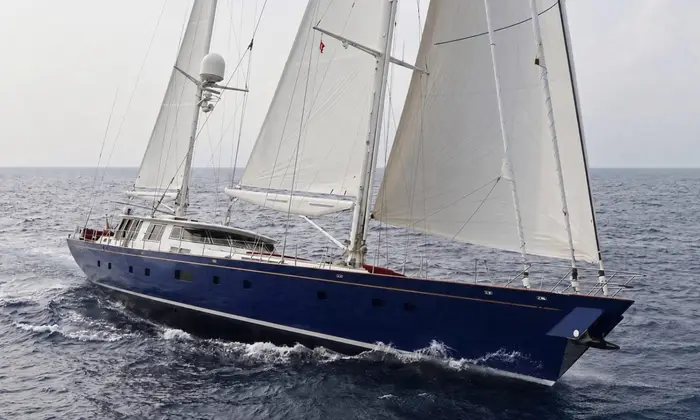
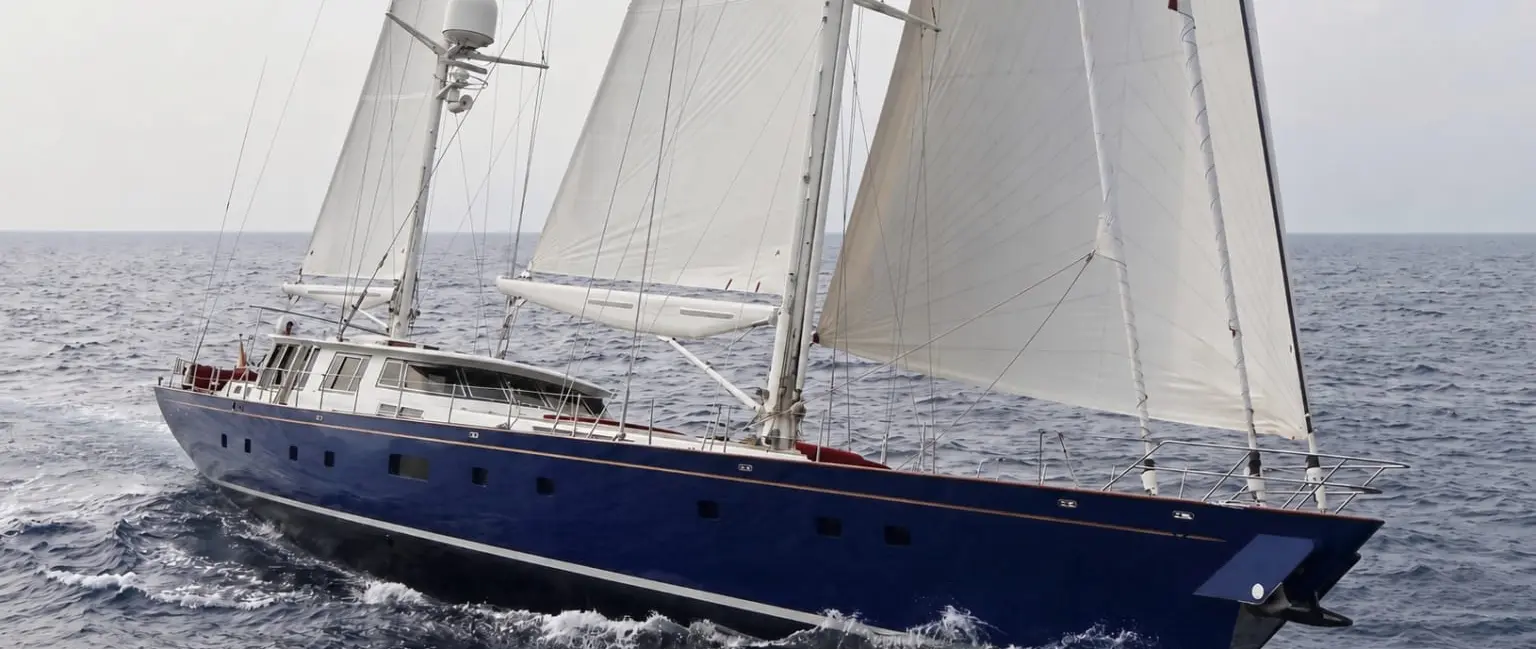
The first-party Phoenix photograph distributed with the 2026 sale notice shows a long blue hull, extensive sail plan and classic proportions. It is an image of the actual yacht, not a generic computer rendering of a similar concept. That matters because visual identity is one of the clearest ways to distinguish named sailing yachts whose dimensions and historic records can overlap. The profile is striking, but photography reveals only the exterior condition at the time it was taken. It cannot document the state of fittings beneath the deck, the condition of rigging components or the results of a structural inspection.
Existing technical records associate the yacht's naval architecture and exterior design with Humphreys Yacht Design, with interior work attributed to John Munford Design. Such attributions help explain the vessel's design vocabulary and practical priorities, but historical records may vary in their level of detail. A thorough purchase assessment should distinguish the original design from alterations made during later work. Deck equipment, sail-handling systems, electronics and even the way cabins are arranged can change over a vessel's lifetime. The fact that a hull is recognised as a particular design is not sufficient evidence that all original systems remain installed or operate as originally intended.
Aluminium can offer a valuable balance of structure and weight in a large sailing yacht, but the material also requires careful inspection and maintenance. The questions are specific: protective coatings, dissimilar-metal interfaces, corrosion prevention, repair history and access to concealed areas. CYRANO DE BERGERAC's published aluminium construction should prompt a buyer to commission qualified survey work rather than treat the material as automatically superior or inferior to steel, wood or composite alternatives. The aim is not to imply that a fault exists. It is to recognise that a vessel with many years of service requires evidence about the current condition of its particular hull and systems.
On a large sailing yacht, the rig is both a source of performance and a major engineering responsibility. Spar condition, rigging age, mast and deck fittings, sail inventory, hydraulic arrangements and safe handling procedures all influence the ownership experience. A prospective purchaser should look beyond the beauty of the yacht under sail and ask for up-to-date rig inspection and service records. The relevant expertise is specialised, and a simple visual survey from the dock is not enough. These considerations make a brokerage offering for a long-established sailing superyacht significantly different from the sale of an otherwise similar-sized motor yacht.
The historical fleet specification describes four principal guest cabins, within a layout intended for longer stays aboard. Four cabins can provide a useful balance between personal space and shared social areas, particularly when a yacht's interior must fit around structural members, rigging support and technical systems. However, cabin count alone does not establish the suitability of sleeping arrangements for a particular family or charter party. Deck plans, berth sizes, bathrooms, circulation routes and the condition of interior joinery matter. The Phoenix message is a starting point for obtaining current specifications, rather than a substitute for examining the accommodation in person.
Sailing on a vessel of this size can offer a particular kind of travel experience. Motion, sound and the work of adjusting the sail plan become part of the passage rather than something always hidden from guests. The crew must coordinate deck operations, watches, tender handling and hospitality, with careful separation of activities where appropriate. Owners who enjoy sailing may find that operational character rewarding. Others may prefer the predictability of a motor yacht. Neither preference is intrinsically better; the point is that choosing CYRANO DE BERGERAC should begin with an understanding of its operating philosophy, not solely with a comparison of asking prices or internal volume.
A sailing yacht cannot be judged by a single headline engine-speed figure. Passage-making may depend on the wind, sea conditions, sail configuration and the skipper's choices, while auxiliary engines serve an important but different role. Historical machinery specifications should be treated as records that require current verification rather than promises of performance. Fuel capacity, generator load, autonomy and weather routing may also be more consequential than a maximum speed quoted out of context. For a vessel whose appeal is partly the experience under sail, evidence of rig efficiency and operational practice can be more useful than an isolated numerical comparison with a power yacht.
Decades of ownership can produce a substantial archive of modifications, maintenance and surveys. On a yacht such as CYRANO DE BERGERAC, that archive may be one of the most important assets a seller can supply. Refit dates should ideally be supported by yard invoices, equipment lists, drawings and survey findings so that buyers know exactly what was renewed. Cosmetic work does not establish a machinery overhaul, and new electronics do not establish that the underlying electrical installation was comprehensively reviewed. Phoenix's 2026 email does not provide a full technical chronology, so this article does not invent one. It identifies the documentation a professional purchaser would reasonably seek.
Phoenix's July 2026 email gave an asking price of €1.8 million. That figure represents the advertised terms at a particular time, not the amount ultimately paid by a buyer, an independent appraisal or proof that the same offer remains open. Classic and older sailing yachts can be especially difficult to value from specifications alone because refit history, maintenance requirements, current certification and the condition of equipment have a significant effect on the cost of ownership. An apparently accessible purchase price can coexist with substantial future expenditure. The sensible comparison is between a vessel's verified condition and the full cost of bringing it into the intended operating programme.
A broker can organise information, coordinate viewings and help seller and purchaser navigate the transaction, but those services should be distinguished from independent technical advice. Phoenix's July communication directed prospective clients to Alexander Kaev and the company's sales team. Buyers should still appoint suitably qualified surveyors and legal advisers as needed, and should verify title, inventory, registration, liabilities and contractual terms. In an established sailing yacht, a proper equipment inventory is especially important: sails, rigging spares, tenders, tools and specialist machinery can represent significant value, but not every item visible in a photograph is necessarily included in a sale.
A complete pre-purchase programme should consider structural condition, rigging, corrosion protection, engines, generators, steering, electrical distribution, plumbing, fire protection, navigation equipment and statutory safety gear. These inspections should be appropriate to the yacht's flag, use and known service history. Buyers may also need to arrange a sea trial under conditions that permit critical systems to be assessed. None of these checks means CYRANO DE BERGERAC has a specific defect; they are the normal evidence needed for a reasoned purchase of a sophisticated older vessel. A credible sale decision rests on documentation and professional findings, not on an evocative blue-hulled image.
The principal photograph on this report was included in the original Phoenix Yacht Management corporate email announcing the yacht for sale on 20 July 2026. The source has been checked as a genuine distributed image rather than a generic library illustration. Its email reference, SHA-256 digest, original media URL and downloaded-file digest have been retained with the associated fleet and newsroom records. This is valuable because long-lived vessels often accumulate images from different decades and different refit stages. A date-linked image provenance record prevents an editor from inadvertently presenting old photography as proof of the yacht's present-day condition.
CYRANO DE BERGERAC is a reminder that the superyacht market includes substantial, technically demanding sailing vessels that do not fit the narrative of continuously increasing length and newly launched motor-yacht platforms. The yacht combines an established British shipyard pedigree, distinctive external identity and the operational character of a full sailing superyacht. Its July 2026 brokerage campaign also demonstrates why careful record handling is necessary: one new email should trigger a check of the existing vessel, its owners' representatives and original press photographs, not another copy of a yacht page. That editorial discipline is particularly useful for vessels whose histories span many years.
The facts established by the source are specific: Phoenix circulated a July 2026 sales notice for the 39-metre, 1993-built Camper & Nicholsons sailing yacht CYRANO DE BERGERAC and provided an asking price and a contact for enquiries. This article does not claim a later sale, a new refit, current availability or the results of a marine survey. It places the announcement into the yacht's existing fleet history and explains what a serious buyer would need to establish. That is more useful than reproducing an old sales email as though it were breaking news today, and it gives the vessel a coherent place in the public superyacht record.
Sources and provenance: Original Phoenix Yacht Management first-party corporate brokerage email ID 1376 dated 20 July 2026; Phoenix official yacht listing; Superyacht Guide fleet records for CYRANO DE BERGERAC and source-linked original Phoenix photograph. Historical asking price quoted only as at July 2026.
© Phoenix Yacht Management — original first-party corporate press photograph
Explore
Go deeper into the yachts, companies, events and destinations directly connected to this article.
Continue reading
The 32.1m Marti Yat LADY LUNA: Phoenix brokerage history, verified wood-epoxy construction, five suites, wellness facilities and original press photos.
Northrop & Johnson lists 30.23m Benetti Tradition 100 ENDLESS SUMMER for €2.79 million after 2022–23 upgrades and a reported 2025 special survey.
Blue Oceans Yachting has confirmed the sale of the 47.4-metre Bilgin MOONRAKER, with Ami Griffith Ira representing the buyer and IKONIC Yachts representing the …
Northrop & Johnson has announced the sale of the 34-metre Sanlorenzo SD112 Christina, with broker Ed Dickinson representing the buyer.
Superyacht Guide
Continue into the wider Superyacht Guide.
Business opportunities · Superyacht Guide
Companies serving the superyacht market can discuss clearly identified advertising, sponsorship and business-profile opportunities. Commercial activity remains separate from independent editorial coverage.