Rossinavi Launches 61.9m Full-Custom Superyacht ALFA in Viareggio | Original cleared SYG 20261125 alfa
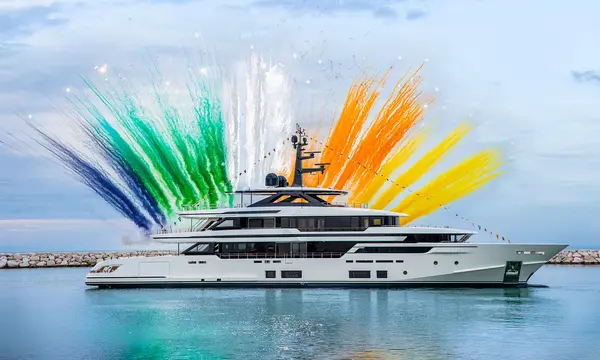
Rossinavi launches the 61.9m custom superyacht ALFA in Viareggio, with 1,210 GT, a De Simoni exterior, six guest cabins and an upper-deck owner suite.
Rossinavi has launched the 61.90-metre motor yacht ALFA at its Viareggio shipyard on 25 November 2026, according to a detailed first-party report published by Press Mare on the same afternoon. The Italian builder describes a fully custom displacement yacht with a steel hull, an aluminium superstructure and an exterior design intended to give a large volume a more dynamic appearance. The launch is a substantial construction milestone, but should not be confused with final delivery or completion of every commissioning test. Readers following a new-build programme should distinguish the moment a yacht enters the water from sea trials, owner acceptance and eventual entry into service. The public announcement supplies valuable technical details while leaving a number of operational specifications undisclosed.
The builder gives ALFA a length overall of 61.90 metres, a maximum beam of 11.10 metres and a gross tonnage of 1,210 GT. Gross tonnage is a measure derived from enclosed volume, not a statement of the yacht's mass in metric tonnes. Those figures place the yacht within the large custom segment in which space allocation, crew circulation and structural engineering are central to an owner's experience. The release does not establish a final displacement figure, top speed, engine manufacturer or maximum range. Such numbers should not be inferred from the length or displacement hull description. For prospective owners comparing vessels, length and GT help illustrate scale but are not sufficient to assess operating performance.
Naval architecture for ALFA is credited to Arrabito Naval Architects. Fulvio De Simoni Yacht Design created the exterior, while Omega Interior Design and Architecture is responsible for the interiors. These attributions clarify who developed different parts of the yacht's architecture without suggesting the studios made every construction decision independently of Rossinavi. On a full-custom project, the integration of engineering and aesthetics requires continuous coordination. Windows, structural openings, deck transitions and the placement of machinery all affect what designers can achieve in the guest spaces. An attractive rendering does not prove structural feasibility; the production process depends on detailed drawings, calculations and construction quality.
The announcement identifies Karma Yachting as the owner's representative from the earliest design stages. Its stated role included helping coordinate communication with the shipyard throughout construction. That is significant because an owner's representative can translate broad expectations into decisions involving drawings, changes and construction milestones. The role should not be interpreted as evidence that Karma Yachting designed the hull or owned the project. A yacht of this complexity involves different contractual and technical responsibilities. The owner remains unnamed in the report, and there is no basis for speculating about identity, purchase price or intended flag. Confidentiality is common in privately commissioned large yachts.
One of ALFA's distinguishing exterior details is a bow shape described by the builder as an automotive-inspired shield. A sculptural ridge runs through the design and is intended to catch light and shadow in different ways. This does not mean that any automotive manufacturer designed the yacht or that the bow performs like a road vehicle component. It describes a visual language used by the exterior design studio. The form is part of a larger effort to give a vessel with considerable enclosed volume a powerful but controlled profile. Readers should assess the result from actual launch photographs and later operational images, since design impressions can change with lighting, freeboard and the surrounding landscape.
The design team uses hull-coloured glazing on the lower and main decks, reducing the visual interruption that would otherwise arise from long window bands. Similar colour treatment is extended to some exterior features, including the bulwarks, pool area and outdoor furnishings. These choices can make separate architectural elements read as part of a coherent exterior. They can also affect how much glazing is perceived from a distance. The release does not provide optical specifications, glass coatings or the technical performance of every pane. It would therefore be incorrect to claim the coloured treatment provides a particular level of privacy, security or solar protection without separate data.
A particularly interesting element of ALFA's layout is a mezzanine deck at the stern. The builder says it links exterior areas of the main and upper decks while helping protect the privacy of the main-deck cockpit. In a conventional arrangement, vertical transitions can require stairways and expose one guest space to circulation between decks. A mezzanine offers another way to choreograph movement and views. The announcement describes the architectural intention, not an assessment of how successfully it works under every operating condition. Visitors should consider the practical route between the swim platform, lounge areas and interior spaces as well as the visual effect.
At sea level, the beach club incorporates aft and side openings, with its floor flush to the swim platform to provide a continuous transition. A step-free connection can improve everyday use of the water-facing spaces and make the platform feel like part of the interior rather than a separate working deck. However, the release does not set out accessibility certification or the details of protection from weather and sea conditions. A sea-level opening is an engineering challenge requiring suitable arrangements for closure, drainage and watertight integrity. An owner comparing beach clubs should pay attention to how the space operates with doors open and closed, not just its appearance in calm-water photographs.
The published accommodation arrangement is for twelve guests, including the owner, in six cabins, together with thirteen crew, including the captain, in seven cabins. Those numbers illustrate the personnel provision expected on a high-volume custom yacht. Crew accommodation should not be treated as an incidental detail. The people operating the vessel need effective access to machinery, guest services and working areas. Layouts that protect guest privacy while allowing essential maintenance can contribute to safer and more reliable operation. The release does not give individual cabin dimensions, certification limits under every flag or the final crew roster. The supplied capacities should therefore be reported as the stated design arrangement.
Two large VIP cabins are situated on the main deck, while three additional guest cabins occupy the lower deck. The configuration gives the owner alternatives for accommodating different generations and guest groups. Main-deck access may be preferable for certain visitors, but cabin accessibility also depends on the exact stairways and internal route. The importance of this arrangement is not solely the count of places to sleep. A yacht may need to accommodate owners' friends, family or occasional business visitors without every guest occupying the same part of the vessel. The builder has not published a complete general arrangement plan in the announcement, so any claim about adjoining rooms or exact interior finishes would be premature.
ALFA's owner has an apartment on part of the upper deck with a private outside area incorporating a Jacuzzi, lounge and sunbathing space. This position can separate the owner's living arrangements from the principal guest circulation below while providing direct access to open air. Adjacent to it is a sky lounge that the owner may keep private or open to other guests. That flexibility is a recurring theme in high-end custom yacht design. It acknowledges that a vessel may be used for intimate family periods as well as for entertaining. A planned degree of separation can enhance comfort, although the way spaces are used ultimately depends on the owner's preferences and crew operations.
On the same upper level, the exterior dining area can be closed off with sliding panels. The builder describes a sheltered veranda incorporating a dedicated climate-control system. Such an arrangement can allow owners to enjoy an outward-facing space under a broader range of weather conditions. It also introduces technical requirements for glazing, drainage, air conditioning and the transitions between open and enclosed use. A partially enclosed dining area should not automatically be counted as the equivalent of a completely insulated interior saloon. Its performance depends on design, exposure and the systems installed. ALFA's arrangement demonstrates the importance of tailoring exterior spaces to actual cruising habits rather than a single summer-weather photograph.
Rossinavi identifies a massage room on the lower deck, a sauna close to the beach club and a gym aft on the bridge deck. Rather than concentrating every activity in one zone, the arrangement distributes wellness facilities around the vessel. This may make it easier to use them at different times without disturbing other guests. The design also creates practical demands for climate control, ventilation, humidity management, equipment restraint and maintenance. A sauna close to a water-facing space has an intuitive recreational appeal, but must be engineered for marine service and safe operation. The public report does not disclose manufacturers, capacities or details of each installation.
The highest deck is described as an observation area devoted to lounging and sunbathing with panoramic views. In a yacht of this size, the availability of several exterior zones allows guests to choose between shade, privacy, social space and uninterrupted views. Designers must consider sightlines, wind exposure, furniture fixing and safe movement in different conditions. An observation deck is not necessarily available under every sea state, and a vessel's procedures should define when exterior areas can be used safely. The announcement establishes the deck's design purpose, not the vessel's operational limits. That difference is important when owners evaluate lifestyle features on a yacht they expect to travel extensively.
Federico Rossi, Rossinavi's Chief Operating Officer, describes the design and quality standards achieved as the result of a shared vision between shipyard and owner. A statement from the builder is relevant evidence of its priorities, but does not amount to an independent survey. Large custom projects succeed when design intentions are translated into construction decisions and their results assessed through testing. The range of features on ALFA suggests the owner placed substantial emphasis on privacy, different types of outdoor life and flexible interior arrangements. The project illustrates how an owner's brief can influence a yacht's architecture more deeply than decorative materials or furniture choices.
The public report establishes that ALFA was launched in Viareggio on 25 November. It does not announce a final delivery date, sea-trial performance, classification completion or an owner's first itinerary. Those distinctions protect readers from confusing a high-profile ceremony with a completed operational record. Following launch, builders typically have commissioning and testing tasks to complete; their exact sequence depends on the project and contractual arrangements. Information about ALFA's performance should be added only when the shipyard or a reliable first-party source releases it. In particular, fuel range, noise and vibration figures, electrical system details and full load conditions remain unverified in the published announcement.
ALFA's launch adds a distinct 61.90-metre project to the publicly visible Rossinavi fleet and shows the yard continuing its focus on owner-led design. The recorded specifications—1,210 GT, a steel-and-aluminium construction, guest accommodation for twelve and multiple privacy-oriented spaces—provide a meaningful picture without requiring speculative performance claims. Its most noteworthy architectural idea may be the way a mezzanine stern and an upper-deck owner apartment reorganise life aboard. For owners considering a new custom yacht, the case illustrates why interior circulation, outdoor connections and operational arrangements should be addressed at the earliest design stage. The next confirmed milestone will be an official account of commissioning or delivery, not an assumption based on the launch itself.
Primary source: Press Mare, original 25 November 2026 Rossinavi ALFA launch report.
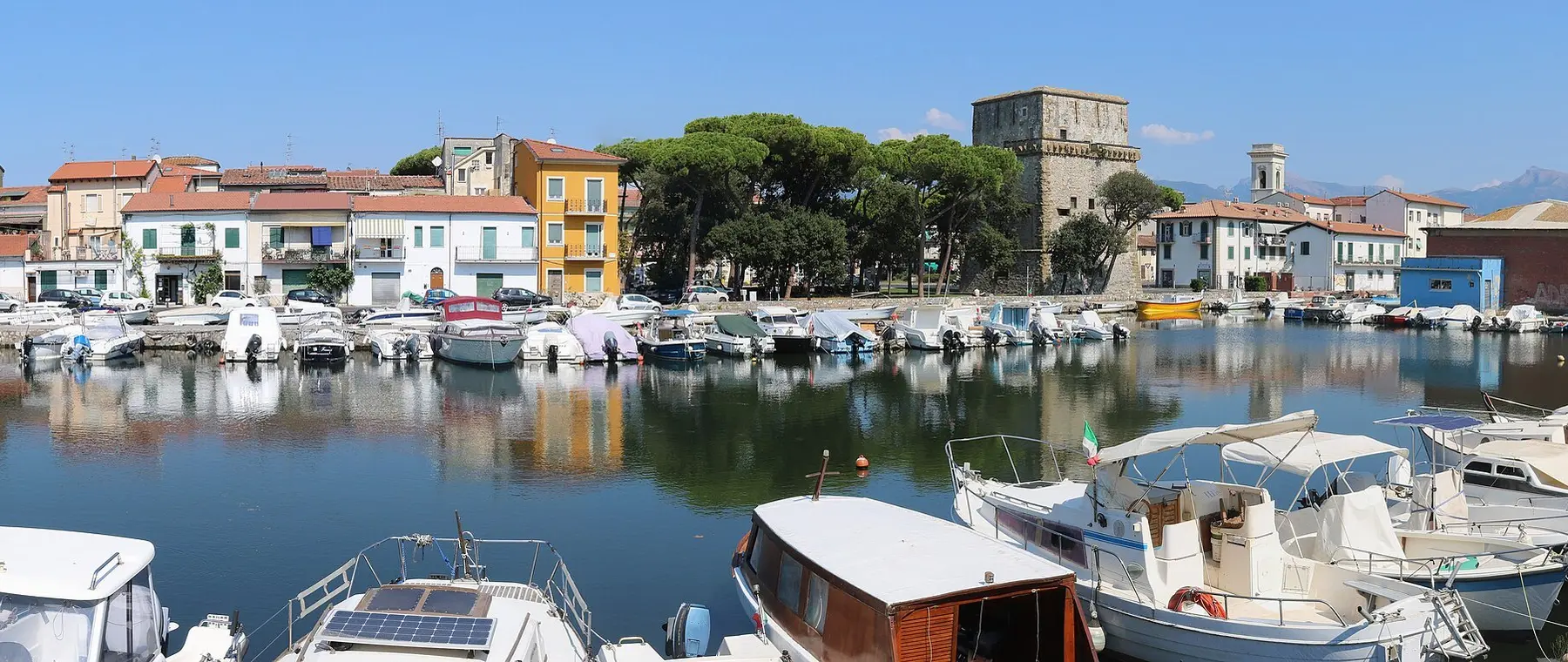
Archival photograph of Viareggio port where ALFA was launched; not an image of Rossinavi ALFA or its 25 Nov launch. Photographer: Ingo Mehling; CC BY-SA 4.0 via Wikimedia Commons. Resized for web. Official source.
Explore
Go deeper into the yachts, companies, events and destinations directly connected to this article.
Continue reading
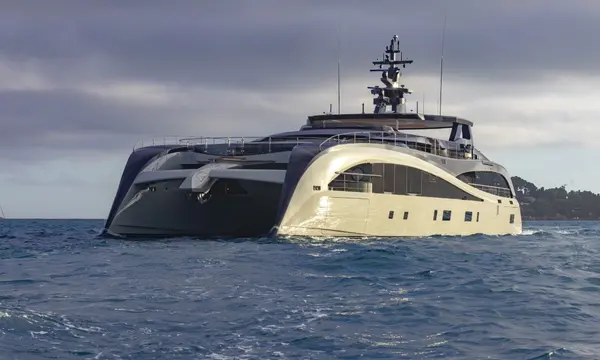
The 42.84m Rossinavi hybrid-electric catamaran SEAWOLF X has sold after marketing at €36.9m, with buyer and seller represented by specialist yacht brokers.
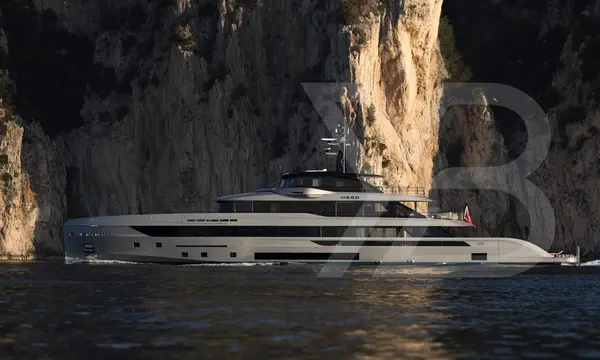
Rossinavi has released the full design of 53-metre Heed, revealing her owner’s deck, two pools and extensive beach-club arrangement.
Gulf Craft has launched the first 49m Majesty 160, designed with Cristiano Gatto, featuring seven guest cabins and scheduled for delivery in March 2027.
Ferretti Group's 24 November announcement confirms the launch of an all-aluminium Custom Line 50 in Ancona, with design by Salvetti and ACPV Architects.
Superyacht Guide
Continue into the wider Superyacht Guide.
Business opportunities · Superyacht Guide
Companies serving the superyacht market can discuss clearly identified advertising, sponsorship and business-profile opportunities. Commercial activity remains separate from independent editorial coverage.

