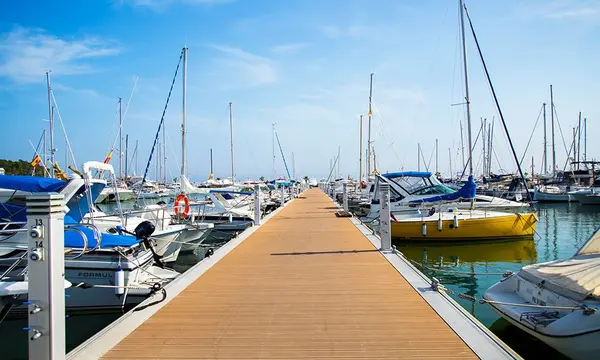
Ibiza’s Santa Eulària Marina Secures Approval for €2m Pontoon Works
Balearic port authority PortsIB has approved five new pontoon-end structures at Santa Eulària marina, with concessionaire Merlin SA funding a €2.001m project subject to …
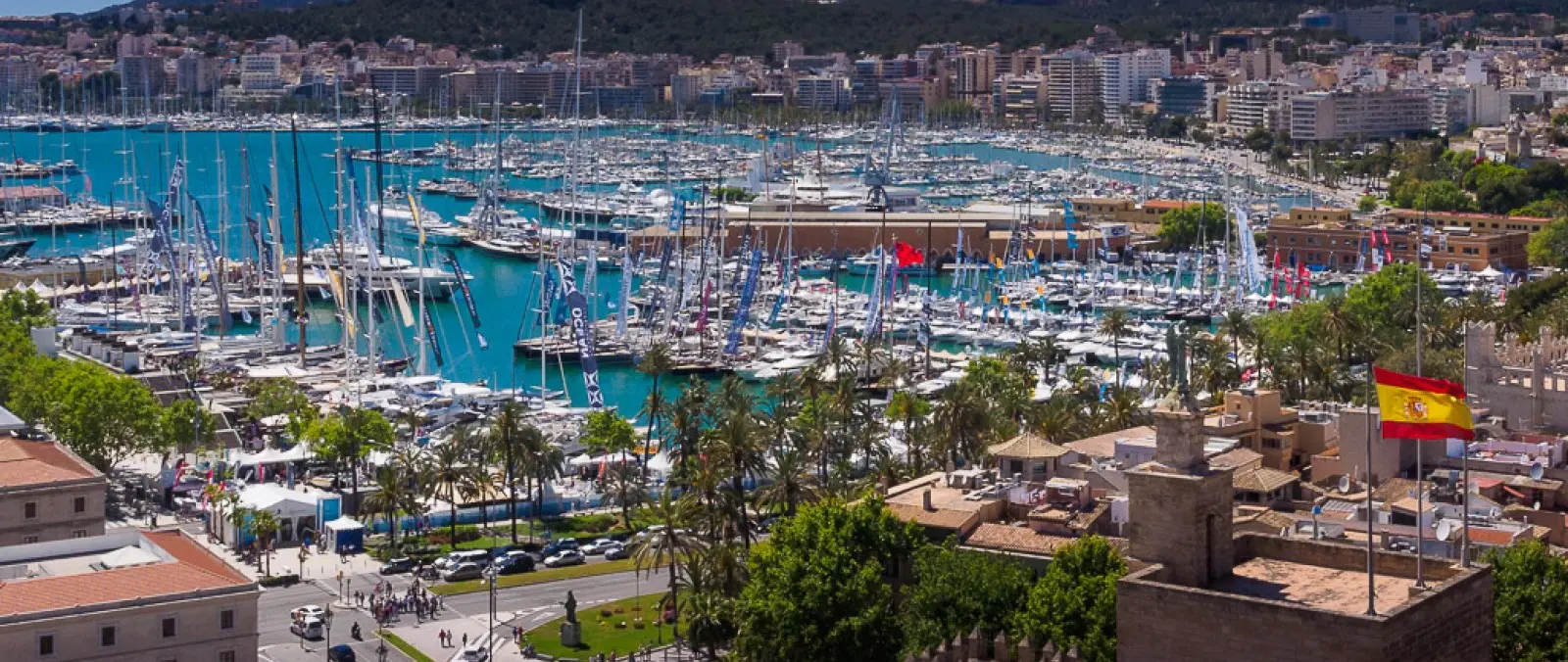
Mallorca combines Palma’s refit and superyacht infrastructure with major air links, varied island cruising and the operational depth that keeps it central to the Balearics.
Ibiza may generate more photographs, more celebrity sightings and more instantly recognisable summer imagery, but the Balearic superyacht story has never belonged to Ibiza alone. For owners, captains and managers looking at the islands as an operating environment rather than simply a succession of glamorous anchorages, Mallorca remains difficult to replace.
The distinction matters. Ibiza excels at intensity: beach clubs, nightlife, villas, short transfers ashore and the irresistible combination of Ibiza Town, Formentera and clear-water anchorages. Mallorca offers something broader. It combines serious superyacht infrastructure with a substantial city, an international airport, a major technical and refit community, large-yacht berthing, mountain landscapes, historic towns, secluded calas and enough geographic scale to support an itinerary rather than merely a stop.
That makes Mallorca unusual in the Mediterranean. A yacht can arrive for technical work, change crew, take on provisions, collect guests from one of Europe's busiest leisure airports, spend days cruising the island and then continue towards Ibiza, Menorca, Barcelona, the Côte d'Azur or further east. It works both behind the scenes and in front of the guests.
Ibiza may define one version of the Balearic summer. Mallorca helps make the entire Balearic programme work.
The strongest argument for Mallorca begins in Palma.
For a guest arriving aboard a yacht, Palma can look like an attractive Mediterranean city with a cathedral, old streets, restaurants, hotels and a waterfront full of boats. For a captain or yacht manager, the same city looks very different. It is a functioning marine ecosystem.
Palma has developed one of the Mediterranean's most established concentrations of refit, repair, maintenance and yacht-support businesses. The Balearic Marine Cluster describes refit as a strategic sector centred particularly around the Port of Palma, while its wider membership represents a substantial cross-section of companies involved in the islands' nautical economy. Recent initiatives have continued to strengthen that positioning, including specialist superyacht industry events and the expansion of large-yacht activity around the Palma International Boat Show.
This is important because yachts rarely experience a Mediterranean season as a continuous holiday. Machinery needs attention. Paint gets damaged. Air-conditioning systems fail. Navigation equipment needs upgrading. Interiors require repairs. Engineers need parts, surveyors need access and specialists may have to fly in at short notice.
A destination becomes much more valuable when many of those problems can be solved without relocating the yacht hundreds of miles. Palma provides that possibility.
It also creates continuity. Crew members know the suppliers. Captains know the yards and agents. Managers can coordinate work with established contractors. Specialists are accustomed to large-yacht standards. A yacht returning year after year can develop relationships rather than starting again in every port.
That kind of accumulated knowledge is less visible than a famous beach club, but operationally it can be far more valuable.
Mallorca also has something that becomes increasingly important as yachts grow: credible infrastructure for very large vessels.
Club de Mar-Mallorca states that it has more than 500 moorings, including substantial capacity intended for superyachts, megayachts and gigayachts. The marina says it can accommodate yachts extending well into the largest end of the contemporary fleet, putting Palma into a relatively small group of Mediterranean locations able to handle genuinely large vessels.
Those capabilities matter because large-yacht itineraries are constrained in ways that smaller yacht cruising is not. Draft, beam, shore power, security, logistics, waste handling, bunkering, provisioning and the physical dimensions of the berth all reduce the number of realistic options as length increases.
Mallorca's advantage is not that a yacht will necessarily spend every summer night alongside in Palma. Quite the opposite: much of the attraction of the Balearics is found at anchor. The advantage is that there is serious infrastructure nearby when it is required.
The island also offers a network of other ports and marinas, including Port Adriano, Puerto Portals, Port d'Andratx, Sóller and facilities around the eastern and northern coasts. Ports de les Illes Balears lists an extensive network of Mallorca facilities, giving cruising yachts alternatives depending on size, weather, itinerary and berth availability.
For a captain planning a week or two around the island, that creates flexibility. Palma can be the operational anchor without becoming the entire itinerary.
Mallorca's aviation connectivity is another advantage that is easy to underestimate until something goes wrong.
Palma de Mallorca Airport is one of Spain's busiest airports and handles tens of millions of passengers each year, with an extensive network of international and domestic routes. Traffic is particularly strong to Germany, the United Kingdom and mainland Spain, while seasonal connectivity extends across much of Europe.
For tourism, those are impressive statistics. For yachting, they mean something more practical.
An owner can reach the yacht easily. Guests can arrive from numerous European cities. Crew rotations become simpler. Engineers and contractors can be flown in. Replacement parts can move through a substantial transport network. Family members can join or leave the yacht without the itinerary being dictated entirely by private aviation.
Private jets remain important at the top of the market, but even yachts with substantial aviation budgets benefit from being based near a major airport. Crew, technicians, chefs, nannies, security personnel and service professionals do not all travel privately.
Palma's airport helps turn the island into a real operating base rather than merely an attractive cruising ground.
The case for Mallorca would be incomplete if it were only about logistics.
What separates the island from a pure service hub is the variety available once the yacht leaves Palma.
The southwest offers Port d'Andratx, coves and easy access back towards Ibiza. The northwest is transformed by the Serra de Tramuntana, the mountainous coastline that gives Mallorca some of its most dramatic scenery. The range has been recognised by UNESCO as a World Heritage cultural landscape since 2011, reflecting the relationship between its mountain environment, settlements, terraces and centuries of human use.
Sóller provides a very different atmosphere from Palma. Around the north and east, the character changes again, with Alcúdia, Cala Ratjada, Porto Cristo, Portocolom, Cala d'Or and numerous coves creating opportunities for a slower island circuit.
For guests, this diversity is important.
A seven-day Ibiza itinerary can deliberately revolve around restaurants, beach clubs, music and Formentera. Mallorca can support a different rhythm. One day may involve lunch ashore in Palma, the next a quiet anchorage, another a drive or helicopter excursion into the Tramuntana mountains, followed by a remote swimming stop or dinner in a small coastal town.
The island is large enough for the yacht to move without every passage feeling like repositioning to another country or another major destination.
That also helps charter programmes. Different groups want different things from a yacht. Some want nightlife. Others want privacy, food, scenery, sport or family time. Mallorca can accommodate several of those expectations within a relatively compact cruising area.
It is tempting to frame Mallorca and Ibiza as rivals, but captains rarely need to make such a binary choice.
The islands perform different roles.
Ibiza remains one of the most commercially powerful names in Mediterranean yachting. Its beach clubs, nightlife, high-end villas and proximity to Formentera give it extraordinary charter appeal, especially for guests who want the yacht integrated into an active social programme.
Mallorca is broader and more operational.
The yacht may winter or refit in Palma, conduct sea trials, load stores, receive a guest party and then move towards Ibiza. Another programme may begin in Ibiza before returning to Mallorca for a quieter second half. Menorca can then extend the itinerary again with a more relaxed cruising environment.
Viewed this way, the Balearics are not a collection of interchangeable islands. They form a small cruising system in which each island contributes something different.
Mallorca's role is often the most complete because it operates at both ends of the experience: what the owner sees and what the yacht needs.
There is, however, another reason why Mallorca and the wider Balearics need to be treated as a serious cruising environment rather than a casual anchoring playground.
Protection of Posidonia oceanica seagrass has become a major operational consideration.
The Balearic Government has identified extensive Posidonia meadows throughout the archipelago and operates seasonal surveillance specifically intended to reduce damage caused by anchoring. Enforcement and monitoring now form an established part of summer yacht operations around the islands.
For captains, this means beautiful anchorages require planning.
The question is no longer simply whether the bay is sheltered and deep enough. Crews need to know what is beneath the yacht, whether anchoring is permitted, where protected seagrass lies, whether buoy fields are available and whether the planned swinging circle remains safe.
That does not reduce Mallorca's appeal. In many ways it reinforces the point that the Balearics have matured as a major yachting destination. High yacht density inevitably brings environmental pressure, and the islands are increasingly trying to manage that pressure rather than allowing unlimited anchoring to become the default.
Owners may experience clear water and beautiful bays. Captains must also see regulation, seabed protection and responsible anchoring.
Ibiza is strongly associated with a summer season. Palma's marine economy is more continuous.
When the Mediterranean charter rush begins to fade, Mallorca does not simply shut down. Refit, maintenance, winter berthing, training, recruitment and project work continue. This gives Palma a second identity that is particularly valuable to professional yachts.
Balearic Marine Cluster has repeatedly positioned Palma as a strategic Mediterranean refit centre, while recent discussions over the future organisation of the Port of Palma have focused specifically on preserving the competitiveness of repair and refit activity. The city's marine industry continues to expand its international profile through events and industry initiatives centred on the large-yacht sector.
The significance goes beyond direct shipyard work.
A year-round yacht community supports chandlers, engineers, electricians, painters, interior specialists, sailmakers, refrigeration technicians, crew agencies, trainers, surveyors, brokers, agents and many other businesses that a large yacht may need.
This ecosystem also makes Mallorca attractive to crew. Palma offers a real city and established international community rather than the isolation that can accompany some technical yards. For yachts undergoing lengthy work, that can make recruitment and crew retention easier than it might be in a purely industrial location.
The island therefore benefits from a reinforcing cycle: yachts create demand for services; services make Palma more attractive to yachts; the concentration of yachts supports more specialist businesses.
That is how a destination becomes a hub.
The Mediterranean contains more glamorous places than Palma, more exclusive marinas than Mallorca and more dramatic nightlife than almost anywhere outside Ibiza.
That is not the point.
Mallorca's strength is the combination.
It can receive a very large yacht. It can support a refit. It can fly in an owner, rotate crew and bring specialists to the vessel. It can provide a genuine city experience in Palma and, within the same cruising programme, offer mountain scenery, quiet anchorages, historic towns and open-water passages around a substantial island.
It can be the beginning of a Balearic charter, the end of one, or the place where the yacht disappears for months of technical work before the next season begins.
That versatility is why Mallorca remains important even when Ibiza attracts more of the attention.
For owners, the Balearics may be about clear water, restaurants and long summer evenings. For captains and managers, the picture is broader. The best destinations are not simply beautiful places to visit. They are places where the yacht can function.
Mallorca does both.
And that is why, beyond Ibiza, it remains one of the foundations of the Western Mediterranean superyacht season.
Balearic Marine Cluster — Palma and the Mediterranean refit sector
Club de Mar-Mallorca — Marina and large-yacht berthing
Ports de les Illes Balears — Balearic port network
Aena — Palma de Mallorca Airport
Government of the Balearic Islands — Posidonia protection and anchoring information
Continue reading
Balearic port authority PortsIB has approved five new pontoon-end structures at Santa Eulària marina, with concessionaire Merlin SA funding a €2.001m project subject to …

Pacific Tourism Organisation and Market Development Facility have launched a regional yachting strategy covering infrastructure, regulation, local enterprises and environmental safeguards.
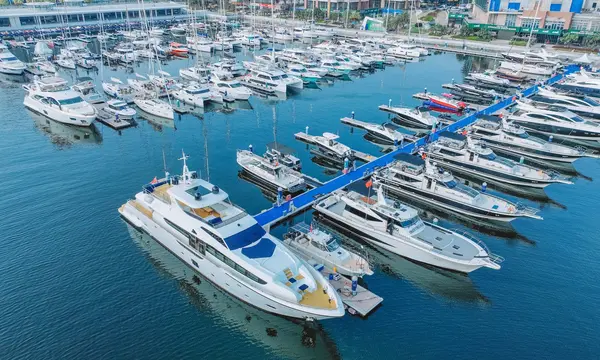
Clear Water Bay Yacht Club reports July approval for its Hainan port to open to international yachts; 301 berths are built and 873 remain …
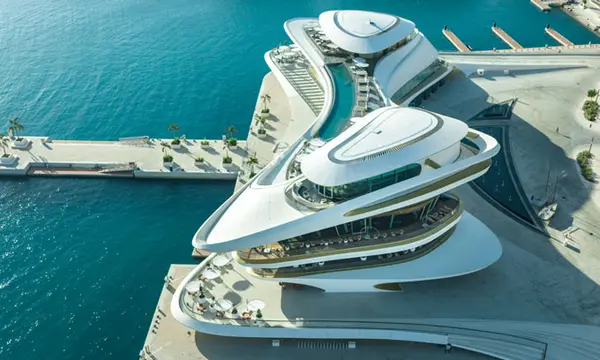
AMAALA Yacht Club has begun operations on Saudi Arabia’s Red Sea coast, adding 119 berths and capacity for superyachts over 100 metres.
Superyacht Guide
Continue into the wider Superyacht Guide.