Thordon Bearings Opens Third Canadian Plant for Marine Seals and Equipment
By Stephen Yardley · Edited by Stephen Yardley
Thordon Bearings opens a third factory in Burlington for water-lubricated seals, water-quality packages and product development.
Thordon Bearings has opened a third manufacturing facility in Burlington, Ontario, as it expands production of specialised water-lubricated mechanical seals and supporting equipment for the marine and hydropower markets. Announced by the Canadian manufacturer on 8 October 2026, Plant 3 is situated at 3180 Mainway, a short distance from the company's existing head office and manufacturing premises at 3225 Mainway. The expansion is intended to increase throughput and reduce pressure on existing facilities rather than introduce an entirely new business.
The new plant will concentrate on TG100 water-lubricated mechanical seals, water-quality packages and related non-bearing components. It also houses a new-product development team and part of the operation of sister company Marsh Brothers Aviation. Thordon says its workforce has grown by 32 percent since the end of 2023, reflecting investment in sales, manufacturing, management and technical positions. Those figures describe company employment growth, not a specific forecast of superyacht orders.
Propulsion and steering arrangements on a large yacht depend on precisely engineered interfaces between rotating shafts, bearings, seals and surrounding structure. Leakage, misalignment or unexpected friction can create operational problems whose consequences extend well beyond replacement-component cost. A yacht may lose a charter window or miss a planned passage while a specialist component is manufactured or delivered.
Water-lubricated systems have gained attention as an alternative to selected oil-lubricated arrangements because they can reduce the risk of lubricating oil reaching the water in normal operation or during failures. Their suitability depends on engineering details, correct water supply and applicable approval rules. Neither lubrication approach is universally appropriate for every yacht without an examination of operating loads and the complete shaftline design.
Thordon identifies the TG100 seal among the principal product families assigned to the new facility. A mechanical seal is a system rather than a simple consumable: faces, mounting arrangement, lubrication conditions and the quality of surrounding water can determine its performance. Installation instructions and dimensional accuracy are particularly important when equipment has been altered during refit.
Water-quality packages support the conditions in which water-lubricated bearings and seals operate. Filters, pumps, instrumentation and control arrangements need to be maintained and inspected like other technical equipment. A system intended to reduce reliance on oil can still fail if a blocked filter or unsuitable water supply goes unnoticed.
Yacht engineers should distinguish a manufacturer's laboratory claims from the inspection and maintenance schedule that applies to their particular installation. A component with promising service characteristics still requires alignment checks, temperature monitoring where specified and records of any abnormal vibration or leakage.
Opening Plant 3 gives the Burlington business additional space for assembly, machining and product development, while releasing room at its head office for other work. Thordon chair and chief executive Anna Galoni has identified improved production flow and shorter lead times as intended benefits. Whether those benefits are realised will depend on orders, staffing and supply-chain performance as the new layout settles into operation.
Closer proximity between the new development team and existing manufacturing employees may make it easier to test product changes against the realities of machining and assembly. For yacht builders and repair yards, the commercial value of a larger supplier facility lies in consistent quality, reliable documentation and predictable delivery. A new factory does not by itself remove all bottlenecks in international logistics.
Thordon is part of the Thomson-Gordon Group, whose industrial roots extend to 1911. The company supplies components into marine, clean-power and other industrial applications and maintains international distribution and support arrangements. Large-yacht customers may encounter its products directly or through shipyard equipment packages, making component identification and after-sales contacts crucial to future service.
Superyacht procurement usually involves several stages between manufacturing and installation. A builder might select an approved shaftline configuration with input from the naval architect and propulsion specialist, while a refit yard may need to source a compatible replacement decades later. Clear part numbers, approved drawings and maintenance records allow those handovers to proceed without guessing about component equivalence.
Long lead times can make machinery and shaftline work a critical part of a refit programme. Where a yacht must be lifted or dry-docked, survey findings may reveal additional wear or misalignment that cannot be fully diagnosed beforehand. Early discussion with manufacturers helps owners' representatives understand what should be ordered in advance and which parts can be confirmed only after disassembly.
Expanding production capacity is therefore relevant to the superyacht sector even when a facility is not dedicated exclusively to luxury craft. A dependable supply of specialist seals and support equipment benefits multiple vessel categories, and the requirements for traceability, inspection and installation quality are common across many of them.
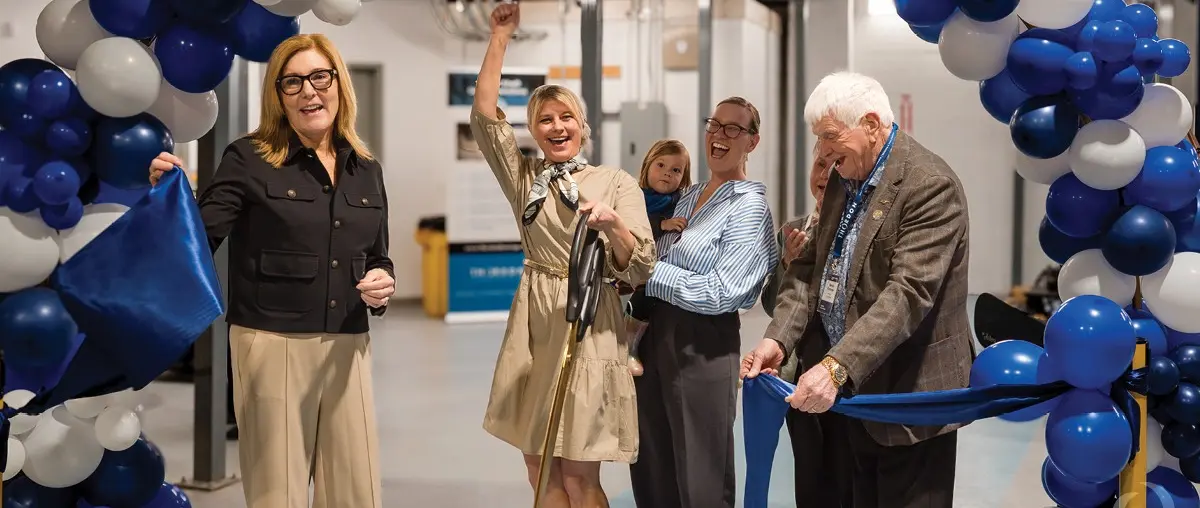
The company held a ribbon-cutting event attended by local Canadian representatives, but the October announcement did not disclose an individual superyacht contract or a quantified reduction in delivery lead times. Future evidence might include expanded product availability, manufacturing throughput or performance of the distribution network. Those outcomes should be reported when verified rather than inferred from the opening ceremony.
For owners and builders, Thordon's new plant is a concrete investment in the industrial supply chain behind reliable marine propulsion and mechanical systems. Its significance will be measured in consistent engineering support and product availability long after the initial factory announcement.
Explore
Go deeper into the yachts, companies, events and destinations directly connected to this article.
Continue reading
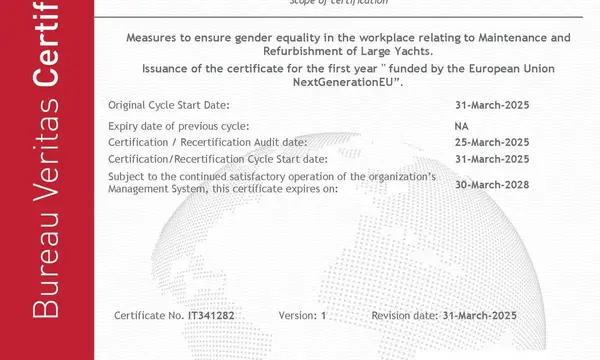
Cantiere Rossini renewed gender-equality certification in April 2026 and reported women in a quarter of its workforce and 40% of operational leadership.
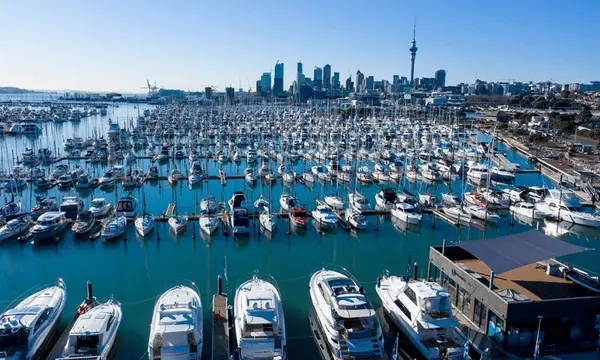
SeaKeepers South Pacific announced a July 2026 partnership with three Auckland Council marinas to widen access to citizen science and conservation programmes.
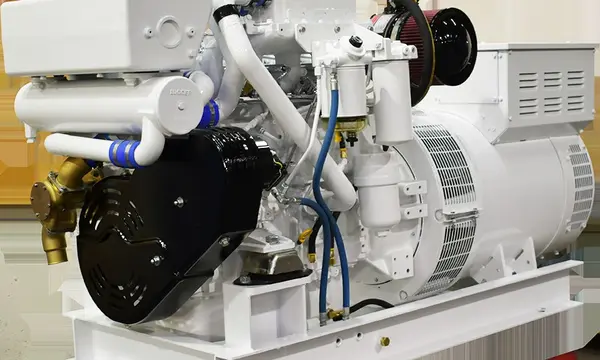
Northern Lights has expanded Diesel Marine NZ’s distributor role to cover marine generators, Lugger engines and Technicold equipment across the South Pacific.
AkzoNobel and Axalta have announced Axanzo as the name for their proposed future combined coatings company, while marine products remain with existing suppliers.
Superyacht Guide
Continue into the wider Superyacht Guide.
Business opportunities · Superyacht Guide
Companies serving the superyacht market can discuss clearly identified advertising, sponsorship and business-profile opportunities. Commercial activity remains separate from independent editorial coverage.