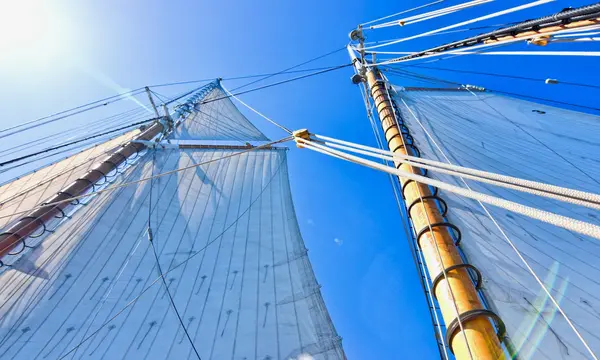
28.8m FREE AT LAST Offers 5% Incentive for First Winter 2027 Caribbean Charter
Bernard Gallay has announced a 5% charter-fee incentive for the first confirmed January or February 2027 booking aboard the rebuilt 28.8m sailing yacht FREE …
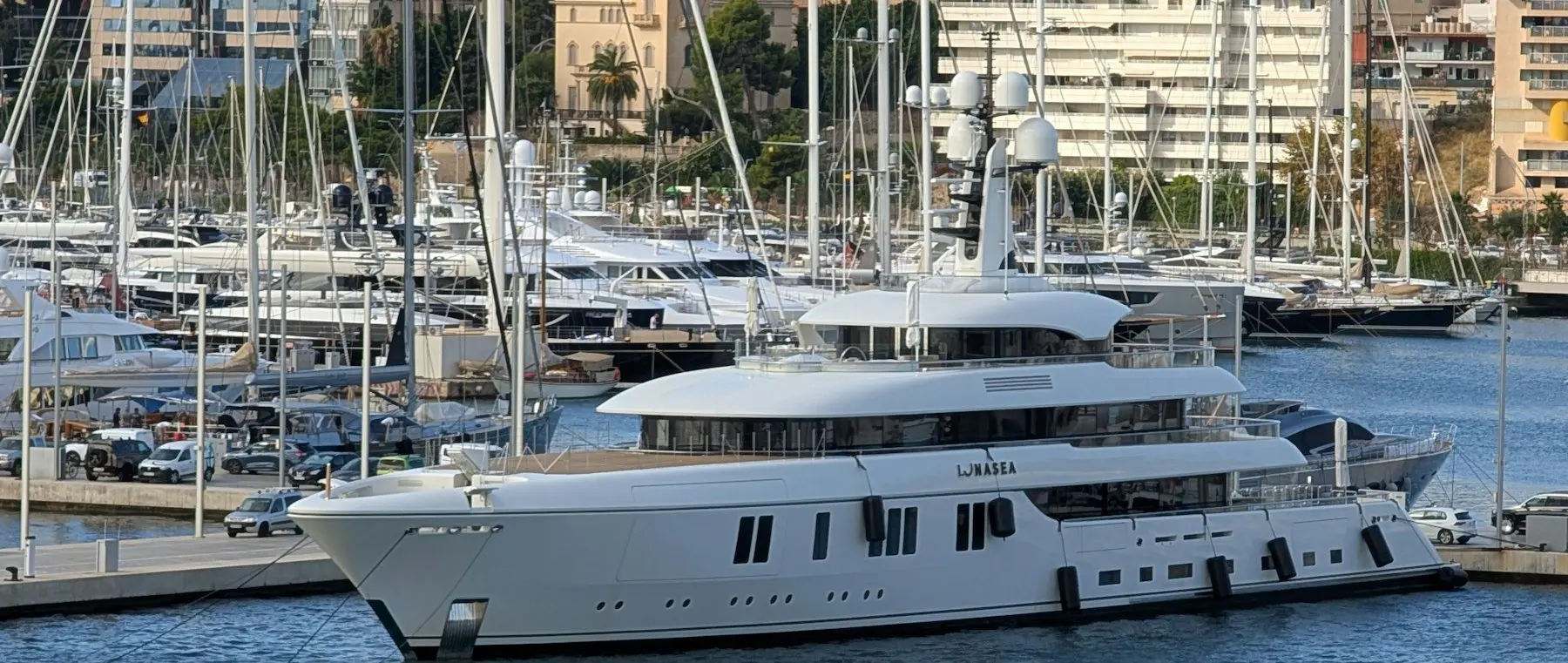
IYC is marketing the 61-metre Royal Hakvoort yacht TOP FIVE II for Bahamas charters from November 2026, with indicative weekly rates of $600,000–$650,000 plus expenses. Published accommodation figures require clarification with the broker.
The 61-metre Royal Hakvoort motor yacht TOP FIVE II is being marketed for Bahamas charters, with IYC's live charter listing showing a regional availability period that begins on 2 November 2026 and runs through 30 April 2028. The same listing quotes indicative weekly rates between US$600,000 and US$650,000, plus expenses. It is a notable offering in the upper segment of the Caribbean winter charter market, although a date range in a destination listing should never be read as a promise that every individual week remains open.
The significant new development is the yacht's stated Bahamas marketing window at the start of the northern winter season. TOP FIVE II is not a new vessel: she was delivered in 2021 by Dutch yard Royal Hakvoort. The editorial news is her current charter positioning, with her official central-agent listing offering a detailed account of the facilities and cruising area being promoted to prospective clients. For guests, the most useful next step is confirmation of a particular embarkation date and itinerary by the appointed charter broker.
IYC describes TOP FIVE II as a 200-foot-two-inch, 61-metre motor yacht. The charter page lists a maximum of twelve guests and nineteen crew, with 12 knots given as cruising speed and 14.5 knots as maximum speed. These are marketing specifications supplied by the central agent, not independently measured performance results. Actual passage speed and route planning will depend on conditions, the captain's judgement and operational requirements.
The indicative price is substantial, but quoting the full structure matters. IYC states a range of $600,000 to $650,000 per week plus expenses for the Bahamas window. The published figure is not an all-inclusive total. A charter proposal may include separately accounted fuel, food, beverages, berthing, local charges, special requests and other agreed operating expenses. The contract and advance provisioning allowance, where relevant, should be checked with the broker for the particular voyage. It is misleading to convert the base weekly rate into a fixed final holiday price without that information.
The operator also reserves the right to change rates and destinations according to availability. A prospective charterer should therefore treat the web quotation as an indicative guide, ask which week is actually available and obtain a written offer reflecting current terms. Superyacht Guide is reporting the published charter listing; it is not acting as the yacht's booking agent and cannot independently reserve a slot.
One of TOP FIVE II's strongest distinguishing features is the emphasis on a dedicated owner's deck. IYC describes a private terrace with broad forward views, along with adaptable guest suites elsewhere in the yacht. The yacht's interior is credited to Sinot Yacht Architecture & Design and is described as using walnut, leather and generous ceiling heights. A glass elevator links multiple decks, making movement between major guest areas a deliberate part of the design.
Prospective charterers should notice one small but important inconsistency in the current marketing information. The descriptive paragraph of IYC's official listing calls the arrangement six cabins, while the specification panel lists seven cabins. It is possible that the discrepancy reflects a convertible or differently counted room, but that cannot be established from the web text alone. The correct number and precise layout for a particular charter should be confirmed directly with the broker before an agreement is signed. The figure of twelve guests is consistent across the same listing.
The descriptive material also mentions one guest cabin designed with wheelchair accessibility in mind. That is a useful facility to discuss, but it should not be treated as a blanket guarantee that every part of the yacht, every tender or all shoreside stops are accessible. The actual dimensions, lift limitations, transfer arrangements and planned shore activities must be assessed against the guest's needs by the charter team. An elevator connecting decks can be valuable without making every activity automatically practical for every passenger.
A charter in the Bahamas often combines time at anchor with short passages between islands, so the onboard layout matters as much as the tender schedule. IYC's TOP FIVE II listing promotes an upper-deck swimming pool, a Jacuzzi on the bow and a firepit on the top deck. The arrangement creates several distinct areas for guests rather than relying on one principal aft terrace. Weather and onboard safety rules will determine how these features are used on a particular day.
The yacht is also advertised with a beach club and gym, while indoor facilities include a cinema and a bridge-deck sky lounge. Those spaces make a difference when weather changes, younger guests have different interests or some members of a party want a quieter programme. The charter brief should specify how the group wishes to divide its time between formal dining, social activities, wellness and more private relaxation; a long amenities list by itself says little about the suitability of the daily schedule.
IYC describes a formal dining space with a custom table for fourteen, which can give the dining room a scale beyond the usual twelve-guest charter limit. That does not change the maximum guest number represented in the listing. It is an example of why a yacht's interior capacity and its operational guest limit are separate considerations. The broker and captain remain the appropriate sources for the certified passenger arrangement and any special event permissions.
The published inventory is extensive. IYC lists a 38-foot Boston Whaler, a 7.5-metre beach-landing tender, four Jet Skis, underwater scooters, e-foils, paddleboards, kayaks and scuba equipment among the yacht's available equipment. For a destination of shallow banks, protected anchorages and varied island access, this kind of tender mix can be appealing. It can also place demands on crew supervision, storage, maintenance and daily launch arrangements.
Not every toy can necessarily be used at every anchorage. Wind, sea state, visibility, local restrictions, operator qualifications, insurance conditions and the captain's instructions can all affect the programme. Guests should ask in advance about minimum ages, required certifications and whether a particular activity is available on their dates. The listing establishes what the operator advertises, but equipment inventories and operating permissions can change without a corresponding headline announcement.
The larger tenders may also support trips ashore where the mothership cannot safely approach a beach or marina, although no specific landing point is guaranteed by the online listing. Guests should not infer a particular itinerary, an exact anchorage or access to a private island merely from the yacht's destination label. The Bahamas offer many possible cruising patterns, each requiring a route adapted to draft, weather, customs arrangements and the party's preferences.
IYC's current destination schedule explicitly includes the Bahamas from November 2026. It also shows a Caribbean window for October 2027 to April 2028, with the British Virgin Islands, Leeward Islands and Windward Islands listed as regional possibilities. Those later alternatives should be seen as separate marketing regions, not proof of a continuous cruise or a booked trans-Caribbean itinerary. The yacht's exact position on a requested date needs direct confirmation.
The Bahamas are often discussed as one homogeneous destination, but a real charter proposal may be built around quite different experiences. Some guests may prefer short transfers and more time at anchor; others may prioritise water sports, diving or longer passages to quieter areas. The yacht's nominal cruise speed gives a broad planning reference, yet nautical distance, sea conditions, tender operations and harbour access determine what is practical within a one-week booking.
The most useful comparison for charter clients is therefore not just weekly rate divided by yacht length. It is the fit between a particular party's guest count, mobility requirements, desired activities, time available and acceptable passage lengths. A large yacht with a significant crew offers flexibility, but flexibility does not remove the need for a disciplined itinerary that leaves room for weather and rest.
A yacht's charter status can appear across numerous marketplaces, some of which retain old dates, old rates or a previous manager's contact details. For this report, Superyacht Guide has relied on IYC's current first-party TOP FIVE II charter page rather than treating a copied directory listing as the source of truth. The official page includes the agent's own disclaimer that particulars are supplied in good faith and may change. This is not a minor footnote; it is central to how the availability claim should be read.
Similarly, past news about ownership, sports-world associations or celebrity guests is not evidence of the present charter contract. We have not treated unrelated owner rumours as part of this availability announcement. What is established is the yacht's identity, builder, year, published technical outline, marketed destination period and advertised starting rate. All of those can be checked against the source identified below.
Some commentary elsewhere describes TOP FIVE II with a six-cabin arrangement, while online data panels can show seven. Rather than arbitrarily selecting whichever number appears most frequently in secondary reports, this article preserves the distinction and asks the relevant operational question: what is the usable, approved accommodation configuration for the particular booking? That is a practical issue for clients travelling as families or multiple couples.
A serious enquiry should begin with the number of guests, intended dates, preferred boarding area and the purpose of the trip. The broker can then confirm whether the yacht is open for that exact period, which rate applies, the applicable contract form, the additional expense arrangements and any special operational limitations. A day-by-day route should be developed only after those matters are resolved. The captain's local assessment is more important than a fixed itinerary copied from a tourism page.
For now, the news is that TOP FIVE II appears on IYC's live books for Bahamas charter marketing beginning 2 November 2026, with rates stated at $600,000–$650,000 per week plus expenses. The 61-metre Royal Hakvoort yacht offers a broad suite of guest facilities, but the final charter terms and exact cabin arrangement require confirmation from the agent. Superyacht Guide will report any material, independently verified change to her programme as a separate event, rather than repeatedly recasting the same availability listing as a new launch or delivery.
Continue reading
Bernard Gallay has announced a 5% charter-fee incentive for the first confirmed January or February 2027 booking aboard the rebuilt 28.8m sailing yacht FREE …

IYC has announced the addition of the 36.9-metre Benetti Motopanfilo ANGEL to its charter portfolio, with accommodation for eleven guests, five cabins and seven …
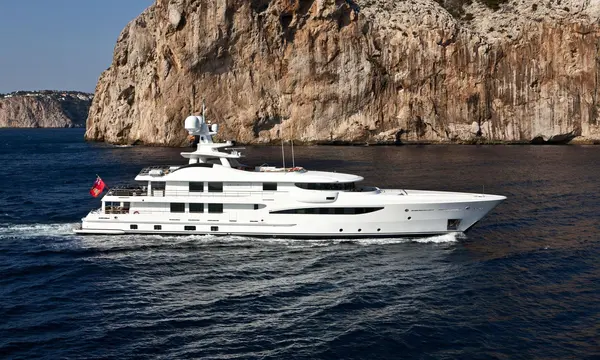
Camper & Nicholsons is marketing the 52.3-metre Amels SWEET MARYI after a 2026 interior and exterior refit. The six-cabin yacht accommodates up to 12 …
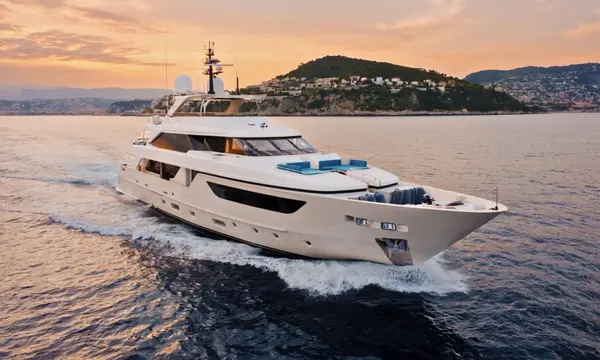
Sanlorenzo PREMURA, measuring 37.95 metres, has joined Royal Yacht International’s charter fleet for the Bahamas winter season, with a Fjord chase tender.
Superyacht Guide
Continue into the wider Superyacht Guide.
Business opportunities · Superyacht Guide
Companies serving the superyacht market can discuss clearly identified advertising, sponsorship and business-profile opportunities. Commercial activity remains separate from independent editorial coverage.