Top Superyacht Builders 2026
Superyacht Guide ranks the leading yacht builders of 2026 using its own structured fleet database rather than a subjective list of favourites. The results …
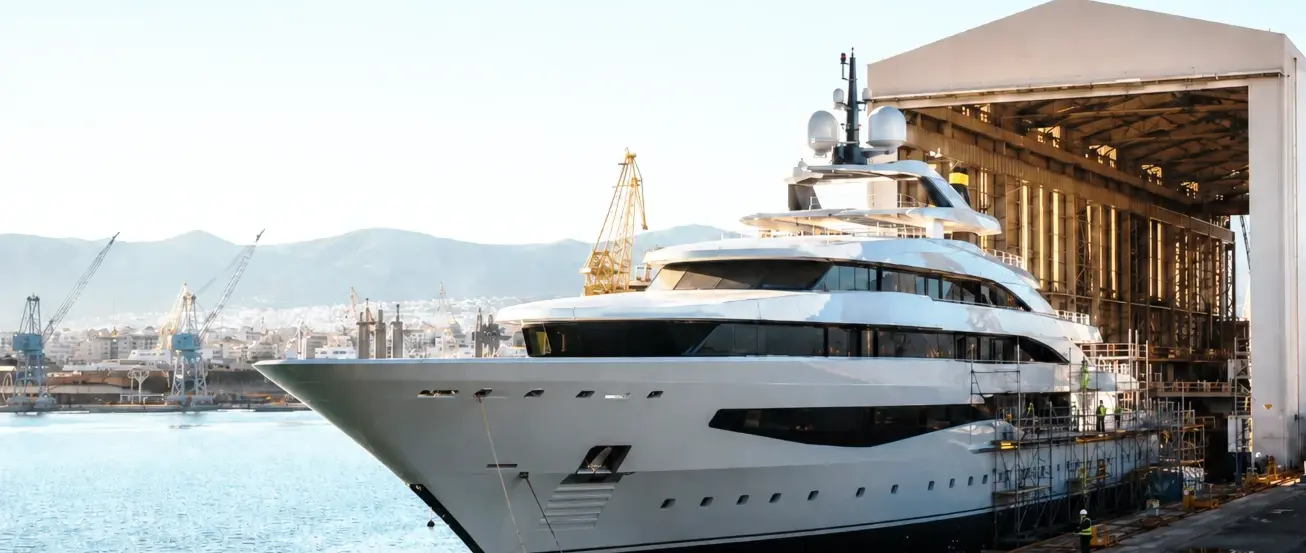
Turkey has become one of the world’s most important superyacht-building nations, combining large custom construction, growing refit capacity, skilled labour and a strategic Eastern Mediterranean location.
There was a time when Turkey occupied a relatively simple place in the international yacht-building conversation. Owners looking for the established prestige of northern European custom construction went to the Netherlands or Germany, while Italy dominated production and semi-custom luxury yachts. Turkey was often discussed differently: a country with good craftsmen, competitive labour costs and yards capable of building an attractive yacht for less money.
That description is now badly out of date.
Turkey has become one of the world’s most important superyacht-building nations, with an industrial base stretching from Istanbul and the Sea of Marmara to Yalova and the Antalya coast. Its yards are no longer competing only for owners seeking a cheaper alternative. They are building large custom yachts, explorer yachts and sophisticated series platforms, working with internationally recognised designers, classification societies, engineering companies and equipment manufacturers, while a parallel refit industry is developing the infrastructure needed to keep increasingly large yachts in the region for major technical work.
By July 2026, industry data placed Turkey second only to Italy by number of superyachts under construction, with 106 yachts in build across 39 active shipyards. That matters because the figure does not represent the success of a single dominant builder. It reflects a broad manufacturing ecosystem containing large custom yards, family-owned specialists, production builders, metal fabricators, interior workshops, engineering companies and an extensive subcontractor network.
The transformation is visible in the yachts themselves. Turquoise Yachts is completing the 87-metre Vento, the largest yacht yet built by the company; Bilgin has moved decisively into the 70- to 90-metre market; Alia has developed a reputation for technically ambitious custom projects in Antalya; Mengi Yay continues to expand from a long tradition of Turkish yacht building into larger steel-and-aluminium projects; and Numarine has turned Turkish-built explorer yachts into a recognisable international product.
Turkey is no longer simply asking owners to compare its prices with established European yards.
Increasingly, it is asking them to compare the yachts.
Turkey’s rise did not begin with a sudden government programme to create a superyacht industry. It grew out of something much broader: generations of commercial shipbuilding, wooden boat construction, metal fabrication, marine engineering and a geographic culture tied closely to the sea.
Around Istanbul, particularly Tuzla, Pendik and the eastern shores of the Sea of Marmara, commercial shipyards and marine suppliers created an industrial ecosystem capable of supporting increasingly complex yacht construction. Yalova developed additional heavy shipbuilding and fabrication capacity, while Antalya’s free-zone infrastructure helped create another significant cluster much farther south.
What changed over time was scale and ambition.
Builders that once concentrated on smaller custom yachts began moving through the 30-, 40- and 50-metre sectors. International designers became more involved. Classification requirements grew more demanding. Owners brought increasingly sophisticated technical specifications, and Turkish yards responded by investing in covered construction halls, floating docks, larger lifting systems, specialist workshops and more structured project-management systems.
Turquoise Yachts illustrates how far this model has evolved. Its Istanbul facility covers around 25,000 square metres and can accommodate yachts up to approximately 95 metres, while its Kocaeli site handles steel and aluminium hull and superstructure construction for yachts up to 120 metres. The two yards divide the build process: heavy metalwork and machinery installation can take place in Kocaeli before projects are transferred by floating dock to Istanbul for outfitting, interiors and finishing. Together, the facilities can support multiple large projects simultaneously.
Bilgin has followed a similarly distributed approach. Its operations now span several facilities, including hull and superstructure construction in Yalova and major outfitting capability at West Istanbul Marina. The yard says more than 700 craftspeople work across its facilities, with capacity at its main outfitting base for several yachts in the 50- to 90-metre range at the same time.
Further south, Alia Yacht Builders demonstrates that Turkey’s superyacht industry is no longer centred exclusively around Istanbul. Its purpose-built Antalya shipyard covers around 30,000 square metres, can accommodate yachts up to approximately 90 metres under cover and is equipped to work in steel, aluminium and composite construction. The yard says as many as six yachts can be in construction simultaneously, with subcontractors accommodated within the site to retain closer control over production.
These are not the characteristics of a cottage industry competing primarily through inexpensive labour. They are signs of an increasingly mature manufacturing sector.
The yachts emerging from it reinforce the point. Turkey now produces everything from long-range explorer yachts in the 25- to 40-metre sector to highly customised steel-and-aluminium vessels approaching 100 metres. Numarine, for example, has developed an internationally recognisable business around explorer platforms and says nearly 200 yachts have been launched since the company was founded. In 2026 it delivered the first 27XP while continuing production of larger explorer models, demonstrating another important strength of the Turkish industry: it is capable of supporting both full-custom construction and repeatable series production.
That mix matters economically. A country that builds only one-off 80-metre yachts develops a different industrial structure from one that can also produce repeated 27-, 32- and 40-metre platforms. Series production keeps supply chains active, creates recurring work for subcontractors and allows yards to develop standardised engineering knowledge that can later support more ambitious custom projects.
The result is a virtuous circle. More yachts create more experienced engineers and craftsmen. More experienced people attract more complex projects. More complex projects justify investment in better facilities. Better facilities make larger yachts possible.
Turkey’s rise has therefore become self-reinforcing.
Value remains central to Turkey’s appeal, but the meaning of the word needs to be understood carefully.
For years, the simplest sales argument was that a Turkish yard could build more yacht for the same money. Labour and production costs were generally lower than in northern Europe, while owners could commission custom metal yachts with substantial volume and ambitious specifications at prices that compared favourably with more established building nations.
That advantage has not disappeared entirely, but Turkey itself has changed. Skilled labour is valuable, imported yacht equipment is expensive, international-class components are priced globally, and sophisticated yachts increasingly rely on the same propulsion systems, electronics, generators, stabilisers, glazing, paint systems and specialist technologies wherever they are built.
A pair of MTU engines does not become cheap simply because the yacht containing them is assembled in Turkey.
Modern value therefore comes from a wider equation.
A strong local subcontractor base can reduce the need to bring every specialist in from northern Europe. Metalwork, joinery, furniture, mechanical fabrication and many engineering disciplines can often be sourced domestically. Large shipbuilding clusters allow yards to draw on suppliers accustomed not merely to luxury yachts but to commercial vessels, naval projects and industrial marine work.
The concentration of skills can also make changes easier to manage. A custom yacht evolves continuously during construction. Owners alter layouts. Designers modify details. Equipment changes. Technical conflicts emerge behind finished surfaces. When engineering, metalwork, joinery and specialist suppliers are located within the same regional ecosystem, resolving those changes can be faster and potentially less expensive than coordinating a fragmented international supply chain.
That is where Turkey’s modern value proposition becomes more interesting.
It is not necessarily about finding the lowest hourly labour rate.
It is about what the owner receives for the total project cost.
A Turkish yacht may be able to offer greater volume, more customisation or a higher specification within a particular budget. Some yards may accept levels of owner involvement and design flexibility that would be more difficult within tightly standardised production systems elsewhere. Others have developed proven platforms precisely to give owners cost and delivery certainty without forcing them into an entirely fixed design.
The danger is assuming that all Turkish yards offer the same thing.
They do not.
Turkey has nearly 40 shipyards active in current superyacht construction data, ranging enormously in experience, financial strength, management structure, engineering capability and quality control. An owner considering a build in Turkey therefore needs exactly the same discipline that should apply in the Netherlands, Italy or Germany: investigate the yard, inspect previous yachts, understand its finances, speak to former clients, examine warranty performance, appoint an experienced owner’s representative and survey team, and negotiate a construction contract that protects payments and clearly defines specification, quality and delivery.
A low contract price can become extraordinarily expensive if the project is delivered late or requires major correction after handover.
Conversely, a well-managed Turkish build can offer compelling economics because the owner is purchasing into a mature marine manufacturing base rather than simply buying inexpensive labour.
The wider export figures demonstrate the scale of that industrial environment. Turkey’s combined ship, yacht and related services exports reached a record $2.243 billion in 2025, up 17.4 per cent from the previous year. That figure covers the broader ship-and-yacht sector rather than superyachts alone, but it illustrates the export-oriented industrial foundation supporting the country’s yacht-building ambitions.
There is another form of value that is harder to put into a spreadsheet: access.
Istanbul is one of the best-connected cities in the world by air. Owners, designers, surveyors and project managers can reach shipyards without the complicated travel sometimes associated with more remote construction locations. International equipment can move through major ports and airports, and European designers and consultants can visit projects relatively easily.
For an owner’s representative who may make dozens of visits during a four-year build, that matters.
A shipyard is not valuable merely because it can build the yacht cheaply.
It must also be possible to manage the build effectively.
New construction attracts the headlines because launches are visible. An 80-metre yacht emerging from a shed is more glamorous than engineers rebuilding stabilisers or stripping paint from a 15-year-old hull.
Economically, however, refit may become just as important to Turkey’s future superyacht industry.
Every yacht eventually becomes a refit yacht.
Paint ages. Machinery reaches major service intervals. Interiors become dated. Navigation and communications technology becomes obsolete. Owners change. Regulations evolve. Engines require rebuilding, teak needs replacing and five-year class surveys create opportunities to combine mandatory work with larger upgrades.
The global superyacht fleet is growing, and much of it cruises within relatively easy reach of Turkey.
That geography is difficult to ignore.
A yacht spending summer in Greece, Croatia or the eastern Mediterranean is already close to Turkish yards. Istanbul sits at the junction of the Mediterranean and Black Sea maritime systems, while Antalya offers direct access from the cruising grounds of southern Turkey, Cyprus and the eastern Mediterranean.
Historically, major refits have often pulled yachts west towards established centres in Italy, France, Spain or northern Europe. Turkey is increasingly arguing that some of those yachts no longer need to travel so far.
The infrastructure is growing accordingly.
KRM Yacht in Tuzla is one example of a business focused specifically on refit and rebuild rather than new construction. Its facility includes a 900-tonne travel lift, around 40,000 square metres of hard-standing and repair quays capable of handling very large yachts. The company says it has completed more than 200 refit and rebuild projects and works primarily with yachts from approximately 30 to 110 metres.
The significance of facilities like this goes beyond the lift itself.
A serious superyacht refit requires the same industrial ecosystem as new construction, sometimes under greater pressure. When a 15-year-old yacht opens its technical spaces, nobody knows exactly what will be found. Corrosion appears behind insulation. Old drawings do not match reality. Replacement machinery has different dimensions. Cabling needs rerouting. Owners decide that while the yacht is open they might as well redesign three cabins and install a new beach club.
A three-month refit becomes six months very easily.
Controlling such projects requires engineers, fabricators, painters, joiners, electricians, hydraulic specialists, class surveyors, equipment agents and project managers to work simultaneously.
Turkey already has many of those people because it builds yachts.
That is one of its greatest competitive advantages.
A country trying to develop refit without a strong marine manufacturing industry has to import much of the expertise. Turkey can often draw from the same technical workforce that constructs new vessels.
Bilgin, Mengi Yay and other builders also provide refit, maintenance or after-sales capabilities, creating another interesting dynamic. A yacht built in Turkey may return to the country years later for major work, strengthening the long-term commercial relationship between owner and yard.
Refit also has a different economic rhythm from new construction. A custom yacht might occupy a build hall for four years before delivery. Refit yards can process multiple vessels through shorter periods, creating recurring activity from an existing global fleet.
As more Turkish-built yachts enter service internationally, the domestic after-sales and refit market should become increasingly important.
The industry is effectively creating its own future customers.
It is easy to focus on wages, shipyard sheds and order-book statistics, but Turkey possesses something no competitor can manufacture: its location.
The country sits directly alongside one of the world’s great yacht-cruising regions.
The Turkish Riviera stretches through Bodrum, Göcek, Marmaris and Antalya, while Greece and the Aegean islands lie immediately offshore. Cyprus and the Levant are to the southeast. The Adriatic and central Mediterranean are within straightforward cruising reach, while Istanbul provides access towards the Black Sea.
This means a yacht can move between cruising and technical work without crossing an ocean.
An owner can finish a summer programme in the Aegean and send the yacht to Istanbul, Yalova or Antalya for winter maintenance. Crew can remain within a region offering established airports, accommodation and marine services. Contractors can access the vessel relatively easily, while the yacht can return to Mediterranean cruising when work is complete.
That geographical logic becomes increasingly powerful as yachts grow larger.
Moving an 80-metre yacht purely to reach a shipyard is expensive. Fuel is consumed, machinery hours accumulate and crew time is required. If equivalent technical capability exists closer to the yacht’s natural cruising programme, the economics of yard selection change.
Turkey also benefits from having several distinct maritime clusters rather than one overcrowded centre.
Tuzla and Pendik provide deep industrial and supplier infrastructure around Istanbul. Kocaeli and Yalova offer large-scale metal construction and heavy shipbuilding capability around the Sea of Marmara. Antalya provides another construction and refit centre directly on the Mediterranean.
This geographical spread gives the industry room to grow.
It also helps explain why Turkey’s ascent should not be viewed as a temporary consequence of exchange rates or one unusually strong order cycle.
The infrastructure is now physical.
The sheds exist.
The travel lifts exist.
The subcontractors exist.
The engineers and craftsmen have accumulated experience across generations of increasingly complicated yachts.
And perhaps most importantly, international owners have now seen the results.
That does not mean Turkey will replace Italy, the Netherlands or Germany. Each has developed a distinctive position. Italy possesses extraordinary production depth and design culture. The Netherlands remains synonymous with highly engineered custom construction. Germany occupies the extreme end of large-yacht complexity and scale.
Turkey is developing its own identity somewhere between them.
It can build large custom yachts, but also production explorers. It combines serious commercial shipbuilding capability with a tradition of bespoke craftsmanship. It can compete on price without necessarily competing only on price, while its refit industry can serve yachts already operating in some of the world’s busiest cruising waters.
The next stage of Turkey’s development may therefore be less about proving that it can build a world-class superyacht.
That argument has largely been won.
The more interesting question is whether Turkish yards can convert their rapidly growing order book into a durable reputation for consistent quality, predictable delivery, strong warranty support and long-term relationships with owners.
That is the transition every emerging yacht-building nation eventually has to make.
Winning a contract through value is one achievement.
Delivering a yacht that makes the same owner return for another is something else entirely.
Turkey now has enough major yachts in construction, enough established builders and enough infrastructure that its place in the global industry is difficult to dismiss as an emerging trend. It has become a major superyacht-building nation in its own right, while investment in refit suggests the country increasingly wants to participate in the entire life of the yacht rather than only its construction.
For owners, that creates more choice.
For established European yards, it creates stronger competition.
And for the Eastern Mediterranean, it is helping create something the region has historically lacked: a large-scale superyacht industrial centre capable of building a yacht, maintaining it, rebuilding it decades later and keeping much of that economic activity within the same maritime ecosystem.
Turkey’s great advantage may once have been described simply as value.
Today, the more accurate word is capability.
Continue reading
Superyacht Guide ranks the leading yacht builders of 2026 using its own structured fleet database rather than a subjective list of favourites. The results …
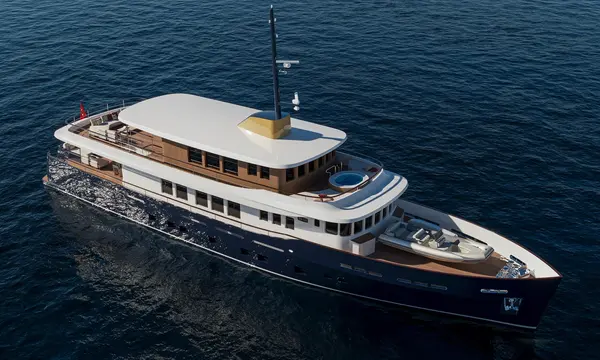
Numarine has unveiled five interior concepts for its 38XPC and 39MXPC Classic Line explorer yachts through the new Numarine Atelier.
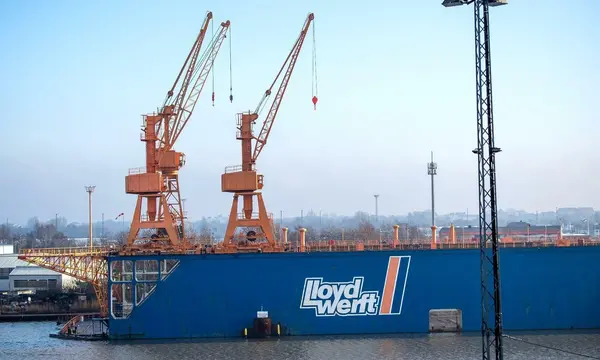
Lloyd Werft is planning a second Bremerhaven facility on a seven-hectare Columbuskaje site, centred on a new floating dock.
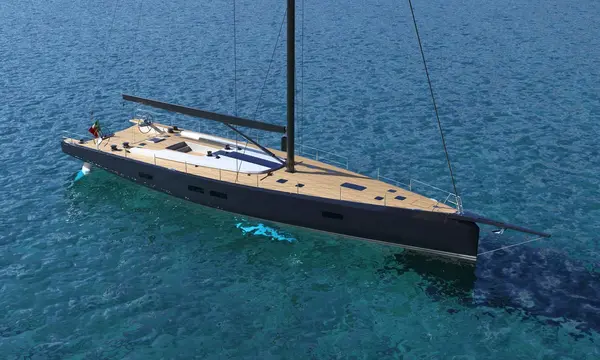
Maxi Dolphin says it will restart at another site after a fire destroyed an Erbusco shipyard building and three yachts, including the 27.07m MD80.
Superyacht Guide
Continue into the wider Superyacht Guide.