Somec Launches Fabbrica Europe as Marine Engineering Group Expands
Somec Group, whose engineered-systems division has major marine glazing operations, establishes Fabbrica Europe for advanced European architectural facades.
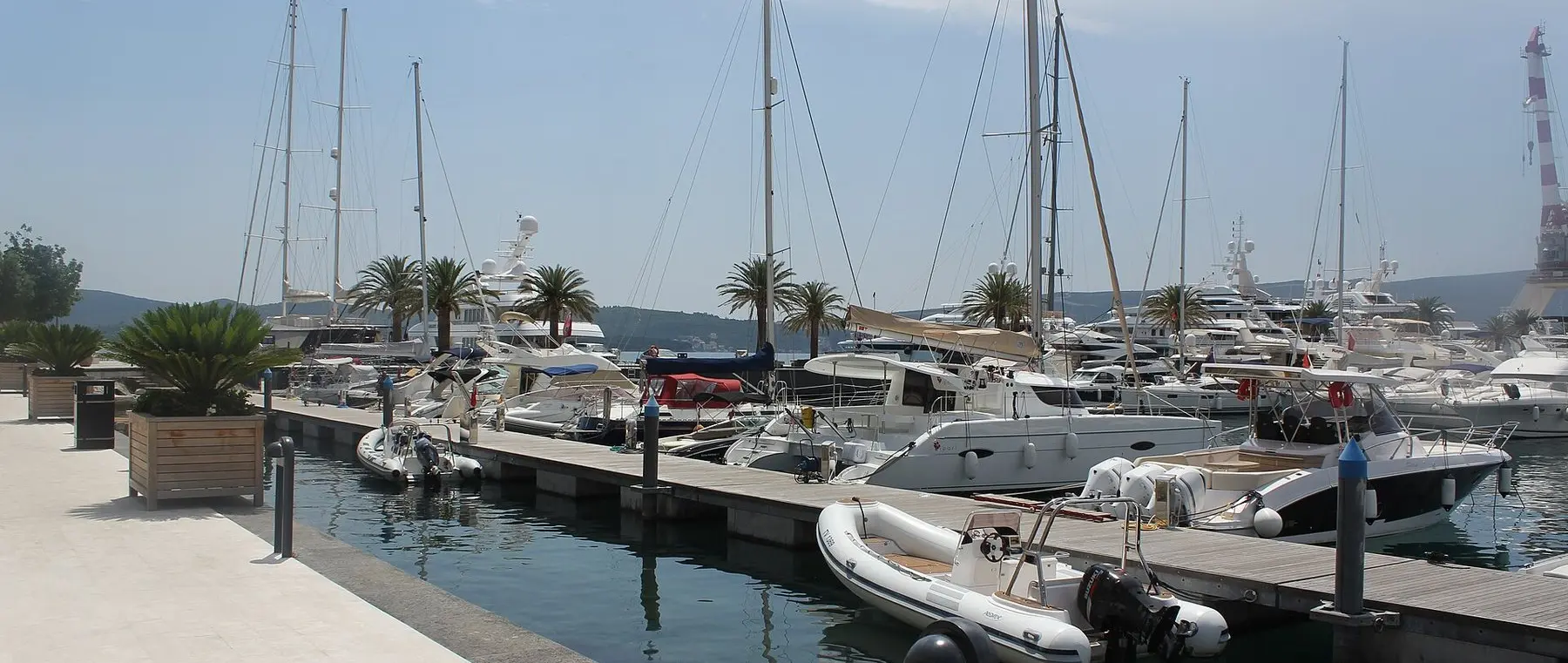
Porto Montenegro marina at Tivat (archival photograph)
Organisers confirm a one-day Yacht Infrastructure Summit on 18 November alongside METSTRADE, with marina finance, refit facilities, engineering and destination investment on the programme.
Editorial preview, 10 November 2026. Programme details below are attributed to the organisers and may change before the 18 November conference; discussion of investment and operations is independent analysis.
An unusually practical question will face delegates at RAI Amsterdam on 18 November: as the superyacht fleet becomes larger and more demanding, where will its vessels berth, undergo serious maintenance and obtain the utilities and services they need? SuperYacht Times and Marina World have announced their inaugural Yacht Infrastructure Summit during METSTRADE, working in partnership with Safe Harbor. This is a one-day meeting directed at the fixed facilities beneath the visible yachting economy, rather than another presentation of new yacht concepts.
The programme is particularly relevant to captains, owners representatives and technical managers who routinely discover that a marina berth, shore-power connection, covered refit shed or haul-out facility is a limiting factor in a cruising or maintenance plan. An impressive yacht with a long range can cross an ocean, but it must eventually find shoreside capability that matches its dimensions and systems. The conference is a scheduled forum for investment and operating questions, not evidence that a new marina or yard capacity has already been delivered.
The organisers identify Wednesday 18 November 2026 as the date and RAI Amsterdam as the venue. METSTRADE itself runs from 17 to 19 November, allowing summit participants to link conference discussions to exhibitors in the Marina and Yard area. Marina World has published a programme involving more than 20 speakers and addressing investment, marina design, refit facilities, engineering, commercial development and operational performance. Safe Harbor is described as patron partner. Those are the confirmed organisational facts available before the event.
The published agenda should be treated as a preview rather than a record of proceedings. Speakers can change, sessions can be adjusted and proposals discussed on stage may never become funded developments. Our reporting therefore distinguishes the identities and topics announced by organisers from the questions Superyacht Guide believes owners and operators should ask. Readers attending should use the summit website for current access arrangements and programme updates instead of relying on a general article for last-minute logistics.
One advertised session asks how private equity and institutional investment can influence marina development. The programme brings investment-sector perspectives together with marina-sector operators, reflecting a basic financial challenge: a large, modern waterfront facility can require extensive civil works, dredging, utilities, environmental studies and long-term concessions before a single yacht pays for a berth. Capital may need to be committed years before the occupancy and service revenue on which a project depends can be demonstrated.
For investors, the headline question is whether a marina is valued as real estate, a transport and hospitality business, a service network or some combination of all three. Those models imply different priorities for maintenance, access and customer service. For yacht owners, the important tests are simpler: whether investment leads to reliable capacity, transparent prices, safe access and the infrastructure their vessels actually require. A financial transaction by itself does not prove that a harbour has become better equipped to serve a larger yacht.
The programme includes a discussion of the commercial case for investing in refit facilities, with Cantiere Rossini identified among its operational examples. Refit work has a different physical and commercial rhythm from a marina. It needs specialist trades, lifting equipment, power, ventilation, waste management, survey access, dry or sheltered work areas and predictable project scheduling. The berth may be occupied for months, but revenue and costs arise from complex services rather than simply from waterside length.
An owner considering a major refit should pay as much attention to the yard supply chain as to the advertised berth or shed. Can the facility coordinate class and flag inspections, subcontractors and materials? What happens when a long-lead component arrives late? Are there clear arrangements for hot work, environmental containment and crew accommodation while the vessel is out of service? These questions help distinguish a picturesque location from a facility genuinely capable of completing technically demanding work to an agreed scope.
The session entitled Creating a Perfect Superyacht Marina is an invitation to examine the parts of a facility that glossy waterfront renderings rarely show. Approach depths, turning space, wind exposure, bollard strength, fender arrangements and emergency access remain basic nautical considerations. Shore power and potable water must also be supplied at a scale and standard suitable for the intended fleet. Guest privacy and service logistics matter, but they cannot replace navigation safety and engineering capacity.
A marina that comfortably hosts smaller leisure craft may be constrained when asked to accommodate a 70-metre or 90-metre yacht, even if it has a clear line of vacant berths. Beam, draft, height, manoeuvring room and the compatibility of shore services must be assessed together. Operators also need contingency procedures for electrical faults, severe weather, pollution incidents and emergency vessel movement. The right marina design emerges from actual operating profiles, not a photograph of an impressive hull alongside a fashionable promenade.
Marina World lists a superyacht marina development case study involving Porto Montenegro. Its presence on the agenda is significant because destination infrastructure must work for different groups at once: transient yachts, long-term berth users, local businesses, residents, employees and visiting guests. At that scale, a marina is connected to transport, planning and the surrounding destination. The relevant question is not simply how many berths have been created, but what supporting services make those berths useful year after year.
A case study can reveal trade-offs between expansion and community access, the design of retail and hospitality elements, construction phasing and environmental obligations. Superyacht Guide is using an independently licensed archival photograph of Porto Montenegro to illustrate the setting of this announced case study. The image does not show this year’s Amsterdam event and should not be taken as a claim that any new construction or investment has been approved at the marina.
Another programme heading, Big Boats, Bigger Infrastructure: Marina Engineering and Expenditure, turns attention to the physical limits of marinas. Larger hulls have greater displacement, present more windage and may demand substantial shore-power capacity. Dredging, breakwaters, shore structures, mooring analysis and the reliability of electricity and water supplies create significant capital and maintenance commitments. The advertised discussion includes engineering-sector perspectives such as Bellingham Marine and Haskoning.
For an individual project, one should never extrapolate a safe depth or berth capacity from yacht length alone. Bathymetry, tidal variation, sedimentation and the vessel’s actual draft affect access. Wind, current, tug availability and approach geometry affect manoeuvring. Engineering studies and the harbour authority must decide what is safe. A conference can help owners and developers understand the questions but does not substitute for site-specific hydrographic, structural or operational assessments.
In older conversations about superyacht berthing, a long pontoon could be the defining feature. Today, the quality of shore services often decides whether a berth is commercially useful to an advanced vessel. Increasingly complex electrical systems, substantial hotel loads and specialised maintenance demands place pressure on distribution infrastructure. Supplying shore power is not just a matter of installing a visible pedestal; grid connection, transformers, protection, metering, reliability and compatibility must all be considered.
The same principle extends to waste reception, wastewater arrangements, connectivity and the safe delivery of fuel and water. Operators may face competing demands from several large vessels at peak periods. A well-designed facility can plan for these loads, communicate limitations and support safe operating procedures. The summit programme identifies utilities and technology as relevant subjects, but does not establish a universal power specification that every marina must adopt. Each yacht and each berth requires its own technical assessment.
Fleet managers, charter companies and captains often know about operational bottlenecks long before a developer sees them in an annual financial report. They encounter seasonal capacity shortages, unsuitable access for service vehicles and delays obtaining specialist repairs. Developers, meanwhile, need dependable evidence before allocating scarce waterfront land and financing expensive construction. One productive use of the summit would be to turn these experiences into clearer demand signals rather than treating every inconvenience as proof that another marina is needed.
Owners and management companies can contribute anonymised information on berth length and draft needs, maintenance patterns, anticipated electrical loads and service problems. Developers can explain planning constraints, environmental obligations and the economics of year-round demand. Neither group should publish confidential vessel movements or private operating data without authorisation. The benefit of a common forum is that both parties can discuss the system without compromising security or making unsupported claims about individual yachts.
An owner preparing to secure a long-term berth should ask for written confirmation of permitted dimensions, minimum operational depths, connection specifications, contract conditions, access restrictions and the range of services actually available. Terms for seasonal use, emergency departure and third-party work aboard can matter as much as the initial fee. A marina’s ability to welcome a large yacht on one occasion does not guarantee availability or compatibility throughout the year.
The same diligence applies to a future refit berth. A proposed slot in a yard schedule is not equivalent to a fully scoped work agreement, and an attractive estimate is not a substitute for understanding variations, exclusions and the process for approving additional work. Comparing facilities on capabilities and operating reliability makes more sense than comparing prices without considering what is included. These are practical questions for the market, not recommendations endorsed by the summit organisers.
After 18 November, the most valuable outcomes will be concrete: documented infrastructure problems, feasible investment proposals, useful technical benchmarks or evidence that operators and capital providers will collaborate. A crowded room and positive comments are not equivalent to completed new capacity. Some projects will be constrained by permits, labour, grid access or economics regardless of enthusiasm. Reporting should follow the difference between an idea, a funded proposal, a project under construction and a functioning facility.
The summit nevertheless addresses a genuine structural issue in the superyacht sector. Building and operating sophisticated yachts depends on a parallel system of ports, marinas and yards that receives much less public attention. By putting those supporting facilities at the centre of an Amsterdam conference, the organisers have opened a useful conversation about the fleet’s practical future. Superyacht Guide will judge the initiative by the evidence and decisions that follow, not by conference promises alone.
Stolbovsky / CC BY-SA 4.0 / archival illustrative photograph
Continue reading
Somec Group, whose engineered-systems division has major marine glazing operations, establishes Fabbrica Europe for advanced European architectural facades.
Honda Marine opens a Florida Marine Office at its Grant-Valkaria R&D facility to link global engineering, rigging validation and US boatbuilder support.
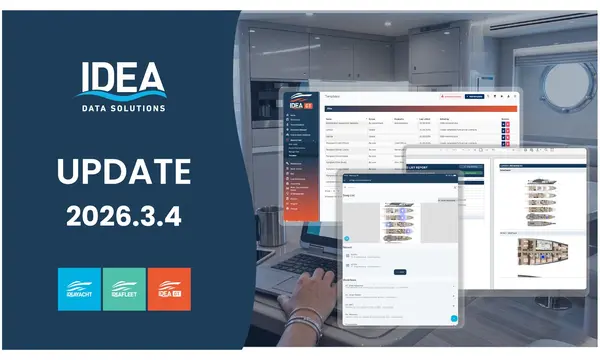
IDEA Data Solutions release 2026.3.4 introduces structured purchase and work-order wizards, crew Hours of Rest improvements and tablet-friendly yacht management software.
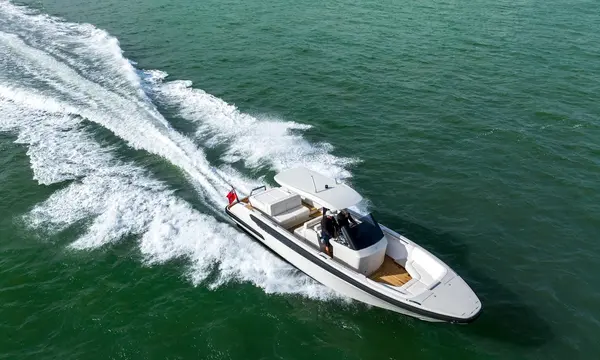
UK-based Super Yacht Tenders has set out a structured crew-familiarisation service covering launch and recovery, close-quarters handling, guest boarding and equipment maintenance aboard the …
Superyacht Guide
Continue into the wider Superyacht Guide.
Business opportunities · Superyacht Guide
Companies serving the superyacht market can discuss clearly identified advertising, sponsorship and business-profile opportunities. Commercial activity remains separate from independent editorial coverage.