
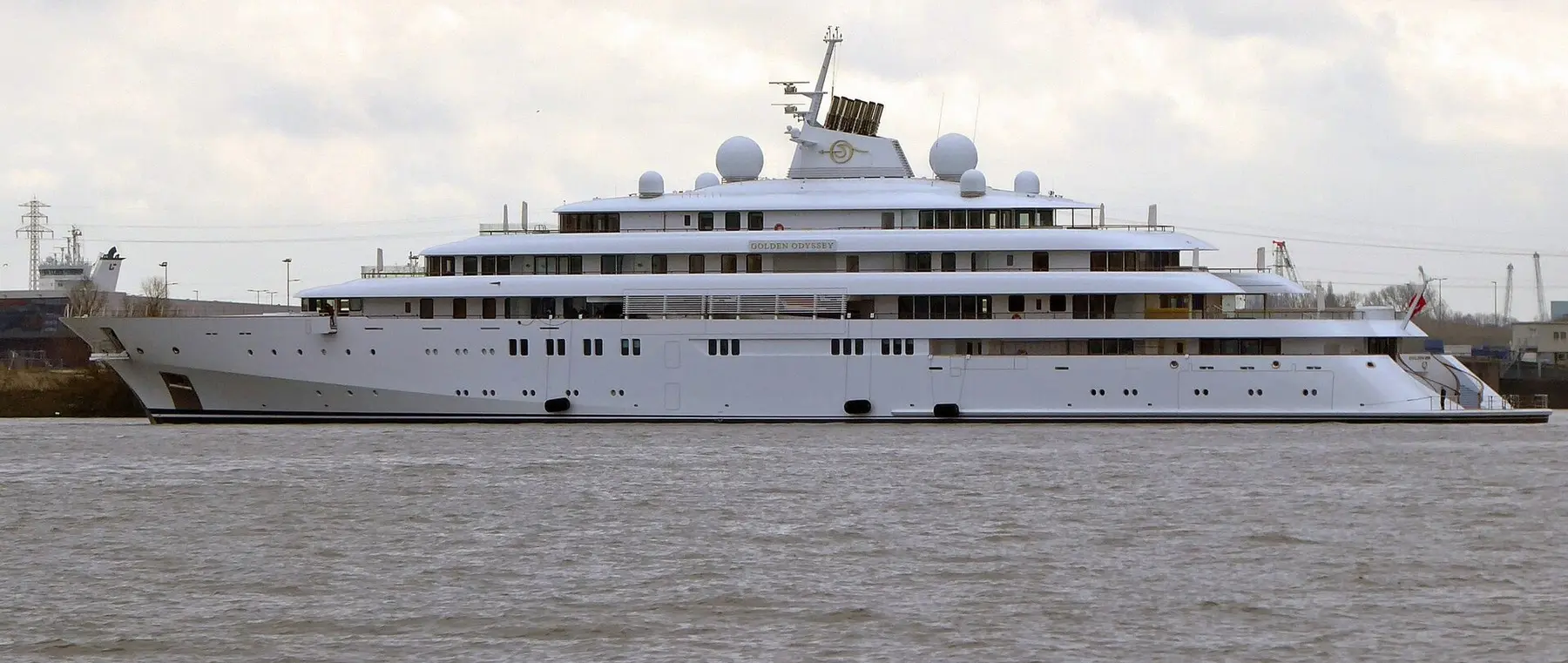
123m Lürssen GOLDEN ODYSSEY Seen in Saint Lucia During Caribbean Cruise
By Stephen Yardley · Edited by Stephen Yardley
A sighting of the 123m Lürssen GOLDEN ODYSSEY in Saint Lucia spotlights the logistics, hospitality and engineering of one of the largest superyachts.
The 123-metre Lürssen motor yacht GOLDEN ODYSSEY was photographed in Saint Lucia on 27 September 2026, with the sighting reported during the first week of October. At a reported 7,690 gross tonnes, she is among the largest private yachts afloat. The Caribbean appearance is notable because it places an unusually substantial vessel in an island destination whose accommodation, support and tender arrangements must be considered differently from those used by more conventional luxury cruisers.
A sighting does not establish the purpose of the voyage, the identity of guests or a change of ownership. The available information concerns the vessel's presence on a particular date, not a confirmed charter programme or commercial transaction. The more enduring story is what a yacht of this size requires to deliver an owner's private travel experience.
Lürssen delivered GOLDEN ODYSSEY in 2015. Her exterior design came from Francis Design, while Alberto Pinto was responsible for the interiors. The German shipyard supplied the engineering and construction capability necessary to integrate accommodation, propulsion, security, technical service and crew functions at a scale closer to a small passenger ship than to a typical private motor yacht.
Gross tonnage is a measure based on enclosed internal volume, not the yacht's actual mass. It is therefore useful for comparing the complexity of large yachts, but should not be described as the weight of GOLDEN ODYSSEY. Major superyacht projects at this level require detailed consideration of class rules, flag requirements, evacuation arrangements and the way guests and personnel move between decks.
The yacht is reported to provide accommodation for thirty guests across fifteen staterooms, supported by up to seventy crew. The owner's private deck includes two principal suites, a dedicated wellness area and outdoor space with a Jacuzzi and dining arrangement. This degree of separation between owner and guest activity is one of the central design features of very large private yachts.
Supporting thirty guests is not simply a matter of providing beds. Professional catering, laundry, housekeeping, engineering and hospitality become complex operations that must continue through long passages and changing weather. Crew rest, stores, fresh-water production and safe access to machinery spaces are essential to sustained performance. The guest experience depends on the reliability of this largely invisible organisational system.
GOLDEN ODYSSEY is known for substantial beach terraces, a major swimming pool with a reported capacity of roughly 42,000 litres, and twin staircases leading from the main deck toward the waterfront area. A certified helideck and a fleet of large tenders add flexibility in destinations where a yacht of this length cannot conveniently enter every marina or approach every shore.
Such amenities change operational planning. Helicopter flights require permission and suitable weather, while a large onboard swimming pool adds water weight and treatment responsibilities. Launching tenders may be restricted by swell, traffic or local regulation. Owners of enormous yachts rely on carefully trained crew and a practical plan for access ashore rather than assuming size alone guarantees unlimited mobility.
Saint Lucia sits within a popular eastern Caribbean cruising region, but yacht size, draught and support needs can limit berthing choices. A 123-metre yacht may need to arrange anchorage, pilots or other maritime services according to local requirements and port conditions. Customs, immigration, provisions, fuel logistics and the handling of large tenders must be coordinated with local authorities and approved providers.
Caribbean weather deserves particular attention in late September, during the Atlantic hurricane season. An operator cannot plan around a photograph of calm tropical water; forecasts, shelter, evacuation alternatives and crew readiness determine whether a particular route is appropriate. The vessel's substantial endurance is an advantage only when it is supported by robust navigation and contingency procedures.
The yacht's propulsion arrangement is described as diesel-electric with MTU equipment, giving the engineering team flexibility in how power is managed for propulsion and onboard services. Large-yacht electrical demand can remain high even at anchor because air conditioning, galley operations, communications, water treatment and guest amenities run continuously. Operational efficiency therefore involves much more than the speed of the hull.
Diesel-electric does not mean emissions-free operation. Real fuel use depends on generator loading, installed equipment, battery capability if present, and the manner in which the crew manages demand. Comparing the environmental performance of vessels of different sizes requires a meaningful functional basis. A large volume and extensive hospitality capability create benefits for guests but also impose considerable resource requirements.
Lürssen is a German specialist in large custom superyacht construction, with facilities and engineering capabilities suited to demanding one-off vessels. Francis Design shaped the yacht's exterior profile, while the late Alberto Pinto's interiors contributed to its private residential character. These roles should remain clearly attributed: the yard builds and integrates the vessel, while designers shape distinct aspects of the owner and guest experience.
A project delivered more than a decade ago also depends on continuing technical support. Class surveys, software changes, machinery maintenance, coatings and interior conservation must be undertaken through the yacht's operating life. A premium name on the transom is valuable only when the management team maintains reliable records, qualified specialists and the discipline to keep critical systems ready for service.
The reported late-September appearance offers a glimpse of a rare category of private yacht operating beyond the major European superyacht shows. Her enormous accommodation capacity and extensive facilities demonstrate why certain owners commission vessels for a long-term global programme rather than a short Mediterranean season. Yet the underlying measures of success remain practical: safe access, sound technical maintenance and the ability to deliver privacy and comfort on each itinerary.
No future route can be inferred from the Saint Lucia observation, and a photograph should not be turned into speculation about the owner or their guests. GOLDEN ODYSSEY's visit instead offers a useful occasion to examine the scale, technical complexity and demanding logistical requirements of one of the world's largest superyachts.
Hero photograph: Wolfgang Fricke / Wikimedia Commons (2023), cropped and resized. Original photograph, licensed under Creative Commons Attribution 3.0.
Explore
Go deeper into the yachts, companies, events and destinations directly connected to this article.
Continue reading
Superyacht Third Officer Salary 2026: Pay by Yacht Size and Rotation Third officer salaries in 2026 generally start around €4,500+ on 60–80m yachts and …
Superyachts with Swimming Pools: The Largest Pools at Sea Swimming pools are now common on large custom yachts, but the engineering becomes progressively harder …

Europe’s largest superyacht marinas are ranked by verified maximum yacht length, with historical duplicate records removed and operator data checked.
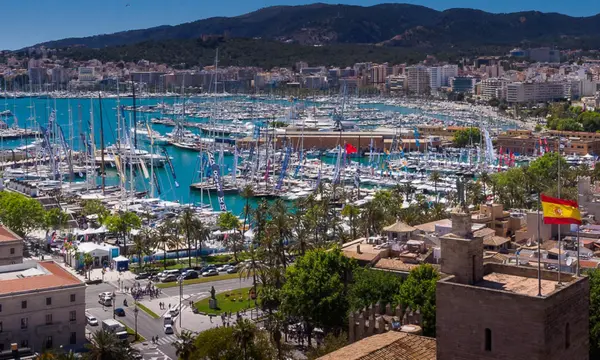
Palma combines superyacht berthing up to 170 metres with major refit facilities at STP Shipyard Palma and Astilleros de Mallorca. This guide compares berth …
Superyacht Guide
Continue into the wider Superyacht Guide.
Business opportunities · Superyacht Guide
Companies serving the superyacht market can discuss clearly identified advertising, sponsorship and business-profile opportunities. Commercial activity remains separate from independent editorial coverage.