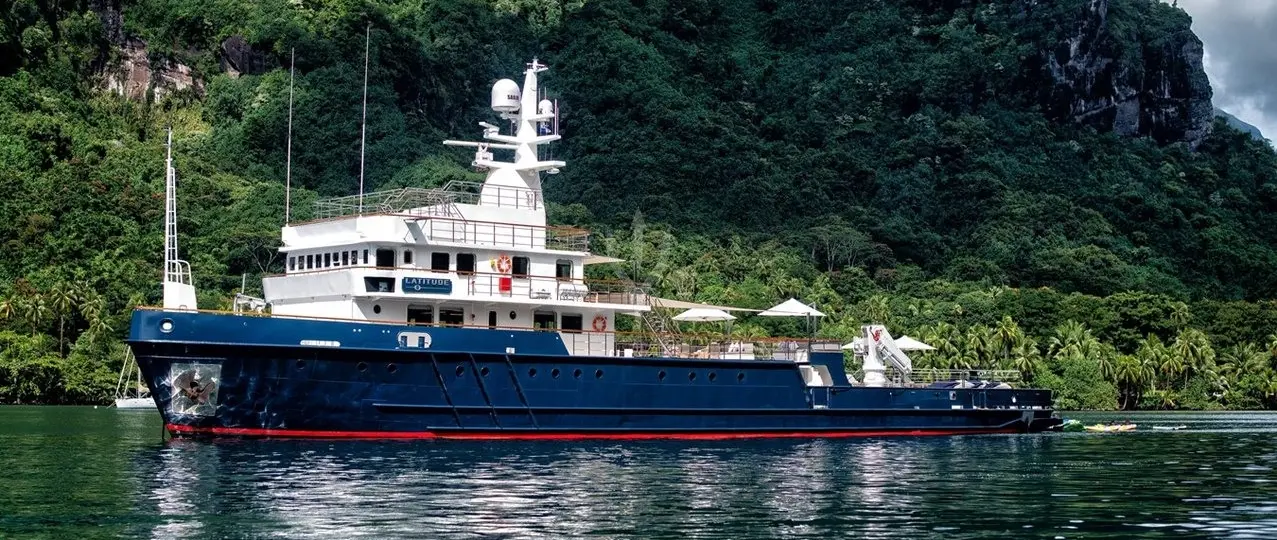
55m Explorer BUCCARA LATITUDE Transits Kiel Canal on Atlantic Passage
By Stephen Yardley · Edited by Stephen Yardley
The 54.7m BUCCARA LATITUDE has been photographed in Germany’s Kiel Canal while sailing westward, highlighting a 1973 commercial vessel converted into an explorer yacht.
The 54.7-metre expedition yacht BUCCARA LATITUDE was photographed in the Kiel Canal on 27 September 2026, with a 9 October report identifying a wider passage from Hamburg toward the Atlantic. Available vessel-tracking information subsequently placed the Maltese-flagged yacht in Vigo, Spain. The sighting provides a timely example of a sizeable converted explorer yacht moving through the working waterways of northern Europe rather than remaining in a traditional superyacht cruising destination.
This is a reported movement of an existing vessel, not a new launch, change of ownership or confirmed charter itinerary. Its significance lies in the distinctive vessel itself and the practical requirements of taking a yacht built around an older commercial hull through a heavily regulated canal before crossing to more open water.
BUCCARA LATITUDE originated at Hitzler Schiffswerft in Germany in 1973. The original platform's professional maritime character made it a possible candidate for an extensive conversion decades later. She underwent a substantial rebuilding programme and was relaunched in 2020, with changes to mechanical and electrical equipment, the bridge and the arrangement of interior accommodation.
Converting an existing vessel can preserve substantial parts of its underlying structure and equipment, but it also introduces uncertainty about what may be found when machinery spaces, plating or older wiring are opened. The quality of a conversion should be measured through surveys, structural calculations, maintenance documentation and operational performance rather than the visual transformation between historic and contemporary photographs. The crew must also maintain a record of how the refit changed ventilation, watertight boundaries and engineering systems, because a vessel designed for commercial work will not necessarily share the same assumptions as a purpose-built private yacht.
The yacht is reported to provide accommodation for twelve guests in six staterooms, with an owner's suite on the bridge deck and a private terrace. A crew of sixteen supports navigation, technical operation and guest service. This ratio reflects the complicated nature of a large expedition-style yacht, where maintenance and passage-making requirements coexist with private hospitality.
A dedicated owner terrace can create the desired privacy, but its relationship to the wheelhouse and crew access must be carefully managed. Conversions are often more constrained than blank-sheet builds because principal machinery and structural elements may already be fixed. Successful planning depends on working with those restrictions to create comfortable guest circulation rather than hiding them behind decorative finishes.
Twin Deutz engines are reported to give the yacht a cruising speed of approximately eight knots and a maximum of 12.5 knots. These figures make sense in the context of a heavily built explorer platform intended to undertake unhurried passage-making. At slower speeds a voyage requires more careful schedule planning, but it may also align well with owners interested in extended exploration rather than frequent rapid transfers between fashionable anchorages.
Practical passage performance will depend on the vessel's condition, sea state, currents and fuel management. An older converted hull should not be assumed to deliver the range or efficiency of a contemporary purpose-designed displacement yacht. A captain needs verified consumption curves, weather-routing support and reliable spare parts before planning remote voyages.
The Nord-Ostsee-Kanal, or Kiel Canal, links the North Sea with the Baltic through northern Germany. It is a commercial shortcut used by ships of many kinds and operates under rules governing access, dimensions, pilotage and navigation. For a yacht of this scale, transit requires detailed planning around its beam, draught, air draft and the requirements of the canal authorities.
The waterway is not simply a picturesque backdrop. Commercial shipping traffic, speed limits, passing points and lock operations can influence the duration of a transit. Navigators must assess bridge clearances and the appropriate support arrangements ahead of arrival. Any plan to use the canal should be based on current official restrictions rather than the fact that a different vessel passed through successfully.
Expedition-style design is often associated with robust construction, large tender capacity and the ability to remain self-sufficient. Yet a yacht cannot be called ready for every remote destination on the strength of exterior styling alone. Fuel endurance, waste capacity, reliable satellite communications, medical arrangements and the ability to operate tenders safely are all essential parts of an effective programme.
In the case of a converted older ship, operators should additionally review the availability of original engineering drawings, past corrosion repairs and whether modern electrical and automation equipment can be serviced in distant cruising grounds. An experienced crew can make an older platform highly capable, but it cannot eliminate the need for appropriate surveys or spare components.
Hitzler Schiffswerft supplied the original vessel at a time when Germany's commercial shipbuilding industry produced many specialist working hulls. Later conversion and refit teams transformed that foundation for private use. The identity of the original builder and the people responsible for subsequent upgrades should remain separate in the yacht's technical records and editorial descriptions.
The current crew holds the practical knowledge needed to operate and maintain the vessel as it exists today. A yacht with more than fifty years of structural history requires a disciplined record of altered systems, onboard procedures and inspections. That institutional knowledge is particularly important after major conversion work, when an original drawing may no longer show the current arrangement.
The late-September movement from Hamburg through the Kiel Canal and onward to the Atlantic illustrates a kind of yachting that places operational capability ahead of a conventional resort itinerary. The photographs and tracking reports indicate a passage, not an announced change to the vessel's commercial status or long-term base. Future movements cannot be established from a single observation.
BUCCARA LATITUDE is an interesting example of the possibilities and responsibilities of converting a durable maritime platform into a private explorer. Her size, crew complement, modest operating speed and substantial refit history invite a more serious discussion of maintenance, safe passage planning and endurance than a simple sighting of a large yacht passing a camera.
Explore
Go deeper into the yachts, companies, events and destinations directly connected to this article.
Continue reading
The S-100 navigation transition is not just a chart-data upgrade: Teledyne Raymarine Commercial says bridge teams and shore managers must plan workflows, training and …
Can a Superyacht Transit the Suez Canal? Fees, Security and Planning Yes. Tourist yachts can transit the Suez Canal, with current Suez Canal Authority …
Can a Superyacht Transit the Panama Canal? Cost, Size and Booking Yes. Superyachts transit the Panama Canal, but tolls, booking options, pilotage and scheduling …
Can a Superyacht Cross the Pacific? Range, Fuel and Route Planning Yes. Properly designed ocean-going superyachts cross the Pacific, but the route is far …
Superyacht Guide
Continue into the wider Superyacht Guide.
Business opportunities · Superyacht Guide
Companies serving the superyacht market can discuss clearly identified advertising, sponsorship and business-profile opportunities. Commercial activity remains separate from independent editorial coverage.