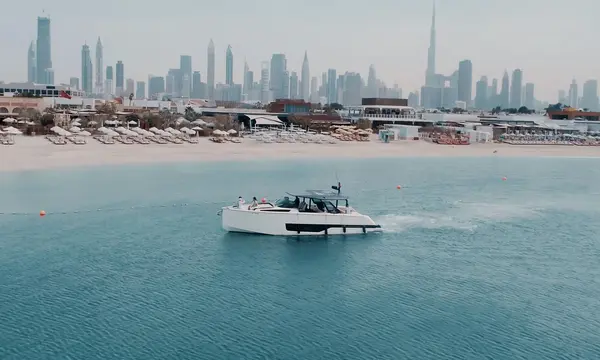
D-Marin Details Dubai J1 Beach Anchorage and Tender Service
D-Marin's October guidance explains how visiting yachts use a permitted offshore anchorage and dedicated tender service to reach Dubai's J1 Beach restaurants.
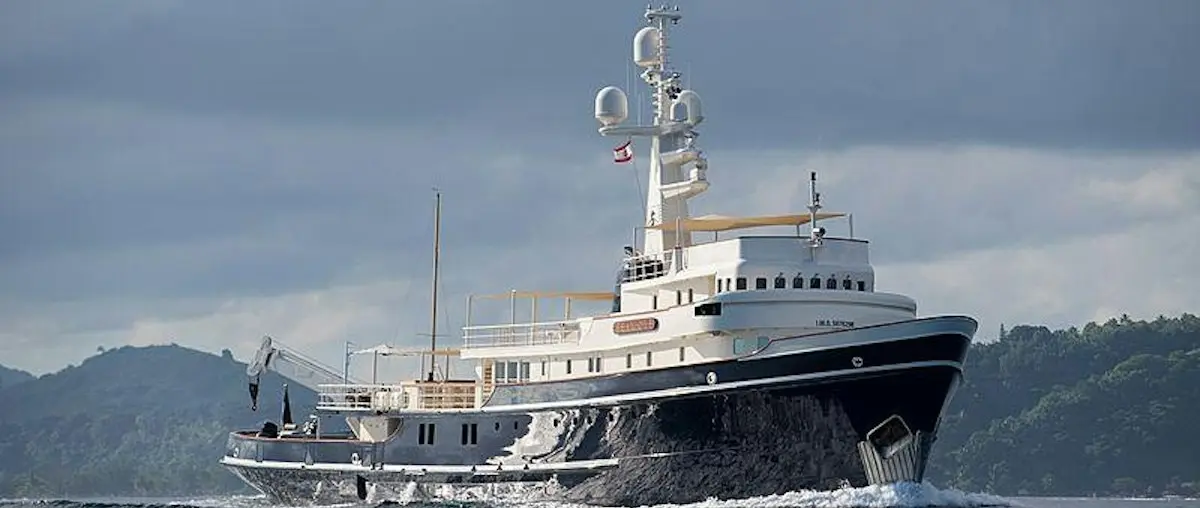
The 58.83m Dutch-built expedition yacht SEAWOLF was observed in Amsterdam on 19 October, following an extensive two-year refit at Pendennis completed in 2024.
The 58.83-metre expedition yacht SEAWOLF was observed cruising through Amsterdam on Monday 19 October, according to an eyewitness report from SuperYacht Times. The sighting placed a long-established Dutch-built vessel back in the waterways of her country of construction. The report documents where she was seen, but does not establish the purpose of the visit or a future destination.
SEAWOLF is a distinctive vessel with a dark-blue steel hull and working-ship proportions, a profile shaped by her original life as an ocean-going tug. Unlike the angular forms of many modern expedition yachts, she carries a design lineage that predates today's luxury explorer market. Her appearance in Amsterdam is an opportunity to examine the history and continuing use of that type of converted vessel without inventing a new itinerary.
The yacht began life in 1957 as the ocean-going tug CLYDE, delivered by J. & K. Smits Scheepswerven in the Netherlands. Its original role demanded structural strength, extensive endurance and an ability to remain at sea in demanding conditions. That commercial background set the foundation for the vessel later becoming a privately operated expedition platform.
Working-vessel construction and luxury-yacht design solve different problems. A tug's generous working decks, durable hull and machinery spaces can provide a starting point for conversion, but they do not automatically supply suitable guest accommodation or modern technical services. Turning such a ship into a yacht therefore requires major design, engineering and regulatory work.
SEAWOLF underwent a substantial transformation at Astilleros de Mallorca around 2002, changing the former tug into a luxury explorer yacht. The original practical profile was retained to a greater degree than on a purpose-built white superyacht. Her exterior design and naval architecture are associated with DBR Huisman, while later interior work brought the vessel in line with expectations for extended private cruising.
The conversion helps explain how a ship of this age can continue to be used in a very different market decades after her launch. A durable hull provides potential, but owners must still fund systems upgrades, technical surveys and ongoing maintenance. The cost of converting an older ship cannot sensibly be compared with a new-build yacht on gross dimensions alone.
A further chapter came when SEAWOLF undertook an extensive two-year refit at Pendennis in Falmouth, completed in October 2024. Reports of the project describe refreshed interiors, exterior refinements and work to improve mechanical systems. That scope goes beyond cosmetic detailing, although a public summary cannot indicate the condition of every component or the precise schedule of works.
Refits of older converted vessels can be particularly demanding. Engineers may need to integrate new controls or equipment with legacy machinery and spaces built to much earlier standards. Technical documentation, spare-parts arrangements and classification surveys are as important as the appearance of newly finished guest areas. For any owner evaluating an explorer of similar vintage, independent verification remains essential.
The published arrangement provides accommodation for up to twelve guests in six staterooms, supported by around fifteen crew. The yacht's interior volume is reported by the latest sighting article at approximately 851 gross tonnes, although other yacht databases publish a higher figure. That discrepancy should be resolved through official tonnage papers rather than choosing whichever number makes the vessel seem more spacious.
Crew numbers are significant on an expedition yacht, where navigation, engineering, deck operations and guest hospitality must continue during long passages. A six-cabin layout can offer privacy and flexibility, but endurance depends just as much on the arrangements behind the scenes. Workshops, dry stores, laundry and fuel management remain central to life aboard.
SEAWOLF is powered by twin Smit MAN engines and is reported to cruise at roughly twelve knots, with a maximum speed near fifteen knots. This relatively measured performance suits a vessel designed around endurance rather than fast transfers between closely spaced resorts. Some historical charter listings refer to extensive passage-making range, but published estimates differ and should not be treated as the current certified capability.
Owners contemplating remote travel must consider more than fuel carried aboard. Weather forecasting, satellite communications, provisioning, navigation permits, insurance limits and competent crew are all important. An expedition hull can support ambitious journeys, but the safety of any passage is determined by a specific vessel's condition and a carefully developed operating plan.
The yacht retains the substantial bow, layered wheelhouse and robust steel construction that recall her previous career. Her transformation added guest decks and the facilities expected aboard a long-range luxury yacht, creating a deliberate contrast between a practical profile and refined accommodation. That combination helps explain why converted commercial ships remain of interest among experienced owners.
A converted hull is not automatically more capable than a purpose-built explorer, and stylistic toughness should not be confused with current ice capability or a particular certification. Buyers need to examine stability data, machinery condition, class records and the limitations of handling equipment. In exchange for careful ownership, an established conversion may offer a distinctive character that new designs cannot easily replicate.
The confirmed news is that SEAWOLF was seen in Amsterdam on 19 October 2026, several years after her major Pendennis refit. Neither the observation nor an older charter listing proves that she has entered a new sales programme, begun another refit or undertaken a particular charter. Her future movements and operating plans remain matters for the yacht's management and crew.
For the wider superyacht industry, SEAWOLF illustrates the longevity possible when a substantial commercial vessel receives repeated engineering investment and new purposes over time. Her Dutch origins make the Amsterdam sighting an interesting moment in that history. The yacht's status as an active expedition vessel, rather than simply a preserved piece of maritime heritage, is what keeps the story relevant to owners and the marine trade.
Continue reading
D-Marin's October guidance explains how visiting yachts use a permitted offshore anchorage and dedicated tender service to reach Dubai's J1 Beach restaurants.
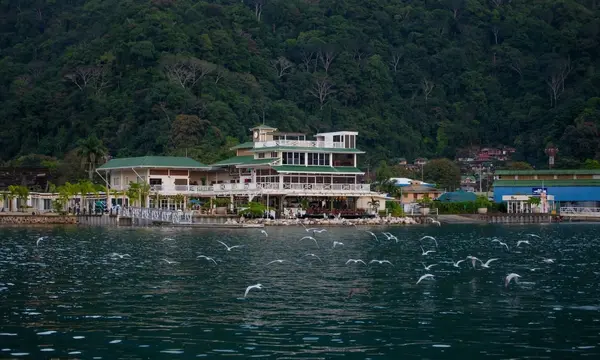
Marina Bahía Golfito highlights prospective customs, port services, road access and research facilities in Costa Rica before FLIBS 2026.
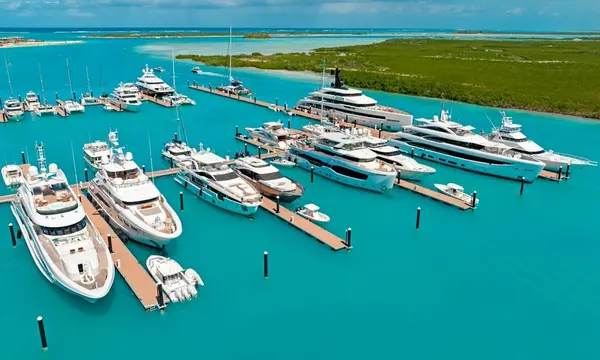
IGY explains how its Trident programme supports eligible superyacht captains seeking short-notice berths during busy events and sudden itinerary changes.
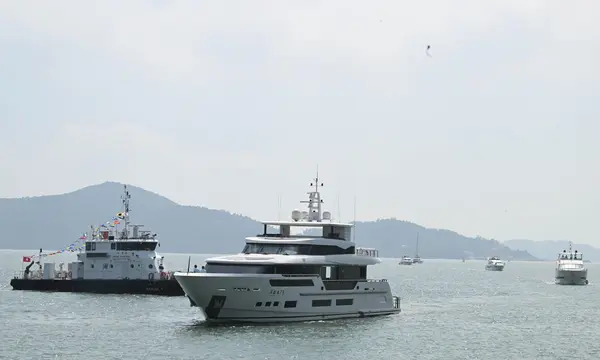
Five Guangdong yachts made the inaugural southbound visit to Hong Kong on 16 October, launching two-way cross-border arrangements and new marina ambitions.
Superyacht Guide
Continue into the wider Superyacht Guide.
Business opportunities · Superyacht Guide
Companies serving the superyacht market can discuss clearly identified advertising, sponsorship and business-profile opportunities. Commercial activity remains separate from independent editorial coverage.