

ABS Framework Puts Superyacht Hotel Loads at Centre of Emissions Cuts
By Stephen Yardley · Edited by Stephen Yardley
Image: Superyacht Technology / ABS
A new ABS Low-Emission Framework for Large Yachts argues that reducing hotel loads, HVAC demand and inefficient generation should be the first step in cutting emissions.
The American Bureau of Shipping has published a Low-Emission Framework for Large Yachts that shifts attention toward the total onboard energy budget. Many yachts spend only a small share of their operating life in transit, yet must continue running air conditioning, refrigeration, lighting, pumps and other hotel services while stationary.
ABS notes that main-engine operation can account for ten per cent or less of some large yachts' time in service. For owners seeking to reduce emissions, this changes the priority list: the most visible propulsion system may not be the equipment responsible for the largest share of actual operating hours.
The framework highlights HVAC efficiency, generator loading and management of other hotel consumers as practical places to begin. Cooling systems are especially significant in warm-water cruising areas, where air conditioning may run nearly continuously while guests are aboard.
Energy audits can identify whether existing equipment is correctly sized for the yacht's actual use. Running a large generator at a very light load can be inefficient, and adding batteries or better power management may help the yacht operate machinery closer to its intended range. Savings require measurement against a baseline, not just installation of new equipment.
ABS also identifies hull condition and fouling control among useful areas for refit planning. A smooth, clean underwater surface can reduce resistance while travelling and therefore influence the energy required to complete a passage. For a yacht used only intermittently, maintenance choices should be evaluated against the real voyage profile.
These issues interact with the hotel plant: a change in cruising schedule can alter generator use and charging opportunities. Comparing yachts solely by fuel type may overlook substantial operational differences between vessels that spend different amounts of time moving, anchored or connected to shore.
For new buildings, ABS discusses designs prepared for shore connections and battery-electric hybrid arrangements that could allow quiet, low-emission hotel operation at anchor. Such systems also introduce demands involving battery protection, charging capacity, maintenance and the availability of compatible marina infrastructure.
The framework is a planning and decision-making tool rather than proof that any named superyacht has eliminated its emissions. Owners and managers can use its approach to quantify energy demand first, establish feasible savings and then select propulsion or hotel-power changes suited to the vessel's operating pattern.
ABS's approach suggests that an owner considering a major efficiency refit should begin with operating evidence. Power-management records can show which generators run most often, how their load changes during a charter, and when heating or cooling equipment is drawing the most energy. Fuel-consumption records and a reliable estimate of days spent at sea and in port help establish the starting point against which later savings could be assessed.
Such records can prevent investment in a technology whose benefits are limited by the yacht's actual duty cycle. For example, a vessel whose guests spend extended periods ashore might have a different energy profile from a yacht where large groups remain aboard at anchor, using every cabin and leisure facility through hot summer days.
Crew routines can also influence energy demand. Clear guidance on when air-conditioning zones are used, whether equipment is left running after guest areas are vacated, and how generators are scheduled may offer opportunities that do not require major structural alterations. Any change should preserve guest comfort, food safety and essential machinery requirements rather than treating lower energy consumption as the only objective.
Ultimately, a credible emissions plan would combine measurement, engineering changes and verification after the work is completed. The ABS framework is useful because it prompts managers to consider the entire vessel as a connected energy system, with machinery, operating habits and shoreside support affecting the result together.
Explore
Go deeper into the yachts, companies, events and destinations directly connected to this article.
Continue reading

Frigomar has introduced its CU210VFDT chiller with 210,000 BTU/h capacity, a titanium seawater exchanger and the same compact dimensions as its 180,000 BTU unit.
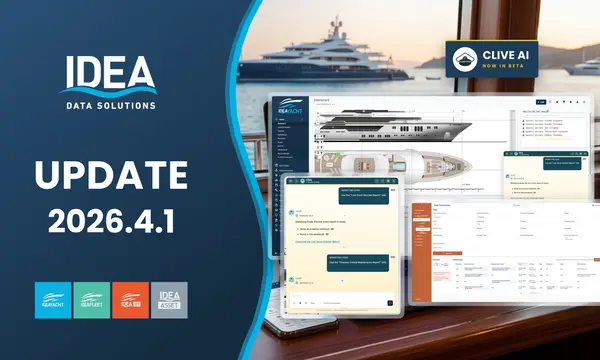
IDEA Data Solutions details release 2026.4.1 for yacht operations, including limited CLIVE AI testing and improvements to purchasing, maintenance and fleet views.

Videoworks explains AVIT Panel, an overlay system that connects existing onboard digital equipment to configurable views for captains and technical teams.

Videoworks explains its bespoke Bang & Olufsen systems on two Custom Line superyachts, naming the hardware used and the integration work carried out.
Superyacht Guide
Continue into the wider Superyacht Guide.
Business opportunities · Superyacht Guide
Companies serving the superyacht market can discuss clearly identified advertising, sponsorship and business-profile opportunities. Commercial activity remains separate from independent editorial coverage.