
Frigomar Introduces 210,000 BTU CU210 Yacht Chiller
By Stephen Yardley · Edited by Stephen Yardley
Frigomar has introduced its CU210VFDT chiller with 210,000 BTU/h capacity, a titanium seawater exchanger and the same compact dimensions as its 180,000 BTU unit.
Italian marine climate-control manufacturer Frigomar has extended its CU chiller range with the CU210VFDT, a three-phase unit offering a stated maximum cooling or heating capacity of 210,000 BTU per hour. That output is equivalent to 17.5 refrigeration tons and represents a 16.7 percent increase over the previous 180,000 BTU per hour version. The company announced the new model in September 2026, positioning it for larger yachts and refit projects.
The important element is not simply the headline capacity figure. Frigomar says the new model achieves its higher output without requiring more installation space than the lower-capacity unit. Yacht designers and engineers frequently face constraints inside technical compartments, where machinery, ventilation and service access compete for limited volume. A higher-output device with the same physical dimensions may therefore have practical value beyond a conventional equipment upgrade.
The company gives the CU210VFDT dimensions as 540 by 600 by 670 millimetres, with a quoted weight of 137 kilograms. It retains the 400-volt three-phase electrical supply, operating at 50 or 60 hertz, and uses R410A refrigerant. Frigomar says the model increases capacity within the same envelope as the preceding 180,000 BTU per hour variant, which may simplify planning for certain replacement installations.
An identical external size does not mean a replacement is automatically suitable for every yacht. An engineer still has to verify clearances, piping, controls, seawater flow and the electrical distribution available on the vessel. The new unit's technical parameters provide a starting point for that assessment, not a universal assurance that existing connections will line up or that its full capacity can be achieved under all operating conditions.
According to the manufacturer's specification, maximum input power is 13.8 kilowatts and maximum current is 22.5 amperes. The unit also has an economy setting stated at 4 kilowatts and 9.0 amperes. These values matter to shipboard electrical load calculations, particularly when a yacht operates from generators, shore power or a hybrid arrangement with variable available energy.
Output capacity and input power are different measurements and should not be confused. The thermal performance of an air-conditioning system also depends on operating conditions, circulation and the heat load of the connected spaces. The company's claim of more capacity at an unchanged footprint needs to be evaluated alongside actual shipboard performance, and an owner should request certified test conditions before comparing efficiency with competing products.
The CU210 uses the company's variable-frequency drive approach, modulating output in response to the air-conditioning demand rather than relying only on repeated fixed-speed starts and stops. Frigomar says this helps the chiller operate at a lower frequency when full cooling or heating capacity is unnecessary. The feature could be important on a yacht where the number of occupied cabins and the outside temperature change significantly through the day.
Variable output may also reduce cycling and provide a more flexible response to part-load conditions. However, the electricity saved on a particular yacht will depend on the system arrangement, control settings and usage. The company has not supplied independent comparative trials for every installation type. Owners considering a refit should calculate realistic duty cycles and avoid assuming that a nominal ECO setting automatically reflects whole-ship consumption.
Frigomar specifies a titanium seawater heat exchanger for the CU210VFDT, rather than offering this variant with multiple exchanger materials. The company highlights titanium's corrosion resistance through the protective oxide film on its surface. For a marine unit exposed to salt water, material choice is a meaningful consideration, especially when the intended service life extends across many seasons.
Corrosion resistance does not eliminate the need for appropriate seawater filtration, inspection and maintenance. Marine growth, fouling and incorrect flow rates can still affect heat transfer or lead to faults elsewhere in the circuit. A technically appropriate installation should incorporate the manufacturer's seawater requirements and access to relevant components. The brochure-level specification does not by itself guarantee uninterrupted operation in harsh conditions.
One intended application is replacing an older chiller without redesigning the entire equipment space. The manufacturer references its earlier 609NT and 610NT units as possible upgrade candidates while also describing replacement opportunities for systems supplied by other brands. This reflects a common challenge in yacht refits: owners want better climate control but may be unwilling to sacrifice guest volume or commission major structural alterations.
A refit cannot be planned from the new chiller's dimensions alone. Technicians must check the distribution network, air-handling units, pipework, pumps, switching and controls before predicting a capacity improvement. A yacht with inadequate circulation or poorly maintained insulation might see little practical benefit from a larger central unit until those weaknesses are resolved. Survey findings should determine the scope of work.
Frigomar says increasing temperatures and the demand for larger vessel systems influenced the CU210's development. Superyacht accommodation can include substantial glazed areas, multiple cabin zones and technical spaces with their own cooling requirements. The thermal load varies according to climate, occupancy and how the vessel is operated, so matching central plant capacity to demand is a design exercise rather than a matter of length alone.
With a quoted maximum of 210,000 BTU per hour, the model gives designers an additional option when selecting equipment for an extensive installation. It does not mean that one unit will necessarily serve an entire large superyacht. Engineers may use several chillers or a redundancy arrangement, depending on the project. The correct configuration requires a professional load study and consideration of fault tolerance.
The manufacturer says the CU210VFDT is available and invites yacht owners, builders and technicians to discuss integration directly with Frigomar or its dealer network. The product expands a range already using inverter technology and responds to requests for capacity without increased space requirements. The new specification is relevant to both planned builds and older yachts whose cooling arrangements have become inadequate.
The accompanying image is Frigomar's official CU210 promotional illustration, clearly showing the chiller and the new 210,000 BTU capacity. It is not a photograph of a completed yacht installation. Published technical figures describe the manufacturer's intended performance; an owner should request current compliance documentation, installation drawings and a vessel-specific engineering assessment before purchasing the unit.
Explore
Go deeper into the yachts, companies, events and destinations directly connected to this article.
Continue reading
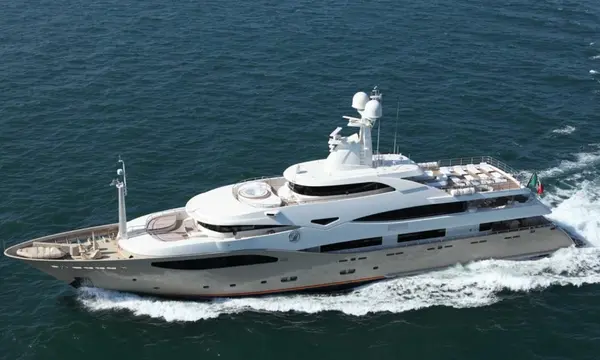
Videoworks has issued technical details of its completed digital refit aboard the 60m CRN charter yacht ELENI, covering multi-zone audio, a 115-inch upper-deck screen …

SEA.AI has tested its machine-vision technology across multiple crewed and uncrewed vessel platforms during the REPMUS 2026 exercise in Portugal.

Floatist has launched a managed website product for charter fleet operators that displays live availability, equipment details and booking payments.
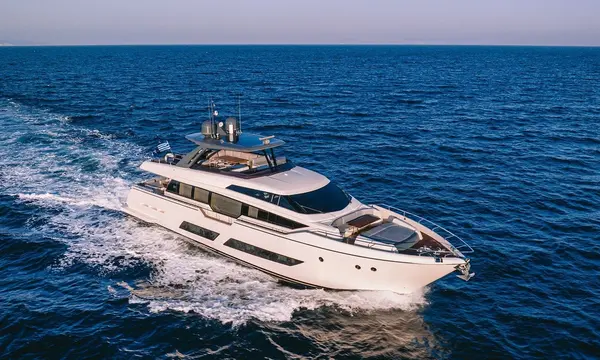
The 26.18m Ferretti motor yacht ANASSA A is offering eight days for the price of seven for eligible May 2027 Greece charters booked before …
Superyacht Guide
Continue into the wider Superyacht Guide.
Business opportunities · Superyacht Guide
Companies serving the superyacht market can discuss clearly identified advertising, sponsorship and business-profile opportunities. Commercial activity remains separate from independent editorial coverage.