
Fraser Brings Superyacht Captains Together at Terre Blanche
Fraser Yachts has reported its inaugural Captains’ Golf Event at Terre Blanche in France, bringing six pairs together for prizes, networking and an end-of-day …
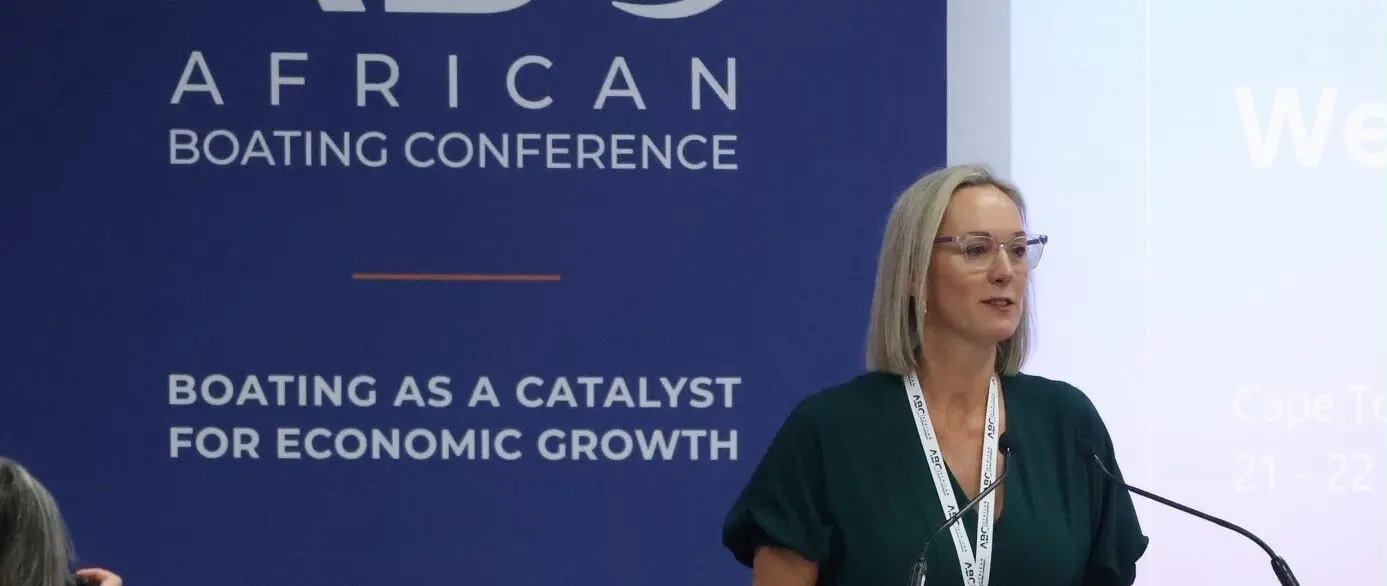
Image: Marine Industry News
Cape Town's 2026 African Boating Conference reported 232 registrations and 12 exhibitors, highlighting shipyard skills, trade barriers and superyacht industry opportunities.
The African Boating Conference opened in Cape Town on 20 October with 232 registrations and 12 exhibitors, according to figures reported by Marine Industry News on the following day. Organisers described the two-day meeting as sold out, with some additional visitors arriving without prior registration. The published number is a registration count, not an independently audited final attendance total.
Hosted by Superyacht Cape Town, the conference combines boatbuilding, marine services, trade policy and superyacht tourism under a theme focused on boating's contribution to economic growth. Its opening sessions brought private-sector suppliers and builders together with public officials. The gathering is relevant to the large-yacht sector because African builders and service providers are competing for work that extends well beyond local leisure boats.
Western Cape premier Alan Winde and Invest Cape Town representative James Vos addressed the opening morning, concentrating on barriers that can slow marine investment and exports. They discussed government tools intended to monitor progress on reducing administrative obstacles to doing business. Their presence does not itself amount to a new shipyard investment or regulatory reform.
Winde also raised the international trade consequences of tariff policies, noting that South African boatbuilders use components and technology from the United States. The relationship works both ways: obstacles to exporting a finished boat can affect orders placed with overseas suppliers. For a superyacht supply chain with design, electronics and propulsion equipment sourced internationally, these trade questions are more than abstract diplomatic debates.
A dedicated boatbuilding panel examined raw-material and production costs, competition and shortages of specialist skills. Bruce Tedder of the South African Boat Builders Export Council moderated a discussion with representatives of Two Oceans Marine Manufacturing, Gemini Marine, Southern Wind and Nexus Yachts. Southern Wind's participation connected the debate directly to the high-end sailing-yacht segment.
The practical emphasis was on improving planning before committing to expensive new equipment. Panellists discussed involving designers and suppliers earlier, sharing technical knowledge and reducing waste through better production sequencing. Those are proposed business responses to cost pressure rather than documented savings achieved by every company represented at the meeting.
One example involved the use of three-dimensional scanning to improve measurement accuracy and shorten production work. In the finishing of superyacht surfaces, speakers suggested that combining accurate measurement with advanced filler application could compress some lengthy tasks. Marine Industry News reported a comparison between processes taking nine to twelve months and a potentially shorter three-to-six-month programme.
That comparison was discussed as an opportunity, not as a controlled trial proving that every yard can halve its schedule. Hull geometry, original surface condition, coating specifications and available labour are different on every yacht. Captains and owners assessing refit estimates should still request a detailed scope, milestones and evidence from comparable projects rather than adopting a conference illustration as a guaranteed duration.
Delegates also considered what happens when automation is adopted without enough trained people to use it well. Expensive equipment cannot resolve poor production organisation or a shortage of experienced technicians on its own. Speakers argued for targeted training and mentorship suited to South African operating conditions rather than simply copying a European yard model.
The issue is particularly important for high-value superyacht work, where mistakes in structural composites, systems integration or final finishes can be expensive to correct. Training opportunities may help local companies win more demanding orders over time, but the conference has not reported a new funded apprenticeship programme or a quantified skills pipeline. Concrete partnerships and measurable training results will be the next evidence to watch.
The programme includes contributions from Erwin Bamps of Gulf Craft and Paris Baloumis of Oceanco, bringing perspectives from established international yachtbuilders. Their involvement gives African companies access to discussions about market demand, partnerships and investment expectations. It should not be reported as a formal manufacturing agreement between those builders and a South African yard.
Sessions on marine infrastructure, superyacht tourism and charter development widen the conversation beyond building new boats. A region seeking more large-yacht visits must also consider berthing, maintenance, clearance, provisioning and the ability to deliver dependable services. Those operational factors will influence whether conference interest can be converted into visits, refits and contracts.
FNB chief economist Mamello Matikinca spoke about rising diesel costs, debt conditions and interest-rate pressures affecting businesses. Her presentation also considered how artificial intelligence may change competitiveness and identified opportunities across African markets including Kenya, Ghana, Nigeria, Tanzania, Namibia and Mauritius. The breadth of those markets does not imply uniform yacht demand or infrastructure readiness.
David Duarte of Treeshake discussed artificial intelligence as a tool that may affect design, engineering and manufacturing processes. As with scanning and production software, claims of higher efficiency will need project-level evidence. The value of the conference is in bringing technical questions into commercial decisions, not in treating every technology presentation as a proven industry-wide result.
Conference director Veda Pretorius described engagement between government and business as encouraging, while emphasising the practical obstacles that still need attention. Organisers said the 232 registrations were a conservative measure because of additional on-the-day visitors. The event's commercial results, including any contracts or specific investment undertakings, were not quantified in the opening report.
The conference follows its inaugural 2025 edition and is intended to become a recurring meeting place for African and international marine businesses. For superyacht owners and industry suppliers, the meaningful follow-up will be confirmed agreements, improved local facilities and better access to skilled services. Until those emerge, the credible result is a sold-out industry gathering and a frank discussion of the sector's opportunities and constraints.
Continue reading
Fraser Yachts has reported its inaugural Captains’ Golf Event at Terre Blanche in France, bringing six pairs together for prizes, networking and an end-of-day …
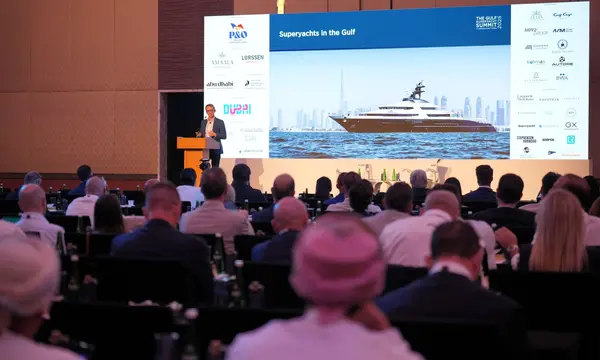
The eighth Gulf Superyacht Summit will take place in Dubai on 24–25 November 2026 with an invitation-only format aimed at owners, investors and senior …
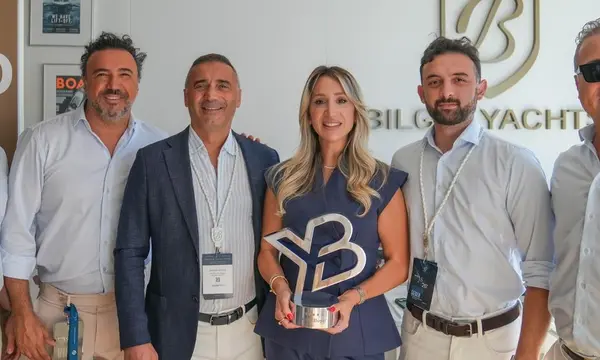
Bilgin Yachts has received the YachtBuyer Hall of Fame trophy for the 49.95-metre CAMILA after the review programme awarded her an overall five-star rating.
Oceanco and RedCabin will bring yacht designers, engineers and specialist outfitters to the Dutch builder's Alblasserdam facilities on 3–4 March 2027.
Superyacht Guide
Continue into the wider Superyacht Guide.
Business opportunities · Superyacht Guide
Companies serving the superyacht market can discuss clearly identified advertising, sponsorship and business-profile opportunities. Commercial activity remains separate from independent editorial coverage.