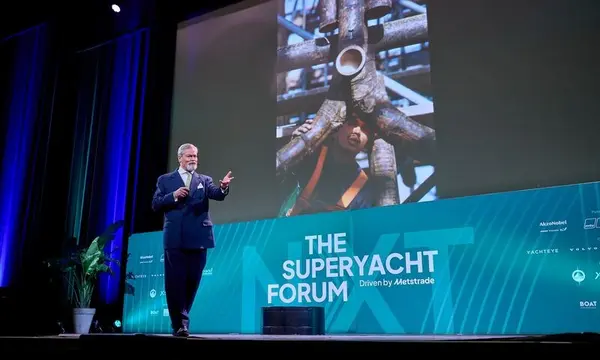
Superyacht Forum Names Engineering and Safety Agenda for 2026
The Superyacht Forum has published its November 2026 programme, with Williams Grand Prix Technologies, crew welfare and shipyard safety feedback among its priorities.
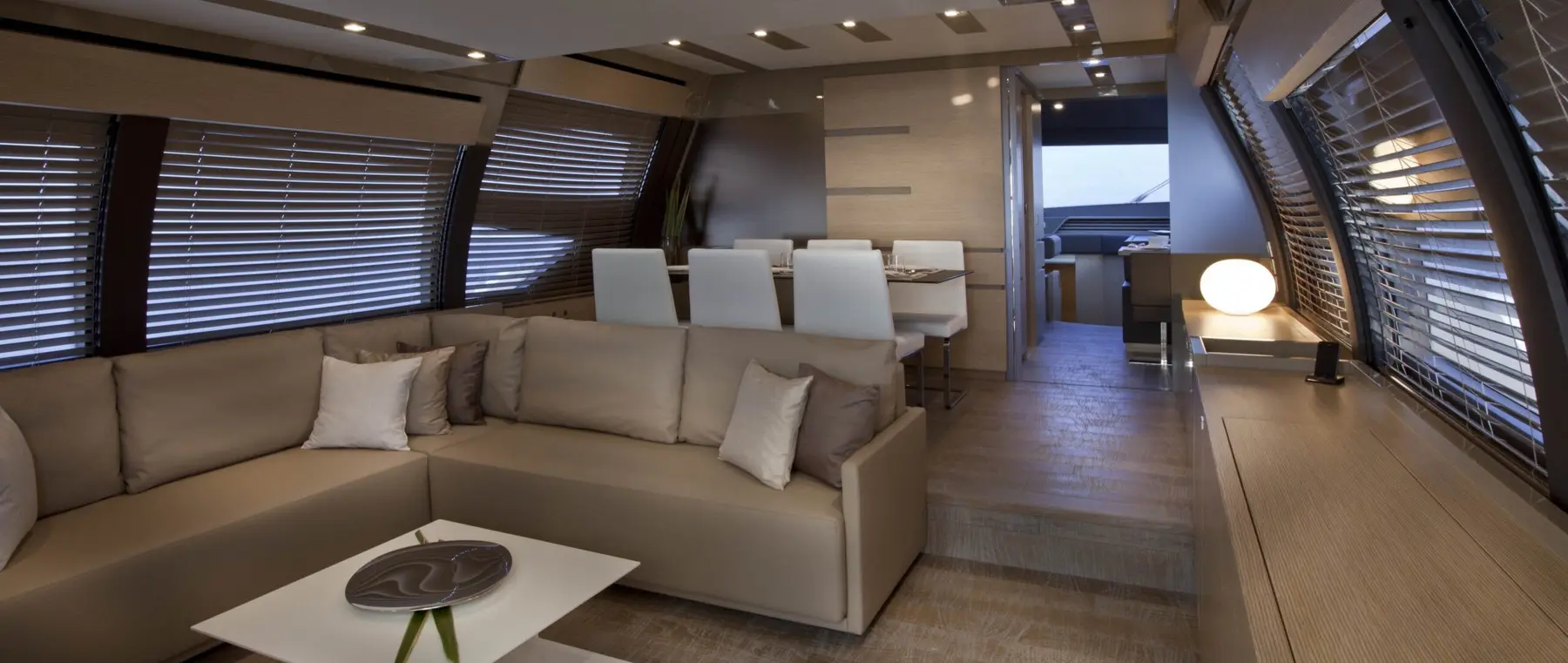
Image: AGB Design official superyacht interior and product information; METSTRADE 2026 exhibitor catalogue
Italian specialist AGB Design highlights the engineering behind automated custom blinds on superyachts, where curved glazing, privacy and guest comfort demand tailored solutions.
Italian specialist AGB Design is bringing its sun-screening expertise to the 2026 superyacht supply chain, with the company included in the official METSTRADE exhibitor programme. Its focus is on custom blinds and curtains that respond to the unusual dimensions, shapes and operational demands of yacht interiors, from owner accommodation to lounges and crew spaces.
Large areas of glazing have become a defining feature of many contemporary superyachts. They provide panoramic views and natural light but also expose accommodation to glare, solar heating and unwanted visibility from nearby vessels. A successful screening system must manage these issues while preserving the qualities that made the glazing attractive in the first place.
AGB describes custom extruded profiles that can follow curves and the irregular geometry found on yacht structures. It offers roller blinds, Venetian blinds, Roman-style treatments, gathered curtains and specialised skylight systems. The practical differences become obvious when a window is neither vertical nor rectangular, or when furniture leaves limited space for a cassette or motor.
A standard household blind may assume simple mounting surfaces and a static environment. At sea, the system must contend with vibration, heel, temperature changes and occasional movement of surrounding structure. The manufacturer needs to ensure that components travel predictably, fabrics do not catch, and the finished installation can be cleaned and serviced without dismantling decorative joinery.
The company offers motorisation and integration with yacht automation systems. In a guest suite, that can allow blinds to be operated through a room-control interface, timed scene or dedicated switch. The underlying engineering includes actuators, limit settings, cabling, software interfaces and safe operating clearances, none of which should distract the guest when the equipment is working properly.
Control simplicity matters. An owner may want one command to close the full suite for privacy, while crew require separate access for cleaning or troubleshooting. On a vessel with numerous cabins, the management of hundreds of motors and individual addresses can become complex. Designers and electronic integrators should decide these functions early, before furnishings and ceilings conceal access routes.
Screening systems can influence the balance between natural light and air-conditioning requirements. Limiting direct sunlight through large windows can make a cabin more comfortable, particularly in hot climates, but actual heat reduction depends on the glazing, the fabric, the position of the blind and the surrounding space. A specific energy saving should not be assumed without the appropriate thermal assessment.
Privacy is equally important at anchor and in harbour. A superyacht may have neighbouring vessels close to expansive owner accommodation. The most suitable solution depends on whether occupants want complete blackout, filtered daylight or partial external visibility. Fabric opacity, reflection, colour and the proximity of interior lighting all affect the result.
AGB says its systems have been installed on more than 300 superyachts, as well as many smaller yachts and cruise vessels. The company traces its business to 1979 and describes work with shipyards requiring highly tailored products and adaptable schedules. Those figures are company statements rather than an independently audited fleet count, but they help explain the supplier's emphasis on bespoke fitting.
Installation on a custom yacht is often a coordinated process involving the interior designer, joinery contractor, glazing supplier and automation specialist. A late change to a recess or curtain track may affect the surrounding surfaces or require modifications to cabling. The financial consequences can be significant when a finished cabin must be reopened for alterations.
Materials choice requires more than matching a designer's colour palette. The team must consider sunlight exposure, cleaning procedures, mechanical tension and how fabrics behave in humid interiors. Moving blinds should not obstruct emergency escape routes or prevent access to essential windows. Crew need straightforward manual or service procedures when automation is unavailable, and the supplier should document which parts are removable without disturbing valuable wall finishes. These practical concerns are easier to resolve during interior mockups than after handover.
Once a yacht is in service, crew need to know how to clean the materials and replace a motor or fabric without damaging surrounding finishes. Consumable components, spare actuators, manuals and programming records should be part of the original handover package. That is especially important on charter yachts where failures in guest areas may need to be corrected during brief turnaround periods.
AGB's confirmed Amsterdam participation gives builders and interior specialists an opportunity to discuss compatibility and custom design work rather than a newly announced named yacht project. The wider lesson is that apparently soft interior furnishings increasingly require the same disciplined integration as other onboard mechanical and electronic systems.
Continue reading
The Superyacht Forum has published its November 2026 programme, with Williams Grand Prix Technologies, crew welfare and shipyard safety feedback among its priorities.
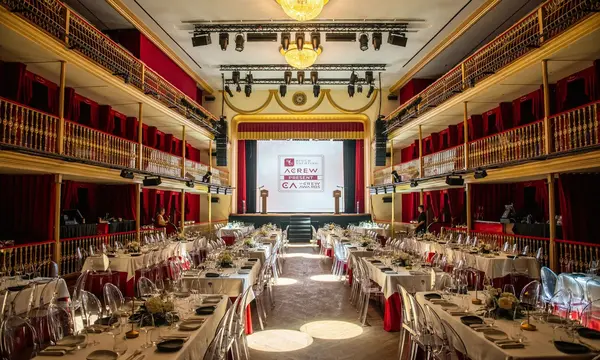
The 2026 ACREW Crew Awards are scheduled in Fort Lauderdale on 25 October, recognising superyacht captains and crew across 14 professional categories.
Somec Group, whose engineered-systems division has major marine glazing operations, establishes Fabbrica Europe for advanced European architectural facades.
MARAD's 2026 shipyard awards provide $1.509m toward a 620-ton Travelift at Delta Marine and $568,720 for digital engineering systems at Burger Boat Company.
Superyacht Guide
Continue into the wider Superyacht Guide.
Business opportunities · Superyacht Guide
Companies serving the superyacht market can discuss clearly identified advertising, sponsorship and business-profile opportunities. Commercial activity remains separate from independent editorial coverage.