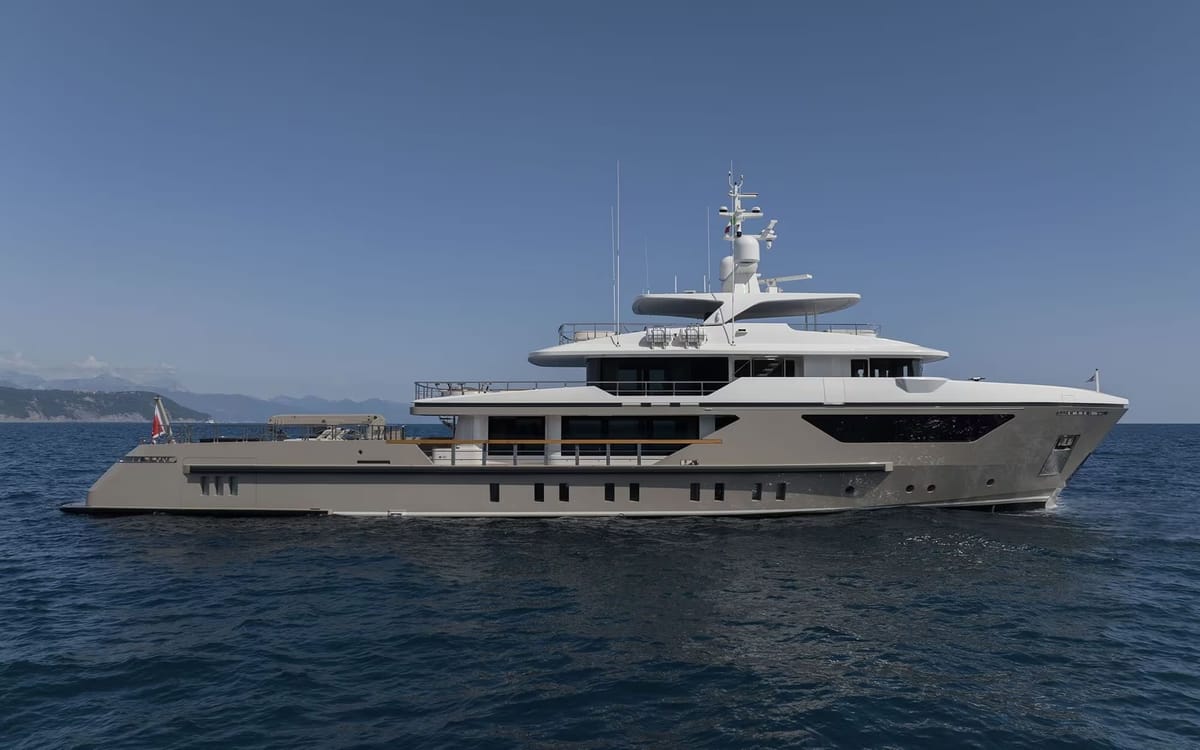
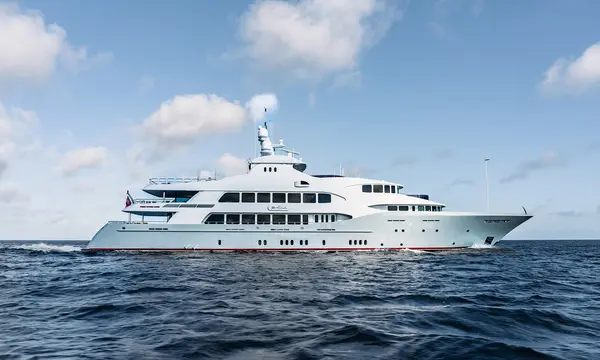
AMIKA under way — IYC charter photograph
Sanlorenzo explorer yacht AMIKA is marketed for New Zealand and Australian charters at US$230,000 weekly plus expenses, with a wider Pacific cruising programme.
The 47-metre Sanlorenzo explorer yacht AMIKA is being marketed for charter in New Zealand and Australia at a published base rate of US$230,000 per week, excluding expenses. IYC's current charter programme identifies a Pacific Ocean season from 16 November 2026 through September 2027, alongside a separate French Polynesian cruising window and a prospective Southeast Asian season beginning in October 2027. These published regions represent possible deployment and not guaranteed availability on a specific date. For guests considering a Southern Hemisphere charter, AMIKA adds a substantial expedition-style vessel to the advertised options for voyages outside the traditional Mediterranean and Caribbean circuits.
Delivered in 2020, AMIKA accommodates eleven guests in five cabins and carries nine crew according to the broker's specifications. The yacht combines an extended aft working and leisure area with broad expanses of exterior deck and an interior designed for prolonged stays aboard. Her advertised cruising speed is twelve knots, with a maximum of thirteen. The distinction between that relatively measured operating speed and the speed of her separate exploration tender helps explain the expedition format: the yacht serves as the comfortable travelling base, while smaller craft allow guests to explore individual locations more flexibly.
The itinerary information published by IYC covers three separate geographical regions. New Zealand and Australia appear under the Pacific Ocean programme, extending from November 2026 to the end of September 2027. French Polynesia is listed through April 2027, while Thailand appears as the destination for a Southeast Asian period from October 2027 to April 2028. The broker expressly qualifies rates and destinations by the vessel's availability. The overlapping advertised periods should therefore not be interpreted as a confirmed sequence of port calls, nor as evidence that the yacht can be booked in widely separated cruising areas on any given day.
This is an important practical distinction in arranging a charter in the region. The yacht's actual position at the proposed embarkation date, the time required for repositioning and the feasibility of the desired itinerary all need to be established before a booking can be finalised. A guest choosing between itineraries will need a more detailed understanding of distances and seasonal conditions than might be necessary when selecting a yacht already stationed in a compact cruising area. The published programme is a useful indication of the geographical flexibility being marketed, rather than a replacement for that discussion with the charter broker and captain.
The New Zealand season offers a contrast with Northern Hemisphere winter cruising. The northern coastline provides numerous possible combinations of sheltered anchorages, island visits and marine recreation. Farther south, the character of the coastline, weather and prevailing sea conditions may differ substantially. Those differences are part of the attraction of an expedition-oriented charter, but they also mean that defining an itinerary involves more than identifying a list of scenic places to visit.
A well-planned voyage should take account of the vessel's position, the number of days available and the interests of the charter party. Guests wishing to spend substantial time ashore, undertake guided activities or explore quieter coastal areas may prefer fewer long yacht passages. A different group may place greater value on seeing a wider variety of landscapes and be willing to dedicate more time to travel between them. The captain's assessment of safe access, anchoring and weather must guide either approach. AMIKA's marketed programme presents opportunities to consider these itineraries, without implying access to any protected or restricted area.
The broker identifies a 10.3-metre Goldfish X10 Explorer chase tender as part of the equipment supporting the charter. It describes the craft as having outboard propulsion and a glass roof, with a claimed maximum speed of approximately fifty knots. The tender's role in the experience is different from that of the yacht herself. On a suitable day, it can carry guests from an anchorage to points of interest that would be impractical to visit using the main vessel.
Its enclosed configuration is relevant when planning excursions where exposure to wind or spray might affect comfort. Nevertheless, the suitability of any particular passage depends upon prevailing conditions, the vessel operator's assessment and equipment limitations. The charter should not be designed on the assumption that a tender's quoted maximum speed represents a reliable travel speed in all waters. The value of this configuration is the flexibility to combine an extended stay aboard the main yacht with shorter, more focused trips.
A family charter involving guests with different preferences may benefit particularly from the ability to divide time between excursions and the yacht. The captain and crew can discuss how access to the tender is organised, what activities can be supported simultaneously and where the itinerary requires advance arrangements with shore-based operators.
IYC describes five guest cabins, including a full-beam master cabin on the main deck and four cabins on the lower deck. The total advertised capacity is eleven guests. That number and the layout will be important to charter parties comprising multiple generations or several families. A cabin arrangement that suits eleven adults may differ from the preferences of a group travelling with children, and the detailed accommodation configuration should be confirmed when the group is assembled.
The main saloon incorporates lounge and dining space, with extensive glazing bringing natural light into the interior. The broker also identifies a lower-deck gym. These facilities can acquire additional significance during a charter that involves longer passages or occasional periods of unsettled weather. An itinerary may be centred on outdoor activity, but the experience is also shaped by whether guests have comfortable places to read, exercise, dine or spend time privately while underway.
The appeal of a large explorer-style yacht is partly the ability to sustain these different uses of space over a longer period. Its suitability for a particular party depends not just on the headline guest capacity but on the distribution of cabins, communal facilities and the anticipated daily programme.
AMIKA's exterior includes a sundeck with a Jacuzzi and places to sit or recline in the open air, together with a beach club and swimming platform at the water's edge. For a charter organised around marine recreation, the accessibility of these areas can influence the daily routine. Guests may wish to alternate between swimming, tender excursions and time aboard, with facilities arranged to support those changes.
IYC's published equipment inventory includes paddleboards, personal watercraft, electric-powered watersports equipment, snorkelling equipment, diving equipment and fishing tackle. The list is subject to confirmation, and the broker specifically identifies licence requirements for some personal watercraft. Local laws, protected marine environments, weather conditions, crew qualifications and the captain's operating rules may affect which equipment can actually be used. The presence of diving gear aboard is not in itself confirmation that all diving activities can be arranged without an appropriately qualified operator.
Charter guests should discuss their intended activities before travel. This permits the yacht and any specialist shore providers to establish what is feasible and what permissions, training or equipment would be required. The practical planning behind an expedition charter is as important as the range of amenities advertised.
The Pacific and New Zealand programme is advertised at US$230,000 per week plus expenses. The later Southeast Asian programme is advertised at €230,000 weekly plus expenses. Those are separate published rates in different currencies and for different geographical periods. They should not be read as a conversion of the same price into a different currency on the same date.
The weekly base price should also be distinguished from the cost of the completed charter arrangement. Depending on the contract and itinerary, additional expenditure may include fuel, food and beverages, fuel consumed by tenders, berth charges, compulsory taxes and applicable local costs. The broker should explain what the quoted rate includes and what the charter party must fund separately. Repositioning or a particular embarkation and disembarkation arrangement may influence the commercial proposal.
In comparing vessels, a party should obtain compatible quotations for the same intended dates and route. That comparison is more informative than ranking yachts solely by advertised weekly prices. A longer voyage with several distant locations may have quite different associated costs from an equally long stay centred on a smaller geographical area.
The placement of a yacht of this size in an advertised Pacific charter programme offers an illustration of the role of expedition-style vessels in developing itineraries beyond established charter hubs. Such programmes involve more than the yacht and its broker. They can require coordination among marinas, port agents, fuel and provisioning suppliers, maintenance companies, guides and local travel specialists. Support arrangements become particularly significant where the intended itinerary covers large distances or includes places with limited technical infrastructure.
The publication of a charter programme does not establish how many bookings will be made or how much economic activity a yacht will generate in any particular destination. It does, however, identify the kinds of service relationships that make such programmes possible. The availability of reliable support and clear, lawful arrangements for visiting vessels can influence how readily brokers and managers can offer extended voyages.
For prospective guests, the next step is to confirm the vessel's position and available dates with the charter representative. IYC's public listing provides the dimensions, accommodation, published rates and broad cruising areas necessary to begin that inquiry. Detailed itineraries, actual equipment availability and contractual terms remain matters for individual confirmation.
The combination of a forty-seven-metre platform, substantial guest accommodation and a dedicated exploration tender gives AMIKA an identifiable role in the charter market. Her appeal lies less in attempting to cover the greatest possible number of destinations than in giving guests the flexibility to balance time aboard with carefully planned excursions. The advertised Pacific programme offers an opportunity to consider that balance in the context of New Zealand and Australia's very different cruising environments. As with any long-distance yacht deployment, the practical quality of the experience will depend upon the actual itinerary, the conditions encountered and the arrangements made between the charter party, broker, captain and local specialists.
Primary source: IYC official AMIKA charter listing, checked 15 November 2026.
AMIKA under way — IYC official charter listing photograph. Official source.
Explore
Go deeper into the yachts, companies, events and destinations directly connected to this article.
Continue reading
IYC is promoting the forthcoming 38m Maiora M|38 FOUR JOYS for charter, while its published 2027 build year makes delivery and operational timing important.
IYC has added the 58m CRN ODYSSEY to its marketed charter fleet, with twelve-guest accommodation, private terraces and a specialised float-in dock.
The 60m Trinity superyacht IRON BLONDE has rejoined IYC charter, offering seven guest cabins, a three-level elevator, dedicated wellness facilities and an owner deck.
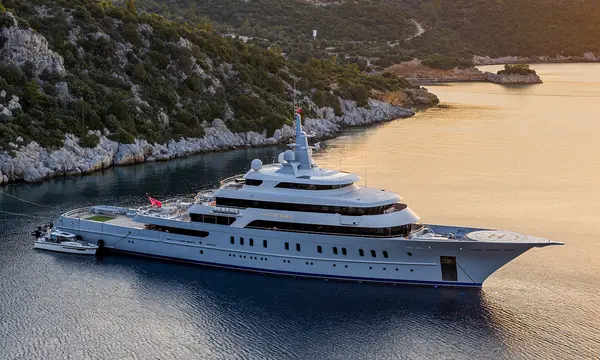
The 85m Akyacht VICTORIOUS has joined IYC’s global charter fleet following a new appointment announced on 1 September 2026. Delivered in 2021, the explorer …
Superyacht Guide
Continue into the wider Superyacht Guide.
Business opportunities · Superyacht Guide
Companies serving the superyacht market can discuss clearly identified advertising, sponsorship and business-profile opportunities. Commercial activity remains separate from independent editorial coverage.