Anschütz Standard 100 MF Brings Maintenance-Free Gyro to 2027 Market
By Superyacht Guide · Edited by Stephen Yardley
Image: Anschütz
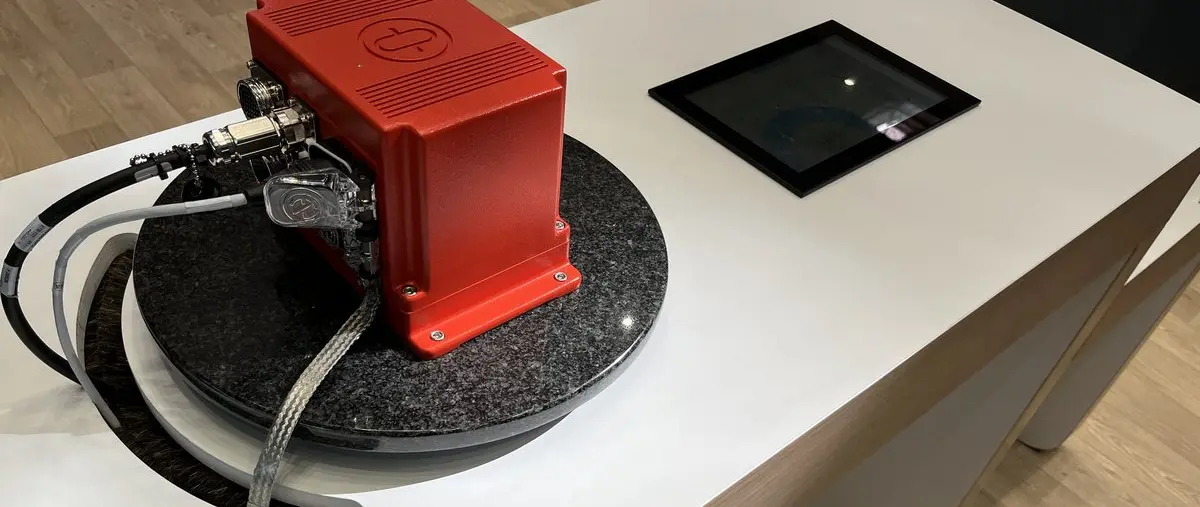
Anschütz has unveiled the Standard 100 MF, a maintenance-free gyrocompass designed for straightforward new-build and retrofit integration from 2027.
Anschütz has unveiled the Standard 100 MF gyrocompass, extending maintenance-free vibrational gyro technology to a broader range of vessels. Presented at SMM 2026, the new unit is scheduled for market entry in 2027 and is designed for both new-build installations and retrofit projects.
Although the product is positioned for the wider commercial fleet, the underlying design priorities are directly relevant to superyachts: stable heading data, reduced maintenance, compatibility with modern bridge networks and straightforward integration into increasingly complex navigation suites. Those priorities are particularly useful on yachts where bridge space, service access and operational downtime all carry a premium.
Anschütz says the Standard 100 MF uses vibrational gyro principles derived from its proven hemispherical resonator gyro systems, including the Standard 30 MF. The company has simplified the architecture to reduce system complexity while retaining stable heading performance and long-term durability without regular gyro servicing.
For yachts that operate intensively or spend long periods away from major technical hubs, reducing scheduled maintenance on navigation equipment can have practical value. Fewer service interventions can simplify lifecycle planning, reduce spares and technician dependency, and lower the risk that routine maintenance collides with owner itineraries or charter commitments.
The Standard 100 MF uses the same CAN bus as the Standard 22 NX and Standard 30 MF. Anschütz says this allows integration into existing gyrocompass systems with six wires, while standardised interfaces are intended to simplify commissioning and adoption on board.
That matters in the superyacht refit market, where replacing one bridge component can otherwise trigger disproportionate engineering work. Compatibility with existing architecture can make it easier to upgrade navigation equipment without rebuilding an entire bridge network or introducing unnecessary downtime.
Beyond heading, the unit provides roll and pitch information, giving connected bridge systems additional vessel-motion data. Communication supports IEC 61162-450 Ethernet networking, IEC 62923 bridge alert management and IACS UR E27 cyber-security requirements, bringing the product into the standards environment expected of modern integrated bridges.
The combination of heading and motion data can support a wider navigation and situational-awareness picture, particularly where multiple bridge systems depend on reliable sensor inputs. On a large yacht, those feeds may be shared across navigation displays, autopilot functions, monitoring systems and other integrated equipment.
Anschütz is targeting market entry in 2027 following the SMM introduction. That timing makes the Standard 100 MF relevant to yacht projects now entering bridge specification, as well as refits being planned around winter yard periods over the next two seasons.
The broader trend is clear: bridge manufacturers are trying to combine lower lifecycle maintenance with easier digital integration and stronger cyber compliance. For yacht owners and technical managers, the important question will be how those claimed lifecycle savings compare with existing gyro installations once the product begins service in real fleets.
Explore
Go deeper into the yachts, companies, events and destinations directly connected to this article.
Continue reading
Is a Superyacht an Investment? Depreciation, Income and Resale A superyacht should usually be treated as a lifestyle asset rather than a conventional investment: …
Can Charter Income Cover Superyacht Running Costs? Charter income can offset a meaningful share of superyacht operating costs, but it rarely makes ownership cost-free …
How Much Is a 100m Superyacht? Build Cost and Running Cost Current SYG value data for 100m+ yachts has a median editorial value around …
How Much Does a Superyacht Refit Cost? A superyacht refit can range from hundreds of thousands of euros for focused cosmetic work to tens …
Superyacht Guide
Continue into the wider Superyacht Guide.