
Marine Results Gains Unrestricted RINA Approval for Superyacht Rigging Surveys
Marine Results International has become a RINA Approved Service Supplier for mast and rigging surveys with no restriction on yacht size or rig type, …

Marco Valle, chief executive of the Azimut|Benetti Group, has described a yacht market divided by vessel size, with weaker activity at the small-boat end but continuing demand for larger yachts. In an interview published by SuperYacht24 on 9 November 2026, Valle identified approximately 30 metres as an important dividing line for the company's own business. His assessment is a manufacturer's view of its enquiries and customers, rather than an independent statistical survey of every segment or region. It is relevant to owners, brokers and suppliers because buying patterns can diverge sharply between production boats and fully custom superyacht projects.
Marco Valle, chief executive of the Azimut|Benetti Group, has described a yacht market divided by vessel size, with weaker activity at the small-boat end but continuing demand for larger yachts. In an interview published by SuperYacht24 on 9 November 2026, Valle identified approximately 30 metres as an important dividing line for the company's own business. His assessment is a manufacturer's view of its enquiries and customers, rather than an independent statistical survey of every segment or region. It is relevant to owners, brokers and suppliers because buying patterns can diverge sharply between production boats and fully custom superyacht projects.
The interview originally appeared in the fourth 2026 issue of the publication's Yacht Upstream supplement before its online release. That distinction matters: Valle is explaining a trading environment and strategy over a period, not announcing that an individual contract was signed on 9 November. Superyacht Guide has examined his remarks against the group's recent reported developments, including the Grande 44M programme and its expanding relationship with hospitality developer Assets Group. The central news is a publicly stated management outlook: the demand seen by one major Italian group remains notably stronger at the upper end of the yacht sector.
Valle's description separates the market into several speeds, with the smallest boats under the greatest pressure. Azimut's own range does not extend all the way down to that smaller end, so the company's direct experience cannot be treated as a representative measure of entry-level production craft. Within the business it does serve, he distinguishes orders and client enquiries for vessels above roughly 30 metres from the less robust conditions seen in smaller categories. He also notes that larger Benetti projects involve extended discussions with customers and tend to benefit from an already lengthy order book.
An order book smooths the impact of short-term fluctuations, but it is not a guarantee that all future projects will proceed on their original timetable. The gestation period of a high-value custom yacht is different from the decision cycle for a smaller production vessel. Naval architecture, technical specifications, class requirements, long-lead equipment and owner-specific interiors may be settled many months before construction is visible. Consequently, a builder with several years of work contracted can report substantial production visibility while brokers encounter a more cautious market elsewhere. The interview highlights that contrast without establishing a universal growth rate for the industry.
When asked which markets were performing best, Valle identified Europe as the strongest market by volume for the group. He separately emphasised the continuing importance of the United States and the international character of the biggest yacht sales. A 70- or 90-metre project can involve a client living in one jurisdiction, design and advisory teams in several others and a European shipyard that delivers the vessel for worldwide operation. It would therefore be misleading to attach the entire high-value market to whichever country hosted the latest boat show.
For designers and brokerage businesses, this distinction between unit volume and turnover has practical consequences. More enquiries in a regional market do not automatically imply the same region accounts for the highest value of contracts. Equally, an apparently quiet period for smaller vessels should not be extrapolated to the superyacht category. Operators assessing demand need to define the length bands, prices and types of yachts included in their figures. Valle's comments offer one company's view, not an independently verified split of global sales, and should be read in that scope.
Valle pointed to the 2026 Cannes and Monaco shows as evidence that clients were continuing to engage with larger yacht products. He said Azimut experienced an increase of more than 35 percent in qualified visitors, with the unveiling of its 44-metre flagship contributing to interest. The wording is important. A qualified visitor is not a completed transaction, and the interview does not provide an audited definition of qualification or a directly comparable figure for other exhibitors. The percentage is the group's own reported measure of engagement, not a forecast of deliveries.
Exhibitions nonetheless matter for a business of this kind because they bring owners, advisers, captains, design studios and manufacturers into the same short window. A large-yacht enquiry may be further advanced by seeing spaces and technology in person, even when negotiations subsequently continue privately. Cannes accommodates a broad mix of yachts, while Monaco has a particularly strong large-yacht profile. Valle's account is consistent with the strategic focus on larger Azimut products, although it cannot establish how every other builder performed during the shows or whether visitor interest will convert at a particular rate.
The Azimut Grande 44M is a clear example of the company's investment at the larger end of the market. The model, a flagship in the Grande series, is part of the evidence behind Valle's argument that new product development can keep an established brand relevant to sophisticated buyers. The yard has previously discussed the design and engineering of the range, including efforts to make interior and exterior areas work together and to distinguish a large series-built yacht from a one-off custom commission. These are design and market-positioning ambitions; they do not establish the performance of every hull.
Product investment can be commercially significant even without an immediately publicised new sale. Design teams, production facilities, suppliers and after-sales networks must be ready before a yacht reaches the customer. A flagship launch also creates opportunities for a builder to demonstrate technical capability to buyers who may later commission a different model. Valle linked the response to larger Azimut products with the company's broader strategic approach. Readers should separate that commercial positioning from order-book facts for which the group has published specific dates and quantities, rather than converting a headline about healthy demand into an unannounced contract total.
An official Azimut announcement issued in early November expanded the company's relationship with Assets Group, a developer of luxury hospitality destinations. The collaboration follows an earlier arrangement involving 18 Azimut yachts intended for Maldives resort operations, and the new statement describes the possibility of additional bespoke marine concepts for future developments. In the official release, Valle emphasised the importance of the company's recently created local service capability. The announcement is relevant background to his interview because it illustrates how a yacht manufacturer is pursuing demand outside conventional individual-owner purchases.
It is essential not to count a proposed bespoke concept as an additional delivered yacht or as a confirmed 44-metre superyacht order. A hospitality fleet can include vessels considerably smaller than Superyacht Guide's usual large-yacht focus. Its inclusion here is about strategy: after-sales infrastructure and long-term operational support can help a manufacturer develop a commercial relationship with customers whose needs go beyond a single boat. The resort partnership has already been reported separately by Superyacht Guide; it is cited here to support understanding of management policy rather than presented as a fresh contract announced by the interview.
Valle also considered competition between shipbuilding countries. He argued that inflation and labour costs had affected Turkish yards' price competitiveness, while large northern European builders had substantial work committed at the upper end of the size range. Those are his assessments of the competitive landscape, not verified price comparisons between like-for-like tenders. Currency movements, skilled labour availability, technical specifications and a client's preferred design team can influence where a project is ordered. No single labour-cost figure can explain every shipyard decision, particularly when specialised work is subcontracted across borders.
For Italy's superyacht supply chain, the opportunity he identifies is not simply to offer a lower price. Complex yachts require reliable construction schedules, engineering coordination, warranty support and a network of specialist contractors. An owner deciding between yards also weighs access to refit facilities and the builder's track record of delivering vessels that match their specification. A full order book can strengthen confidence in a company, but it can also create capacity pressure if suppliers and labour cannot keep pace. Successful growth depends on the ability to execute existing work while designing the next generation of yachts.
On the next 12 to 24 months, Valle referred to the disruption caused by geopolitical tensions and explained that uncertainty can slow purchasing decisions, even where interest later recovers. He stressed the importance of maintaining control of internal processes and a clear range of products. The message is less a promise of uninterrupted expansion than a description of how the group intends to operate through an uneven market. For prospective buyers, the distinction is relevant: asking about delivery slots, contract safeguards and after-sales commitments remains necessary even when an established builder reports strong enquiries.
The 9 November interview adds a current senior-management assessment to an already busy period of announcements across the Italian yacht industry. Its most defensible conclusion is narrow but useful: Azimut|Benetti reports sustained interest above approximately 30 metres, sees Europe leading its volume business and considers investment in large new products an advantage. It does not provide independently audited sales by length segment, evidence that the smallest boats are recovering or a new order count for the company. Those gaps should remain visible in coverage intended for an audience making substantial yacht and commercial decisions.
Reporting source: original announcement; corroborating source: additional first-party or industry material. Report dated 9 November 2026. Announcements and operating plans may change; editorial interpretations are distinguished from confirmed facts.
Editorial photograph: photographer and original image — redcharlie / Unsplash License; August 2020 motor yacht cruising off Cannes, illustrative photograph, not an Azimut or Benetti product. Cropped and resized under the Unsplash License. Illustrative photograph only; it does not show the 2026 event or named product.
Continue reading
Marine Results International has become a RINA Approved Service Supplier for mast and rigging surveys with no restriction on yacht size or rig type, …
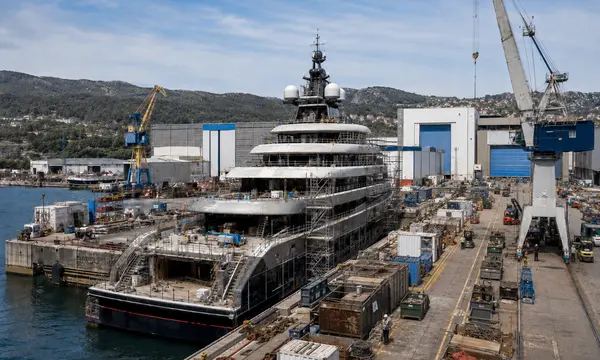
How owner deposits and stage payments help fund superyacht construction, why the model carries risk and what real shipyard cases teach buyers.
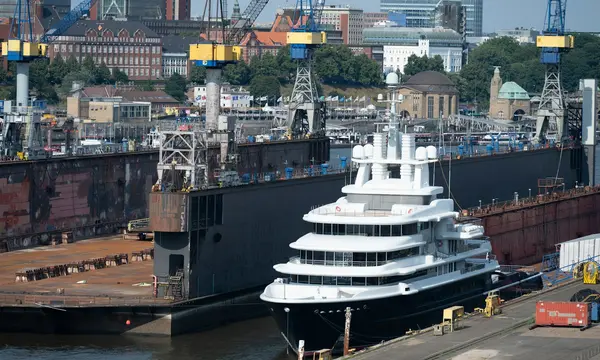
Oceanco has reported that the 72-metre expedition support yacht Indratus has begun sea trials following an extensive refit at its Zwijndrecht facilities in the …
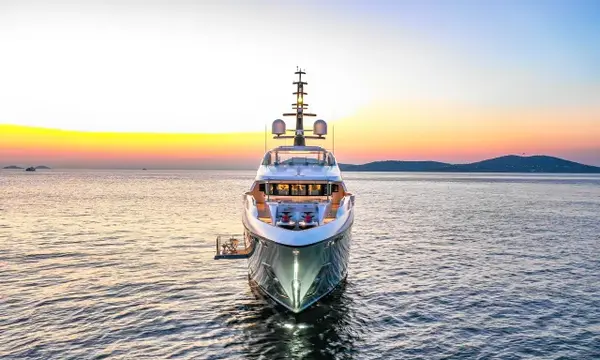
Blue Oceans Yachting has confirmed the sale of the 47.4-metre Bilgin MOONRAKER, with Ami Griffith Ira representing the buyer and IKONIC Yachts representing the …
Superyacht Guide
Continue into the wider Superyacht Guide.
Business opportunities · Superyacht Guide
Companies serving the superyacht market can discuss clearly identified advertising, sponsorship and business-profile opportunities. Commercial activity remains separate from independent editorial coverage.