Royal Hakvoort Takes 38m Soprano for Lloyd’s Survey in Amsterdam
Royal Hakvoort Shipyard has confirmed that the 38.25-metre motor yacht Soprano has returned for maintenance and what the builder describes as her ten-year Lloyd's …
Oceanco has reported that the 72-metre expedition support yacht Indratus has begun sea trials following an extensive refit at its Zwijndrecht facilities in the Netherlands. In a company update shared during the first week of November 2026, the yard described trials as the latest milestone in the vessel's return to service with the Inkfish fleet. The announcement is distinct from the October news that the former Game Changer had emerged from the refit facility with a revised appearance. It marks movement into operational testing, but the short company statement does not establish the date of final handover or certify that every trial has been completed successfully.
Oceanco has reported that the 72-metre expedition support yacht Indratus has begun sea trials following an extensive refit at its Zwijndrecht facilities in the Netherlands. In a company update shared during the first week of November 2026, the yard described trials as the latest milestone in the vessel's return to service with the Inkfish fleet. The announcement is distinct from the October news that the former Game Changer had emerged from the refit facility with a revised appearance. It marks movement into operational testing, but the short company statement does not establish the date of final handover or certify that every trial has been completed successfully.
Indratus is a working companion vessel rather than a conventional guest-focused superyacht. Originally built by Damen Yachting in 2017, she carries equipment and supports the wider expedition programme associated with the Oceanco yachts Leviathan and Draak. Her return to the water after major works matters because support vessels have demanding operational responsibilities, from handling equipment and boats to accommodating specialist teams. In this latest phase, the priority shifts from visible refit changes to whether the machinery, navigation equipment, working arrangements and modified systems perform as intended when the yacht is underway.
Indratus began life as Game Changer, one of Damen Yachting's purpose-built support vessels. The platform was designed to carry assets and personnel that can be awkward or inefficient to accommodate aboard a principal luxury yacht. Damen's original programme provided a substantial working deck, helicopter arrangements and crane capability, placing utility at the centre of the design. The vessel has subsequently experienced several phases of adaptation, and her current name reflects the newest stage of an operational career rather than the arrival of a completely new build.
An earlier large refit took place in 2020, when the vessel's stern was extended by around three metres. Reports of that programme also describe changes to accommodation, handling equipment and diving facilities. The latest Oceanco project is therefore being undertaken on a hull that had already been substantially adapted to changing requirements. Understanding this history prevents repeated alterations from being attributed to a single yard period. It also helps explain why a major refit needs reliable records of earlier structural changes and system installations if engineers are to assess future modifications safely.
In early October 2026, Oceanco's work on Indratus attracted attention when the yacht emerged from the yard with a revised grey-and-black appearance and a turquoise accent. Specialist reports described a programme involving the vessel's ten-year survey alongside upgrades and other modifications. The sight of a yacht outside a refit shed is a useful milestone, yet visual completion alone does not confirm operational readiness. Testing, rectification and formal documentation can continue well after fresh paint and equipment are visible on the water.
The company's later statement that sea trials had begun is therefore independently meaningful in the project's sequence. It establishes a new stage without inventing a delivery ceremony or a new owner. There is also no public basis for asserting a final project budget or attributing every newly installed system to the present refit. For crews and managers, precise milestones matter: a yacht released for tests remains under a commissioning programme whose outcome should be checked against agreed specifications and the findings of surveyors before normal operations resume.
Trial programmes for large support vessels typically examine machinery, steering response, navigation systems, communications, power generation and the interaction of upgraded equipment. The exact trial schedule for Indratus has not been published in the company's brief update, so none of those checks should be represented as individually completed. What can be said is that operation outside the controlled conditions of a refit yard allows crews and engineers to observe how integrated systems behave under load, in changing sea conditions and across different manoeuvres.
Workboats supporting expeditions have additional practical demands. Launching equipment, handling tenders, maintaining a safe working deck and keeping specialist stores accessible can influence the vessel's schedule and crew procedures. A yacht may pass propulsion checks yet still require adjustments to deck operations, safety arrangements or data interfaces before returning to a remote cruising itinerary. Owners should therefore distinguish the announcement of sea trials from formal acceptance testing, the closure of defects and delivery into service. Oceanco has confirmed the stage reached, not the final results of each technical test.
The current programme has been described in industry reporting as incorporating Indratus's ten-year survey. Such surveys are important for a mature steel support vessel because they involve reviewing the condition of the ship, its systems and the documentation supporting continued operation. They are not interchangeable with a cosmetic refresh or the installation of new equipment. Survey scope is controlled by the relevant authorities and rules, and the public information reviewed does not provide a list of individual survey findings or certificates issued for this project.
Combining survey work with operational modifications can be efficient when a yacht is already in the hands of a large yard, but integration brings scheduling risks. Opening spaces for inspection can reveal work that was not apparent in the initial specification, and a new electrical or mechanical arrangement may require further examination before a survey can be closed. The practical measure of success is a vessel that can perform its intended role safely with updated documentation. The November statement is encouraging progress toward that goal, while final survey status remains a matter for confirmed records.
Indratus is associated with Inkfish's research and exploration programme, alongside the 111-metre Leviathan and the extensively rebuilt Oceanco yacht Draak. The three vessels are not identical in purpose. A companion yacht can carry working equipment, tenders, aircraft support facilities and crew functions that would compete with guest accommodation on the principal vessel. That division of labour helps explain why the return of a single support ship can be important even when attention at boat shows concentrates on larger and more luxurious yachts.
It would nevertheless be inaccurate to assume that all three vessels have a confirmed joint voyage scheduled simply because they belong to the same wider fleet. Public announcements describe capabilities and operating intentions, not a verified future itinerary. Support-vessel readiness has to be assessed on its own terms, including machinery, communications, crew certification and the equipment actually carried. The next useful official update would identify completion of the Indratus trial and refit programme and clarify whether the vessel has returned to active service, without revealing private operational plans unnecessarily.
Large refits are sometimes presented as transformations of interiors and exterior profiles, yet the value of an expedition support vessel rests primarily on dependable work. Indratus provides a case study in extending the life of an established hull to meet evolving demands. Her original construction, earlier lengthening and latest Oceanco work demonstrate that a technical platform can be adapted more than once, provided each change is properly engineered, recorded and tested. Refit decisions should take account of how modified structures and systems affect crew access, equipment servicing and the safety of people working on deck.
The commercial implications extend beyond this individual ship. As more owners organise longer voyages and technical expeditions, yards that can coordinate heavy engineering with survey work and complex integration may find demand for substantial refits as well as new construction. The existence of such demand does not prove a particular yard's capacity or profitability, and this article makes no claim about an undisclosed refit price. Indratus is a concrete example of the work involved, but judging the outcome ultimately requires observing the yacht's reliable return to service.
Oceanco's reported commencement of Indratus sea trials is the news: the project has advanced beyond its October emergence from the refit facility and is undergoing tests ahead of its next operating period. The company's first-hand update offers stronger evidence for this stage than visual impressions or speculation about vessel movements. Available specialist reporting supplies the history of the Damen support-yacht platform, its previous changes and the announced survey programme. Together, these sources give useful context without merging separate milestones into an unsupported final delivery claim.
Further reports should look for confirmation of completed trials, formal acceptance and the vessel's actual return to the Inkfish programme. Those distinctions matter to owners considering the scope and timing of their own refit projects, and to shipyards explaining what technical readiness means after a major programme. A support yacht is ultimately judged by safe, repeatable operation at sea. The current milestone is significant because it takes Indratus closer to that test, not because it finishes the story before Oceanco and the vessel's representatives have done so.
News source: original announcement; corroborating source: additional first-party or industry material. Report dated 9 November 2026. Announcements and operating plans may change; editorial interpretations are distinguished from confirmed facts.
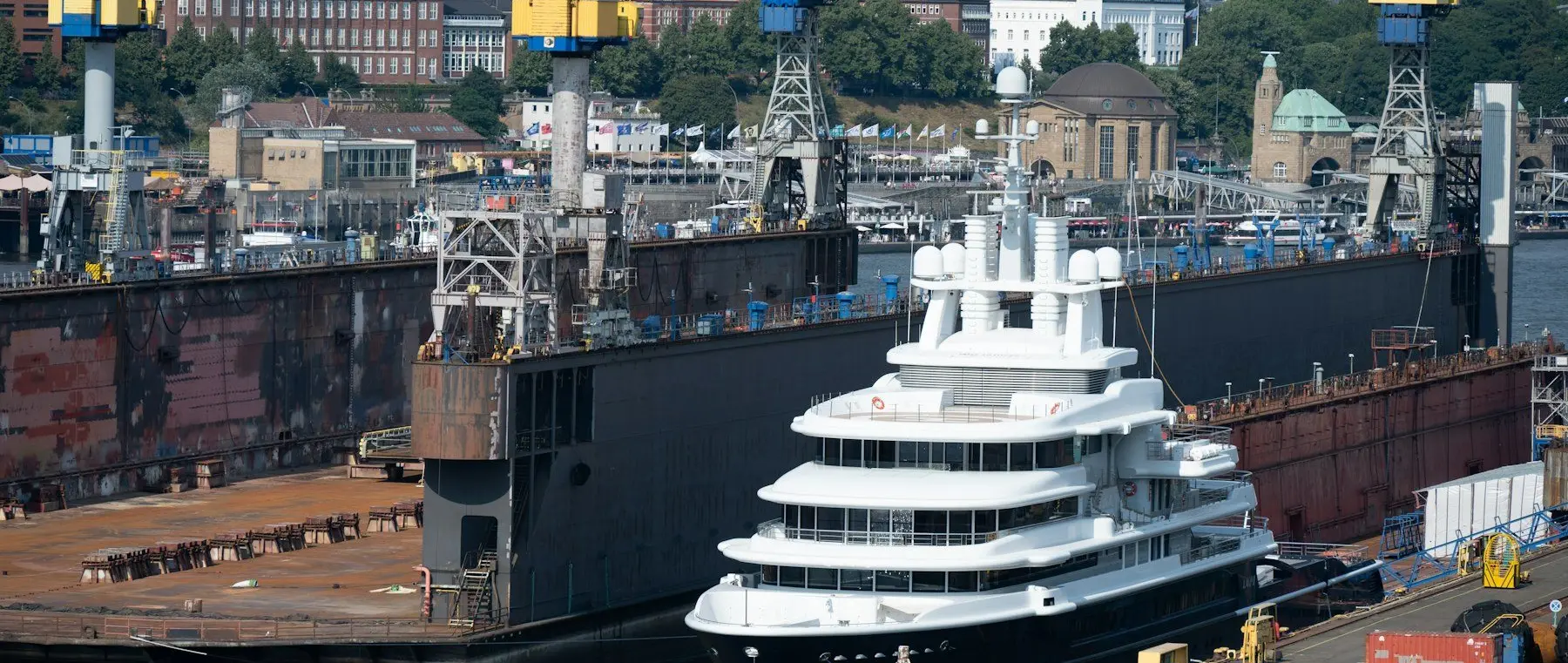
Editorial photograph: photographer and original image — Julia Taubitz / Unsplash License; August 2025 Hamburg dry dock photograph; illustrative only, not Indratus or Oceanco. Cropped and resized under the Unsplash License. Illustrative photograph only; it does not show the 2026 event or named product.
Continue reading
Royal Hakvoort Shipyard has confirmed that the 38.25-metre motor yacht Soprano has returned for maintenance and what the builder describes as her ten-year Lloyd's …
The 80-metre Feadship Love, formerly Project 716, has been spotted heading toward Rotterdam as the yacht prepares for sea trials.
The first Pearl 100 Hybrid has completed initial sea trials ahead of its world debut at the 2026 Fort Lauderdale International Boat Show.
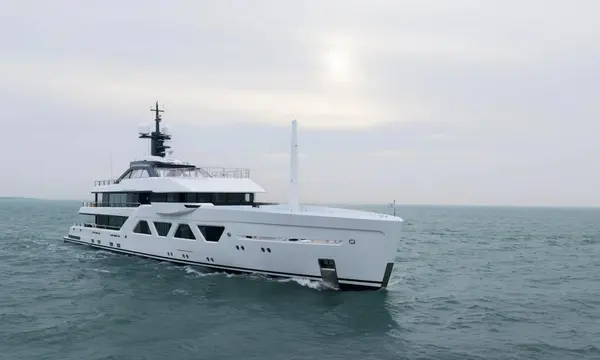
The latest 60-metre Amels Limited Editions yacht has begun North Sea trials from Vlissingen ahead of completion and delivery to her owner.
Superyacht Guide
Continue into the wider Superyacht Guide.
Business opportunities · Superyacht Guide
Companies serving the superyacht market can discuss clearly identified advertising, sponsorship and business-profile opportunities. Commercial activity remains separate from independent editorial coverage.