
What Happens After You Buy a Superyacht? The First 100 Days of Ownership
Buying the yacht is only the beginning. The first 100 days turn a multimillion-euro acquisition into a functioning yacht operation, covering handover, crew, management, …
Royal Hakvoort Shipyard has confirmed that the 38.25-metre motor yacht Soprano has returned for maintenance and what the builder describes as her ten-year Lloyd's survey. The vessel was originally delivered in 2017, placing the work within the period when a substantial private yacht must confront the accumulated effects of active service, maintenance decisions and changing technical expectations. The announcement is specific about the yacht, the nature of the visit and its location. It does not give a completion date, the cost of the work or a list of defects, and none should be assumed.
Royal Hakvoort Shipyard has confirmed that the 38.25-metre motor yacht Soprano has returned for maintenance and what the builder describes as her ten-year Lloyd's survey. The vessel was originally delivered in 2017, placing the work within the period when a substantial private yacht must confront the accumulated effects of active service, maintenance decisions and changing technical expectations. The announcement is specific about the yacht, the nature of the visit and its location. It does not give a completion date, the cost of the work or a list of defects, and none should be assumed.
The more revealing detail is geographical. Hakvoort says both construction halls at its home yard in Monnickendam are currently committed to new-build projects, so Soprano's work is being undertaken at a facility in Amsterdam. That does not mean the builder has abandoned its home base or outsourced responsibility for the vessel. It shows the practical pressure that can arise when finite enclosed construction space must accommodate new-build work and the return of an established yacht. For an owner, the physical location matters less than continuity of expertise, planning and documentation.
Soprano's exterior was designed by Diana Yacht Design and her nautical-inspired interior by Felix Buytendijk. Hakvoort identifies mahogany, white lacquer and limestone among the interior materials that shape her character. These details are not decoration added to a technical story: they establish why an older custom yacht may require a more sympathetic approach than an otherwise comparable commercial vessel. A survey demands technical rigour, while maintenance must preserve finishes, workmanship and original design intent that define the yacht's appeal to an owner or a future buyer.
At 38.25 metres, Soprano sits firmly within the professional superyacht market, where a captain, management company, insurers and specialist contractors commonly coordinate substantial maintenance periods. The size is long enough for system complexity to be meaningful, yet not so large that a yard can assume unlimited access or unrestricted space around delicate interior and exterior work. Neither Hakvoort nor the accompanying industry release describes Soprano's current itinerary, ownership or charter programme. The reported facts are the return, the named survey and the design provenance; operational implications are editorial context.
A class survey is not simply a ceremonial inspection tied to a yacht's birthday. Classification arrangements normally require structured examination of particular systems, hull elements, machinery and records according to the vessel's applicable class requirements and survey schedule. The precise scope varies by classification notation, registration and individual vessel condition, so it would be misleading to publish a checklist for Soprano without access to the actual survey plan. Hakvoort's wording identifies Lloyd's and a ten-year survey, but does not enumerate the items inspected or state any class findings.
For owners, the real value of a properly planned survey window is the opportunity to coordinate work that would otherwise involve repeated disruption. Inspections requiring access to machinery, tanks, coatings or equipment may be sequenced alongside planned servicing, repainting and remedial tasks when the relevant contractors and approvals are available. A captain planning ahead will also want to know which discoveries could affect a re-launch date. No suggestion is made here that Soprano has experienced such discoveries; these are general considerations that make a reported survey visit commercially relevant to SYG readers.
The combination of mahogany, lacquer and limestone noted by Hakvoort is a reminder that technical access on a custom yacht is rarely isolated from aesthetic care. Protecting flooring, joinery, decorative panels and carefully finished surfaces while specialists move equipment and tools through the vessel requires methodical preparation. Even when an assignment concerns only machinery or structural areas, an owner may expect the yacht to return in exactly the condition in which it entered, with the additional requirement that surveyed systems are documented and ready for service.
That expectation makes coordination between a builder's historical knowledge and an experienced maintenance team significant. The original yard may hold drawings and familiarity with where equipment is installed, how systems interact and which finishes need unusual treatment. Access to original information can reduce exploratory work, though it cannot guarantee a trouble-free survey or predict costs. Hakvoort's public announcement does not disclose the contractors or access arrangements being used in Amsterdam. It simply establishes that the builder is involved and that the two Monnickendam construction halls are devoted to other projects.
The simultaneous presence of active new-build projects and returning yachts creates a scheduling equation for specialist northern European yards. Large halls, heavy lifting capacity, heated space, experienced craftspeople and controlled environments cannot always be multiplied when demand peaks. A builder may instead arrange a defined maintenance project at another appropriate location while retaining close engineering and project oversight. The exact commercial arrangement for Soprano is not public, so this is an industry reading of the operational choice rather than a statement about contractual responsibility.
Amsterdam and the surrounding Dutch shipbuilding region have longstanding marine engineering and yacht-servicing networks. That broader setting makes the choice intelligible, without proving that a particular facility offers capabilities beyond those Hakvoort has disclosed. The lesson for an owner selecting a yard is to ask who controls the schedule, which specialists sign off technical tasks, how original drawings will be accessed and where the vessel can be inspected before redelivery. Those questions have more value than assumptions drawn from the name on a building.
Soprano's return provides a timely reminder to bring a survey and maintenance plan together early, particularly when yard capacity is constrained. An owner can ask the management team for a documented scope, an allowance for investigations, a realistic period in dock and an explicit division of responsibility for technical approval. The captain should understand what work is essential to compliance and what upgrades are discretionary. This distinction protects both the schedule and the integrity of budgeting, especially where a yacht has bespoke systems or delicate finish materials.
The current report should not be read as an estimate of what a similar 38-metre yacht will cost to service. Survey expenditure depends on condition, machinery, class scope, access, location and any subsequent repairs, none of which is priced in the Hakvoort release. Equally, the absence of a public completion date does not indicate delay. The significance lies in a named 2017 delivery returning for a defined Lloyd's survey and in a respected builder openly describing how it is managing space while new construction continues.
A significant maintenance visit also has a documentary side that rarely appears in the photographs accompanying an announcement. Class records, service histories, changes to systems and confirmation of work completed should follow the vessel long after it leaves a yard. For a yacht such as Soprano, with an identifiable original design team and a long expected life, that information can help later captains, engineers and prospective purchasers understand what was maintained and when. The current release does not publish Soprano's records; their general importance is the point.
Good documentation also makes future work less dependent on the memory of an individual contractor. That is particularly useful if a yacht changes management or begins operating in a different cruising region. The captain and owner can agree how photographs, inspection reports and updated drawings will be retained and shared securely with authorised specialists. This is not an assertion that Hakvoort has introduced a new digital system for Soprano. It is a practical editorial observation prompted by the builder's announcement of a formal survey and maintenance period.
For fleet managers and future owners, refit news is valuable when it documents actual work rather than offering a vague claim that a shipyard can do everything. Hakvoort has identified the yacht, her length, her original delivery year, her designers, the broad task and why she is presently in Amsterdam. The announcement does not promise a transformation, a record-breaking turnaround or new technology. In a sector where marketing language can obscure precise project boundaries, that narrowness gives a useful basis for reporting.
Superyacht Guide will treat further information about Soprano's survey results, completion and any additions to the work scope as separate developments requiring confirmation. Until then, the reliable story is of a classic-looking custom motor yacht receiving periodic technical attention while its builder accommodates new-build commitments. It is also an instructive example of why maintaining a well-built superyacht means protecting its design identity and mechanical reliability together, with careful scheduling rather than dramatic claims taking centre stage.
Primary source: original announcement; corroborating source: additional first-party or industry material. Report dated 7 November 2026. Announcements and operating plans may change; editorial interpretations are distinguished from confirmed facts.
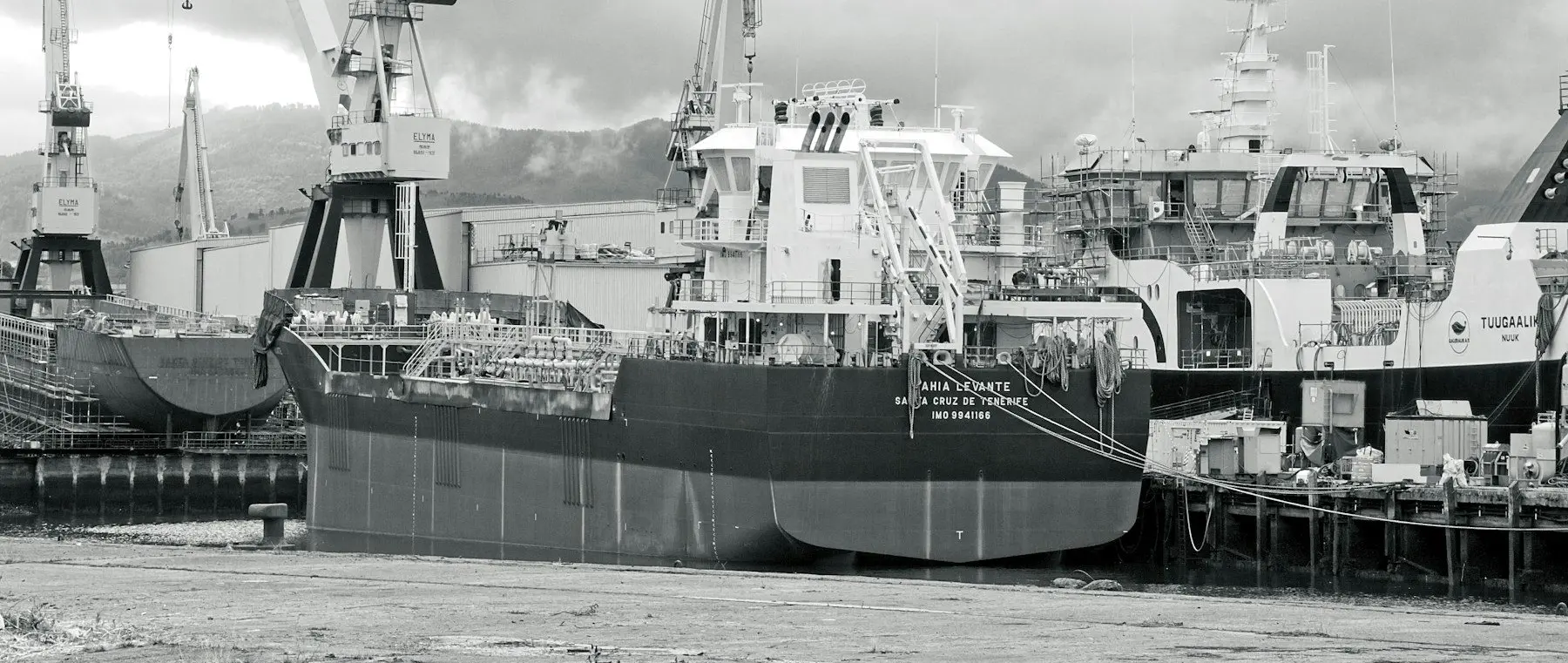
Editorial photograph: photographer and original image — Miguel A Amutio / Unsplash License; shipyard with vessels and cranes, illustrative industrial scene; not Hakvoort, Soprano or the Amsterdam survey. Cropped and resized under the Unsplash License. Illustrative photograph only; it does not show the 2026 event or named product.
Continue reading
Buying the yacht is only the beginning. The first 100 days turn a multimillion-euro acquisition into a functioning yacht operation, covering handover, crew, management, …
Choosing a superyacht flag is not a post-purchase formality. The registry can shape private or commercial use, technical compliance, crewing, finance and the wider …

Propspeed's Foulfree Multi-Surface anti-fouling protection has won a 2026 IBEX Innovation Award in Boat Care and Maintenance, jointly with Spectrum Color.
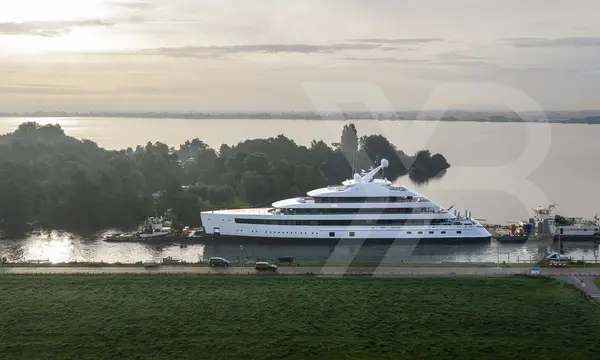
The 80-metre Feadship Love, formerly Project 716, has been spotted heading toward Rotterdam as the yacht prepares for sea trials.
Superyacht Guide
Continue into the wider Superyacht Guide.
Business opportunities · Superyacht Guide
Companies serving the superyacht market can discuss clearly identified advertising, sponsorship and business-profile opportunities. Commercial activity remains separate from independent editorial coverage.