Company
International Maritime Organization
Explore the company profile and related Superyacht Guide coverage.
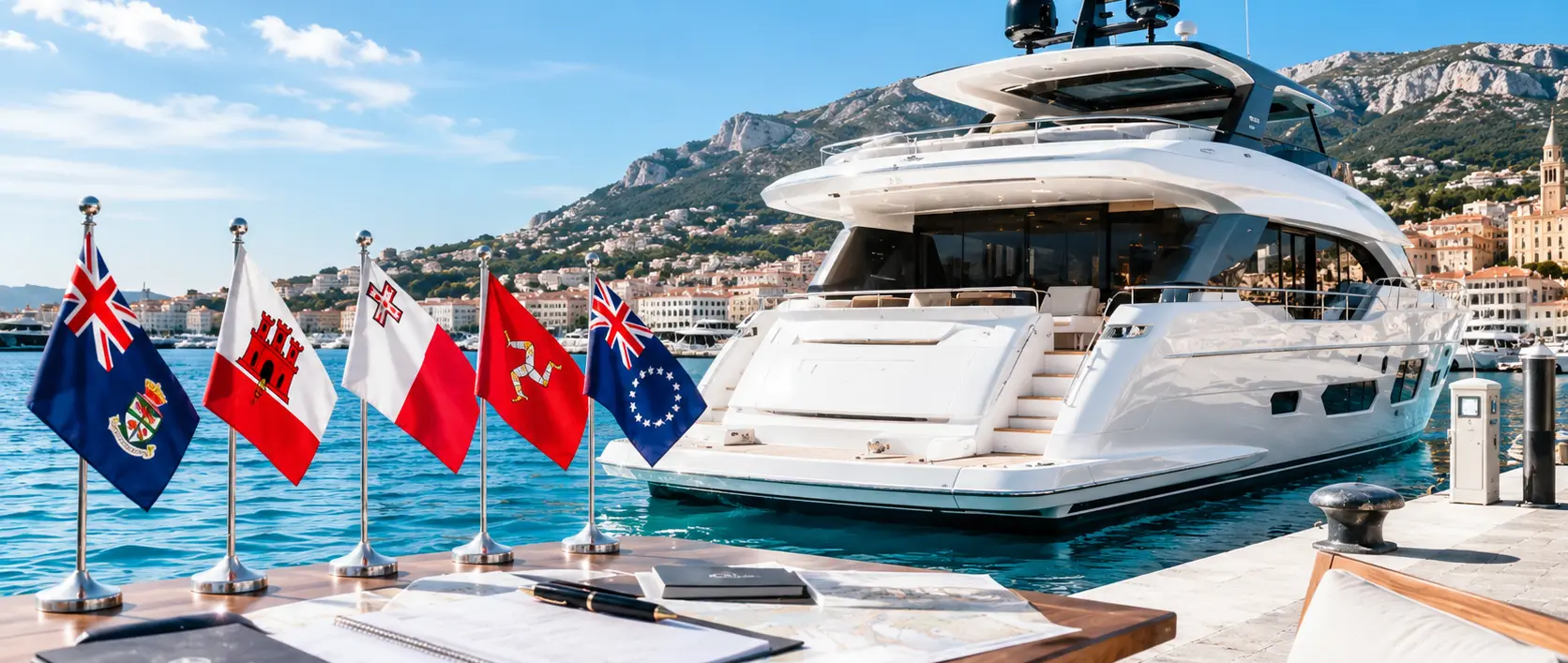
Choosing a superyacht flag is not a post-purchase formality. The registry can shape private or commercial use, technical compliance, crewing, finance and the wider ownership structure, making flag choice an essential part of acquisition due diligence.
For a prospective superyacht owner, choosing a flag can look like one of the administrative details that follows the real decisions. The yacht has to be found, inspected and valued; the purchase contract has to be negotiated; financing and insurance may need to be arranged; and the ownership entity has to be established. Against that background, registration can appear to be something that the lawyers and managers can settle once the yacht is almost ready to change hands. In reality, flag choice belongs much earlier in the acquisition process because it can affect how the yacht may be used, which technical standards apply, what surveys and certification are required, how crew are regulated and whether a proposed commercial or occasional-charter programme is practical.
That importance begins with a basic principle of maritime law. Registering a yacht gives it the nationality of a state, and that state assumes jurisdiction and control over the vessel in administrative, technical and social matters. The International Maritime Organization describes registration as the mechanism by which a ship is linked to a state, while each state establishes its own conditions for granting nationality and the right to fly its flag. The flag is therefore not simply the ensign displayed at the stern; it forms part of the legal and regulatory framework under which the yacht operates throughout its ownership.
For an owner buying a yacht worth tens or hundreds of millions of euros, that framework should be tested against the intended ownership programme before completion rather than selected according to familiarity, registration cost or the flag most commonly seen in a particular marina. Two outwardly similar yachts can have very different requirements if one will remain entirely private while the other will spend part of every summer chartering. A third owner may want private use most of the year but retain the ability to charter occasionally. Those differences can change the regulatory answer considerably, which is why the correct question is not simply which flag is best, but which flag is appropriate for this yacht, this owner and this operating plan.
The most important distinction to establish at the beginning is whether the yacht will operate privately, commercially or under a recognised arrangement permitting some combination of the two. That decision affects much more than whether guests pay a charter fee. Commercial operation can bring additional requirements covering construction and equipment, surveys, certification, safety management, manning and seafarer welfare, while the precise threshold and regime depend on the chosen administration, the yacht's dimensions, tonnage, passenger capacity and area of operation.
The major yacht registries demonstrate why an owner cannot safely assume that all flags treat the same yacht in the same way. Under the Red Ensign Group framework, Part A of the REG Yacht Code covers qualifying commercial motor and sailing yachts of 24 metres load-line length and over carrying no more than 12 passengers, while yachts carrying greater passenger numbers enter a different regulatory framework. Malta likewise operates a dedicated commercial-yacht regime, with its Commercial Yacht Code 2025 applying to commercial yachts of 24 metres load-line length and above carrying up to 12 passengers. These thresholds illustrate how quickly an apparently simple decision about private or commercial use becomes a technical and regulatory question.
The distinctions become particularly relevant for owners who want flexibility. Cayman updated its Yacht Engaged in Trade guidance in June 2026, providing a route under which a qualifying Cayman-registered pleasure yacht of 24 metres or more can obtain temporary YET certification permitting charter for up to 84 days in a calendar year, subject to the detailed requirements. The guidance requires compliance with the Red Ensign Group Yacht Code and addresses qualifying yachts operating in EU waters with the necessary VAT-paid or temporary-admission position. This is not an automatic conversion from private to commercial use; it is a defined regulatory mechanism with conditions that have to be satisfied.
The Marshall Islands has developed its own dual-use arrangements. Its Private Yacht Limited Charter regime applies, subject to the applicable requirements, to qualifying private yachts of at least 18 metres and below 500 gross tons, allowing limited charter for no more than 84 days per calendar year and no more than 12 passengers where local rules permit it. The RMI Yacht Code 2026 became effective on 1 January 2026 and forms part of the framework against which these yachts are assessed. The existence of several legitimate approaches is precisely why owners should begin with intended use rather than with a preconceived choice of registry.
An owner who expects the yacht to be exclusively private for ten years may place little value on commercial-code flexibility, while an owner whose financial model assumes a substantial charter programme will approach the decision very differently. Choosing a private regime because it appears administratively convenient and then deciding after purchase that charter income is desirable can lead to additional certification, surveys, management arrangements and potentially technical work. Maintaining a commercial structure that will never be used can equally add cost and administrative obligations without producing a practical benefit for that particular owner.
Once registered, the flag administration remains involved in the yacht's regulatory life. The international framework requires relevant vessels to be surveyed and verified so that appropriate statutory certificates can be issued, with administrations carrying out that work themselves or authorising recognised organisations and surveyors to act on their behalf. For a large yacht, this can touch construction standards, safety equipment, pollution-prevention systems, statutory certification, security arrangements and continuing compliance throughout the vessel's operating life. The relationship with the flag administration therefore continues long after the registration certificate has first been issued.
That makes the quality and accessibility of an administration an operational consideration rather than merely a reputational one. Superyachts frequently undergo modifications, carry unusual equipment, change cruising programmes and enter refit periods in which technical decisions have to be made quickly. Captains, managers, surveyors and class societies may need interpretations, approvals, dispensations or confirmation that a proposed arrangement satisfies the applicable rules. The owner is consequently buying into a continuing regulatory relationship, even if he or she never deals with the administration personally.
Age and history matter as well. A yacht that has spent many years operating successfully under one flag should not automatically be assumed to transfer to another without further examination. The prospective registry has to be satisfied that the vessel is eligible for registration and that the applicable technical and documentary requirements can be met. For an older yacht, a heavily modified yacht or one moving from private to commercial operation, that assessment deserves to form part of pre-purchase due diligence rather than being left until after title has passed.
This is also where the acquisition survey and the flag investigation should communicate with each other. A conventional condition survey may identify machinery, structural or safety defects, but the owner's advisers should separately establish whether the yacht as presented will satisfy the proposed flag and operating regime. A yacht can be perfectly capable of being purchased and operated while still requiring work before it can be registered or commercially certificated in the form the new owner intends. Discovering that distinction before closing creates choices, whereas discovering it after closing creates a problem that the owner already owns.
Crew regulation is another part of the equation, particularly once commercial operation is contemplated. The Maritime Labour Convention establishes internationally recognised standards for seafarers' working and living conditions through implementation by ratifying states, and its certification provisions apply to ships of 500 gross tonnage or more engaged in international voyages, as well as certain ships operating between ports in another country. Qualifying vessels must carry a Maritime Labour Certificate and Declaration of Maritime Labour Compliance. The practical effect is that flag choice, commercial status and crewing cannot sensibly be considered in isolation, particularly on larger yachts with substantial international crews.
Flag selection also has to work with the entity that will own the yacht. Registries establish their own ownership and eligibility rules, and an acquisition structure that works well for one administration may require modification for another. That is one reason an ownership company should not be incorporated merely because a particular jurisdiction has traditionally been associated with yacht ownership. The corporate structure, beneficial ownership position, intended use and proposed registry need to be designed together rather than assembled independently at different stages of the purchase.
Timing matters because the registered owner will normally appear throughout the transaction documentation. The bill of sale, financing documents, insurance arrangements, management agreements and registration application all need to describe a coherent ownership structure. If the proposed flag requires a different owning entity or additional qualification, discovering that late can complicate a closing that may already involve brokers, lawyers, banks, class, surveyors, insurers and two registries coordinating the yacht's deletion and re-registration. Early registry work reduces the number of moving parts at the point when the buyer is most exposed to delay.
Finance should be brought into the discussion early for the same reason. Where a lender is taking security over the yacht, the proposed registry and its mortgage-registration regime form part of the lender's legal analysis. The buyer may therefore have several flags that are technically available while the finance structure narrows the practical choice. Waiting until the acquisition is almost complete before establishing whether the intended registry is acceptable to the lender introduces a risk that can usually be avoided during the initial structuring phase.
Tax and customs treatment require an equally important distinction: the yacht's flag does not by itself determine its VAT or customs position. The flag establishes nationality and the regulatory jurisdiction of the vessel, while customs and tax treatment follows separate legal rules concerning ownership, residence, importation, use and the particular customs procedure involved. European Union temporary admission, for example, is a customs procedure with its own conditions, including requirements concerning the status of the holder, identification of the goods and compliance with the wider customs framework. A particular flag should therefore never be presented to an owner as a complete VAT or tax solution.
That distinction becomes especially important when private use, EU cruising and occasional charter appear in the same ownership plan. Regulatory permission from a flag administration to undertake a particular form of charter does not automatically resolve the separate fiscal and customs questions arising in every jurisdiction in which the yacht operates. Cayman expressly places its YET mechanism within a framework that includes the yacht's VAT-paid or temporary-admission position in EU waters, while the Marshall Islands makes clear that local rules continue to govern whether limited private-yacht charter is permitted in a particular area. Flag, ownership, tax and customs planning therefore have to describe the same real-world operation.
The sensible approach is to make the yacht lawyer, tax adviser, manager and registry work from the same proposed facts: who will own the yacht, where the beneficial owner is resident, where the yacht will be based, whether it will be imported, where it will cruise and whether it will ever charter. Those facts should drive the structure. Selecting the flag first and attempting to make every other part of the transaction fit around it reverses the proper sequence and increases the likelihood that the owner will later have to restructure something that could have been settled before completion.
Yachts change flag regularly, so choosing one registry does not lock the owner into it for the life of the vessel. That flexibility can nevertheless create a misleading impression that an imperfect choice at acquisition carries little consequence because the yacht can simply be moved later. In practice, a change of flag is another regulatory transaction. It can involve deletion from the existing register, documentary evidence of ownership, new registration, statutory surveys and certification, radio and identification documentation, manning issues, class involvement and coordination with insurers, managers and lenders.
The administrative work becomes particularly important when reflagging is combined with another change. A yacht being purchased may simultaneously change legal ownership, beneficial control, commercial status, manager, home port and flag. Each element is manageable on its own, but the closing process becomes much more vulnerable to delay when several have to occur together and one depends on documentation from another. The buyer's team should therefore establish the target flag sufficiently early to obtain a clear registration pathway and identify any preconditions before the contractual delivery date.
There is another reason not to treat later reflagging casually: the regulatory environment continues to develop. Malta's Commercial Yacht Code 2025 replaced its previous code for the relevant yachts, the Marshall Islands Yacht Code 2026 came into force at the start of this year, Cayman issued revised YET guidance in June, and the International Maritime Organization approved new guidelines on ship registration in April 2026. Those IMO guidelines are intended to strengthen verification, due diligence, ownership records and oversight of registration procedures. The direction is towards clearer accountability and stronger registration processes rather than towards flagging becoming a purely clerical exercise.
None of this means that reflagging should be avoided when the owner's circumstances genuinely change. A yacht may move from private to commercial use, change cruising area, be refinanced or pass to a new owner whose preferred structure points to a different administration. The important distinction is between a deliberate later change driven by changed circumstances and using future reflagging as an excuse not to resolve questions that were already foreseeable when the yacht was bought.
Owners are often presented with league tables of popular yacht flags, comparisons of registration fees or claims that one registry is faster, safer, more prestigious or more commercially flexible than another. Those comparisons can be useful, but they become misleading when separated from the yacht itself. A 35-metre private yacht based principally in one region, a 70-metre commercially operated charter yacht and a 100-metre private yacht with a large international crew may all justify different conclusions even when the beneficial owners have similar backgrounds. The popularity of a registry is therefore evidence of market acceptance, not proof that it is the correct answer for every acquisition.
What matters is the complete operating proposition. The prospective flag should accept the owner and ownership structure; the yacht should be technically capable of meeting the relevant regime; its commercial or private status should correspond with the owner's real intentions; the crewing and certification requirements should be workable; lenders and insurers should be comfortable with the structure; and the tax and customs analysis should make sense in the places where the yacht will actually operate. Administrative responsiveness, technical competence and the practical experience of the captain and manager with the registry should then form part of the comparison rather than being added as an afterthought.
That work belongs alongside the rest of the acquisition due diligence. Before committing to a yacht, the buyer's advisers should know not merely whether the vessel can be registered under the proposed flag, but what will be required to register and operate it in the intended manner from the first day of ownership. Any additional survey, certification, technical modification or corporate restructuring can then be costed and incorporated into the transaction instead of emerging as an unpleasant surprise between closing and the owner's first cruise.
Flag choice is consequently less about selecting a nationality for the yacht than designing the regulatory environment in which ownership will take place. The right answer is the flag that fits the actual vessel, the owner's structure and the intended programme with the least unnecessary friction while maintaining the standards required for safe and lawful operation. When that analysis is performed before the purchase is completed, registration becomes part of a coherent acquisition strategy rather than a problem to solve after the yacht has already changed hands.
Explore
Go deeper into the yachts, companies, events and destinations directly connected to this article.
Company
Explore the company profile and related Superyacht Guide coverage.
Continue reading
A sanctions freeze can immobilise a superyacht without making its crew sanctioned, leaving wages, contracts and daily operations caught between employment law and financial …
Running a 40m superyacht requires a substantial annual budget for crew, maintenance, fuel, berthing and other operating costs. Superyacht Guide's 2026 model of 322 …

Buying the yacht is only the beginning. The first 100 days turn a multimillion-euro acquisition into a functioning yacht operation, covering handover, crew, management, …

Superyacht Guide's 2026 running cost calculator provides annual, monthly and five-year ownership estimates using either an existing yacht or a planning value. It gives …
Superyacht Guide
Continue into the wider Superyacht Guide.
Business opportunities · Superyacht Guide
Companies serving the superyacht market can discuss clearly identified advertising, sponsorship and business-profile opportunities. Commercial activity remains separate from independent editorial coverage.