

A sanctions freeze can immobilise a superyacht without making its crew sanctioned, leaving wages, contracts and daily operations caught between employment law and financial restrictions. For captains and crew, the practical questions quickly become whether they can be paid, who can authorise essential spending and how they get home if the yacht must remain frozen.
A superyacht can become frozen while the crew are still making beds, checking generators, standing watch and waiting for their salaries to arrive. There may be no dramatic boarding party and no immediate order for everyone to leave; instead, the first signs can be a payroll transfer that does not clear, a supplier refusing an instruction or a management company telling the captain that ordinary spending now needs legal approval.
For the people aboard, sanctions create an unusual separation between the yacht and those who work on it. A vessel may be frozen because it is owned or controlled by a designated person, but that does not automatically make the captain, engineer, deckhand, chef or stewardess sanctioned; the difficulty is that paying and supporting them can require transactions connected with property whose ordinary commercial life has been restricted.
An asset freeze is aimed at the funds and economic resources of a designated person and at transactions that make funds or economic resources available to that person. In the United Kingdom, OFSI’s financial-services threat assessment has specifically highlighted suspected sanctions breaches involving payments through the UK financial system to staff on superyachts linked to Russian designated persons, showing why otherwise routine payroll can become a compliance issue once ownership is caught by sanctions.
The important point for crew is that their employment position and the sanctions status of the yacht are not the same question. A seafarer may still have a contractual claim for salary, leave or notice even when the account normally used to pay those obligations is frozen, while banks, managers and payroll providers must separately decide whether a payment can lawfully be processed under an exception, a general authorisation or a specific licence.
OFSI’s 2026 guidance on payments to personal staff of designated individuals shows how restrictive that analysis can be. The guidance says personal staff payments will generally not be licensed simply to preserve a designated person’s previous lifestyle, although OFSI may consider limited exceptions under grounds such as basic needs, routine holding and maintenance or prior obligations, including payments for services already provided and arrangements needed to wind employment down.
The United States has faced the same practical problem from a different sanctions regime. In OFAC FAQ 834, a vessel wind-down authorisation expressly covered transactions connected with crew health and safety, wages, employee benefits and crewing services, illustrating that crew costs can be legitimate and necessary while still requiring a lawful sanctions pathway rather than an ordinary instruction to the bank.
Maritime employment rights do not disappear because the payment mechanism has become complicated. The Maritime Labour Convention, 2006 establishes international standards covering seafarers’ employment agreements, payment of wages and repatriation for ships and seafarers within its scope, but the existence of an employment right does not by itself unlock frozen funds or remove the need for sanctions compliance.
Once recreational use stops, the purpose of the crew can change quickly. Some personnel may be needed to keep machinery safe, maintain watchkeeping, protect the vessel from fire or flooding and satisfy flag-state or port requirements, while other roles associated with guest service may no longer be necessary; that distinction is closely related to the question of who is permitted to pay for maintaining a seized or frozen superyacht.
OFSI’s current general financial-sanctions guidance allows licensing in appropriate cases for reasonable costs associated with the routine holding or maintenance of frozen assets, but that does not amount to permission to preserve every element of the owner’s pre-sanctions lifestyle. Captains, managers, accountants and suppliers therefore have to separate expenditure genuinely necessary to preserve the yacht from services that could be viewed as continuing its recreational use, the same compliance boundary examined in Superyacht Guide’s sanctions guidance for yacht brokers, managers and shipyards.
That can lead to reduced manning, redundancies or temporary retention of a technical skeleton crew while the legal position is clarified. There is no universal crew formula because the answer depends on the flag, the yacht’s commercial or private status, safe-manning requirements, the employment agreements in force and the terms of any sanctions licence, so a frozen yacht may still have people aboard long after normal owner use has ended.
Leaving the yacht can be as complicated as staying. Flights need to be purchased, final wages and notice entitlements calculated, immigration status checked and replacement personnel arranged if the vessel must remain safely manned, and each of those steps can involve payments or services that need to be screened when the employer, management structure or yacht is linked to a designated person.
If the employment structure fails altogether, the situation can begin to resemble seafarer abandonment even though sanctions caused the financial break. The International Maritime Organization’s abandonment framework, supported by the International Maritime Organization and the ILO, focuses on failures such as unpaid wages, lack of essential support and failure to arrange repatriation, giving flag and port authorities a framework for dealing with crew who might otherwise be left aboard without money or a route home.
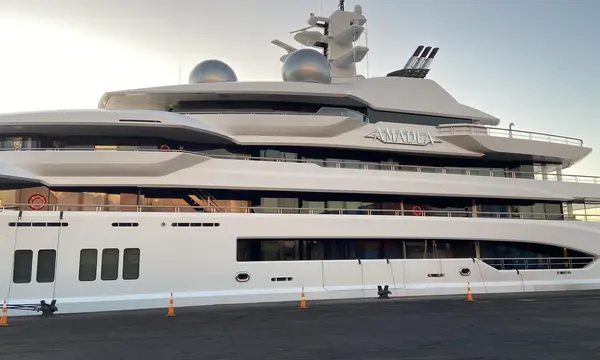
The 106-metre Amadea demonstrates why payments connected with a sanctioned yacht require careful legal separation from the position of the people physically serving aboard. In its civil forfeiture case concerning Amadea, the U.S. Justice Department alleged that the yacht was improved and maintained in violation of sanctions applicable to its beneficial owner; the allegations concerned the ownership, services and payment structure around the asset, not a proposition that ordinary crew members became designated merely because they worked on the vessel.
For captains and crew, the practical lesson is that a frozen yacht can remain a workplace even after it has ceased to function as a private leisure asset. The safest course is neither to assume that all payments must stop nor to continue business as usual, but to identify the employer, preserve wage and employment records, obtain sanctions advice before moving money, establish what manning is genuinely required and secure a lawful route for anyone who needs to be repatriated.
Explore
Go deeper into the yachts, companies, events and destinations directly connected to this article.
Company
Explore the company profile and related Superyacht Guide coverage.
Continue reading

Superyachts can expose far more than their location. AIS, connected systems, ownership records, suppliers and human activity can collectively reveal owners, guests and itineraries.

When authorities seize or freeze a superyacht, maintenance bills continue. Who pays depends on custody, sanctions rules, owner funds and eventual sale.

A superyacht can be easy to locate but far harder to connect legally to the person authorities want to target. Layered companies, differing ownership …
A superyacht can offer distance from conflict, but port access, sanctions, insurance and wartime law can quickly turn autonomy into exposure.
Superyacht Guide
Continue into the wider Superyacht Guide.
Business opportunities · Superyacht Guide
Companies serving the superyacht market can discuss clearly identified advertising, sponsorship and business-profile opportunities. Commercial activity remains separate from independent editorial coverage.