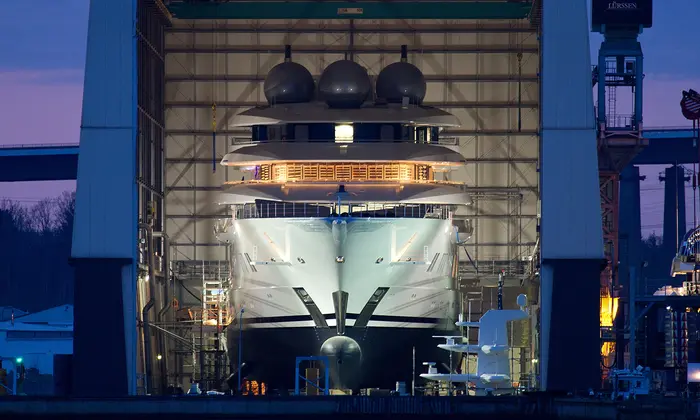
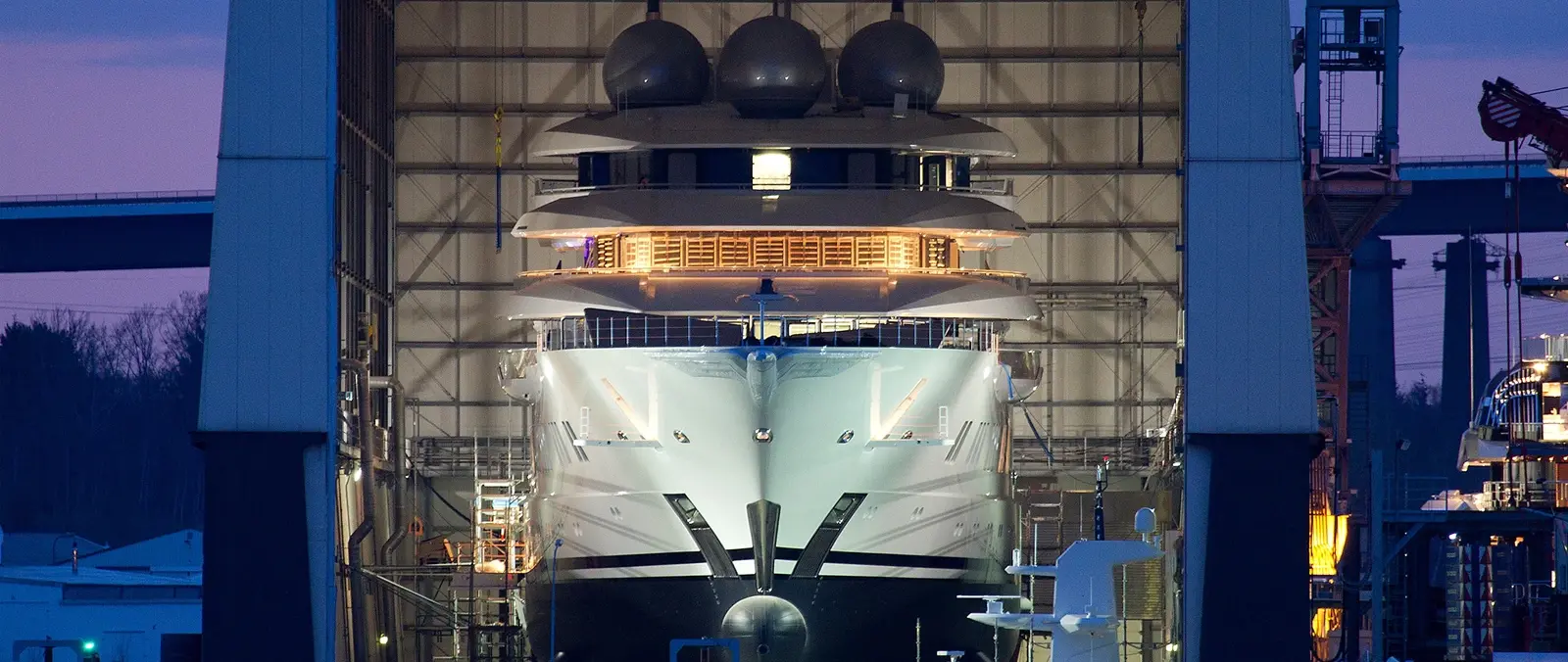
When authorities seize or freeze a superyacht, maintenance bills continue. Who pays depends on custody, sanctions rules, owner funds and eventual sale.
A superyacht can be prevented from sailing in a matter of hours, but its operating costs cannot be switched off nearly as quickly. Even a yacht sitting permanently alongside needs power, security, insurance, machinery care and enough technical attention to prevent a valuable asset from deteriorating.
That creates an awkward question whenever authorities seize, freeze or detain a large yacht: who pays the bills while lawyers argue about ownership? The answer depends on the legal mechanism involved and can include the government holding the yacht, licensed use of an owner's frozen funds, an asset-forfeiture fund or ultimately the value recovered when the yacht is sold.
The first distinction is legal rather than technical. A yacht whose owner's assets have been frozen under sanctions can remain legally owned by the same person even though dealing with, moving or paying for the asset may be restricted, whereas a yacht seized in a forfeiture case can pass into the physical custody of a government agency or another authorised custodian.
Judicial arrest in a maritime claim and administrative detention by a maritime authority create still other situations. They can all leave a yacht unable to sail, but they do not automatically produce the same answer about responsibility for berthing, insurance, contractors or continuing maintenance.
The United States provides one of the clearest examples through the Department of Justice Assets Forfeiture Program. Its Assets Forfeiture Fund supports costs connected with seized and forfeited property, including storage, maintenance, security and disposition, meaning the government asset-management system can initially fund preservation while a case proceeds.
That does not mean the person writing the cheque today necessarily carries the final economic burden. Asset-management and case expenses can affect the proceeds ultimately remaining from forfeited property, while unresolved ownership claims can continue long after the government has assumed practical responsibility for keeping the asset secure and saleable.
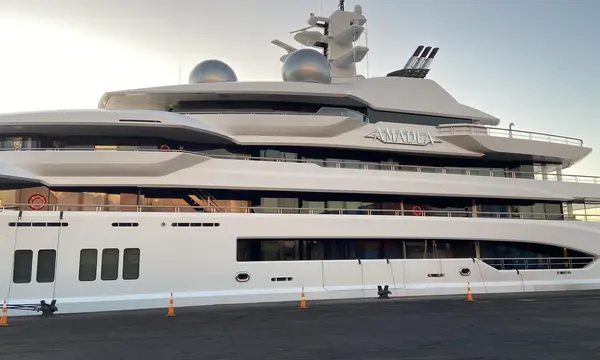
The 106.1-metre Amadea provides a documented example of those costs. In 2024 proceedings over a proposed interlocutory sale, the US government told the Southern District of New York that expenses associated with the yacht were at least $743,750 per month, including approximately $600,000 in monthly maintenance and the monthly equivalent of a $1.725 million annual insurance premium.
The court nevertheless denied the government's then-pending motion for an interlocutory sale. The decision showed that an extraordinary monthly bill is not automatically enough by itself to establish that continued custody has become legally excessive, particularly when the property in question is an unusually large and inherently expensive superyacht.
The physical yacht was later converted into cash. A Department of Justice Office of the Inspector General report records that Amadea was sold on 10 October 2025 for $187 million, while the related legal appeal remained pending and the net proceeds were to remain in the Seized Asset Deposit Fund until the dispute was resolved.
Sanctions freezes can work differently because freezing an economic resource does not automatically transfer ownership of it to the state. UK Office of Financial Sanctions Implementation guidance recognises maintenance of frozen assets as a licensing issue and specifically uses a superyacht as an example of an asset whose preservation costs may require independent specialist evidence.
OFSI identifies marine surveyors and naval architects among the professionals who may be appropriate to assess maritime assets. The underlying principle is that expenditure should be necessary and reasonable for preservation rather than a way of financing continued recreational use by a sanctioned owner.
This distinction helps explain why the broader category of sanctioned, frozen and seized superyachts cannot be treated as though every vessel is under the same legal regime. A government may be paying custody expenses in one case while another yacht is maintained through licensed transactions involving frozen resources belonging to its owner.
A large yacht that never leaves the berth still contains engines, generators, electrical systems, batteries, pumps, tanks, fire equipment, air-conditioning, navigation electronics and extensive hotel systems that require continuing attention. Leaving those systems unmanaged for months can turn a preservation exercise into a much larger refit problem and reduce the value of an asset that may eventually need to be sold.
Berthing, shore power, insurance, security and specialist contractors can therefore remain unavoidable even when normal cruising operations have stopped. Authorities or custodians may reduce operating expenditure dramatically, but reducing it to zero can be economically self-defeating if deterioration destroys more value than sensible preservation would have cost.
An interlocutory sale can replace a deteriorating and expensive physical asset with cash while ownership litigation continues. Once a yacht has been converted into money, the court or government no longer needs to fund the same programme of engineering care, insurance, berthing and physical security simply to preserve the disputed value.
The issue sits at the intersection of asset forfeiture, sanctions, legal services and insurance and finance. A sale can simplify custody economics without necessarily deciding who ultimately has the strongest legal claim to the value represented by the yacht.
There is no single international rule making either the government or the owner responsible in every case. A forfeiture authority may initially fund custody and preservation, licensed frozen funds may support necessary maintenance in a sanctions case, and asset-management expenses may eventually be reflected in the net proceeds available after a forfeited yacht is sold.
The final economic burden can therefore remain uncertain for years even though the practical bills arrive every month. A seized superyacht may be politically frozen and legally contested, but physically it remains a complex ship, and somebody still has to pay enough to keep that ship from becoming worth substantially less while the courts decide what happens next.
Explore
Go deeper into the yachts, companies, events and destinations directly connected to this article.
Continue reading

A superyacht can be easy to locate but far harder to connect legally to the person authorities want to target. Layered companies, differing ownership …
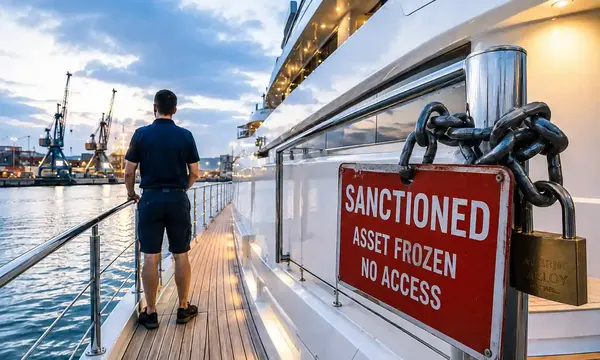
A sanctions freeze can immobilise a superyacht without making its crew sanctioned, leaving wages, contracts and daily operations caught between employment law and financial …

Superyachts can expose far more than their location. AIS, connected systems, ownership records, suppliers and human activity can collectively reveal owners, guests and itineraries.
A superyacht can offer distance from conflict, but port access, sanctions, insurance and wartime law can quickly turn autonomy into exposure.
Superyacht Guide
Continue into the wider Superyacht Guide.
Business opportunities · Superyacht Guide
Companies serving the superyacht market can discuss clearly identified advertising, sponsorship and business-profile opportunities. Commercial activity remains separate from independent editorial coverage.