
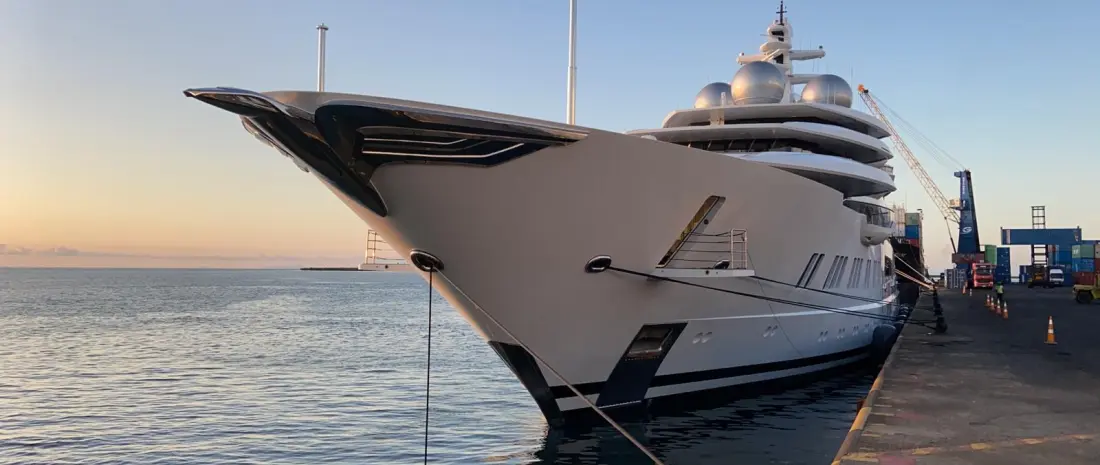
A superyacht can be easy to locate but far harder to connect legally to the person authorities want to target. Layered companies, differing ownership tests and separate seizure and forfeiture procedures can turn an enforcement action into years of litigation.
A superyacht can be one of the easiest private assets in the world to locate and one of the hardest to attribute with legal certainty. The vessel may be sitting in plain sight at a marina, yet the person who appears to use it may be several corporate layers away from the company named on the registry, and that gap can determine whether an attempted freeze, detention, seizure or forfeiture survives challenge.
Large yachts are commonly held through special-purpose companies rather than directly in an individual's name, and that structure is not inherently suspicious. The legal difficulty begins when authorities need to establish whether the registered company is the substantive owner or merely one layer in a chain leading to the person who ultimately provides the money, directs the yacht's use or exercises effective control.
That distinction has become important enough for the UK's Office of Financial Sanctions Implementation to review how ownership-and-control rules operate in practice. OFSI's 2026 call for evidence said firms had reported difficulty assessing control where a designated person may be able to influence an entity without exercising that power openly, creating legal risk and uncertainty for businesses expected to apply sanctions correctly.
Even when two governments are pursuing the same sanctioned individual, their legal tests may not be identical. In the United States, OFAC's 50 Percent Rule automatically treats an entity as blocked when one or more blocked persons own at least 50 percent of it in the aggregate, but OFAC expressly says that rule concerns ownership rather than control.
UK sanctions rules use a broader ownership-and-control framework that can require an assessment of whether a designated person has rights or influence capable of directing an entity's affairs. For a yacht held through companies, nominees, trusts, managers and financing arrangements across several jurisdictions, the same factual structure can therefore raise different legal questions depending on which authority is acting.
The language used around enforcement can hide another important distinction because freezing, detention, seizure and forfeiture are not interchangeable. A government may be able to stop a yacht moving or dealing with its assets under one legal power, while permanently taking the property requires a different statutory route, evidence capable of supporting that route and an opportunity for competing claimants to challenge the action.
The Amadea case shows how many steps can sit between suspicion and final disposition. The US Department of Justice said the yacht was seized in Fiji after a US warrant and a mutual legal assistance request, and its later civil forfeiture complaint expressly stated that the government carries the burden of proving that the property is forfeitable.
That proof rarely comes from a single registry entry. Investigators may examine who funded the purchase, who paid operating and refit bills, who selected the crew or managers, who directed itineraries, who authorised major works, who used the yacht and whether money moved through accounts or companies that connect the asset to the person authorities say is the real owner.
In the Amadea forfeiture case, the Justice Department alleged that beneficial ownership had been moved through a series of shell companies in a manner designed to conceal ownership, while also pointing to use of the yacht, renovation plans, travel planning and responsibility for upkeep. In the separate Tango case, US investigators likewise alleged that shell companies obscured Viktor Vekselberg's interest even though the yacht's design, use and management history were said to point back to him.
A superyacht may be flagged in one jurisdiction, owned by a company incorporated in another, managed from a third, financed through banks elsewhere and physically located in a fifth country when authorities act. That means investigators may need registry records, banking evidence, corporate documents, witness statements and assistance from foreign courts before a domestic legal theory can be turned into control of the yacht itself.
Amadea again provides a clear example because the United States obtained its warrant while the yacht was in Fiji and relied on Fijian authorities to execute the action under local process. The UK's detention of Phi illustrates a different route, with the vessel held under transport-sanctions powers and the legality of that detention challenged through the British courts rather than through a US-style civil forfeiture case.
The central difficulty is therefore not simply discovering a yacht or identifying the person most closely associated with it in public reporting. Authorities must connect the asset to a legally relevant owner or controller under the law they are using, establish jurisdiction, satisfy the evidential threshold for the particular enforcement step and then defend that decision against anyone with a credible competing claim.
For the superyacht industry, that makes ownership provenance more than an administrative formality. Brokers, managers, banks, insurers, shipyards and other counterparties increasingly need a defensible picture of who sits behind the owning structure, because a yacht whose paperwork cannot be reconciled with its economic reality can become difficult not only to transact but also to freeze, seize, release or ultimately sell.
Explore
Go deeper into the yachts, companies, events and destinations directly connected to this article.
Continue reading

When authorities seize or freeze a superyacht, maintenance bills continue. Who pays depends on custody, sanctions rules, owner funds and eventual sale.
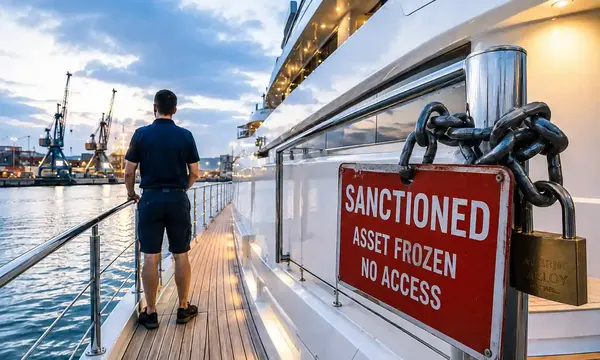
A sanctions freeze can immobilise a superyacht without making its crew sanctioned, leaving wages, contracts and daily operations caught between employment law and financial …
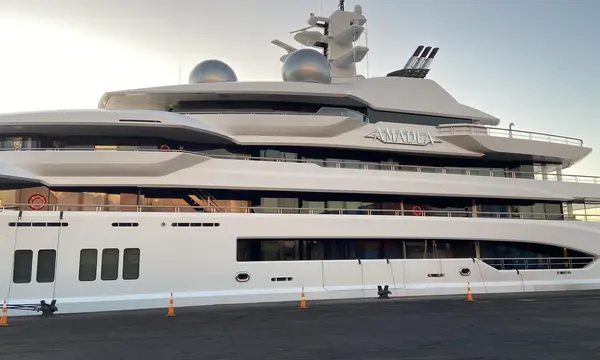
A superyacht can offer distance from conflict, but port access, sanctions, insurance and wartime law can quickly turn autonomy into exposure.
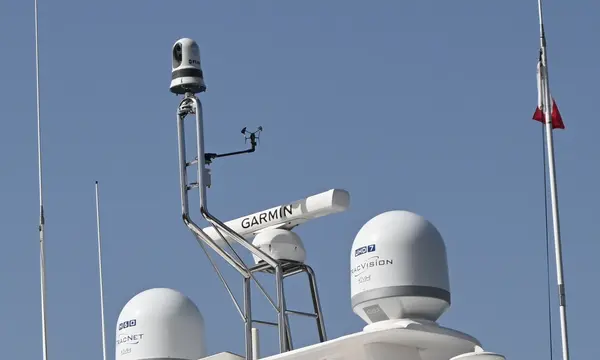
Superyachts can expose far more than their location. AIS, connected systems, ownership records, suppliers and human activity can collectively reveal owners, guests and itineraries.
Superyacht Guide
Continue into the wider Superyacht Guide.
Business opportunities · Superyacht Guide
Companies serving the superyacht market can discuss clearly identified advertising, sponsorship and business-profile opportunities. Commercial activity remains separate from independent editorial coverage.