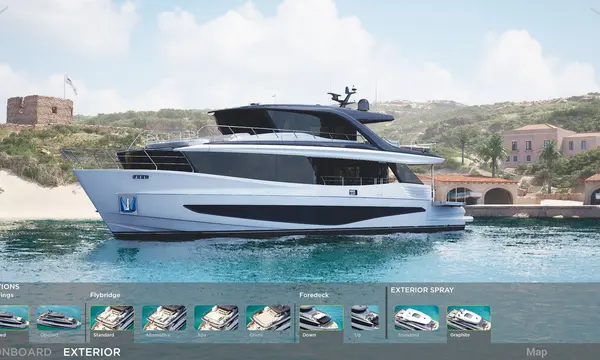
From blueprint to reality: How Princess Yachts’ new 3D configurator is changing the way we purchase yachts
Our Network Careers en de en es fr it pt ru zh Make an Enquiry X95 Vista X90 X80 Y95 Y80 Y72 F65 F58 …
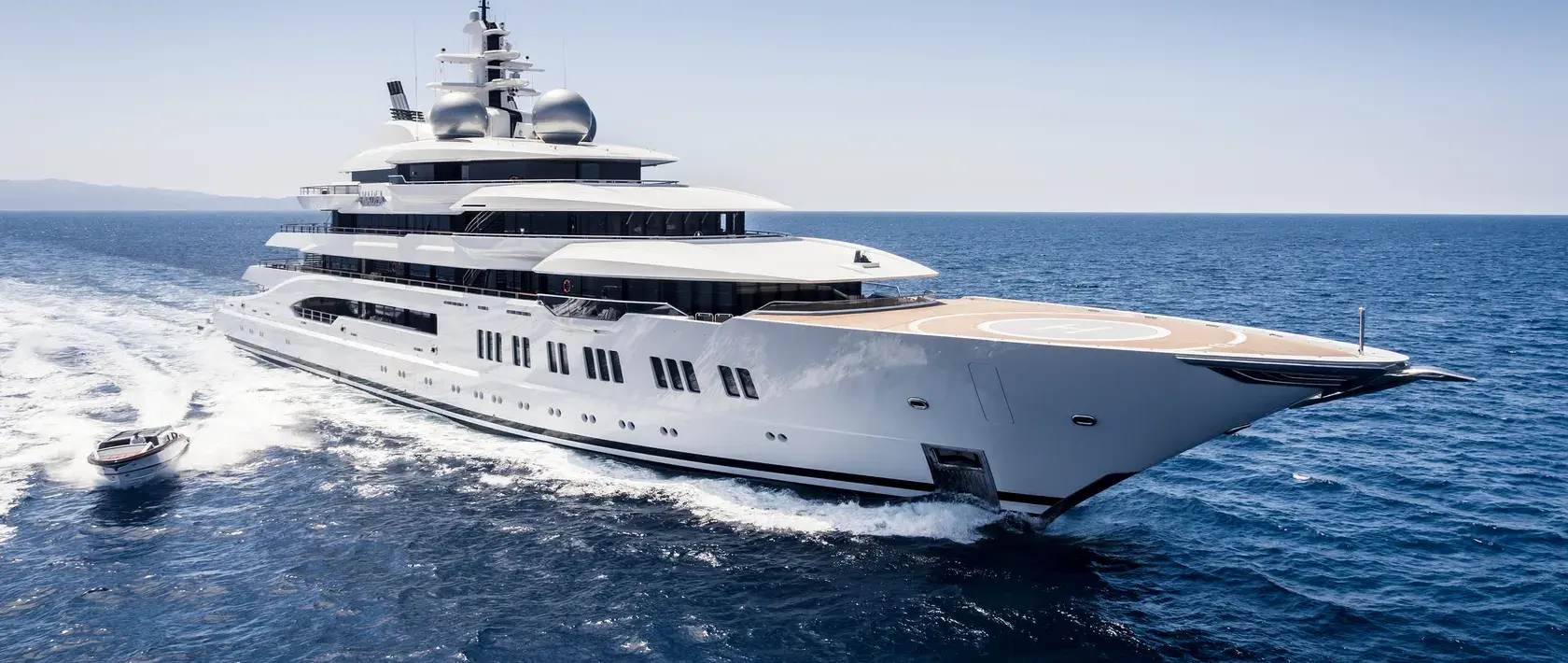
Dubai property developer Abbas Sajwani has emerged as the buyer of 106.1-metre Lürssen Amadea, acquired from the U.S. government for $187 million following one of the superyacht industry's most closely watched forfeiture cases.
Dubai property developer Abbas Sajwani has emerged as the buyer of the 106.1-metre Lürssen superyacht Amadea, bringing new clarity to one of the most closely watched yacht ownership and forfeiture cases of recent years. Sajwani has now discussed the acquisition publicly from aboard the yacht, while U.S. government financial records establish that Amadea was sold for $187 million following its disposal by the United States.
The sale followed more than three years of seizure, litigation and government custody after Amadea was detained in Fiji in 2022 at the request of the United States. The U.S. Marshals Service subsequently disposed of the yacht through a sealed-bid auction in September 2025 without publicly identifying the successful bidder. Department of Justice financial statements record the completed sale at $187 million on 10 October 2025.
Sajwani's involvement provides the missing human element behind a transaction whose broad outline had already become public. The U.S. Marshals Service disclosed that it had successfully sold Amadea in a sealed-bid process but kept the identity of the buyer confidential. Sajwani has since spoken to Forbes aboard the yacht and described how he had previously inspected Amadea several years before eventually securing it through the government sale.
According to Forbes, Sajwani's successful bid exceeded the second-highest offer by only $1 million. The 27-year-old founded Dubai-based luxury property developer AHS Properties in 2021 and has built a business focused on the upper end of Dubai's residential market. His acquisition of Amadea therefore moves the yacht decisively away from government custody and back into conventional private use.
That distinction matters because Amadea had spent years being discussed primarily as a sanctions asset rather than as a yacht. Ownership arguments, forfeiture proceedings, legal standing and maintenance bills had largely displaced discussion of design, cruising and private use. The identification of a new owner changes that context.
Perhaps the most important element for the wider superyacht market is the documented transaction value. The Department of Justice initially described Amadea as being worth approximately $300 million or more when the yacht was seized in 2022. A later appraisal referred to during the forfeiture proceedings put the figure at approximately $230 million. The eventual $187 million sale therefore took place materially below both of those earlier benchmarks.
It would be misleading, however, to treat the transaction as a straightforward measure of what every comparable 100-metre-plus yacht is worth. Amadea was not sold through an ordinary voluntary brokerage campaign in which an owner could wait indefinitely for the preferred price. It was a government-controlled disposal following years of legal proceedings, substantial publicity and an unusual ownership history.
Even with those qualifications, documented transaction prices for yachts of this scale are exceptionally valuable. Many of the world's largest privately owned yachts change hands without a confirmed sale price ever reaching the public domain. In Amadea's case, the figure appears in U.S. government financial statements, making the $187 million amount considerably stronger evidence than an asking price, broker estimate or speculative yacht valuation.
The transaction also demonstrates why the difference between estimated value and realised value matters in the upper end of the yacht market. Construction cost, replacement value, appraisal value and eventual selling price can be very different numbers, particularly when the seller is operating under unusual legal or commercial constraints.
Amadea's path to the auction began in May 2022, when Fijian authorities acted on a U.S. seizure warrant. The Department of Justice alleged that sanctioned Russian businessman Suleiman Kerimov was the yacht's beneficial owner and that transactions connected with maintaining the vessel had involved violations of U.S. sanctions law. Eduard Khudainatov and Millemarin Investments disputed the government's position and asserted ownership interests in the yacht.
That dispute continued through the U.S. federal courts even as the government sought to preserve and ultimately dispose of the vessel. In June 2026, the U.S. Court of Appeals for the Second Circuit upheld the lower court's decision that Khudainatov and Millemarin lacked the ownership interest necessary to establish standing to contest the forfeiture. The decision removed a major remaining challenge surrounding the government's action.
The history makes Amadea an unusually important case for the superyacht industry. It demonstrated how beneficial ownership can become the central issue when a yacht is held through corporate structures, how expensive a very large yacht remains even while immobilised, and how difficult it can be for authorities to move from seizure to a legally defensible sale.
For brokers and buyers, it also illustrates why provenance can matter almost as much as technical condition. Purchasing a yacht that has passed through forfeiture requires confidence not merely in machinery, class and survey documentation but in the title being transferred and the legal process behind it.
Away from its legal history, Amadea remains one of Lürssen's significant large custom yachts. The German shipyard confirms that the yacht measures 106 metres, has an 18-metre beam and was delivered in 2017. Espen Øino International created the exterior design, while Zuretti Design was responsible for the interior. One of its most recognisable exterior details is the sculptural chrome albatross mounted at the bow.
Sajwani has indicated that the yacht's existing design was part of its attraction and that he does not intend to undertake a wholesale refit. That is notable after several years during which Amadea's condition and the considerable expense of preserving it formed part of the broader legal story.
The yacht also already exists within Superyacht Guide's wider fleet coverage as a 106.1-metre Lürssen delivered in 2017. The newly identified ownership and documented transaction price add an unusually well-sourced chapter to the history of a yacht whose ownership structure has previously been the subject of extensive litigation.
For years, Amadea's story was dominated by the question of who legally controlled the yacht and whether the United States could sell it. The $187 million transaction and Sajwani's emergence as the buyer move the story into a different phase.
Amadea is no longer merely an example in the debate over sanctioned and seized superyachts. She is once again a privately operated 106-metre Lürssen, but with one of the most extensively documented ownership transitions of any yacht in her size class.
Continue reading
Our Network Careers en de en es fr it pt ru zh Make an Enquiry X95 Vista X90 X80 Y95 Y80 Y72 F65 F58 …
Our Network Careers en de en es fr it pt ru zh Make an Enquiry X95 Vista X90 X80 Y95 Y80 Y72 F65 F58 …
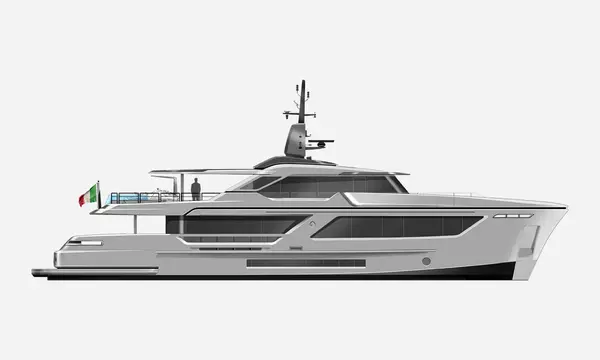
An Australian Owner has purchased an RJ 102 14.02.2024 An Australian Owner has purchased an RJ 102 Five contracts in the first six weeks …
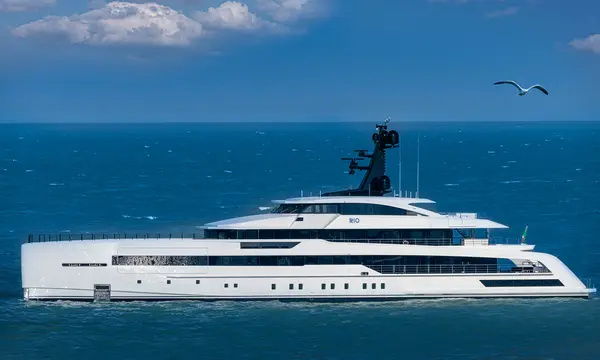
CRN published an official news and events update about The CRN M/Y RIO Superyacht undergoes her first sea trial., supporting the public record for …
Superyacht Guide
Continue into the wider Superyacht Guide.