Superyacht Running Cost Calculator 2026: Crew, Fuel, Berthing and Maintenance
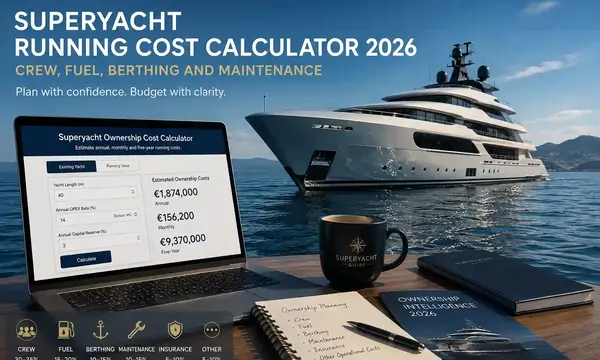
Superyacht Guide's 2026 running cost calculator provides annual, monthly and five-year ownership estimates using either an existing yacht or a planning value. It gives …
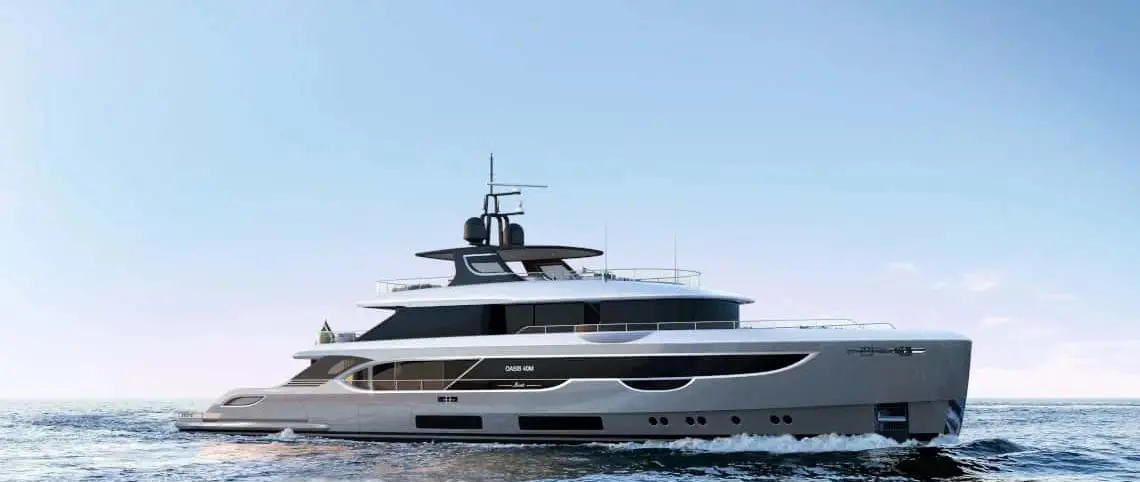
Running a 40m superyacht requires a substantial annual budget for crew, maintenance, fuel, berthing and other operating costs. Superyacht Guide's 2026 model of 322 yachts between 39 and 41 metres also shows why owners should keep a separate reserve for major refit and renewal.
A 40-metre superyacht is already a substantial professional operation. It needs full-time crew, continuous technical maintenance, insurance, management, berthing and enough fuel and supplies to remain ready for the owner's programme, so the purchase price tells only part of the ownership story.
Superyacht Guide's 2026 Cost Intelligence model contains complete operating-cost profiles for 322 yachts between 39 and 41 metres. These are planning estimates rather than reported owner accounts, but the dataset provides a consistent way to see how a typical 40m budget is divided between crew, maintenance, fuel, berthing and the other recurring costs of operating the yacht.
The median central operating-cost estimate across the 39–41m cohort is approximately €1.69 million per year. The model's lower case is around €1.27 million, while the higher-cost case reaches approximately €2.28 million, showing how strongly utilisation, condition, crewing and cruising programme can change the final bill.
Major refit and lifecycle expenditure should be considered separately from routine operating cost. The median annualised reserve in the 40m cohort is approximately €290,000, taking the combined central planning requirement for normal operation plus long-term renewal to about €1.98 million.
This is more useful than simply applying a percentage to the yacht's value because it shows what the budget is actually funding. Superyacht Guide's broader ownership-cost guide for 40m to 100m yachts gives the size-level context, while this analysis focuses specifically on where the money goes on a yacht around 40 metres.
Annual cost category40m planning figureShare of OPEXCrew salaries and employment costs€590,00035.0%Travel, training, medical and uniforms€50,0003.0%Maintenance and routine repairs€340,00020.0%Fuel and lubricants€200,00012.0%Berthing, ports and agency fees€140,0008.0%Insurance€80,0005.0%Provisions and hospitality€100,0006.0%Tenders, toys and deck equipment€70,0004.0%Yacht management and administration€50,0003.0%Flag, registration, class and surveys€30,0002.0%Communications, IT and security€30,0002.0%Refit and lifecycle reserve€290,000Separate from OPEX
Crew salaries and employment costs are the largest individual line in the model at approximately €590,000 a year, representing about 35.0% of central operating expenditure. A 40m yacht has to maintain professional deck, engineering, interior and command capability even when owner use is relatively light, which makes crew much less sensitive to cruising days than fuel or port expenditure.
Travel, training, medical costs and uniforms add another approximately €50,000. Actual expenditure can increase with rotational contracts, relief crew, recruitment, charter operations and specialist positions, while a stable private yacht with low turnover may remain closer to the central planning case.
Fuel and lubricants account for approximately €200,000 in the central 40m model. Unlike crew, this line can change dramatically with engine hours, cruising speed, passage distance, generator load, tender use and fuel price, so a yacht completing long repositioning passages will not resemble one spending most of the season around a single cruising area.
Berthing, ports and agency fees contribute approximately €140,000. Home-port contracts, winter berthing and ordinary marina nights can be reasonably predictable, but premium Mediterranean destinations, major events and short-notice availability can push the real cost materially higher than an annual model suggests.
Routine maintenance and repairs account for approximately €340,000, around 20.0% of the central operating budget. This covers the continuing technical burden of machinery, generators, HVAC, stabilisers, safety equipment, navigation systems, paint, teak and hotel systems rather than a major transformation of the yacht.
Refit is different because major expenditure arrives unevenly. Paint programmes, engine or generator overhauls, class-related work, teak replacement, stabiliser renewal, AV/IT upgrades and larger interior projects can create a very expensive yard year, which is why the model keeps approximately €290,000 of annualised lifecycle reserve outside ordinary OPEX.
Age and condition can move a yacht well above the central estimate. Deferred maintenance, machinery approaching overhaul intervals, ageing electronics, deteriorating paint or teak and an approaching major survey can all convert what looked like a normal operating year into a substantial technical programme.
Usage is equally important because heavy cruising increases fuel, machinery hours, provisioning, port calls and wear. Charter activity may generate revenue, but it can also increase compliance, guest operations, crew workload and maintenance demand, so gross charter income should not be treated as a simple deduction from the yacht's private running costs.
For an owner preparing a serious 40m budget, approximately €1.69 million is therefore a useful central operating estimate, with roughly €290,000 kept separately for long-term refit and renewal. The next step is to replace each planning figure with the yacht's real crew contracts, berth arrangements, fuel profile, insurance quotation and technical maintenance schedule; Superyacht Guide's ownership cost calculator can then be used to test yacht-specific assumptions.
The key point is that a 40m yacht does not have one single running-cost number. Crew establishes the largest fixed commitment, maintenance keeps the asset operational, fuel and berthing respond to how and where it is used, and refit creates a separate capital cycle that has to be funded even when the expenditure does not appear evenly every year.
Continue reading
Superyacht Guide's 2026 running cost calculator provides annual, monthly and five-year ownership estimates using either an existing yacht or a planning value. It gives …

A superyacht can function as a full-time home, but continuous living changes crew, maintenance, berthing and operating requirements. We examine the practical and financial …
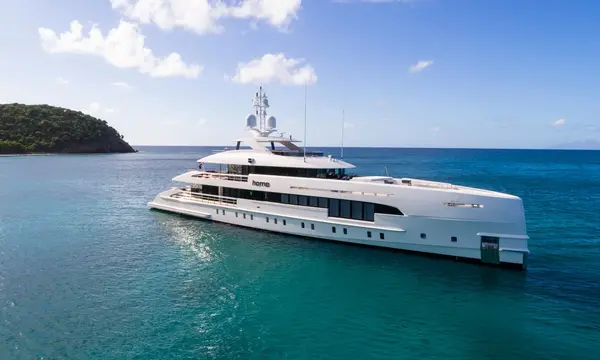
A 50m superyacht can require several million euros a year to keep professionally crewed, maintained, insured, berthed and ready to cruise. Superyacht Guide examines …

Superyacht insurance is not simply a percentage applied to the yacht’s value. Underwriters assess the vessel, crew, cruising programme, claims history, machinery, security and …
Superyacht Guide
Continue into the wider Superyacht Guide.
Business opportunities · Superyacht Guide
Companies serving the superyacht market can discuss clearly identified advertising, sponsorship and business-profile opportunities. Commercial activity remains separate from independent editorial coverage.