
How Much Does It Cost to Keep a Superyacht in Monaco?
Official 2026 Port Hercule rates show how Monaco berthing scales with yacht length and season. The berth is only one part of a much …

A superyacht can function as a full-time home, but continuous living changes crew, maintenance, berthing and operating requirements. We examine the practical and financial realities.
Yes, an owner can live on a superyacht full time, but doing so turns the yacht from an occasional luxury asset into a permanently operating home, workplace and transport system. The practical challenge is not whether the master suite is comfortable enough, but whether crew rotation, maintenance, provisioning, visas, insurance, berthing, connectivity, medical support and the owner’s daily routine can be sustained for twelve months rather than a few weeks.
A large yacht can provide extraordinary privacy and mobility, yet full-time living also removes the long periods when many privately owned yachts are empty and available for deep maintenance. Owners who want to remain aboard continuously need a more deliberate operating model, because engineering work, class surveys, refits and crew leave still have to happen while the yacht continues to function as a residence.
Living aboard full time does not mean the yacht must be at sea every day, and in practice many owners combine cruising with extended stays in marinas or protected anchorages. The yacht may spend weeks in one region while the owner works or travels ashore, then relocate seasonally between the Mediterranean, Caribbean, Middle East, United States or other cruising areas.
The yacht still operates under maritime rules even when it feels like a home, so flag-state requirements, safe manning, class obligations, port rules and immigration formalities continue to apply. Commercially registered yachts have additional compliance obligations, while private yachts remain subject to the rules of their flag and the coastal states they visit.
Full-time residence also changes expectations of the interior because office space, storage, laundry, exercise, medical supplies and quiet private areas become more important than they are on a short holiday. A spectacular formal saloon that is rarely used may be less valuable to a resident owner than a practical office, reliable internet, a comfortable gym and enough storage for changing seasons.
A full-time owner depends heavily on the crew because navigation, engineering, maintenance, cooking, housekeeping, security and tender operations continue every day whether the yacht is cruising or tied alongside. Larger yachts can support departmental structures and rotation more easily, while smaller yachts may struggle to give crew meaningful leave if the owner expects continuous full-service operation.
Rotation is therefore important for long-term sustainability, particularly for captains, engineers and senior interior crew. Employing additional rotational staff increases payroll and travel costs, but it can reduce burnout and maintain continuity when the yacht never has a long owner-free period in which the whole team can reset.
The relationship between owner and crew also becomes more personal because the same people may be present throughout daily meals, travel, family visits and work routines. Clear boundaries, predictable leave, private crew circulation and good onboard management help preserve professional service without making either the owner or crew feel that they are living permanently in each other’s space.
The cost is driven primarily by the yacht rather than by the owner’s decision to sleep aboard every night, because crew, insurance, maintenance, class, management and depreciation exist whether the yacht is occupied or not. Superyacht Guide’s standard planning model assumes annual operating expenditure of around 14% of yacht value when no yacht-specific budget is available, although real costs vary widely with age, size, machinery, crew structure and cruising intensity.
Continuous occupancy can push some variable costs higher because generators, air conditioning, hotel systems, tenders, laundry and galley equipment are used more heavily, while provisioning becomes a constant household expense rather than an occasional guest cost. A mobile owner who wants frequent long passages will also burn more fuel and create more maintenance hours than an owner who lives aboard mainly in a home marina.
Berthing becomes a major planning item because a full-time resident needs reliable places to stay through different seasons, and prime superyacht marinas can be expensive or difficult to secure. Longer-term contracts may offer better economics than repeated transient rates, but they reduce spontaneity and may require the owner to decide months in advance where the yacht will spend winter or peak summer periods.
Every yacht needs periods when machinery is opened, systems are isolated, decks are repaired, paint is renewed or guest areas become temporarily unavailable. Full-time owners have to accept that some of this work will happen around them or plan shore stays while the yacht enters a yard, because attempting to postpone all disruptive maintenance eventually creates reliability and safety problems.
Major surveys and refits are the most difficult periods because the yacht may be out of the water, surrounded by contractors and effectively uninhabitable. Owners who genuinely intend year-round residence sometimes solve this with a second home, hotel arrangements or another yacht, but the key point is that a superyacht cannot provide uninterrupted five-star accommodation while undergoing major technical work.
Preventive maintenance becomes even more valuable under continuous use because failures are more disruptive when the owner is permanently aboard. Redundant generators, watermakers, refrigeration, communications and climate-control systems can make a meaningful difference to quality of life when the yacht is operating far from its usual service network.
Modern satellite systems make remote work far more practical than it was a decade ago, but owners should still plan for coverage limits, latency, equipment failures and local restrictions. Critical business communications may justify redundant satellite and cellular systems, independent power backup and cybersecurity controls, particularly when confidential work is conducted from the yacht.
Banking, post, medical care, schooling and tax residence do not disappear simply because the owner is mobile, and these shore-side issues can be more complicated than the yachting itself. Families with school-age children may need tutors or an education plan, while owners with regular medical requirements should consider proximity to hospitals and the yacht’s onboard medical capability when choosing remote itineraries.
Immigration and customs can also shape the programme because owners, guests and crew may have different passports, visas and permitted stays. A yacht can cross borders easily in physical terms, but the people aboard still have to comply with national entry rules, and long-term residence in one jurisdiction can create legal or tax questions that require professional advice.
One of the strongest attractions of living aboard is control over the immediate environment, because the owner can move away from crowds, receive guests privately and wake up in a different destination without changing hotels. The yacht becomes a secure personal base containing familiar staff, possessions, food, transport and leisure facilities.
The same privacy can become isolation if every social interaction has to be organised through the yacht, particularly during long periods at anchor or in remote regions. Owners who live aboard successfully often build a rhythm that combines private cruising with time in major hubs where friends, business contacts, medical services and normal shore life are easily accessible.
Weather can also dictate lifestyle more than it does in a land-based home, because a swell can make an anchorage uncomfortable and a storm can force a move or keep the yacht in port. Full-time residents need to accept that the captain’s safety decision can override the preferred view from the window, and flexibility becomes part of the lifestyle.
For an owner who values mobility, privacy and direct access to the sea, a well-run superyacht can function as an exceptional home for much of the year. It works best when the yacht has enough volume for private and crew separation, robust technical redundancy, strong connectivity, generous storage and an operating budget that supports rotation and preventive maintenance.
It is less practical for someone who expects the certainty of a fixed residence, dislikes schedule changes or wants to avoid the constant management of crew, maintenance and logistics. A yacht is always a vessel first, and even the most luxurious one remains subject to weather, mechanical systems, port availability and maritime regulation.
The realistic version of full-time yacht living is therefore not endless cruising without interruption, but a managed cycle of voyages, marina periods, maintenance windows and occasional shore stays. Owners who plan around that reality can live aboard for very long periods, while those who expect a superyacht to behave like a maintenance-free waterfront apartment are likely to find the practical burden much greater than the brochure suggests.
Continue reading
Official 2026 Port Hercule rates show how Monaco berthing scales with yacht length and season. The berth is only one part of a much …

Superyacht insurance premiums are individually underwritten rather than set by a universal percentage. We explain hull, liability, claims, deductibles and war-risk cover.
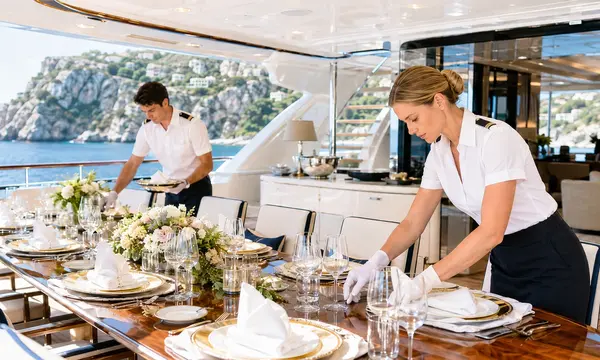
Chartering and ownership can look surprisingly close once annual use rises, but the headline comparison hides major capital costs. Superyacht Guide models a representative …
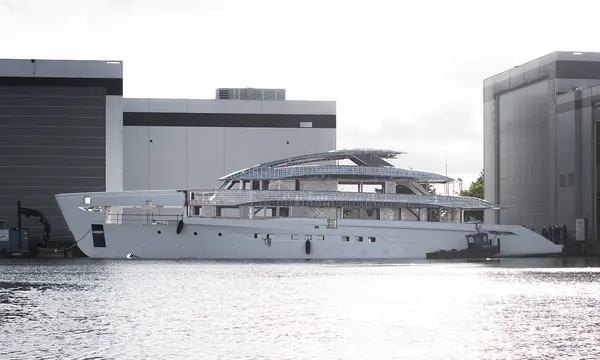
A superyacht can take anywhere from around two years to more than five years to build. Superyacht Guide examines realistic 40m to 100m timelines, …
Superyacht Guide
Continue into the wider Superyacht Guide.