40m Superyacht Running Costs: Crew, Fuel, Berthing and Refit
Running a 40m superyacht requires a substantial annual budget for crew, maintenance, fuel, berthing and other operating costs. Superyacht Guide's 2026 model of 322 …
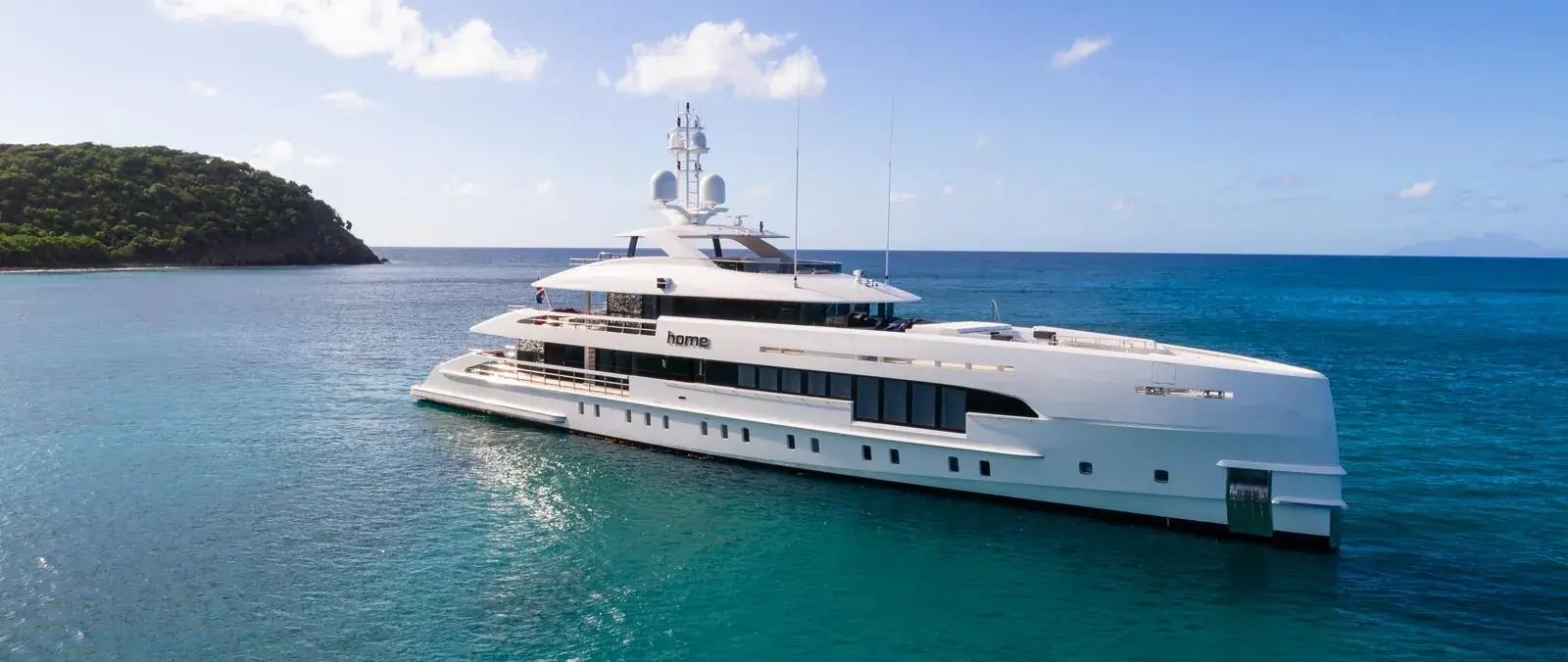
A 50m superyacht can require several million euros a year to keep professionally crewed, maintained, insured, berthed and ready to cruise. Superyacht Guide examines current 50m ownership data, crew costs and the reserves owners need beyond routine annual OPEX.
A 50-metre superyacht occupies an important point in the ownership market. It is large enough to carry a substantial professional crew, sophisticated engineering, multiple guest spaces and serious cruising capability, while remaining below the operating scale of the 70m, 80m and 100m yachts where crew numbers, gross tonnage and technical complexity can rise particularly sharply.
That does not make a 50m yacht inexpensive to own. Current industry benchmarks and Superyacht Guide's own financial profiles indicate that an owner should think in terms of several million euros every year for normal operation, with a separate allowance for major refit, paint, machinery renewal and other lifecycle expenditure.
An illustrative sample of eight approximately 50m yachts carrying current Superyacht Guide financial profiles produces central annual OPEX estimates ranging from about €2.20 million to €5.73 million. The median across that sample is €4.263 million per year, before adding the separate reserve used to plan for major refit and long-term capital expenditure.
The same eight-yacht sample carries a median annual capital reserve of €761,250, taking the median combined planning requirement for normal OPEX plus long-term renewal to €5.024 million a year. These are indicative Superyacht Guide planning estimates rather than audited owner accounts, and the figures are intended to illustrate the scale and variation of 50m ownership rather than predict the exact expenditure of a particular yacht.
| Illustrative 50m yacht | Annual OPEX estimate | Capital reserve |
|---|---|---|
| Camila, 49.95m | €5.45m | €0.97m |
| MY Loyalty, 50.00m | €4.41m | €0.79m |
| Project Grace, 50.00m | €4.12m | €0.74m |
| Man of Steel, 50.00m | €3.33m | €0.58m |
| Perla, 50.00m | €5.73m | €1.02m |
| Ocean Z, 50.00m | €5.29m | €0.95m |
| Double Trouble, 50.00m | €2.20m | €0.34m |
| Is A Rose, 50.00m | €2.70m | €0.45m |
The spread matters more than any single headline number because yachts measuring almost exactly 50 metres can have very different values, gross tonnage, construction, crew requirements, machinery, age and cruising programmes. Length is therefore a useful starting point for an ownership budget, but it cannot determine the final annual cost on its own.
A 50m yacht normally requires a departmental crew structure rather than the smaller multitasking team found aboard many 30m yachts. Captain, officers, engineers, chef, interior crew and deck crew all have to be recruited, salaried, insured, trained and transported, while rotational contracts can increase the number of people employed over the course of a year.
Moran Yacht & Ship's current 2026 benchmark uses a $30 million, 50-metre yacht with a captain and roughly nine to twelve additional crew, estimating annual crew expenditure at approximately $1.2 million to $1.8 million. Its total operating estimate for the same 50m example is $2.7 million to $5.4 million a year, placing personnel firmly at the centre of the ownership budget.
Current YPI CREW data shows why senior personnel costs rise at this size. Captains on 50m to 60m yachts are benchmarked at roughly €10,000 to €16,000 per month, while chief engineers are around €8,000 to €12,000 and increasingly work rotational packages that require additional personnel coverage.
Interior and deck salaries add another substantial layer to the payroll. YPI CREW's 2026 benchmarks place chief stewardess salaries on 50m to 60m yachts at roughly €5,500 to €7,500 per month and bosuns at about €4,000 to €5,000, before travel, training, medical, uniforms and wider employment costs are included.
Crew costs become relatively predictable once an employment structure is established, but maintenance is where two apparently similar 50m yachts can diverge dramatically. Age, construction material, coatings, engine hours, stabilisers, generators, HVAC systems, tenders, watermakers, electronics and the yacht's survey cycle can all turn a routine maintenance year into a significantly more expensive one.
Moran's current 50m example allows approximately $500,000 to $1.5 million per year for maintenance and repairs. That range reflects the difference between ordinary servicing and consumables at one end and machinery work, coatings, teak, class items and unexpected technical failures at the other.
Fraser's ownership guidance similarly argues that maintenance should not be treated as a contingency that disappears in a quiet year. Dry-docking, hull work, running-gear inspection and deeper mechanical access recur through the ownership cycle, even when a yacht has suffered no obvious failure during the season.
This is why Superyacht Guide separates routine OPEX from a capital or lifecycle reserve. A yacht can record a relatively controlled operating year and still require a multimillion-euro paint programme, machinery overhaul or substantial refit when a larger maintenance cycle falls due.
Fuel is one of the most visible operating costs, but it is not necessarily the largest expense on a 50m yacht. A yacht spending much of the season at anchor or in port can consume dramatically less than one making long passages, operating continuously in hot climates and running substantial tender programmes every day.
For its illustrative 50m yacht cruising for approximately eight to twelve weeks, Moran uses an annual fuel range of about $300,000 to $600,000. That should be treated as a usage scenario rather than a universal allowance because displacement, cruising speed, engine type, generator loading and itinerary have a direct effect on consumption.
An owner planning an Atlantic crossing followed by an intensive Mediterranean season therefore needs a different fuel allowance from an owner whose yacht remains mainly within one cruising region. The most useful forecast starts with the actual yacht's consumption curves and planned engine hours rather than assigning a generic percentage solely from length or value.
Berthing is another cost capable of changing materially with location and season. Moran's 50m example allows roughly $200,000 to $500,000 annually for dockage and marina fees, demonstrating the difference that home port, seasonal berth availability and cruising pattern can make to the final budget.
Insurance is similarly yacht-specific because premiums respond to value, age, condition, cruising area, claims experience and the breadth of cover required. Fraser currently places comprehensive superyacht insurance broadly between 0.5% and 2% of vessel value annually, making insured value and operating profile important inputs to any ownership forecast.
Professional management also becomes increasingly important at 50 metres. Crew payroll, technical management, class and flag compliance, accounting, purchasing, budgeting and regulatory administration continue even during periods when the yacht is not carrying guests, so management is a structural rather than seasonal operating cost.
An owner can control cruising hours and some discretionary expenditure, but the long-term physical renewal of the yacht cannot simply be avoided. Paint systems age, interiors wear, tenders need replacing, electronics become obsolete, machinery reaches overhaul intervals and regulatory requirements continue to evolve.
An annual OPEX figure should therefore never be presented as the complete cost of maintaining a 50m yacht across five or ten years. The Superyacht Guide sample produces a median capital reserve of approximately €761,000 a year, but real cash expenditure rarely arrives as a neat annual amount because several comparatively quiet years can be followed by a major yard period requiring several million euros.
A properly funded reserve converts that future shipyard bill into a planned ownership cost rather than an emergency. It can also protect reliability and resale value by reducing the pressure to defer maintenance simply because a major item falls outside the routine operating budget for that year.
The safest conclusion is not that every 50m yacht costs exactly €4.263 million or €5.024 million a year. The useful conclusion is that a professionally operated 50m superyacht should normally be budgeted in the low-to-mid millions annually, with substantial additional capital reserves deliberately separated from day-to-day OPEX.
Superyacht Guide's current eight-yacht sample places median normal operating expenditure at €4.263 million and the median combined OPEX-plus-reserve planning requirement at just over €5.02 million. Moran's independent 50m benchmark reaches a compatible broad range of $2.7 million to $5.4 million in annual operating costs, depending on crew, utilisation, maintenance and the yacht's individual programme.
The correct figure for an actual owner should replace every modelled number with the yacht's real crew list, employment contracts, insured value, berth agreement, machinery hours, fuel consumption, maintenance plan, class schedule and intended itinerary. At 50 metres, the difference between a comfortable ownership programme and an unexpectedly expensive one is rarely the acquisition price alone; it is whether the operating and renewal budget was understood before the yacht was bought.
Continue reading
Running a 40m superyacht requires a substantial annual budget for crew, maintenance, fuel, berthing and other operating costs. Superyacht Guide's 2026 model of 322 …
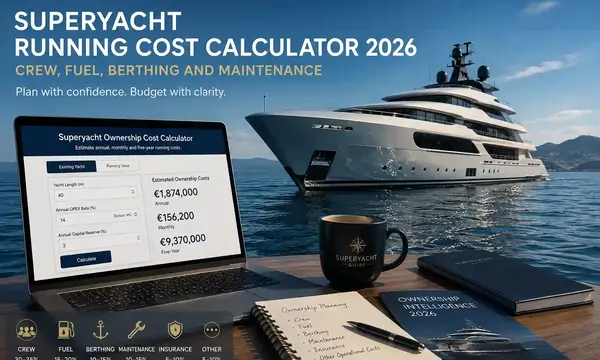
Superyacht Guide's 2026 running cost calculator provides annual, monthly and five-year ownership estimates using either an existing yacht or a planning value. It gives …

A superyacht can function as a full-time home, but continuous living changes crew, maintenance, berthing and operating requirements. We examine the practical and financial …
Superyacht insurance is not simply a percentage applied to the yacht’s value. Underwriters assess the vessel, crew, cruising programme, claims history, machinery, security and …
Superyacht Guide
Continue into the wider Superyacht Guide.
Business opportunities · Superyacht Guide
Companies serving the superyacht market can discuss clearly identified advertising, sponsorship and business-profile opportunities. Commercial activity remains separate from independent editorial coverage.