Azimut Benetti chair Giovanna Vitelli has sought to reassure yacht owners that the legal and financial turmoil surrounding Bayesian and Perini Navi should not be interpreted as a wider failure of Italian yachtbuilding.
Azimut-Benetti Group chair Giovanna Vitelli has moved to reassure yacht buyers that the litigation and financial turmoil surrounding the loss of Bayesian should not be interpreted as evidence of a wider problem across Italian yachtbuilding.
Her comments follow reports of a €456 million civil claim connected with the sinking of the 56-metre sailing yacht off Sicily in August 2024. The action has introduced a new and uncomfortable question into the relationship between yacht owners and shipyards: whether a builder or brand owner could pursue a client, an estate or members of a yacht’s crew after a major casualty whose causes remain under investigation.
Vitelli’s intervention is therefore about more than defending the reputation of one of Italy’s most important industries. It reflects concern that the dispute could influence how owners evaluate shipyards, negotiate contracts and assess risks that extend far beyond the technical construction of a yacht.
The reported €456 million claim was brought by The Italian Sea Group, the present owner of the Perini Navi brand, against parties connected with Bayesian, including the estate of the late Mike Lynch and members of the yacht’s crew. The claim reportedly alleges that the sinking caused serious commercial and reputational damage to the brand. It is contested, and no final determination of liability for the casualty has been made.
An important distinction is that Bayesian was built and delivered by the former Perini Navi organisation in 2008. The Italian Sea Group acquired the Perini Navi business and assets through bankruptcy proceedings more than a decade later, completing the €80 million acquisition in January 2022. The present group therefore owns the brand and its commercial legacy, but it was not the corporate organisation that originally constructed and delivered the yacht.
That distinction does not remove the commercial consequences of the casualty for the current owner of the Perini Navi name. The Financial Times reported that the brand had not sold another yacht since the sinking, illustrating how uncertainty surrounding one vessel can affect confidence in an entire marque even before investigators or courts establish responsibility.
Speaking to the Financial Times, Vitelli described legal action by a yacht builder against client interests during an unresolved casualty investigation as highly unusual. Her central message was that owners should see the dispute as exceptional and specific to the parties involved, rather than as a normal feature of yachtbuilding relationships.
The comments carry particular weight because Azimut-Benetti Group is not a detached observer. It is one of the world’s largest yacht groups, operates across production yachts and custom superyachts and competes directly for the confidence of international owners. The group has a strong interest in ensuring that buyers do not begin to associate Italian shipyards generally with unpredictable legal exposure after an accident.
At the heart of the concern is the traditionally long relationship between an owner and a shipyard. A custom superyacht may take several years to design, finance, build, test and deliver. The relationship can continue through warranty work, maintenance, technical support and future refits. Owners must therefore trust not only the yacht’s naval architecture and construction, but also the builder’s behaviour when something goes wrong.
A high-value claim connected with a casualty may lead buyers to ask whether their contracts, insurance arrangements and ownership structures provide adequate protection if a builder later alleges that an owner or crew has harmed the yard’s commercial reputation.
The casualty occurred on 19 August 2024, when Bayesian foundered in severe weather near Porticello, Sicily. Fifteen of the 22 people on board escaped, while six guests and one crew member died.
The UK Marine Accident Investigation Branch’s interim work found that the yacht may have been vulnerable to the high winds experienced during the casualty. Its initial study concluded that the reported wind conditions were capable of knocking the yacht over and that the situation became irrecoverable once the vessel heeled beyond approximately 70 degrees.
The MAIB has stressed that its investigation remains ongoing and that the interim findings are not its final conclusions. It is therefore premature to state definitively that the sinking resulted from crew error, a design vulnerability, a technical failure or a particular combination of circumstances.
Italian criminal investigations, the MAIB’s marine-safety investigation and the civil litigation also serve different purposes. Allegations made in litigation are not established accident findings, while an interim safety report does not determine civil or criminal liability.
Concern surrounding Perini Navi is intensified by the wider financial and governance crisis at The Italian Sea Group. The company has entered court-supervised restructuring proceedings intended to preserve business continuity while it addresses its financial position, project losses, creditors and unfinished yachts.
Giovanni Costantino resigned as chairman, chief executive and director on 20 July, while Gianmaria Costantino also left the board. A further director resigned the following day, bringing the existing board’s mandate to an end under the company’s governance provisions, although outgoing directors remained temporarily in place to maintain continuity.
The company’s official investor disclosures show that protective measures and court procedures were introduced during July as part of the restructuring process. Those measures concern the company’s financial position and its ability to preserve operations; they do not establish the cause of the Bayesian casualty.
The collision of litigation, financial distress and leadership change nevertheless makes it harder to restore confidence in the Perini Navi brand. Superyacht Guide has examined that background separately in What The Italian Sea Group’s Leadership Crisis Means for Admiral, Perini Navi and Its Order Book.
This is why the issue now extends beyond the design of an individual sailing yacht. Owners considering a new-build contract increasingly need to understand whether the shipyard has sufficient capital, reliable project controls, stable management and the financial capacity to complete a yacht whose delivery may be years away.
Traditionally, buyers have concentrated on a yard’s completed fleet, engineering competence, design capability, delivery record and resale reputation. Those considerations remain fundamental, but the present dispute demonstrates why they are no longer enough.
A buyer should also examine the builder’s financial statements, ownership structure, available working capital, order-book quality, performance guarantees and dependence on advance payments. The contractual review should cover termination rights, refund guarantees, changes in ownership, insolvency protections, dispute resolution and the treatment of cost overruns.
The legal culture of the shipyard is also becoming part of the assessment. Owners may ask how the builder has handled warranty claims and construction disputes, whether it has previously pursued clients publicly and how it communicates during technical investigations.
Insurance advisers may in turn need to consider whether conventional owner, hull, liability and directors’ cover would respond to claims alleging wider reputational or commercial damage following a casualty. The answer will depend on the policy wording, the insured parties and the allegations made.
Vitelli’s reassurance is supported by a markedly different financial position at Azimut-Benetti Group. The group reported revenues of approximately €1.5 billion for its 2024–25 financial year, representing growth of around 15 per cent. The Financial Times reported an order book of approximately €2.6 billion and net equity exceeding €500 million.
Those figures do not make any yacht builder immune from project, legal or technical risk. They do, however, illustrate why owners should avoid treating every Italian shipyard as financially interchangeable.
Italy remains the dominant country in global superyacht construction by the number of yachts on order. Its shipyards range from family-owned builders with strong balance sheets to listed industrial groups, specialist sailing-yacht yards and smaller companies whose survival may depend heavily on a few major contracts.
The difficulties of one group can affect perceptions of the wider industry, but they do not describe the financial position, governance or behaviour of every Italian builder.
The immediate purpose of Vitelli’s intervention was to calm owners concerned that the Bayesian litigation could represent a new normal in yachtbuilding. Her broader point is that the dispute should be understood as exceptional rather than characteristic of the relationship between Italian yards and their clients.
Whether buyers accept that reassurance will depend on what happens next. The final casualty investigations, the civil litigation, The Italian Sea Group’s restructuring and the future of Perini Navi all remain unresolved.
For owners, the lesson is not to abandon Italian yachtbuilding. It is to conduct deeper due diligence before committing to a multi-year construction contract. A shipyard’s reputation must now be assessed through its finances, governance, contracts and conduct as well as through the yachts carrying its name.
The design may begin the relationship, but confidence in the builder must survive construction, delivery and whatever follows.
Explore
Go deeper into the yachts, companies, events and destinations directly connected to this article.
Continue reading
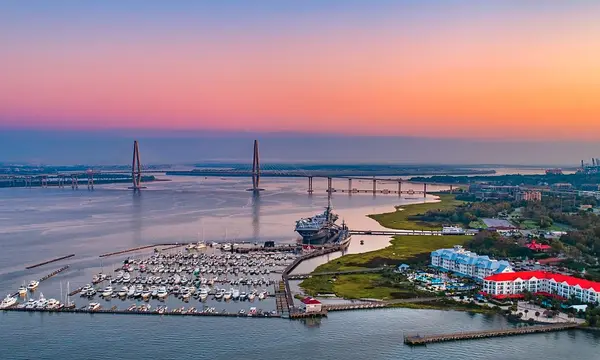
Suntex Marinas has acquired Charleston Harbor Marina, adding more than 450 slips and superyacht capacity to its growing US marina portfolio.
Platinum Equity has agreed to sell De Wave Group to Renaissance Partners, with completion expected by the end of 2026. De Wave reports more …
Ferretti Group has introduced an extra year of limited warranty cover for eligible new yachts up to 45m. Official servicing is required, and aluminium …
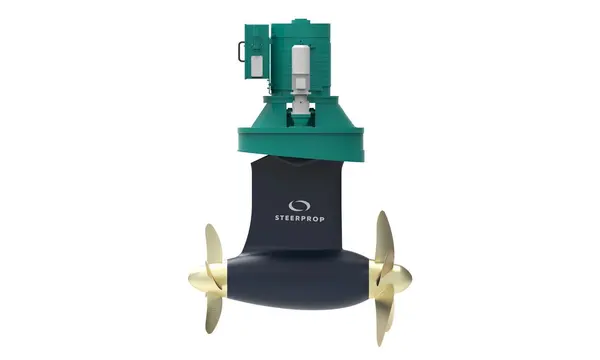
Kongsberg Maritime has agreed to acquire Finnish propulsion specialist Steerprop, days after Steerprop announced its first yacht propulsion project.
Superyacht Guide
Continue into the wider Superyacht Guide.