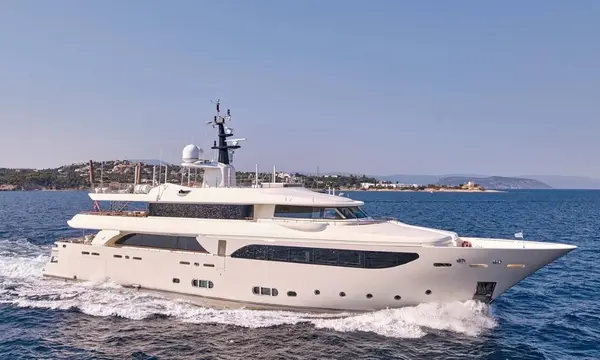
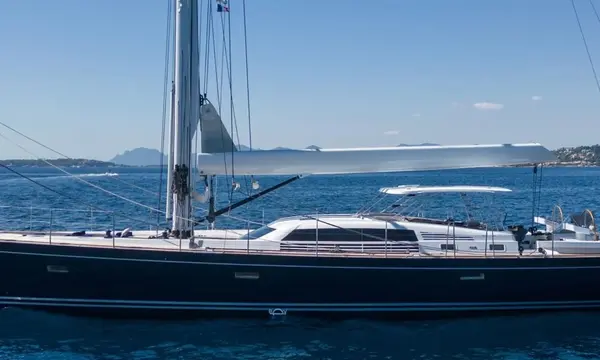
Refitted 43m CRN PHOTON Offers Eight-Day Greece Charters
The 43-metre CRN PHOTON is offering eight days for the seven-day charter rate in Greece during May, June and September, following its 2025 interior …
© Respective copyright holder / International Yacht Brokers Association; published with the original announcement or interview, individual photographer not identified.
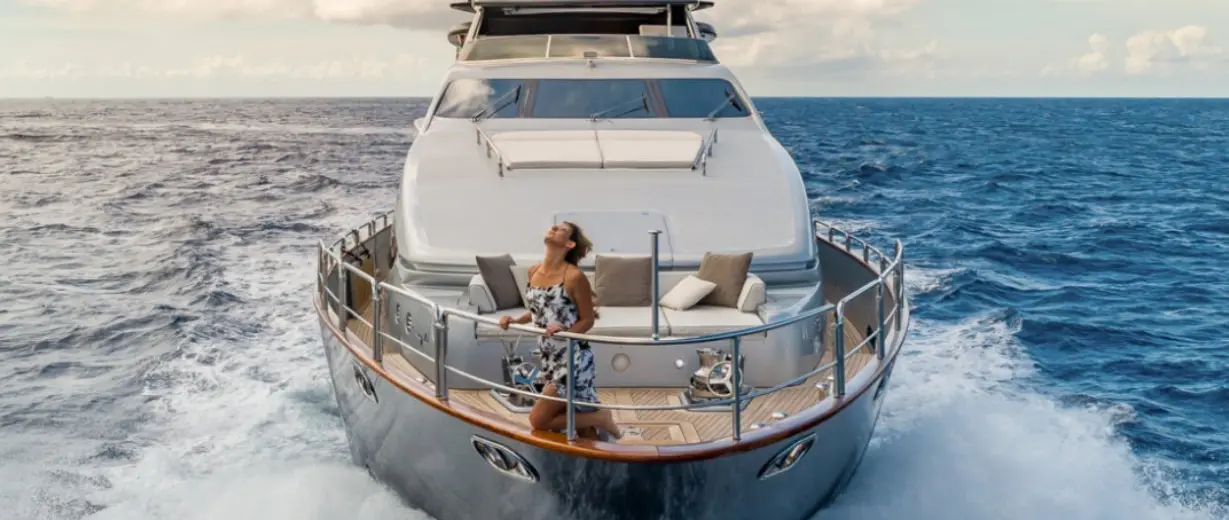
In a November interview with IYBA, the owner of the 116-foot Azimut TAIL LIGHTS discusses his charter business, festive itineraries and long booking lead times.
An interview published by the International Yacht Brokers Association on 17 November provides a first-hand account of the way the 116-foot Azimut TAIL LIGHTS has been operated as a charter yacht. Owner Lee Mandel describes his acquisition of the vessel in 2019 and a commercial strategy that, according to his account, has resulted in approximately 25 charters a year. IYBA executive director Andrew Parkinson also discusses the planning of festive voyages, the role of the charter broker and the relationship between private ownership and commercial availability.
The reported booking figure is the owner's own account, not an independently audited utilisation statistic. It nevertheless offers an informative example of how one owner approaches the management of a substantial charter asset. The interview is particularly timely as the winter Caribbean season begins and brokers coordinate reservations for the Christmas and New Year period.
Mandel describes a long personal involvement with boating before acquiring TAIL LIGHTS in September 2019. He discusses his earlier experience with a smaller Sea Ray and explains that his purchase of the Azimut followed the sale of his technology business. The intended role of the larger vessel was commercial from the outset, rather than simply making a privately operated yacht available for occasional bookings.
That distinction has implications for the selection of the vessel. A buyer expecting frequent charter activity needs to consider the relationship between the purchase price, guest facilities, operating costs and likely market demand. A yacht that suits a particular owner's personal requirements may not be equally well positioned for a commercially focused programme, especially if its accommodation or operating characteristics differ from those sought by the intended charter market.
The interview describes a search across yachts from several shipbuilding countries before the owner settled on TAIL LIGHTS. Mandel's account highlights the importance he attached to the amenities that could be offered relative to the charter price. Rather than identifying the most expensive yacht within a particular length band, he was looking for a platform that could support his proposed business.
The financial consequences of that choice extend beyond the acquisition itself. Condition, maintenance intervals, crew requirements and the capital expenditure needed to keep a vessel competitive can influence the viability of a charter programme. A commercial acquisition brief should therefore be developed alongside an assessment of the vessel's technical condition and anticipated operating pattern. The published interview does not disclose the full acquisition cost or subsequent investment in the yacht.
Mandel states that TAIL LIGHTS undertakes around 25 charters annually. This is an indication of the number of bookings he reports, rather than a directly comparable measure of the number of days sold. A charter can vary significantly in duration, so the number of individual contracts is not sufficient to establish annual occupancy or gross charter income.
An owner evaluating performance should distinguish bookings, booked days, cancelled bookings and periods reserved for maintenance or private use. It is also useful to compare the actual income associated with each booking against the operating costs generated by the itinerary. The interview provides no audited revenue or profit figures, and it would be inappropriate to estimate the yacht's financial results from the booking count alone.
The owner's account identifies the relationship between guest capacity, amenities, size and price as an important part of TAIL LIGHTS' appeal. A yacht's market positioning can be affected by all four of these characteristics. It may also depend on how consistently the vessel is presented by its representatives and the experience delivered by the crew.
This is why the published headline rate of a charter yacht is only one element of its competitive position. Prospective guests may evaluate accommodation flexibility, water activities and itinerary options against alternatives available on the same dates. The owner and charter manager must consider those requirements when determining how to maintain and present the asset over successive seasons.
The interview identifies Thanksgiving, Christmas and New Year as commercially important periods for TAIL LIGHTS. Mandel explains that holiday bookings are often agreed considerably in advance, with lead times of roughly eight to twelve months in his experience. The precise lead time will vary with the yacht, the proposed cruising area and the dates requested.
The commercial significance of these weeks is not limited to the charter contract itself. Popular destinations can face competing demand for marina berths, restaurants and other shoreside services. Even when a yacht has been secured, the successful delivery of the guest programme may depend on arrangements made separately and well ahead of embarkation.
Mandel identifies the British Virgin Islands and the area around St Martin and St Barts among the destinations commonly associated with the yacht's festive charters. He distinguishes different styles of experience, including quieter cruising and the more socially active environment associated with St Barts. Those observations reflect the charter patterns described in the interview rather than a guarantee of conditions at any particular destination.
A broker planning a holiday itinerary needs to establish which elements matter most to the guest party. Some groups may value privacy and time at anchor, while others may prioritise specific events or reservations ashore. The practical itinerary should then be developed with the yacht's location and operational limitations in mind.
Mandel identifies Susan Harris of HMY as the charter broker who handles the yacht's bookings. His account illustrates the importance of a continuing relationship between the owner and the brokerage professional responsible for coordinating commercial activity. That relationship may extend across a series of bookings rather than being limited to the initial marketing of the yacht.
A broker can help align the requirements of prospective guests with the vessel's availability and service arrangements. The captain and crew remain responsible for the practical delivery of the agreed programme aboard. Effective communication between the parties becomes particularly valuable during busy holiday periods, when changes to one booking can have implications for subsequent commitments.
The interview also discusses a consequence of operating a yacht primarily for commercial use: the periods most attractive to paying guests may overlap with those during which an owner would otherwise wish to use the vessel. Mandel notes that he has often prioritised charter activity during the holidays and used another vessel for some of his personal boating.
This is a useful consideration for prospective owners assessing a charter strategy. The opportunity cost of retaining a peak-season week for private use cannot be assessed without reference to actual demand and the yacht's commercial arrangements. An ownership plan needs to distinguish between weeks the owner wishes to reserve and periods the charter manager is permitted to offer to the market.
The account also places emphasis on the people responsible for delivering the onboard experience. A commercially active yacht has to manage repeated guest turnovers, provisioning, maintenance and changes of itinerary. The volume of bookings cannot be considered independently of the resources required to deliver them reliably.
A well-managed charter programme should allocate sufficient time between commitments for the tasks that cannot be completed during an occupied charter. Crew continuity and familiarity with the vessel may support consistent service, but the practical requirements depend on the actual operation. Owners should evaluate both the commercial calendar and the work necessary to maintain the yacht's condition over the same period.
IYBA's November interview provides an example of a named yacht owner approaching commercial operation with an explicit business objective. It draws attention to the interaction between acquisition strategy, pricing, holiday demand and the role of a long-standing brokerage relationship. Those factors are relevant to other prospective owners even though TAIL LIGHTS' experience cannot be assumed to be representative of the wider fleet.
The most valuable lesson is the need to assess a charter yacht as an operating business rather than simply as a vessel with an advertised weekly rate. Booking volume is one useful indicator, but the complete financial and operational picture requires verified income, expenditure, usage and maintenance records. The owner's reported experience gives industry participants a concrete example against which to consider those questions.
Original primary record: International Yacht Brokers Association. © Respective copyright holder / International Yacht Brokers Association; published with the original announcement or interview, individual photographer not identified. Original first-party media: source photograph or official illustration. Copyright and image source are credited; first-party availability does not imply unrestricted reproduction permission.
Continue reading
The 43-metre CRN PHOTON is offering eight days for the seven-day charter rate in Greece during May, June and September, following its 2025 interior …
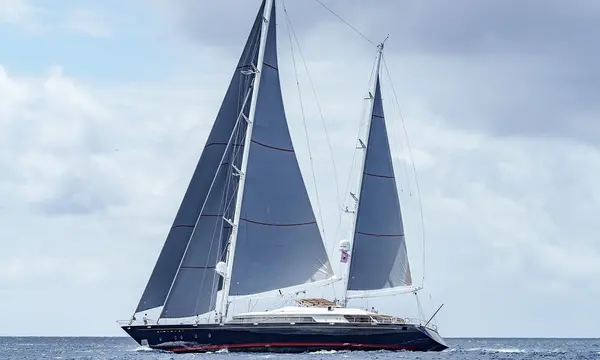
The 49.8-metre Perini Navi sailing yacht ALMYRA II is advertised at €175,000 for eight charter days in Greece during May, with four guest cabins.
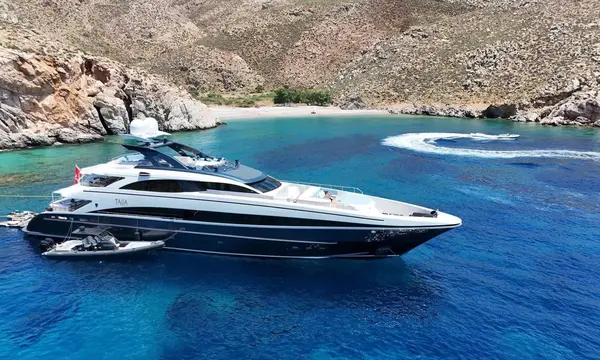
Heesen's 44.17-metre TALIA is offering eight-day charters for the seven-day rate in May and September, with an advertised base price of €200,000.
Bernard Gallay Yacht Brokerage has outlined the final January 2027 Caribbean window and subsequent February and March charter dates for the 29.48-metre sailing yacht …
Superyacht Guide
Continue into the wider Superyacht Guide.
Business opportunities · Superyacht Guide
Companies serving the superyacht market can discuss clearly identified advertising, sponsorship and business-profile opportunities. Commercial activity remains separate from independent editorial coverage.