
IYC Reports Firm Winter Charter Bookings After Positive Summer — licensed SYG News 26Nov batch02
IYC reports summer yacht charter bookings 2% ahead of 2025 and early 2026–27 winter reservations up 11%, amid increasing global fleet competition, with.
The global luxury yacht charter market is entering the northern winter with bookings tracking ahead of last year's comparable position, according to a Q3 2026 review published by IYC. The brokerage reports that summer bookings for yachts measuring at least 20 metres finished two percent above 2025, while early reservations for November 2026 to April 2027 were eleven percent ahead of the previous year's comparable booking date. The Mediterranean remains the leading summer region, with Greece retaining the largest country share. For owners and managers, the important story is not only the resilience of demand but also the increase in available yachts and the pressure to distinguish individual vessels.
IYC describes the 2026 summer charter season as positive despite geopolitical and economic uncertainty. The company's figures show a two-percent year-on-year increase in confirmed bookings for yachts of 20 metres and above. This is a modest gain rather than a boom, and it is important to report the metric precisely. Confirmed bookings are not the same as total revenue, occupied berths, charter weeks or profit, although these measures may be related.
An owner assessing performance should consider whether the yacht's own bookings changed in line with the wider sample. A growing market can still contain vessels with weak occupancy, particularly when new competitors enter the fleet or a yacht operates in a region with softer demand. IYC's review suggests that the quality of the onboard offering has become more influential as clients gain choice. That is a practical point for managers preparing pricing and maintenance plans.
The report attributes approximately 85 percent of confirmed summer charters to the Mediterranean. It places 43 percent of bookings in the eastern Mediterranean and 39 percent in the western region. These reported subregional numbers do not sum exactly to the broader figure, which may reflect the way bookings are categorised or rounded. They should be repeated as published without inventing an explanation or silently forcing an exact total.
For owners, this regional dominance means that the Mediterranean remains an important point of comparison when planning yacht deployment. A vessel based in a highly sought-after cruising area can benefit from convenient client access and familiar infrastructure, but competition may also be intense. The busiest market is not automatically the most profitable for every yacht. Berth charges, crew arrangements, repositioning and the length of the charter season must be included in a realistic calculation.
Greece accounts for 27 percent of the reported summer charter bookings, unchanged from 2025, according to IYC. France follows with 18 percent and Italy with 16 percent. The brokerage notes a decline of two percentage points for France and one for Italy, while Croatia moves from 13 to 12 percent and Turkey from five to four percent. The Balearic Islands are reported at five percent compared with six percent last year.
These changes are not large enough to establish a collapse in any region. They indicate that booking shares can shift while overall market activity remains healthy. A charter manager should assess demand for particular itineraries and dates rather than assume that every vessel in Greece or France experiences the same occupancy. Some clients may favour remote bays, while others want established ports and a programme linked to restaurants, events or cultural visits.
IYC estimates that more than 2,300 yachts measuring over 20 metres are available globally for charter and that the fleet has been growing by approximately 6.5 percent a year on average. This growth is one of the most consequential figures in the review because it suggests increasing competition for each individual booking. More boats offer guests greater choice in layout, style, equipment and price. Owners may need to maintain higher standards simply to remain visible.
A yacht's specification alone is not enough to guarantee a strong season. Marketing imagery may attract an inquiry, but suitability depends on cabin configuration, crew, available water toys, condition and the intended cruising region. Charter managers can use such factors to identify the clients most likely to value a particular vessel. The aim is not necessarily to undercut competitors but to make a clear, accurate case for what the yacht provides.
The review estimates that the global charter market generated more than $2.2 billion in revenue during 2026 year-to-date, with over 17,500 charter weeks booked. These are useful indicators of the scale of the market as described by IYC, but they should not be presented as audited financial statements for every operator. They also refer to different units, so dividing one by the other without understanding the underlying definitions may produce a misleading average.
For an individual owner, gross charter revenue is only part of the financial outcome. Commission, fuel, crew, maintenance, insurance, berthing, management and periods when the yacht is unavailable all influence the net result. Even a yacht with numerous booked weeks may face significant operating expenses. IYC's data demonstrates the scale of the market but does not establish the profit margin for any vessel.
IYC places particular emphasis on personalised service, crew quality and amenities. This reflects a market in which guests can compare many yachts with attractive photographs and similar broad specifications. The vessel that stands out may be the one whose crew can deliver a consistent experience and adapt the itinerary to guest interests. Such differentiation is difficult to measure but can be important for repeat business.
An owner should regard crew investment as part of the charter proposition rather than a purely administrative cost. Training, stable staffing and good communication can influence the guest experience. Equipment also matters: tenders, dive facilities, wellness spaces and suitable exterior dining areas may help a yacht reach a particular market. However, adding more amenities will not automatically improve bookings if the facilities are poorly maintained or unsuitable for the vessel.
For November 2026 through April 2027, IYC reports early bookings eleven percent ahead of the comparable point last year. At the time of its review, confirmed reservations had reached 52 percent of the final total recorded during winter 2025–26. This distinction between bookings to date and a previous season's final total is important. It does not mean the upcoming winter has already completed all its activity or that the eventual season will finish exactly eleven percent higher.
Early reservations can change through additional bookings, itinerary revisions and cancellations. The figures are a positive signal but not a forecast with guaranteed precision. Owners considering winter deployment should assess actual enquiries and calendar commitments for their own yachts. An operator may see strong overall market sentiment while still needing to reposition a particular vessel or adjust its proposed itinerary.
IYC says the Caribbean remains the leading winter charter destination. At the time of publication, confirmed bookings were broadly in line with the same point last year and represented approximately 46 percent of the preceding winter's final total. This suggests continued interest but also illustrates why booking figures should be compared against appropriate reference periods. A season that is still developing should not be judged by its current reservations alone.
The Caribbean presents opportunities for varied cruising but also complex logistics. Yacht availability, marina capacity, holiday schedules and local operating requirements influence the experience. A popular December week can be difficult to secure even when other parts of the season have more space. Owners should ensure the yacht's maintenance and provisioning programme is aligned with the dates on which clients are most likely to book.
The Bahamas shows a twelve-percent year-on-year increase in early winter reservations in the IYC review. The company reports that current bookings have reached 38 percent of the previous winter's final tally. These are encouraging figures, but they should not be extrapolated automatically into a twelve-percent full-season increase. Timing and demand patterns may change, and the total available fleet may also influence the final result.
For a charter yacht considering the Bahamas, draft and access to particular anchorages can be more relevant than the broad market number. The region's shallow waters require careful route planning, and marina or tender arrangements vary by destination. A yacht with appropriate dimensions and a capable crew may offer considerable appeal, but its commercial performance will depend on how accurately the itinerary matches client expectations.
IYC also reports that Southeast Asia has reached 77 percent of the previous winter's total bookings, while the Indian Ocean stands at 67 percent. These percentages are not directly comparable to a region's share of global demand because the underlying volumes and timing may differ. They nevertheless suggest interest beyond the most familiar winter markets. Charter brokers and managers can use this information to explore whether a yacht's capabilities support more varied itineraries.
Long-distance repositioning involves substantial costs and logistical demands, so a yacht should not be moved across oceans solely because one regional percentage looks attractive. Owners need to consider delivery voyage time, permits, seasonal weather, crew rotation and service support. Markets with fewer vessels can offer opportunities, but they may also have more limited infrastructure for the very largest yachts.
IYC's central message is that owners need to differentiate their vessels as the market grows. A sound strategy begins with reliable information about the yacht's current condition, its target guest groups and the periods in which it is available. Pricing should reflect the competitive set and the actual charter experience. Owners who maintain unrealistic expectations may leave gaps in the calendar despite continued overall demand.
A charter manager can review the vessel's booking history, repeat-client activity and feedback to identify where improvement would be worthwhile. Some yachts may benefit from refreshed photography or clearer descriptions of facilities, while others require investment in service or equipment. The review supports careful positioning but does not prescribe one solution for every vessel. The correct approach is evidence-based and specific to the yacht.
Even when global bookings grow, individual countries and seasons may behave differently. The IYC report demonstrates this by showing relatively small shifts between Mediterranean destinations and more varied winter booking momentum. Owners should resist relying on a single percentage to guide complex decisions about home port, crew and marketing budgets. Regional and vessel-specific information remains essential.
Similarly, the charter market can support yacht ownership without eliminating its risks. Revenue opportunities are subject to operational expenses, changes in client preferences and unexpected periods when the yacht cannot be used. An investment case should distinguish between the lifestyle value of ownership and financial returns. The Q3 data provides context for decisions but not a guarantee of an asset's commercial performance.
The report was released on 5 November, and its observations remain relevant as winter reservations develop toward December. The coming weeks will help determine how much early interest becomes realised charter activity. The current confirmed result is that summer bookings were modestly higher, the Mediterranean led the market, and winter reservations were ahead at the report's comparison date. IYC's figures should continue to be cited with that date and definition.
For owners, captains, managers and prospective charter clients, the message is practical rather than dramatic. Demand remains active, but choice is expanding and the quality of execution matters. Accurate marketing, a well-maintained yacht and a capable crew offer more durable advantages than relying on the overall market to deliver bookings automatically.
Primary source: IYC official 5 November 2026 Q3 charter performance and early winter booking market review.
Licensed archival photograph of a superyacht cruising or at anchor, not an IYC charter survey participant. Photo: Andy Mitchell from Glasgow, UK; CC BY-SA 2.0 via Wikimedia Commons. Official source.
Explore
Go deeper into the yachts, companies, events and destinations directly connected to this article.
Continue reading
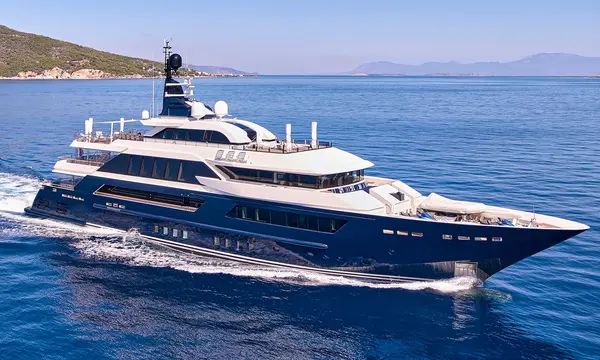
IYC has added the 58m CRN ODYSSEY to its marketed charter fleet, with twelve-guest accommodation, private terraces and a specialised float-in dock.
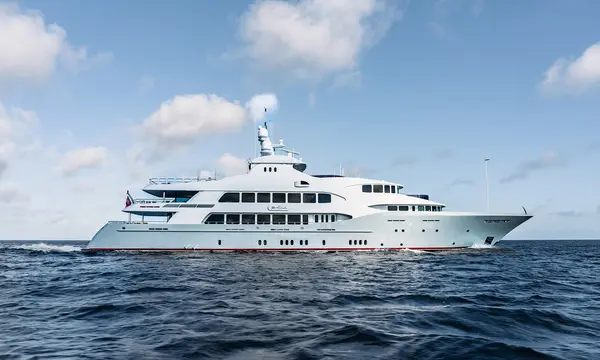
The 60m Trinity superyacht IRON BLONDE has rejoined IYC charter, offering seven guest cabins, a three-level elevator, dedicated wellness facilities and an owner deck.
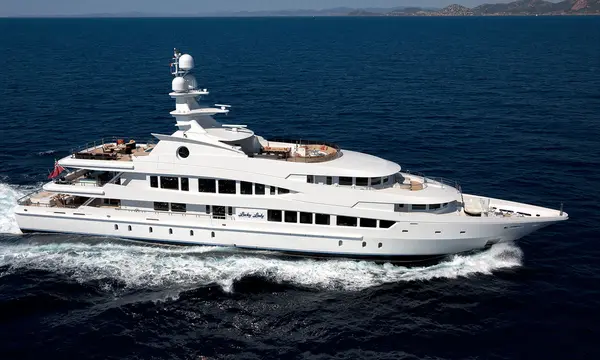
IYC has welcomed the 63m Oceanco LUCKY LADY to its global charter fleet, accommodating 11 guests in five cabins with a crew of 15.
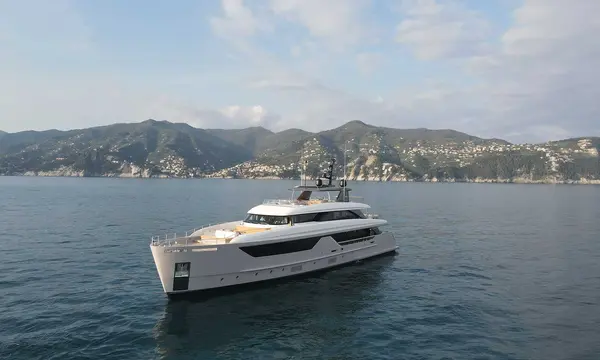
The 40.7m Sanlorenzo ANDIAMO has reported June and August 2027 Greek charter windows, with published weekly base rates of €209,000 to €239,000 plus expenses.
Superyacht Guide
Continue into the wider Superyacht Guide.
Business opportunities · Superyacht Guide
Companies serving the superyacht market can discuss clearly identified advertising, sponsorship and business-profile opportunities. Commercial activity remains separate from independent editorial coverage.

