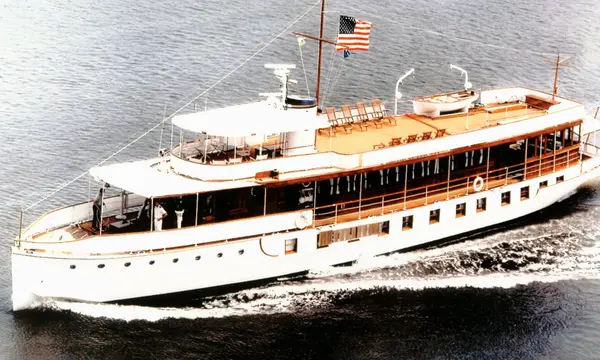
USS Sequoia: The Presidential Yacht Used by Nine U.S. Presidents
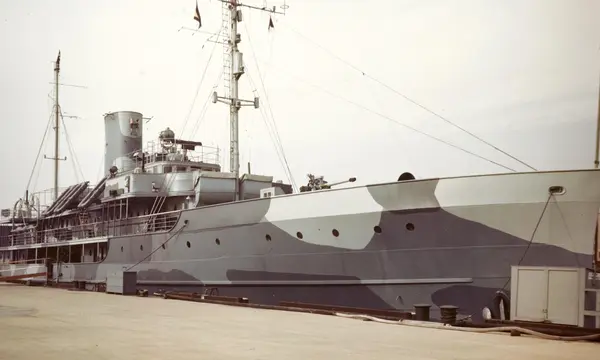
USS Sequoia served nine U.S. presidents and became a floating setting for diplomacy, political decisions and private presidential life. From Roosevelt and Kennedy to …
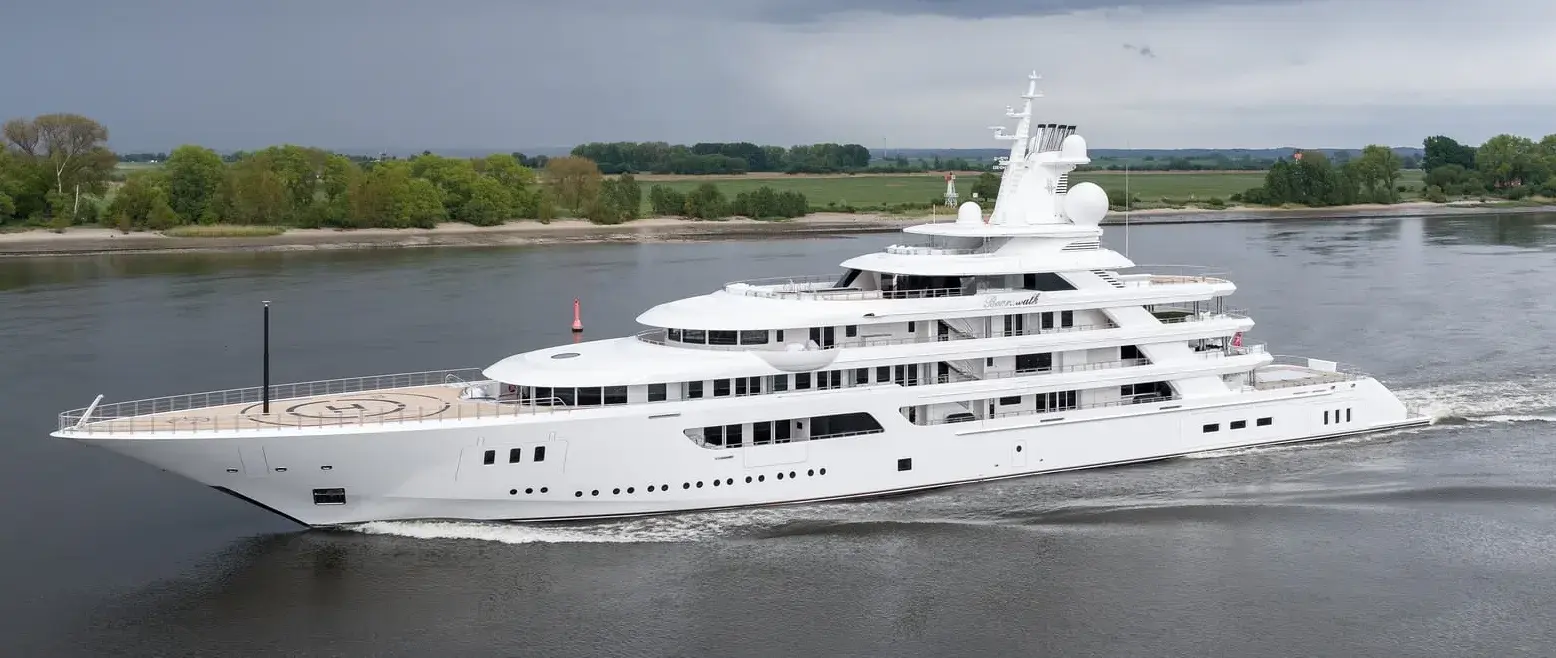
US Ambassador Tilman Fertitta’s use of 117m Boardwalk for a coastal diplomatic tour of Italy raises unusual questions about private ownership, public security and the role of superyachts as mobile diplomatic platforms.
The sight of a 117-metre Lürssen arriving in an Italian port would normally be treated as another moment in the Mediterranean superyacht season, attracting the usual interest in ownership, design and itinerary. The arrival of Boardwalk, however, has been rather different. Owned by billionaire businessman Tilman Fertitta, now serving as the United States Ambassador to Italy, the yacht has effectively become a travelling base for a programme of official diplomatic activity along the Italian coast, hosting meetings and receptions while simultaneously serving as the ambassador’s private residence and means of transport. The result is an unusual overlap between private superyacht ownership and public office, raising questions about diplomatic status, security, cost and the increasingly sophisticated role that the world’s largest private yachts can play beyond leisure.
Fertitta’s journey forms part of the US Embassy’s Freedom 250 Coastal Diplomacy programme, connected with celebrations leading towards the 250th anniversary of American independence. Rather than conducting all of his official engagement from Rome, the ambassador has taken diplomacy to a series of Italian coastal destinations, meeting regional political figures, business leaders, officials and other guests as Boardwalk moves through the country. The yacht has therefore become much more than transportation between engagements. Its salons, exterior decks and reception spaces provide a mobile venue capable of hosting the type of gatherings that would normally take place at an embassy residence, hotel or official government building, while allowing the ambassador to bring those events directly to different regions.
There is nothing inherently unprecedented about politicians, diplomats and heads of state meeting aboard private yachts. Yachts have been used as discreet venues for political discussion, commercial negotiation and informal diplomacy for generations. What makes the use of Boardwalk particularly interesting is the scale and openness of the arrangement. This is not an isolated dinner with government officials aboard a visiting yacht. A privately owned 117-metre vessel is being deliberately incorporated into a wider programme of official diplomatic engagement, creating a situation in which a personal asset worth an enormous amount of money is operating, at least temporarily, as part of the practical machinery through which an ambassador performs his public role.
That distinction became particularly visible when Boardwalk arrived in Venice. Protesters gathered as the yacht reached the city, while Italian authorities implemented security arrangements around Fertitta and the vessel. The demonstrations reflected opposition to American policies as well as wider tensions surrounding wealth, mass tourism and the presence of billionaires in Venice, but they also generated a more specific debate about the resources required to protect an ambassador who chooses to travel aboard one of the largest privately owned yachts in the world. Police deployment, maritime security and restrictions around a visiting vessel are highly visible in a way that the security surrounding a conventional diplomatic motorcade or private residence often is not.
The central financial question is therefore more complicated than asking whether taxpayers are paying for an ambassador to cruise Italy aboard a superyacht. The US Embassy has stated that Fertitta is personally funding the yacht’s voyage. The normal costs associated with Boardwalk — its crew, fuel, maintenance, insurance, provisioning, berthing and general operation — remain private ownership expenses. A vessel of this scale requires an enormous annual operating budget regardless of whether its owner happens to be an ambassador, and there is no basis for treating those normal yacht costs as publicly funded simply because diplomatic meetings are taking place aboard.
Security is a different matter. Fertitta is not simply a private billionaire travelling through Italy; he is the accredited representative of the United States and therefore a protected diplomatic figure. Italian authorities have responsibilities for his security while he is serving in the country, and those responsibilities continue whether he is travelling by official vehicle, staying at a residence, attending a public event or living temporarily aboard his yacht. The unusual element is that Boardwalk combines several of those environments in one place. It is simultaneously a private residence, a transportation platform and, when official engagements are taking place, a venue for diplomatic activity.
This does not mean that Boardwalk has literally become an American embassy, nor has it somehow become US sovereign territory. The familiar description of embassies as “foreign soil” is itself legally misleading. Diplomatic premises remain geographically within the host state, although international law grants them extensive protections and inviolability. A privately owned yacht does not acquire formal embassy status merely because an ambassador lives aboard or holds meetings there. Nevertheless, the presence of a serving ambassador and official diplomatic activities inevitably changes the practical security environment surrounding the vessel.
That difference is important when considering what Italian authorities are actually protecting. They are not necessarily protecting a billionaire’s yacht because it is a valuable private possession; they are protecting the accredited ambassador and the official functions taking place around him. If Fertitta were staying in a privately owned villa or travelling to public meetings by another form of privately funded transport, security obligations would still exist. What Boardwalk changes is the complexity and visibility of providing that protection. A 117-metre yacht arriving in a busy waterfront destination creates a very different security problem from an individual entering a government building.
Large-yacht operations already require careful control of access, guest movements, deliveries, crew logistics and marina security. Add a serving US ambassador, politicians, business leaders and official receptions, and those requirements become considerably more demanding. The waterfront may need monitoring from both land and water, access to neighbouring quays can require additional control, vehicles and guests need to be coordinated, and local police may work alongside diplomatic security personnel. None of this necessarily makes the arrangement improper, but it illustrates why the use of such a large private asset for public activity can create costs and logistical consequences beyond the yacht’s own operating budget.
The yacht itself is unusually suited to the role. Delivered by Lürssen in 2026, Boardwalk is approximately 117 metres long and has an internal volume exceeding 5,000GT, placing her among the largest private yachts currently operating. At that scale, the traditional image of a yacht as little more than a luxurious floating holiday home becomes inadequate. Vessels of this size contain multiple reception spaces, extensive guest accommodation, sophisticated communications infrastructure, large crews and the logistical capability to support prolonged independent operations. They can host formal dinners, business meetings and sizeable gatherings without relying heavily on facilities ashore.
For Fertitta, whose business empire has long been built around hospitality, restaurants, hotels, casinos and entertainment, using such a vessel for diplomatic hospitality is not entirely surprising. A yacht like Boardwalk can provide controlled access, privacy and a carefully managed guest environment while still creating the informality that often makes relationship-building easier than it might be in an official government building. It also has one advantage that no ambassadorial residence can offer: it moves.
That mobility is central to understanding why the yacht may be useful as a diplomatic platform. Traditional diplomacy tends to be concentrated in national capitals, requiring regional politicians, businesses and organisations to travel to the ambassador. A large yacht reverses that relationship. Boardwalk can arrive directly in a region, host meetings locally and move on to the next destination without requiring a completely new hospitality infrastructure at every stop. For a coastal country such as Italy, with powerful regional economies and important maritime centres spread along thousands of kilometres of coastline, the practical advantages are obvious.
A visit aboard such a yacht also creates considerable visibility. The arrival of a 117-metre Lürssen inevitably attracts attention from local media and the public, potentially giving diplomatic events a prominence they would never receive if held quietly inside a hotel conference room. That can be useful when the objective is public diplomacy, commercial engagement or strengthening ties with regional authorities. The same visibility, however, can just as easily become a liability.
Venice demonstrated that clearly. Boardwalk became a focal point not simply because Fertitta is an ambassador but because the vessel itself is such a conspicuous symbol of private wealth. Political criticism of the United States, opposition to the presence of billionaires and wider concerns about the pressures of luxury tourism became attached to the yacht in a way they might not have been attached to an ordinary diplomatic visit. In that sense, the vessel became part of the political message whether its owner intended it to or not.
That creates an unavoidable tension between Fertitta’s two identities. As a billionaire businessman, he is entitled to own and privately finance a superyacht. As US Ambassador to Italy, his actions inevitably acquire diplomatic significance. When he travels aboard Boardwalk privately, those roles may remain relatively distinct. When the yacht itself hosts official meetings and becomes part of an organised diplomatic tour, the distinction becomes much harder to maintain.
There is an argument that this arrangement can actually save public money. Fertitta is providing an extraordinarily expensive piece of infrastructure at his own cost, including accommodation, transportation and hospitality facilities that might otherwise require hotels, official residences or event venues. If the vessel itself is privately funded, the United States is gaining access to a mobile platform of exceptional capability without having to purchase or operate it.
There is an equally understandable argument on the other side. A yacht of this scale may complicate security, require waterfront restrictions and generate public-order demands that would not exist in the same form during a conventional diplomatic visit. It may also blur perceptions of where private hospitality ends and official diplomacy begins. Neither argument can be resolved simply by looking at the yacht’s fuel bill, and no reliable public accounting has established the total security costs associated with the tour.
The more interesting issue is what Boardwalk reveals about the changing capabilities of the largest superyachts. As yachts move beyond 100 metres, their potential uses expand dramatically. They are capable of operating as private residences, corporate headquarters, conference venues, communications centres and highly secure transportation platforms. Some carry helicopters and extensive medical facilities; others can remain operationally independent for long periods. The distinction between an exceptionally large private yacht and a small mobile institution is becoming increasingly blurred.
For owners involved in global business, politics or diplomacy, that capability can be extremely valuable. A yacht can provide a controlled environment in which accommodation, transport, meetings and hospitality exist within the same security perimeter. Guests can be received without relying on public venues, itineraries can change rapidly and the entire operation can move from one jurisdiction to another. The same characteristics that make large yachts attractive to private owners also make them potentially powerful instruments of soft influence.
That does not mean superyachts are about to replace embassies. Formal diplomacy depends on permanent institutions, professional diplomatic staff and recognised legal structures that cannot simply be transferred aboard a private vessel. Boardwalk remains private property, and its use for meetings does not confer special sovereignty upon it. The yacht is better understood as a supplementary diplomatic platform: an unusually capable private environment that its owner can make available while carrying out his official role.
The arrangement nevertheless raises questions that are likely to become more relevant as private wealth and public office continue to intersect. Should there be clearer rules governing the use of personally owned aircraft, yachts and residences for official activity? How should security costs be separated from ordinary private expenses? What records should exist when private assets are used for public functions, and how should governments ensure that diplomatic access does not become confused with private commercial hospitality?
There is no suggestion that the use of Boardwalk itself answers those questions improperly. The point is that such a large and visible private asset makes them impossible to ignore.
For the superyacht industry, the story is equally revealing. Much of the public conversation around very large yachts continues to focus on size, ownership and luxury, but vessels at this level are increasingly capable of performing functions far removed from conventional recreation. They are highly mobile, technologically sophisticated platforms with the infrastructure to support complex organisations and high-profile individuals almost anywhere in the world.
Boardwalk’s Italian tour is perhaps one of the clearest demonstrations of that evolution. The yacht has not become an embassy in the legal sense, but during Fertitta’s coastal programme it has operated as something far more significant than a private holiday vessel. It has been his residence, his transport, his reception venue and a setting in which official American diplomacy has taken place.
The most interesting question is therefore not whether a superyacht can technically become an embassy. It cannot simply acquire that legal status through use. The real question is how close the world’s largest private yachts can come to performing many of the practical functions traditionally associated with one.
In the case of Boardwalk, the answer appears to be: considerably closer than most people might have expected.
Continue reading
USS Sequoia served nine U.S. presidents and became a floating setting for diplomacy, political decisions and private presidential life. From Roosevelt and Kennedy to …
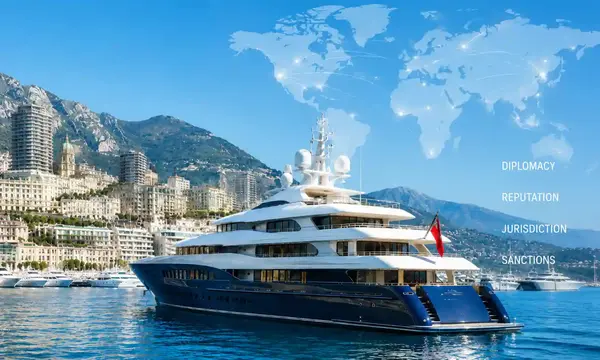
Superyachts are unusually visible forms of private wealth, so where they berth can carry reputational as well as legal significance. Soft power begins with …
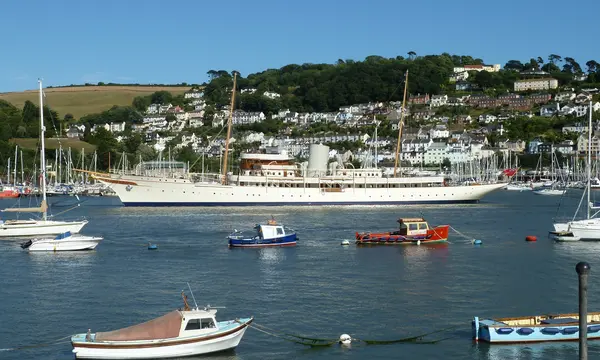
Nahlin is a 91.44-metre classic motor yacht built by John Brown & Sons in 1930 to a G.L. Watson design. Her 1936 Mediterranean charter …
Built for Horace Dodge in 1921, SS Delphine survived sinking, wartime service as USS Dauntless and decades of uncertainty before a landmark restoration returned …
Superyacht Guide
Continue into the wider Superyacht Guide.