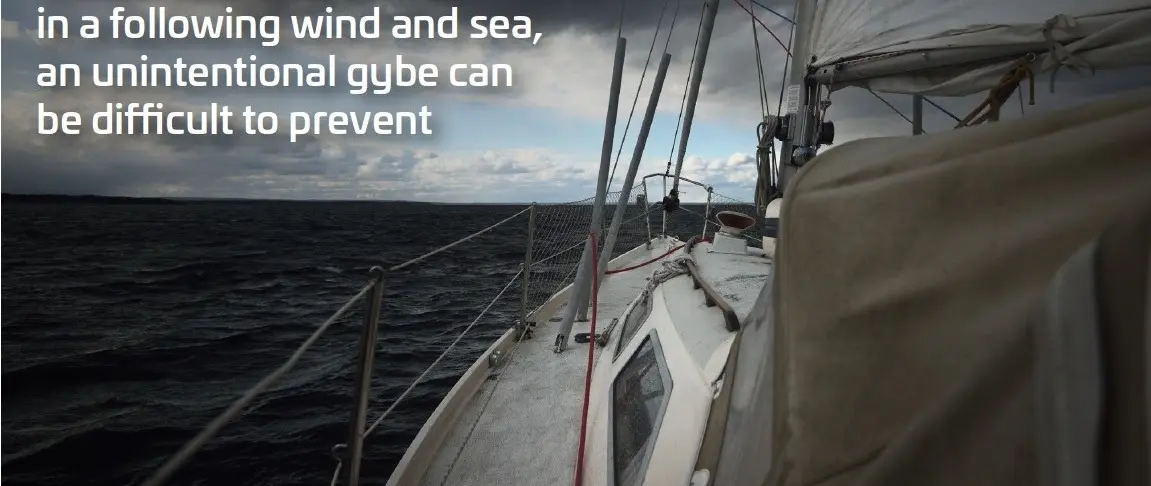
CHIRP maritime M2882 offshore sailing near-miss, official safety illustration

News

CHIRP Warns Yacht Owners to Respect Command Boundaries After Offshore Foredeck Near-Miss

Nov. 13, 2026 Operations

CHIRP maritime M2882 offshore sailing near-miss, official safety illustration

CHIRP reports two dangerous incidents aboard a private sailing yacht: an accidental gybe and a later night-time foredeck near-miss involving the owner.

A report about decision-making rather than a named vessel Maritime safety charity CHIRP has drawn attention to two potentially serious incidents aboard a privately operated large sailing yacht during an ocean passage. Its anonymised report, M2882, describes an unexpected gybe, equipment failure and a separate near-miss involving an owner on the foredeck at night. The account appeared in CHIRP's October 2026 safety reports and was examined in a SuperyachtNews contribution on 6 November. The case is relevant to yachts carrying inexperienced guests because it shows how quickly technical problems can become more dangerous when command responsibilities and personal safety boundaries are unclear. The vessel is not named, and the report should not be used to speculate about its identity or the individuals involved.

Nine people aboard, but only a small professional team CHIRP states that nine people were onboard: three professional crew, a chef and five guests with little or no sailing experience. During the passage the owner was steering while on watch. Conditions began to deteriorate, and a squall approached. A watchkeeper called the captain on deck to reduce sail, but the owner inadvertently put the yacht through an accidental gybe before that adjustment could be completed. This description is enough to illustrate the operational risk without inventing the yacht's size, route or weather measurements. A vessel may be large and sophisticated yet still require rapid, coordinated decisions when wind direction, sea state and sail loading change.

The preventer failed under a sudden load The gybe caused the preventer to part, exposing the boom and related equipment to very high forces. CHIRP reports damage to the boom vang seals and the failure of an associated block, with debris narrowly missing a crew member. Those details are important because they illustrate the danger posed by hardware under tension. In a loaded rig, a broken fitting may become a projectile; the immediate risk is not limited to the movement of the boom. Inspecting the condition and suitability of high-load gear is a core safety responsibility, but even well-maintained components have operating limits. The precise cause of this failure is not independently established in the public report, and it should not be attributed to one defective part without evidence.

The crew regained control after the incident According to the report, the watchkeeper took the helm to regain control, the captain assumed command and the mainsail was brought under control. The sequence demonstrates the importance of having experienced personnel ready to respond when conditions change. It also raises a question about when an owner or inexperienced guest should be permitted to steer. Recreational participation can be an enjoyable part of sailing, but it does not remove the need for competent supervision and clear limits. An owner's personal enthusiasm for the helm should not become an unspoken expectation that professional crew must defer to them in unsafe conditions. Everyone aboard needs to understand who has final authority when risk increases.

A second near-miss occurred at night Later in the passage, crew were lowering a staysail during a night-time foredeck operation. The working crew wore lifejackets and were clipped on. The owner came forward without a lifejacket or safety tether and became entangled in the staysail sheets, nearly falling overboard. The captain and another crew member prevented the fall. This was not the same event as the accidental gybe, and it should be reported separately. Both incidents involved the owner, but the risks differed. The first concerned control of sail and high-load equipment; the second concerned personal protective equipment, moving lines, visibility and a dangerous workplace created during an active deck evolution.

An owner is not exempt from the safety system CHIRP's central observation is that safety procedures apply to everyone onboard, including the person who owns the yacht. This can be socially difficult on a private vessel, where an owner has a close relationship with the crew and may expect considerable freedom. The distinction between financial ownership and operational command is therefore critical. The master must be able to set safe working limits, and crew must know that they can challenge a dangerous situation. A well-run yacht can accommodate owners who enjoy technical involvement, but participation should take place within an agreed framework. Boundaries are most effective when discussed in advance rather than improvised during a squall or an urgent sail-handling operation.

Experienced watchkeeping requires adequate resources The reporter suggested that watches should include at least two experienced crew when sailing offshore with inexperienced guests, particularly when heavier weather is possible. That recommendation should be read as an operational risk consideration, not an assertion that every yacht is subject to the same fixed manning rule. A safe manning assessment depends on the vessel, the passage, crew qualifications, working hours and anticipated conditions. A yacht that can be handled with a small team in settled weather may have less margin when a simultaneous rigging failure, injured guest or person-overboard emergency occurs. Crew numbers must be considered alongside their competence, rest and the tasks they may need to perform at the same time.

Reduce sail before there is no room for error The report describes a developing squall and an intention to reduce sail before the accidental gybe. CHIRP emphasises early preparation when conditions worsen, particularly on broad reaches in following seas where an unintentional gybe may be difficult to prevent. The practical lesson is not to establish a single wind-speed threshold for every yacht. Sail reduction needs to reflect the vessel's rig, the forecast, actual sea state and the experience of those on watch. Delay can reduce the crew's options and increase the load on equipment when an emergency manoeuvre becomes necessary. A passage plan should leave room for preventive action rather than depending on last-minute recovery from a preventable situation.

High-energy systems need a defined exclusion zone Lines, blocks, preventers and vangs may carry enormous loads. A failure can affect people outside the immediate handling area, particularly if a fitting breaks and debris moves unexpectedly. Crews should consider where personnel stand during high-load operations and whether guests understand why access to certain parts of the deck may be restricted. Equipment inspections should be carried out according to the relevant design and maintenance requirements. The public account does not contain enough technical information to prescribe a replacement specification for the preventer or to reconstruct the exact forces. It does establish that failure of loaded gear created a serious near-miss, which is sufficient reason to review procedures.

Night operations amplify small mistakes A working foredeck at night is a hazardous environment, particularly on a moving sailing yacht. Visibility is reduced, communication can be difficult and lines may move rapidly during sail changes. CHIRP's report notes that the crew members were clipped on and wearing lifejackets while the owner arrived without those safeguards. Such inconsistent standards can undermine an otherwise careful procedure. Guests may underestimate the danger if they see familiar crew moving confidently around the vessel. Access controls, briefing and clear instructions help prevent a non-participant from entering a restricted area at precisely the wrong time. An owner should not have to discover those limits during an emergency.

The importance of a pre-passage briefing A safety briefing for an offshore sailing passage should clarify command authority, watch arrangements, weather thresholds, deck access, protective equipment and what guests must do if an alarm is raised. The exact contents depend on the vessel and itinerary, but the purpose is to make expectations explicit before stress and fatigue affect communication. The briefing should be credible rather than ceremonial. If an owner wishes to steer or take part in sail handling, the captain should agree when that is safe, who will supervise and under what circumstances control returns immediately to professional crew. A written or recorded acknowledgement may support consistency, but an effective safety culture depends on behaviour rather than paperwork alone.

What managers and owners should review Following such a report, a yacht manager might ask whether the professional team has sufficient authority, how often high-load rigging is inspected, whether nighttime sail operations require additional personnel and what safeguards prevent guests from entering hazardous areas. Training should include appropriate responses to an accidental gybe, equipment failure and a possible person-overboard event, within the yacht's established emergency procedures. Management should also review fatigue and the practical demands placed on a small team. This article is not a substitute for a formal technical inspection, incident investigation or safety-management review. The value of CHIRP's anonymised reporting is to prompt those questions before a similar event occurs elsewhere.

Confidential reporting helps the wider industry learn CHIRP collects reports of human-factor and safety concerns and publishes anonymised analyses to support learning across maritime operations. That approach can reveal recurring patterns without relying solely on incidents that lead to injury or formal enforcement. It is important to preserve the reporting system's purpose by avoiding speculation about the people involved. The 2026 M2882 case should be discussed as a cautionary example, not used to assign legal liability. In the broader superyacht community, owners, captains and crew can draw lessons from the sequence without assuming that the yacht in question reflects the practices of every privately operated sailing vessel.

The central lesson is authority under pressure Both near-misses arose during routine aspects of offshore sailing that became dangerous because of changing conditions and human decisions. The equipment failure was technical, but its context involved sail handling and a delayed response to deteriorating weather. The foredeck incident was a personal-safety failure, but it also exposed the tension between ownership and professional authority. CHIRP's message is clear: the master must be able to say no, and the yacht's safety system must apply to the owner as well as guests and crew. The report offers a useful reminder that professional seamanship is measured by hazards prevented, not by a willingness to accept unnecessary risk.

**Primary source:** CHIRP Maritime anonymous report M2882, published October 2026, with a 6 November industry briefing. Official CHIRP incident illustration; it is not a photograph of the vessel. No yacht or individual is identified.

Primary source: CHIRP Maritime safety report M2882.

Image: CHIRP Maritime M2882 official incident illustration; does not depict an identified yacht. Official source image.

Photo licence and source

Image: CHIRP Maritime M2882 official incident illustration; does not depict an identified yacht.

Continue reading

All news

Superyacht Guide

Explore the superyacht world

Continue into the wider Superyacht Guide.

Business opportunities · Superyacht Guide

Reach the superyacht industry audience

Companies serving the superyacht market can discuss clearly identified advertising, sponsorship and business-profile opportunities. Commercial activity remains separate from independent editorial coverage.