Cimolai Builds 1,500t Fully Electric Mobile Boat Hoist
By Stephen Yardley · Edited by Stephen Yardley
Image: Cimolai Technology
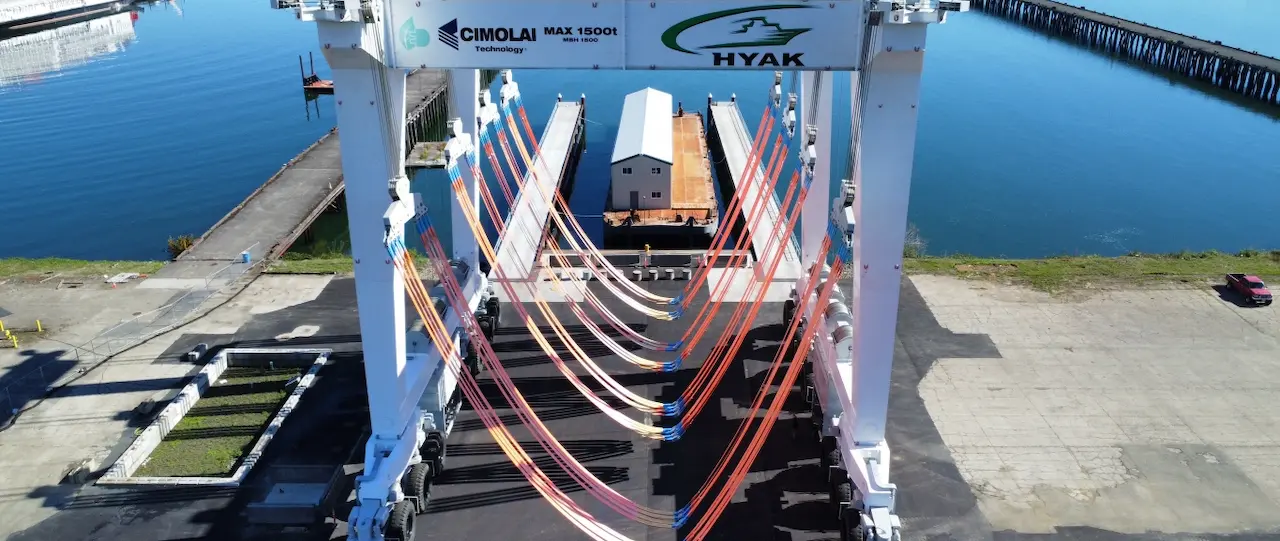
Cimolai Technology has detailed a 1,500-tonne fully electric mobile boat hoist designed for hauling and launching very large vessels in Oregon.
Cimolai Technology has detailed a fully electric mobile boat hoist with a rated lifting capacity of 1,500 tonnes, placing it among the largest pieces of mobile haul-out equipment available to the marine industry. The machine is designed for the Hyak Tongue Point facility in Oregon and is intended to launch and dry-dock very large vessels without using conventional diesel propulsion for the hoist itself.
Although the installation serves a broad commercial marine market, the scale is directly relevant to large-yacht refit infrastructure. As superyachts become longer and heavier, only a limited number of facilities can lift them clear of the water without relying on a dry dock or shiplift.
Travel lifts are common at yacht yards, but capacity normally falls far below the displacement of the largest superyachts. A 1,500-tonne rating moves mobile lifting into a category where substantial steel and aluminium yachts can be hauled onto hardstanding for hull, propulsion and underwater work.
The practical limit is not determined by displacement alone. Beam, lifting-point geometry, sling positions, wheel loading, yard pavement strength and the yacht's structural requirements all have to be assessed before a lift can be approved.
Cimolai describes the Oregon machine as fully electric and powered by long-life lithium batteries. Electric drive removes local exhaust emissions from normal hoist movement and can reduce noise around a yard where heavy lifting operations often take place close to workshops and occupied vessels.
Regenerative capability can also recover energy during lowering and deceleration, depending on the final control configuration. The environmental benefit will still depend on the electricity used for charging, but electrification shifts energy use away from multiple onboard combustion engines toward a controllable shore supply.
Refit yards compete not only on craftsmanship but on the physical infrastructure needed to receive increasingly large yachts. Deep-water access, crane capacity, hardstanding, sheds, shore power and lifting systems determine which projects a facility can realistically accept.
A mobile hoist offers flexibility because the yacht can be moved away from the waterfront after haul-out, potentially freeing the lifting bay for another vessel. That can increase yard throughput compared with facilities where a yacht occupies the dock or shiplift platform throughout the project.
The arrival of 1,500-tonne mobile hoists shows how shore facilities are adapting to vessels that would previously have required fixed dry-dock infrastructure. For the superyacht industry, that can broaden the number of locations capable of handling major underwater and structural work.
It does not remove the need for careful lift engineering, but it gives yards another route to serve larger yachts. As refit demand grows, the capacity and energy efficiency of the equipment ashore will become increasingly important parts of the ownership and maintenance ecosystem.
Explore
Go deeper into the yachts, companies, events and destinations directly connected to this article.
Continue reading

Boero Yacht Coatings has launched CHALLENGERPRO, a complete superyacht coating system built around primers and premium polyurethane topcoats.
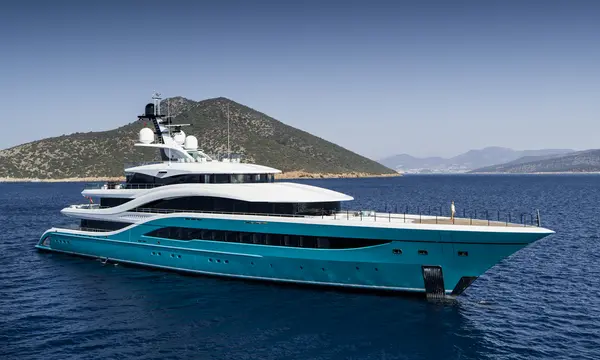
MarQuip has detailed how cracked exhaust components on the 76.75m superyacht GO allowed gases into the engine room before replacement work in Mallorca.
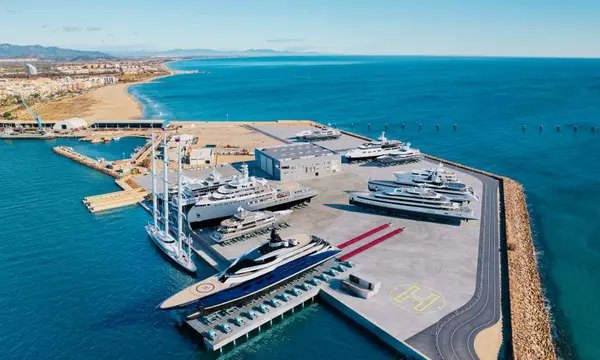
VMG Astilleros de Sagunto says its 5,000-tonne shiplift is now operational, with a 102m by 22m platform capable of handling yachts up to 125m.
The 109.5m four-masted sailing yacht SEA CLOUD is undergoing a major rebuild at Palumbo Malta, combining restoration of her 1930s character with new machinery, …
Superyacht Guide
Continue into the wider Superyacht Guide.