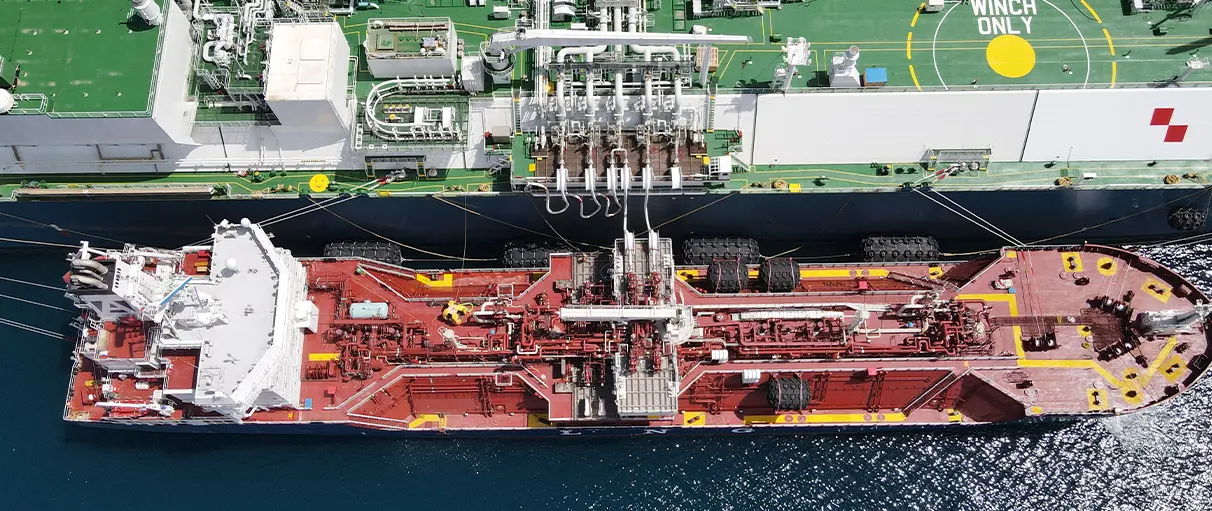
DNV Says LNG Bunker Vessel Fleet May Need to Double by 2030
By Stephen Yardley · Edited by Stephen Yardley
Image: DNV
DNV estimates that the global LNG bunker vessel fleet could need to reach 165 to 208 ships by 2030 as demand for LNG-fuelled vessels grows faster than bunkering capacity.
DNV says the global fleet of LNG bunker vessels may need to more than double by 2030 as fuel demand grows faster than the infrastructure available to serve LNG-powered ships. Its latest white paper estimates that between 165 and 208 bunker vessels could be required worldwide by the end of the decade.
The forecast matters beyond commercial shipping because alternative-fuel adoption depends on the same physical supply chain whether the end user is a cargo ship, cruise vessel or very large yacht. A technically capable vessel cannot use a fuel reliably if suitable bunkering capacity is unavailable along the routes and ports where it operates.
DNV's analysis says the LNG-fuelled fleet is expanding more quickly than the network of bunker vessels needed to support it. The risk is that fuel availability becomes a constraint on further adoption, particularly in regions where demand grows before dedicated supply assets and operational capability are in place.
For yacht designers and owners assessing lower-carbon propulsion pathways, that reinforces the importance of looking beyond machinery specifications. Range, fuel storage, port access, supplier availability and the geographical depth of the bunkering network can all affect whether an alternative-fuel concept works in real-world cruising.
The white paper examines market development, technical design, safety management, regulation and crew competence across the gas-bunkering sector. DNV also identifies conversion of suitable small-scale LNG carriers as one possible way to expand supply capacity more quickly than relying solely on new-build bunker vessels.
The report treats operational readiness as part of the infrastructure challenge rather than an afterthought. More frequent bunkering in more locations requires consistent procedures, trained personnel and safety systems that can scale with the physical fleet.
Although DNV's paper is centred on LNG, it also considers how experience gained from gas bunkering could support future fuel pathways. Biomethane can use much of the same methane infrastructure, while parts of the safety and operational framework may inform the later development of ammonia bunkering.
For the superyacht sector, the immediate implication is not that every large yacht should move toward LNG. It is that fuel-transition planning increasingly has to include the ports, bunker vessels and logistics network around the yacht, because infrastructure can determine how much practical value a new propulsion technology delivers once the vessel leaves the shipyard.
Explore
Go deeper into the yachts, companies, events and destinations directly connected to this article.
Continue reading
Is It Cheaper to Charter or Own a Superyacht? Chartering is usually far cheaper for people who only want several weeks of yacht use …
How Much Charter Revenue Can a Superyacht Earn Per Year? Annual superyacht charter revenue depends on weekly rate, number of booked weeks, seasonality and …
Can Charter Income Cover Superyacht Running Costs? Charter income can offset a meaningful share of superyacht operating costs, but it rarely makes ownership cost-free …
Late-August gaps in the Mediterranean charter calendar are producing substantial discounts, with Burgess offering reduced rates on yachts including 73m Titania and 63.1m North …
Superyacht Guide
Continue into the wider Superyacht Guide.