Company
European Boating Industry
Explore the company profile and related Superyacht Guide coverage.

European Boating Industry secretary-general Philip Easthill has identified continuing resilience in larger yachts despite slower trading in much of the small-boat market. Speaking during a media briefing on 7 October 2026, he said
European Boating Industry secretary-general Philip Easthill has identified continuing resilience in larger yachts despite slower trading in much of the small-boat market. Speaking during a media briefing on 7 October 2026, he said European recreational-boat exports have more than doubled over a decade and argued that trade between EU member states presents additional opportunities. The briefing covered vessels ranging from small leisure boats through to 50–60-metre-plus superyachts, so its overall statistics should not be described as figures exclusive to the large-yacht sector.
Easthill reported that exports outside the European Union had grown around threefold while intra-EU trade had expanded more slowly. The EU remains a net exporter by approximately three to one in value terms, according to the data presented. These are broad leisure-marine indicators, rather than a measure of individual shipyard profitability or confirmed superyacht orders.
The industry association sees more pressure on smaller and mid-size consumer boat purchases, where higher borrowing costs, inflation and household uncertainty can delay decisions. The larger-yacht category, above approximately 20 metres in the association's discussion, has shown more resilience in both building and refit activity. SYG's own superyacht remit remains focused on vessels of at least 24 metres, so the observations need to be read within that distinction.
Luxury yacht owners and their representatives face different financial and operational decisions from typical buyers in the recreational dayboat market. New construction may be driven by custom design goals, yard availability and the planning horizon for a major asset, while refits are sometimes essential regardless of short-term economic sentiment. That difference helps explain why a downturn in smaller boat sales need not translate into an identical pattern for superyachts.
Easthill's briefing described approximately 32,000 companies in the European sector, most of them small or medium-sized, directly employing about 280,000 people. He also cited a fleet of about 6.5 million boats and more than 10,000 marinas. Those figures encompass the full European boating economy and should not be confused with the number of superyacht builders or their employees.
Nevertheless, large custom yachts draw on many of these supplier categories, including engineering, coatings, fabrics, electronics, refit labour and transport. Small specialist firms may serve sophisticated yachts even if most of their other customers own smaller boats. Trade conditions and labour availability therefore influence the wider superyacht supply chain well beyond the main shipyards.
European yacht builders sell internationally and depend on demand from owners operating under different legal, financial and tax environments. Export growth reflects this international orientation, but it also creates exposure to currency movements, customs rules and geopolitical risk. A stronger regional market could provide some diversification if it developed on commercially sustainable terms.
Greater intra-European trade would not automatically benefit every vessel category equally. Firms supplying custom superyacht engineering often have established overseas relationships and long project cycles, whereas a domestic leisure-boat distributor may rely on a different mix of customers. The association's broad totals should be used to identify trends rather than predict an individual company's prospects.
The briefing also described healthy activity in marinas, charter, nautical tourism and second-hand boat sales across many markets. These activities provide repeat business for operators and suppliers after a yacht's initial purchase. Larger yachts in particular require maintenance, crew support and extensive shore-side infrastructure throughout the year.
An expanding fleet can intensify demand for large berths, technically capable refit yards and specialist contractors, even when construction growth is uneven. The availability of skills and suitable facilities may consequently be more important to owners than headline consumer confidence surveys. Businesses investing in after-sales service need to understand local demand and capacity rather than relying on pan-European aggregates.
Easthill pointed to improving sentiment around early autumn European boat shows and said the January 2027 boot Düsseldorf exhibition could be an important barometer. A trade-show forecast is a view of expectations, not proof that orders will materialise. Confirmed contracts, deliveries and inventory levels will provide stronger evidence as the market evolves.
For SYG readers, the October briefing offers useful context for why superyacht building, refit and supplier businesses can continue to develop even while parts of recreational boating face pressure. The central lesson is to separate vessel sizes and business models before making investment or operating decisions.
Explore
Go deeper into the yachts, companies, events and destinations directly connected to this article.
Company
Explore the company profile and related Superyacht Guide coverage.
Continue reading

Cantiere Rossini renewed gender-equality certification in April 2026 and reported women in a quarter of its workforce and 40% of operational leadership.
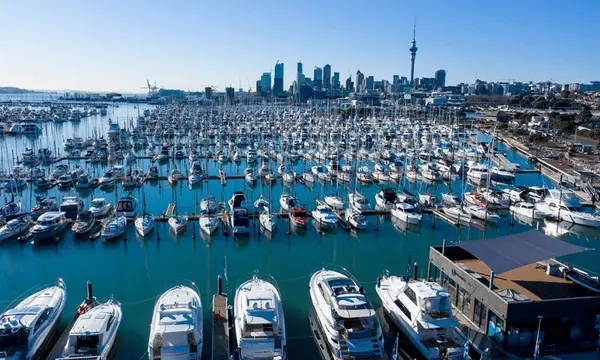
SeaKeepers South Pacific announced a July 2026 partnership with three Auckland Council marinas to widen access to citizen science and conservation programmes.

Northern Lights has expanded Diesel Marine NZ’s distributor role to cover marine generators, Lugger engines and Technicold equipment across the South Pacific.

AkzoNobel and Axalta have announced Axanzo as the name for their proposed future combined coatings company, while marine products remain with existing suppliers.
Superyacht Guide
Continue into the wider Superyacht Guide.
Business opportunities · Superyacht Guide
Companies serving the superyacht market can discuss clearly identified advertising, sponsorship and business-profile opportunities. Commercial activity remains separate from independent editorial coverage.