Yacht Chef Salary 2026: Pay, Tips and Charter Earnings
Yacht Chef Salary 2026: Pay, Tips and Charter Earnings Yacht-chef pay depends on yacht size, private or charter use, professional background, qualifications, rotation and …
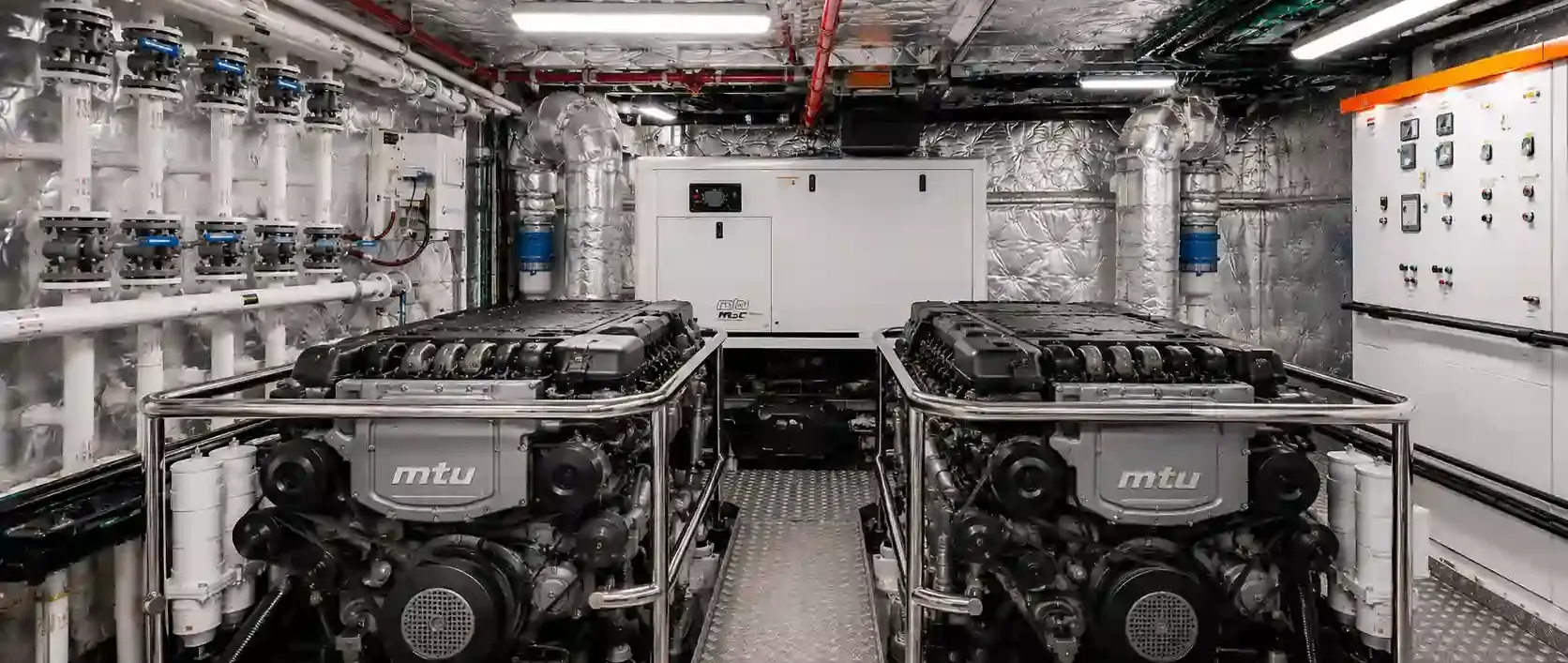
Engine-room reliability is built long before a breakdown. Captains need owners to fund planned maintenance, critical spares, diagnostics, yard time and engineering capacity before reliability becomes an emergency.
A superyacht engine room rarely fails because somebody forgot that maintenance matters. More often, reliability erodes when the maintenance plan, spare-parts inventory, engineering manpower and yard time are expected to fit around a programme that has already consumed most of the available budget and calendar.
For captains and chief engineers, that makes reliability partly a technical problem and partly a funding problem. Engines, generators, pumps, coolers, compressors, fuel systems and control equipment can all be maintained only when the people responsible for them have the money, parts, specialist support and operating windows to do the work before a defect becomes a failure.
Modern machinery monitoring is excellent at showing temperatures, pressures, running hours and alarms, but it cannot replace maintenance that has been deferred. A warning system may identify deterioration, yet the value of that warning depends on whether the crew can investigate it, obtain parts and take equipment out of service before the yacht is forced to do so unexpectedly.
The regulatory logic is similar. Section 10 of the IMO's International Safety Management Code requires companies within its scope to maintain ships in accordance with applicable requirements, carry out inspections at appropriate intervals, record deficiencies and corrective action, and identify equipment whose sudden failure could create a hazardous situation.
The ISM Code also calls for specific measures that promote the reliability of critical equipment and technical systems, including regular testing of standby arrangements and equipment that is not continuously in use. That turns reliability from a matter of engineering preference into an organised maintenance responsibility wherever the Code applies.
The current Red Ensign Group Yacht Code applies the same principle directly to the large-yacht environment, including requirements around maintenance and safety-management arrangements for vessels within its scope. None of those rules dictates an owner's annual engineering budget, but the operational implication is clear: a maintenance system is meaningful only if the work it identifies can actually be carried out.
A planned-maintenance system can make an engine room look highly organised on paper. It can track running hours, calendar intervals, filters, belts, impellers, pumps, injectors, heat exchangers, generators and dozens of other tasks, but overdue jobs do not become less important because the yacht has entered a busy charter or owner-use period.
The funding decision therefore has to precede the failure. Captains need sufficient engineering budget to complete manufacturer-recommended servicing, renew consumables, overhaul components at sensible intervals and engage authorised technicians when specialist work exceeds what the onboard team should reasonably undertake.
The UK's Maritime and Coastguard Agency makes the basic point in yacht-specific guidance. MGN 612 says owners, managing agents and skippers should periodically inspect, maintain and service vessels and their equipment, and recommends maintenance information covering periodic schedules, repair instructions, replacement parts, sources for spares and inspection records.
The same guidance highlights simple checks such as engine-oil levels and fuel filters, but a large yacht scales the principle across far more equipment. Reliability is built through hundreds of relatively ordinary interventions completed on time rather than through one dramatic repair after something has already failed.
A component does not have to be particularly expensive to immobilise a yacht. A failed sensor, relay, seal, pump, control module, starter, impeller or proprietary electronic board can stop a much larger system, and the operational consequence becomes more severe when the yacht is far from a major service centre.
For that reason, the spare-parts budget should be based on criticality and lead time rather than on the physical size of the part. Captains and chief engineers need authority to carry items whose failure would disable propulsion, electrical generation, steering support, cooling, fuel transfer, bilge functions, water production or another system essential to the yacht's safe and practical operation.
The MCA's maintenance guidance specifically recommends that maintenance information includes a list of replaceable parts and sources for spares. On a superyacht, that principle is most useful when the inventory distinguishes ordinary consumables from components whose absence could turn a minor defect into days of lost availability.
There is a balance, because carrying every possible component is neither economical nor practical. The useful question is whether a part is sufficiently critical, difficult to source or slow to deliver that the yacht should own the solution before it needs it.
One of the strongest arguments for engineering expenditure is that relatively modest diagnostic work can reveal deterioration before it becomes visible through an alarm or loss of performance. Oil analysis, coolant analysis, fuel testing, vibration data, thermal imaging and trend monitoring allow the engineering team to make decisions from evidence rather than waiting for a component to demonstrate failure.
The same principle appears in formal survey arrangements. The MCA's extended dry-docking guidance makes machinery planned maintenance and screwshaft condition monitoring part of the entry requirements for qualifying vessels, illustrating how continuing evidence of machinery condition can support decisions about inspection and maintenance intervals.
That matters on yachts because fuel, lubrication and cooling problems rarely respect the itinerary. A developing contamination or wear issue found while the yacht is alongside can often be investigated methodically, whereas the same problem discovered after filters begin blocking or machinery overheats during a passage becomes an operational event.
Condition monitoring should not become an excuse to stretch every service interval indefinitely. Its value is that it gives the chief engineer better information about what is happening inside equipment, helping the captain and owner decide where money needs to be spent now and where work can legitimately be planned for later.
Superyachts are designed with redundancy because important equipment can fail. Twin propulsion engines, multiple generators, duplicate pumps and alternative systems reduce exposure only if the equipment held in reserve is itself maintained, tested and capable of assuming load when called upon.
The ISM Code is explicit on this point for systems whose sudden failure could create hazardous situations, requiring regular testing of standby arrangements and equipment not in continuous use. A pump that has not been run for months, a generator with a starting fault or an automatic changeover arrangement that has never been tested may exist on the equipment list without providing meaningful redundancy.
Owners therefore need to fund maintenance of equipment that appears to be doing nothing. Standby pumps still require seals and bearings, emergency systems still need batteries and testing, and redundant machinery still accumulates age-related deterioration even when its running hours remain low.
This can be difficult to explain because the successful outcome of preventive spending is often invisible. Money is spent, nothing dramatic happens, and the yacht continues operating, but that uneventful result is precisely what reliability expenditure is intended to buy.
A yard period creates competition for time and money. Paint, interiors, guest-area upgrades and visible improvements are easy to understand because the result can be seen immediately, while machinery work may consume substantial budget only to leave the engine room looking almost exactly as it did before.
For the captain and chief engineer, the technical scope needs protection from that competition. Sea valves, shafting, coolers, pumps, exhaust components, tanks, pipework, machinery mounts, generators and propulsion equipment may require inspection, overhaul or renewal according to condition, class requirements and maintenance history, even when none of them has yet produced an obvious operational complaint.
The MCA's extended dry-docking guidance illustrates how closely longer docking intervals depend on disciplined maintenance and survey arrangements. Its entry requirements include hull and machinery planned-maintenance plans, screwshaft monitoring and continuous survey cycles, demonstrating that reduced docking frequency is conditional on stronger evidence of continuing technical control rather than on simply postponing work.
The broader lesson for a yacht refit is that machinery scope should be established before visible discretionary projects consume the available window. Work that needs isolation, tank access, lifting, dismantling or specialist attendance becomes far harder to accommodate once the yard period is already compressed.
Reliability is not created by parts alone. Engineers need time to isolate equipment safely, dismantle it, inspect it, wait for specialist attendance where required, reassemble it, test it and document what was done, and that time has to exist somewhere in the yacht's operating programme.
A heavily used yacht can create a maintenance paradox. The more important availability becomes to the owner, the harder it can be to release machinery for preventive work, yet the less time equipment receives for planned maintenance, the greater the chance that an unplanned failure will eventually dictate the schedule instead.
Owners can therefore fund reliability by accepting engineering windows as well as invoices. A day alongside with machinery unavailable for service can have significant value when it prevents a defect from consuming several days during a passage, charter or owner trip.
The same applies to crew capability. The ISM Code requires companies within its scope to ensure that personnel are properly qualified, familiar with their duties and given the support needed to perform them safely, so training and adequate engineering capacity belong in the reliability discussion alongside parts and machinery.
A useful engineering budget should distinguish between routine operating cost and accumulated reliability debt. When overdue maintenance, temporary repairs, ageing batteries, leaking seals, marginal pumps, obsolete electronics and deferred overhauls begin appearing together, the issue is no longer one isolated defect but a growing backlog that changes the yacht's risk profile.
Captains need that backlog presented to owners in operational language. Instead of a list of engineering jobs, the decision should show what can fail, what function would be lost, whether redundancy remains, how long replacement parts take to obtain, what the likely operational consequence would be and whether waiting is genuinely cheaper.
The REG Yacht Code and ISM framework both emphasise documented maintenance, inspections and corrective actions within their respective scopes, creating a history that should allow recurring defects and repeated temporary fixes to be recognised rather than rediscovered. Those records give captains and chief engineers a factual basis for explaining why a recurring item has become a reliability issue rather than another isolated repair.
A well-kept history can also prevent unnecessary expenditure. If oil trends are stable, a pump has recently been overhauled, a heat exchanger has documented condition and the standby system has been tested successfully, the engineering team can defend both the work that needs funding and the work that does not.
The most defensible engine-room budget is not an unlimited request for technical perfection. It is a prioritised reliability plan covering statutory and class obligations, manufacturer maintenance, known defects, critical spares, condition monitoring, specialist attendance, engineering labour, planned yard work and a contingency for failures that cannot reasonably be predicted.
Owners should also expect the captain and chief engineer to explain those priorities clearly. A request becomes stronger when it identifies the consequence of deferral, the remaining redundancy, the parts lead time and the point at which a planned maintenance decision becomes an operational risk.
The aim is not to eliminate every breakdown, because complex machinery can fail even when maintained correctly. The aim is to prevent predictable deterioration, preserve redundancy and ensure that when defects appear the yacht has enough warning, capability and logistical support to deal with them before they control the programme.
That is ultimately what captains need owners to fund: not simply engines that run today, but the maintenance system, spare parts, diagnostic evidence, engineering time and yard access that make it reasonable to expect them to run tomorrow. Reliability is an operating capability, and like fuel, crew and insurance, it exists only when the resources behind it are treated as essential rather than optional.
Continue reading
Yacht Chef Salary 2026: Pay, Tips and Charter Earnings Yacht-chef pay depends on yacht size, private or charter use, professional background, qualifications, rotation and …
Superyacht Crew Tips: How Much Can Crew Earn on Charter? Charter-yacht crew often receive discretionary guest tips, but tips are not guaranteed salary and …

During a charter, the captain has to balance guest expectations with crew capability, rest requirements and a weather picture that can change by the …
Can Charter Income Cover Superyacht Running Costs? Charter income can offset a meaningful share of superyacht operating costs, but it rarely makes ownership cost-free …
Superyacht Guide
Continue into the wider Superyacht Guide.
Business opportunities · Superyacht Guide
Companies serving the superyacht market can discuss clearly identified advertising, sponsorship and business-profile opportunities. Commercial activity remains separate from independent editorial coverage.