Yacht Chef Salary 2026: Pay, Tips and Charter Earnings
Yacht Chef Salary 2026: Pay, Tips and Charter Earnings Yacht-chef pay depends on yacht size, private or charter use, professional background, qualifications, rotation and …
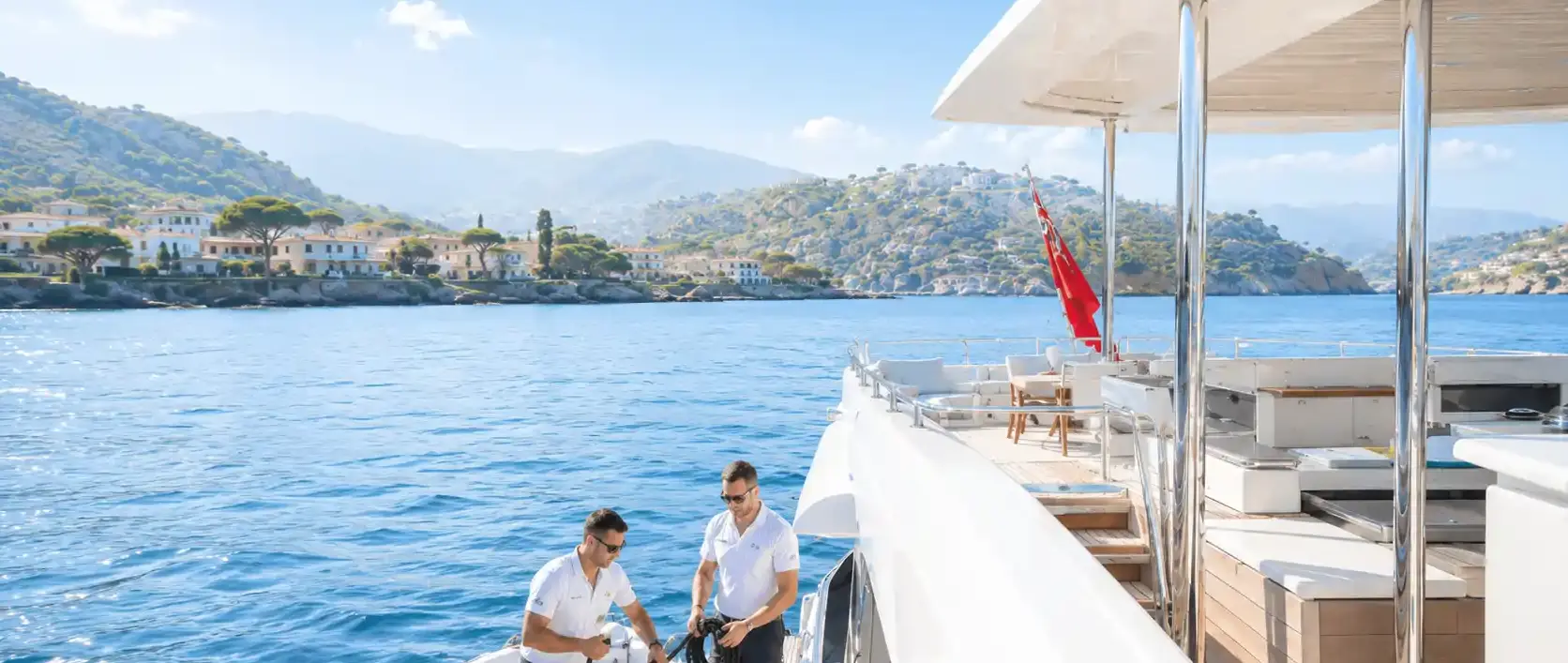
During a charter, the captain has to balance guest expectations with crew capability, rest requirements and a weather picture that can change by the hour. The best command decisions preserve the experience without compromising the yacht’s safe operation.
A successful superyacht charter can look almost frictionless from the guest side: breakfast moves later, the yacht shifts anchorage before lunch, water toys appear when the wind drops and dinner is moved ashore because somebody changes their mind. On the bridge, however, the captain is continuously balancing three systems that do not naturally move at the same speed: what the guests want, what the crew can safely deliver and what the weather will allow.
That balancing act is one of the least visible parts of command. A charter itinerary may be agreed before embarkation, but once the yacht is operating the captain has to keep translating preference into a safe and workable programme, often while protecting crew rest, maintaining watchkeeping standards and preserving enough flexibility to respond to a deteriorating forecast.
The Maritime and Coastguard Agency's current yacht-master examination standards make that combination explicit. Masters are expected to understand passage planning, meteorological conditions, safe watchkeeping, personnel management, hours-of-work legislation and the protection of passengers, which is a useful description of why charter command is much broader than simply deciding where the yacht goes next.
Guests often board with a strong idea of the week: a particular bay for lunch, a restaurant booking ashore, a famous anchorage for sunset and another island by breakfast. The captain treats those wishes seriously, but the itinerary remains conditional because the yacht still has to operate within the limits imposed by weather, sea room, machinery, local restrictions, berth availability, crew capability and the characteristics of the vessel itself.
This is why experienced captains try to separate the guest's objective from the literal route. If the real objective is a quiet swim followed by dinner ashore, there may be several places that deliver it; if the named anchorage becomes untenable, the captain can preserve the experience by moving the programme rather than defending a plan that no longer works.
The discipline behind that flexibility is formal seamanship, not improvisation. MCA yacht-master standards require voyage planning to account for navigational information and meteorological conditions, while current guidance for certain short-range yachts specifically identifies weather routing, appropriate manning and fatigue control as considerations when a passage moves beyond normal operating limits.
A captain's most effective guest-management tool is usually communication before a restriction becomes visible. If the wind is expected to strengthen after lunch, it is better to explain at breakfast that the yacht may move earlier than planned and offer two attractive alternatives than to wait until the tender cannot be operated comfortably and present the change as a last-minute refusal.
The same principle applies to water sports, overnight passages and exposed anchorages. Guests do not need a technical bridge briefing every time the forecast changes, but they do need to understand what is likely to change, why it matters to their comfort or safety and what the crew can offer instead.
This is also where the captain and senior interior team have to work closely together. The captain may know that a departure must be brought forward by two hours, but the chief steward or stewardess and chef know what that does to lunch service, guest preparation, shore arrangements and the rhythm of the day, so the operational decision needs to be translated into hospitality rather than simply announced from the bridge.
Guest-facing work can expand very quickly during a busy charter. A late dinner, an after-midnight tender run, an early-morning departure and a full water-sports programme may each be manageable in isolation, but together they can place pressure on deck, interior, galley and engineering teams whose duties overlap across the same 24-hour period.
For UK-regulated seagoing ships covered by the Maritime Labour Convention hours-of-work regime, the MCA states a minimum of 10 hours of rest in any 24-hour period and 77 hours in any seven-day period, with day-to-day monitoring commonly falling to the master even when departmental managers assist. The exact legal regime depends on flag, vessel and operation, but the operational principle is wider: a charter schedule cannot be treated as successful if it quietly consumes the rest needed to navigate, maintain, cook, launch tenders and respond to emergencies safely.
This is one reason good captains plan beyond the bridge watchbill. They look at when the deck team will recover toys, when engineers may be called for manoeuvring, when interior service will finish, when the chef has to start breakfast preparation and whether the same people are being repeatedly pulled into late and early duties.
Fatigue is not solved by a tidy record after the event. MCA fatigue guidance warns that fatigue can impair decision-making and performance, so the practical response is to adjust work, protect genuine rest and use compensatory rest after exceptional disruption rather than allowing a demanding guest programme to become the normal reason that schedules fail.
Weather decisions during charter are rarely binary questions about whether the yacht can survive a passage. The captain is often deciding whether the motion will be acceptable for guests, whether a tender operation will remain sensible, whether an anchorage will become uncomfortable after a wind shift, whether a lee shore will develop, whether an arrival can be completed in daylight and whether moving now creates a better margin than moving later.
That means the forecast is checked against the actual conditions the yacht is experiencing. Wind direction, swell height and period, local acceleration zones, thunderstorms, visibility, current and the shelter offered by the intended destination can all matter, and the bridge team may revise the plan several times without the guests ever seeing a dramatic weather event.
The captain also has to think one step beyond the preferred destination. A plan is stronger when there is a suitable alternative anchorage, harbour or berth already identified, because a deteriorating forecast is much easier to manage when the yacht can move toward a prepared option rather than beginning a new planning exercise under time pressure.
The captain cannot personally coordinate every plate, line, tender, generator and cabin. Charter management therefore depends on department heads who understand both the guest programme and the operational constraints, with the bridge, deck, engineering, interior and galley teams exchanging enough information that one department's solution does not create another department's problem.
A weather-driven move is a useful example. The bridge may choose a safer anchorage, deck may need to recover equipment earlier, engineering may change machinery preparation, interior may bring service forward and the chef may alter the timing of a meal; the guest should experience one coherent change rather than five separate departments reacting independently.
Brief senior-team meetings are valuable because they expose conflicts while there is still time to solve them. The most useful discussion is often not a long report but a shared picture of the next 12 to 24 hours: guest intentions, expected weather, movement times, crew constraints, shore commitments and the points at which a decision will need to be made.
Saying no is sometimes necessary, but a charter captain's skill is usually shown by what comes after the no. If the original bay is exposed, another may offer better shelter; if a crossing would be uncomfortable in the afternoon, an earlier departure or overnight move may work; if water sports are unsafe, the yacht may be able to reposition for a shore programme while conditions settle.
Not every request has an equivalent substitute, and safety decisions remain safety decisions. The master has ultimate operational responsibility aboard the yacht, so there will be occasions when commercial pressure, bookings or guest disappointment cannot justify proceeding with a plan that the captain considers unsafe.
What prevents those moments from damaging the charter is credibility built beforehand. A captain who explains risks consistently, gives early warning and arrives with alternatives is easier for guests and charter representatives to trust than one who remains silent until the only remaining answer is refusal.
The real measure of command during a charter is not whether the original itinerary survives unchanged. It is whether the yacht can keep delivering a high-quality guest experience while the crew remain capable, the vessel remains safely operated and weather-driven changes are absorbed without creating unnecessary drama.
That requires the captain to think in overlapping time horizons. The guests are often focused on the next meal or destination, department heads are focused on the next shift or service, and the bridge may already be looking at tomorrow's wind, the next harbour and the rest available before the next passage.
When those horizons are aligned, the charter feels spontaneous even though it is being actively managed. The guests experience freedom, while the captain and crew maintain the structure that makes that freedom possible at sea.
Continue reading
Yacht Chef Salary 2026: Pay, Tips and Charter Earnings Yacht-chef pay depends on yacht size, private or charter use, professional background, qualifications, rotation and …
Superyacht Crew Tips: How Much Can Crew Earn on Charter? Charter-yacht crew often receive discretionary guest tips, but tips are not guaranteed salary and …
Guests may experience the first day of a superyacht charter as a seamless transition from airport to anchorage. For the crew, it is a …
The annual Newport Charter Yacht Show returns June 22–25, 2026, at Safe Harbor Newport Shipyard , once again transforming downtown Newport’s waterfront into one …
Superyacht Guide
Continue into the wider Superyacht Guide.
Business opportunities · Superyacht Guide
Companies serving the superyacht market can discuss clearly identified advertising, sponsorship and business-profile opportunities. Commercial activity remains separate from independent editorial coverage.