Ferretti Chief Executive Sets Out Larger Riva and Wally Relaunch Priorities
By Superyacht Guide Newsroom · Edited by Superyacht Guide Newsroom
Ferretti Chief Executive Sets Out Larger Riva and Wally Relaunch Priorities | Original cleared SYG 20261125 ferretti
Ferretti CEO Stassi Anastassov discusses plans for larger Riva superyachts, a Wally relaunch and new group strategy in a recent interview on future growth.
Ferretti Group chief executive Stassi Anastassov has described priorities for a new strategic plan expected in spring 2027, including development of Riva superyachts beyond the current 54-metre range and a relaunch of the Wally brand. The comments appeared in a Marine Business report of 23 November and a further Marine Industry News account of 25 November, following an interview published by the Italian newspaper la Repubblica's Affari & Finanza supplement earlier in the week. They amount to an outline of intentions rather than an approved product catalogue with specifications and delivery dates. That distinction is important for owners, brokers and shipyards. A future model may require design, technical development, commercial confirmation and manufacturing capacity before its availability can be treated as established.
Riva is among the Ferretti Group's most recognisable brands, associated with Italian style and a long history of yacht construction. Expanding the superyacht offering beyond the current 54-metre models would introduce additional requirements for naval architecture, construction, crew provision and owner support. Anastassov's reported remarks do not identify a new vessel name, price or first delivery date. For now, this is a strategic ambition rather than an announcement that a particular larger hull has been sold or launched. Prospective owners should distinguish existing model specifications from future concepts and obtain direct confirmation from the builder before planning a build contract around an unannounced design.
The chief executive points to a Wally relaunch as another priority. Wally has a distinctive identity within the Ferretti portfolio, often associated with unconventional shapes and a design-led approach to yachting. The word relaunch can encompass several activities, from refreshed products and brand positioning to changes in distribution and owner services. The interview summary does not disclose a complete Wally range or a precise sequence of new launches. It would be misleading to claim that a named model will definitely enter production on a particular date. The useful conclusion is that senior management sees Wally as a brand requiring renewed strategic attention within the group's medium-term development.
Anastassov reportedly expects the new business plan to be presented in spring 2027, alongside completion of the ongoing management reorganisation. The timing should be understood as a management target rather than an independently guaranteed publication date. Corporate plans can change as market demand, production and financial circumstances evolve. For industry observers, the value of a future plan will lie in measurable commitments: product development stages, investment allocation, manufacturing capacity and commercial objectives. A plan may help explain priorities, but execution requires separate evidence. Until a formal announcement is made, owners and suppliers should not assume every intention has become an approved project.
The executive says the company is already working on designs intended for sales later in the coming decade, particularly the 2030–2035 period. Yacht development can take several years, especially when new hull forms, power systems and construction techniques are involved. Long-range planning is therefore understandable for a group operating several brands. It can also give suppliers an indication of where future technical requirements may emerge. However, the interview does not publish a product-by-product roadmap. Statements about a design cycle should not be treated as confirmed orders, and the market may evolve considerably between initial studies and eventual production.
Ferretti intends to keep its boatbuilding operations and shipyards in Italy, according to the interview. That commitment matters because the group's brands rely heavily on Italian design, manufacturing expertise and established supplier relationships. Retaining production in Italy can support continuity of specialist labour and technical knowledge, but it does not eliminate the pressures associated with large custom projects. Shipyards still need appropriate facilities, qualified staff, reliable procurement and disciplined quality control. The future business plan will be judged in part by how the group develops that capacity. The statement is a strategic position from management, not a guarantee that every component will be sourced domestically.
The group has separately announced plans to spend almost €30 million over approximately three years on expansion at its Ancona superyacht yard. The investment involves the former Tubimar site and the addition of production sheds intended to increase capability for metal superyachts. This previously announced project gives practical substance to Anastassov's discussion of higher-capacity production. A yard expansion is not equivalent to an immediate increase in finished-yacht deliveries. Construction work, permitting, recruitment and the timing of orders all affect when capacity becomes usable. Readers should distinguish the financial commitment from the ultimate number of yachts completed each year.
A move beyond 54 metres changes the demands placed on fabrication spaces, transport, lifting arrangements and equipment integration. Steel and aluminium construction may require additional specialist skills and facilities compared with smaller composite series yachts. Even within a single yard, the optimum approach depends on the design and the work already under way. Expanding physical infrastructure is only one part of the solution. Planning, quality systems and supplier coordination must also develop. The Ancona investment could support growth, but the public interview does not quantify exactly how many larger Rivas or other vessels will be built there. Such claims require a formal and more detailed production programme.
Anastassov wants yacht configurations to respond to customers in Europe, the United States, Asia and the Middle East. Owners in these regions can have different preferences relating to climate, travel, hospitality and onboard arrangements, although nationality alone is not a reliable guide to a buyer's needs. A design adapted for extended warm-weather entertaining may not be ideal for an owner planning long voyages in colder waters. The objective should be to offer relevant choices while maintaining consistent engineering standards. The interview's emphasis on geographic differences suggests that Ferretti sees market intelligence and product configuration as important competitive tools.
According to the Marine Industry News report, the US accounts for approximately 24% of Ferretti Group revenue, compared with 4.2% for Asia. These are company-related proportions cited in the report, not estimates of the entire global yacht market. The distinction matters because a brand's sales mix can differ significantly from industry-wide demand. Revenue share also does not reveal how many superyachts were delivered in a region or what individual buyers spent. Management may use such information to decide where to develop dealer networks or tailor product ranges. Owners should not interpret the percentages as evidence that one market is intrinsically more profitable or active for every yacht builder.
Ferretti's results for the first nine months of 2026 showed €888.6 million in net revenue, a small year-on-year increase, while adjusted EBITDA fell 7.8% to €130.6 million. The group reported an adjusted EBITDA margin of 14.7% and net profit of €49.9 million, down 18.2%. These figures, reported by Marine Industry News from the company's 27 October financial disclosure, help explain why management is focusing on product mix, manufacturing and organisation. They do not establish the economic prospects of any specific Riva or Wally model. A yacht builder can have strong brands and still face considerable variability in the timing of high-value orders.
The company maintained a 2026 net revenue forecast of €1.20–€1.24 billion but reduced its adjusted EBITDA expectations to €174–€185 million, with a projected margin of 14.5–14.9%. Capital expenditure guidance was approximately €60–€65 million. These are forecasts, not completed-year results. A handful of large orders can affect quarterly comparisons when products are customised and delivery schedules span years. Investors and industry partners should evaluate statements of future performance against later filings. For yacht owners, the financial context is most relevant to the manufacturer's ability to continue supporting products, investing in facilities and completing complex programmes.
Anastassov became chief executive in May 2026 and has been reorganising parts of the business. Ferretti separately announced the appointment of Olivier Faujour as chief marketing and new business development officer, with a start date in January 2027. The post spans the group's seven principal yacht brands. A senior marketing appointment does not itself launch a new yacht, but can influence how future products are positioned and how prospective buyers engage with the group. Management coordination is especially important when several brands share resources or compete for investment. The reported spring 2027 business plan may make these responsibilities easier to understand.
The interview was also conducted amid a governance dispute involving KKCG Maritime and Ferretti's larger shareholder structure. Marine Industry News reports that KKCG Maritime, backed by Karel Komárek, holds approximately 23% of the company, while the China-linked Weichai group exercises control through a holding structure associated with a 39.5% stake. The dispute concerns shareholder votes and aspects of Italy's Golden Power regime. A court decision and continuing litigation have their own legal significance, but they should not be conflated with the commercial features of a yacht. The chief executive expressed confidence in his ability to work with shareholders; that statement is not proof that every dispute has been resolved.
A client interested in a future larger Riva or new Wally concept should seek clarity about project status, construction timetable, specification authority, payment stages and technical support. A manufacturer may discuss strategic plans well before formal sales materials are ready. The buyer should verify what is contractually available rather than rely on headlines. For a highly customised yacht, early discussions can be useful, but questions about flag, class, operating profile, interior volume and ownership budget need detailed answers. The reputation of the group and its brands is relevant but cannot replace project-specific diligence and transparent written commitments.
Design offices, technical suppliers and contractors are likely to pay attention to new-build priorities that affect larger vessels. Potential demand for hull fabrication, stabilisation, HVAC, electrical distribution, interiors and specialist outfitting may change as products evolve. However, an ambition to create a larger model does not automatically translate into a procurement order. Suppliers need formal specifications, schedules and commercial agreements before making significant capacity decisions. Ancona's announced investment offers a more tangible indicator than an unconfirmed model concept, though its actual utilisation will depend on subsequent contracts and yard operations. Industry forecasts should reflect that uncertainty.
The 25 November report gives a useful outline of Ferretti's intentions: larger Riva superyachts, renewed Wally development, Italian production, regional product adaptation and a strategic plan in spring 2027. It does not confirm a complete model range, contractual order book or future delivery dates. The most constructive way to assess the company is to follow subsequent official announcements and actual production milestones. A future yacht concept may become important to owners and brokers, but only once technical specifications and commercial availability are established. For now, the chief executive's comments identify strategic priorities at a time when the group is seeking improved profitability, stronger products and more robust manufacturing capacity.
Primary source: Marine Business original 23 November 2026 report of Ferretti CEO interview, corroborated by independent 25 Nov reporting.
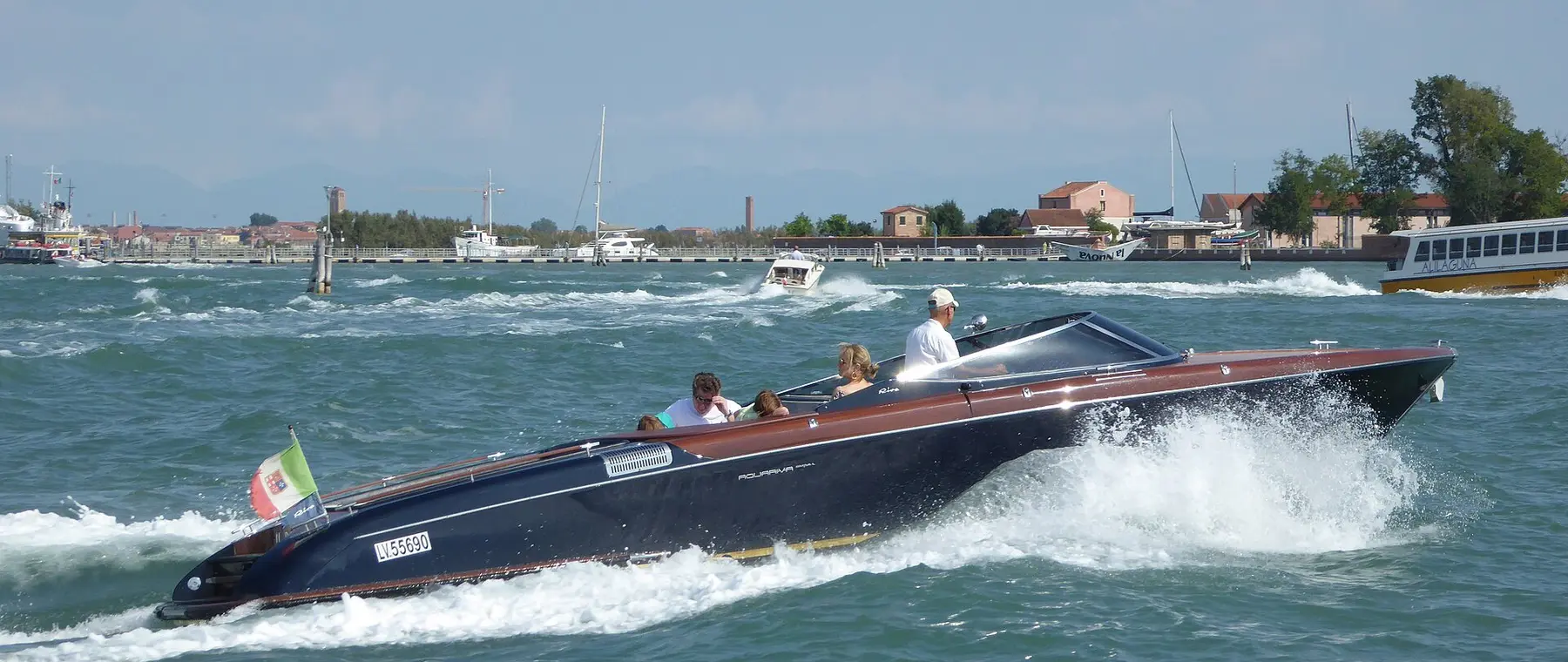
Archive photo of a smaller Riva yacht in Venice illustrating the marque; not a new superyacht model. Photographer: Abxbay; CC BY-SA 4.0 via Wikimedia Commons. Resized for web. Official source.
Explore
Go deeper into the yachts, companies, events and destinations directly connected to this article.
Continue reading
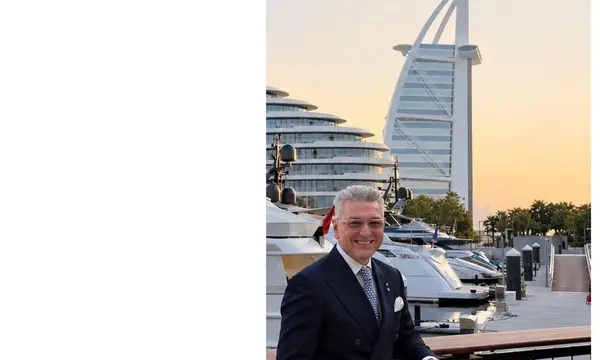
Ferretti Group has named the Middle East and Africa as a growth and investment priority, with CEO Stassi Anastassov speaking at the Dubai summit …
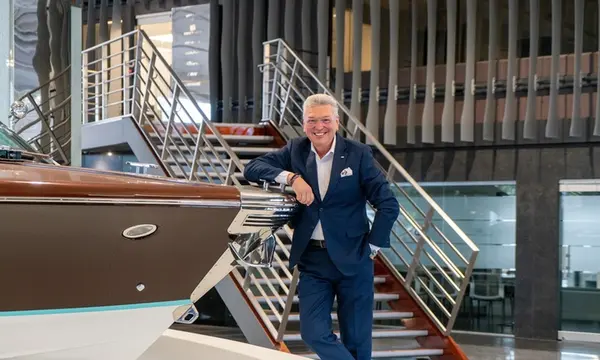
Ferretti CEO Stassi Anastassov outlines brand loyalty, yacht quality, after-sales service and warranty extensions for eligible yachts under 45m.
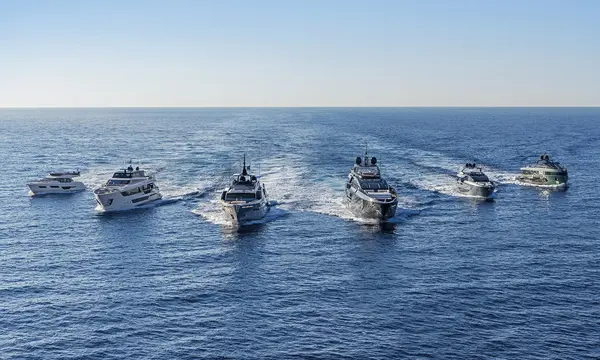
Ferretti Group is reorganising technical and operational leadership into separate manufacturing, research and development, and customer-quality functions as Matteo Cecada departs.

Ferretti Group says a Bologna court has rejected KKCG Maritime’s request to suspend contested board resolutions, while the underlying shareholder case remains pending.
Superyacht Guide
Continue into the wider Superyacht Guide.
Business opportunities · Superyacht Guide
Companies serving the superyacht market can discuss clearly identified advertising, sponsorship and business-profile opportunities. Commercial activity remains separate from independent editorial coverage.

