
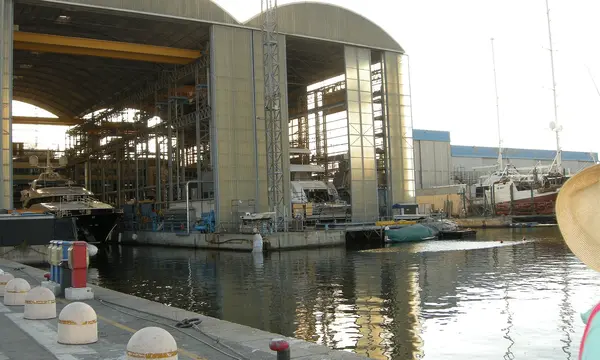
Italian VAT Code Overhaul Requires Yacht Yard Invoice Changes from January 2027
Italy's consolidated VAT code takes effect on 1 January 2027, requiring yacht builders and refit yards to review invoice references, contracts and systems.
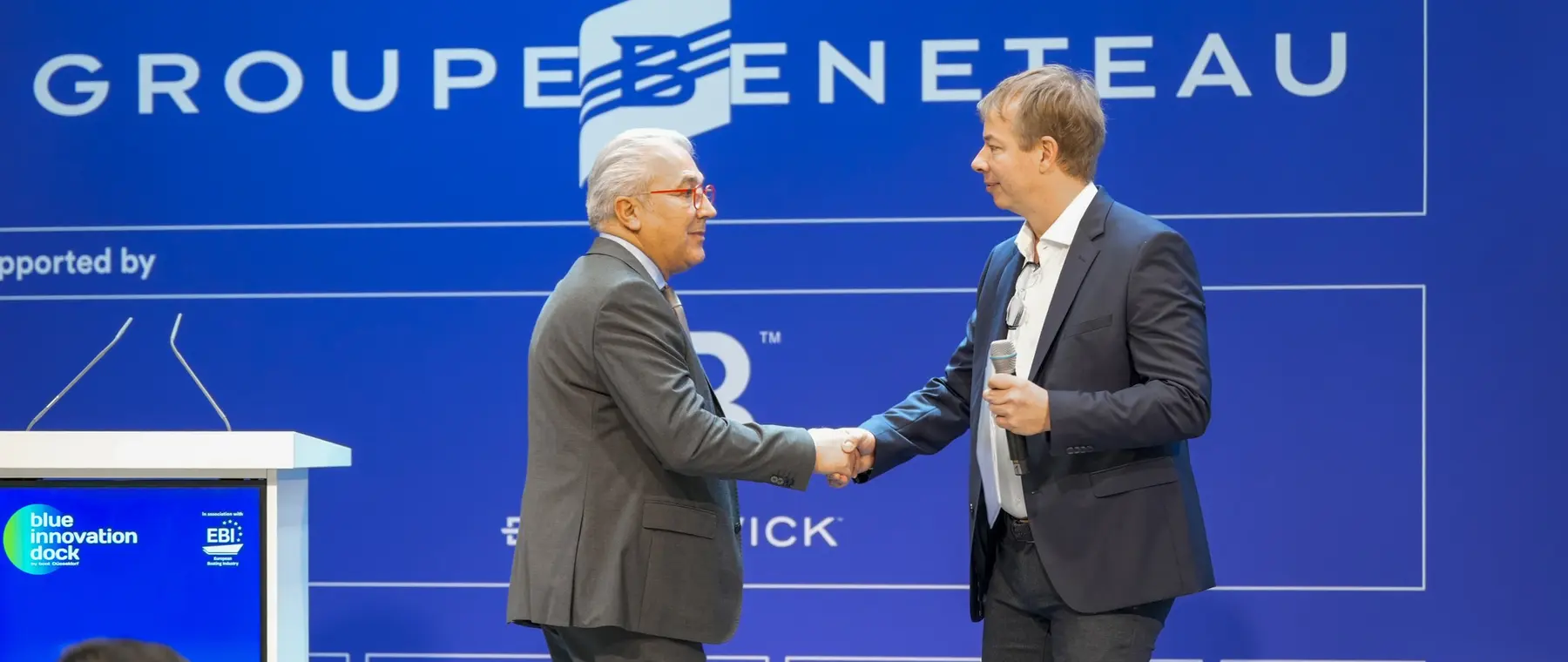
Messe Düsseldorf original organiser press photo of Marcus Krall and Petros Michelidakis - 2026 archive
Ferretti Group joins boot Düsseldorf's 2027 blue innovation dock as a project partner, alongside Group Beneteau and Brunswick, for a practical technology forum.
Ferretti Group has been named a new project partner of the blue innovation dock at boot Düsseldorf 2027, in a programme that brings marine manufacturers, policymakers and technical specialists together around practical innovation. The exhibition organiser announced the updated plans on 19 November 2026, ahead of the Düsseldorf show scheduled for 23–31 January 2027. Group Beneteau returns as main sponsor, while Brunswick Corporation continues as a project partner. The event itself covers a broad recreational-boating market, but Ferretti's participation makes the announcement relevant to the large-yacht supply chain: innovations in materials, electrification, automation, regulatory compliance and industrial processes can move between serial yacht production and custom superyacht construction. The organisers are putting particular emphasis on technologies that can be used today rather than treating every presentation as a distant concept.
The blue innovation dock is organised by boot Düsseldorf with European Boating Industry, the Brussels-based industry association. The programme will take place in Hall 10 during the nine-day show, bringing discussion sessions, interviews and presentations to a dedicated platform. The official release gives the event an agenda that joins industry, research and public policy rather than limiting attention to individual vessel launches. This is an important distinction for shipyards. Equipment decisions depend not only on whether a component works but also on how it interacts with regulation, supply capacity and the ability of service networks to support it. The organisers intend the dock to be a forum where practical examples can be examined in public. Visitors should nonetheless distinguish the scheduled content from products that have been independently certified or adopted across an entire fleet. A forum can identify opportunities; evidence from installation and operation is needed to establish performance.
The organisers explicitly describe Ferretti Group as a new project partner in the 2027 programme. That matters because the group's activities reach from motor yachts into the larger custom-yacht category through its various brands and facilities. A major manufacturing group can offer insight into the difficult transition from a successful prototype to repeatable production, documented quality control and service support. Participation should not be interpreted as an announcement that Ferretti will adopt a particular technology discussed on the stage or launch a new superyacht at the dock. Neither is implied in the release. What the partnership does demonstrate is the company's involvement in a cross-industry discussion about the direction of marine technology. For suppliers hoping to work with superyacht yards, the audience is as significant as the programme: a direct opportunity to understand the purchasing and integration concerns of manufacturers operating at several scales.
One theme of the 2027 programme is the separation of practical applications from speculative promises. Marine businesses have been presented with a succession of announcements about alternative propulsion, connected equipment, software platforms and autonomous functions. The challenge is deciding what can be bought, installed, operated and maintained with confidence. A system may perform well in a controlled demonstration yet require new training, electrical architecture or legal approval before its use makes sense on a commercial or private yacht. The blue innovation dock intends to include examples grounded in operating conditions and current regulatory developments. For yacht builders, that creates an opportunity to ask specific questions about endurance, maintenance intervals, integration standards and the availability of trained technicians. An apparently modest, well-supported product improvement can have greater immediate value than a dramatic concept with no route to certification or servicing.
Artificial intelligence and robotics are listed among the subjects the organisers expect to address. In a superyacht context, those terms cover very different possible applications, from production planning and predictive machinery maintenance to digital inventory tools or assisted navigation. They should not be conflated. Software used to prioritise workshop tasks has a very different safety profile from a system influencing a moving vessel. Any proposed onboard function needs scrutiny of failure modes, sensor reliability, cybersecurity, operator responsibilities and human override. The release does not claim that specific products have met those requirements. It establishes that the discussion will occur. Yards and managers considering AI should request clear explanations of the task being automated, the data on which a system relies and what happens when the result is uncertain. For crew, the essential safeguard is that useful software reduces avoidable workload without obscuring who remains accountable for decisions.
The event organisers also highlight intelligent regulation and policy choices as part of the dock's remit. This is relevant to large yachts because changes in emissions requirements, safety expectations, materials and digital systems can affect decisions made years before a vessel is delivered. A custom superyacht represents a long investment cycle. Its builder must anticipate not only the regulations in force at signing but also potential requirements at commissioning, registration and later refits. The right approach is not to assume that a public conference will predict the final wording of every future rule. It is to use the exchange to identify emerging concerns and then follow official regulatory processes. Classification societies, flag administrations, professional advisers and equipment suppliers each have a different role in that work. Owners should ensure that legal compliance and technical feasibility are addressed together rather than postponed until a late construction stage.
The official announcement maintains sustainability as a central topic, with attention to the relationship between environmental progress and economic competitiveness. For superyachts, that balance can be difficult. Changes intended to reduce operational emissions may add weight, require more complex power electronics or create new maintenance dependencies. Different fuels have different availability and storage constraints, while new materials must be assessed for durability and repairability. It is therefore useful that the event intends to address already available solutions alongside longer-term choices. A convincing environmental argument needs a defined comparison: the same yacht, duty cycle and measurement boundary should be used when evaluating an alternative. Claims should separate manufacturing effects, operational fuel or electricity consumption, maintenance and eventual disposal. Without those details, a product may appear beneficial simply because the difficult parts of its life cycle were omitted from the calculation.
The dock's programme includes market demand and the conditions required to strengthen investment. That may sound distant from the technical decisions made in a superyacht yard, but the link is immediate. A supplier expanding manufacturing capacity needs confidence that orders will continue. A builder choosing a new component must be satisfied that the manufacturer can deliver spare parts and support it for many years. A yacht owner considering a major retrofit needs to understand the price, downtime, expected service life and possible effect on charter use or resale. These issues explain why the industry does not adopt every promising technology as soon as it is announced. Investment decisions are made under uncertainty, and the cost of a wrong choice can be substantial. A forum bringing lenders, suppliers, policymakers and manufacturers into one conversation can help clarify those risks, although individual companies must still perform their own commercial due diligence.
A procurement executive visiting the programme should look beyond headline product demonstrations. Useful questions include whether a supplier has delivered comparable installations, what acceptance tests were performed and who will attend a yacht in service outside its home region. A product that requires proprietary software or a dedicated diagnostic connection should come with a clear support plan. Documentation, parts identification, training and digital security can matter as much as purchase price. The same reasoning applies to seemingly simple materials or fittings: the yard should know how they age, whether their appearance can be restored after damage and whether replacement parts will remain available. The presence of both Ferretti and Brunswick as partners suggests that large manufacturers will be represented, but it does not constitute an endorsement of individual exhibitors' claims. A serious yard can treat the platform as a place to identify questions and potential suppliers, not as a substitute for formal technical review.
New technology often changes the skills a yard or yacht needs. A digitally monitored system may improve fault diagnosis while demanding technicians who understand networks and software. An alternative electrical architecture may reduce one maintenance requirement but increase the need for appropriately trained electrical personnel. Robotics in a production environment can alter workshop processes, inspection methods and safety procedures. These human factors are sometimes overlooked during product promotion because they are less visually striking than the equipment itself. The dock's cross-industry format presents a useful opportunity to discuss whether training provision is keeping pace with technical changes. For superyacht operators, the practical test is whether the chief engineer can maintain the installation at sea and whether crew know the safe response when a device fails. Long-term usefulness depends on those capabilities being built into the operating plan.
The January exhibition encompasses sailing, motorboats and the wider water-sports industry, not exclusively vessels over 24 metres. Some developments discussed there will have little direct bearing on large custom yachts. Others may reach the superyacht sector precisely because they first become affordable and reliable in higher-volume markets. Sensors, power management, pumps, composite techniques and user interfaces are all examples of technology categories where wider industrial experience can be informative. The transfer is not automatic: a superyacht may require different materials, certification, redundancy, noise limits and maintenance access. Yet the ability to observe advances outside the narrow superyacht market is valuable. Ferretti's participation reinforces that connection between production yachtbuilding and the technical requirements of larger vessels. The editorial relevance lies in assessing the pathway from an interesting prototype or serial product to a proven large-yacht installation.
The organisers have confirmed the 23–31 January 2027 dates, the Hall 10 blue innovation dock platform, the involvement of European Boating Industry and the named commercial partners. They also describe the themes of practical innovation, AI, robotics, regulation, sustainability and the investment climate. The full outcome of individual sessions, any product commitments and the business impact of the programme cannot be known before the exhibition takes place. Those should be reported as subsequent developments. For owners and managers looking for a new technology today, the appropriate next step is to verify supplier documentation and seek independent technical advice, not infer readiness merely from a conference slot. The 19 November announcement is therefore a programme and partnership story, distinct from the already publicised overall boot Düsseldorf show dates and halls.
By putting Ferretti Group alongside Group Beneteau and Brunswick Corporation, boot Düsseldorf is assembling participants with different manufacturing scales around a common innovation agenda. That combination may help reveal where the industry's technical problems overlap and where custom superyachts still need bespoke solutions. The more consequential discussions are likely to concern the realities of integration, regulation, service capacity and investment rather than a single eye-catching product. For the superyacht sector, the news is not that every technology on display will change yachtbuilding. It is that a major European industry forum is explicitly putting proven applications and the conditions for adoption at the centre of its January programme. The value of the initiative can be judged after the event by the specificity of the solutions presented and the follow-up commitments made by industry participants.
Primary source: Messe Düsseldorf / boot Düsseldorf — official blue innovation dock 2027 press release, 19 November 2026.
Photo: Messe Düsseldorf / C. Tillmann. Official press photograph of event representatives from January 2026, supplied in the organiser's November 2026 press release; not a January 2027 event photograph. Official source.
Continue reading
Italy's consolidated VAT code takes effect on 1 January 2027, requiring yacht builders and refit yards to review invoice references, contracts and systems.
FGI Yacht Group announces a partnership with flyExclusive, linking yacht brokerage and charter clients with private aviation and amphibious transfers.
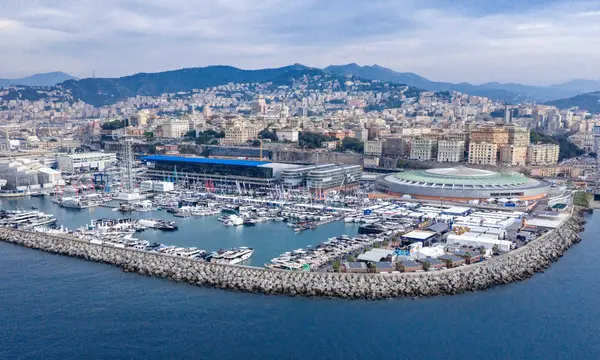
FORUM26 at the Genoa International Boat Show has opened with anti-money-laundering, tax, customs, cybersecurity and technology among the main industry themes.
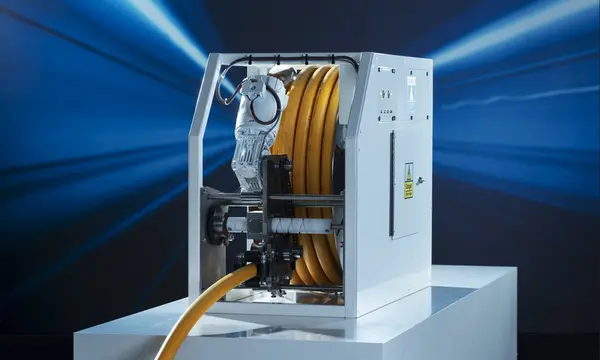
4C Innovation presents an automatic shore-cable reel in the METSTRADE 2026 Superyacht Zone, focusing on safe berthing, cable handling and electrical integration.
Superyacht Guide
Continue into the wider Superyacht Guide.
Business opportunities · Superyacht Guide
Companies serving the superyacht market can discuss clearly identified advertising, sponsorship and business-profile opportunities. Commercial activity remains separate from independent editorial coverage.