

4C Innovation Shows Automatic Shore-Cable Reel for Superyacht Berths
By Superyacht Guide Newsroom · Edited by Superyacht Guide Newsroom
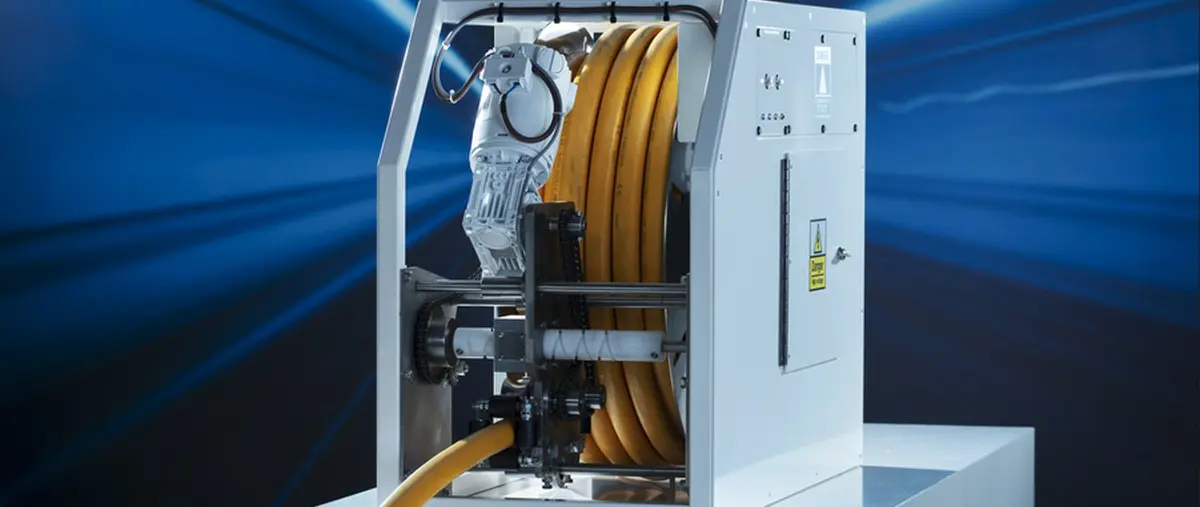
4C Innovation Automatic Cable Reel for marina shore-power connections official product photograph
4C Innovation presents an automatic shore-cable reel in the METSTRADE 2026 Superyacht Zone, focusing on safe berthing, cable handling and electrical integration.
Italian marine engineering supplier 4C Innovation has presented its Automatic Cable Reel to the superyacht equipment audience at METSTRADE 2026, drawing attention to a practical but easily overlooked task at large-yacht berths: managing the shore-power cable safely. The manufacturer describes the system as an automatic arrangement for storing a yacht’s connection cable, part of a broader offering that includes underwater lighting and electrical equipment. A heavy cable can be awkward for crew to handle and difficult to stow without damaging its jacket or connectors. A powered reel may help organise the process, but its suitability depends on the actual electrical installation, cable dimensions, load ratings and safety controls. The product therefore deserves engineering consideration rather than simply being treated as a convenience accessory.
The METSTRADE listing identifies 4C Innovation as a company associated with the Cantalupi Group, drawing on experience in yacht electrical equipment and lighting technology. The business is represented in the Superyacht Zone, where suppliers meet builders, naval architects and technical departments working on larger vessels. Its product portfolio combines several forms of electrical infrastructure, including shore-cable handling, underwater lights and illuminated yacht lettering. Those products share an electrical basis, but they serve very different functions. A cable reel must manage substantial mechanical loads and electrical-safety considerations, while a lighting installation is primarily concerned with output, protection and aesthetics.
A modern superyacht can require considerable electrical power while berthed, supporting air conditioning, refrigeration, charging, machinery and hotel services. Connecting a vessel to marina supply may involve thick, relatively heavy cables with robust connectors. Crew need to bring the cable into position, avoid damaging it and maintain safe access around the quay. If the cable is stored poorly, repeated bending and abrasion can shorten its life and complicate inspections. A dedicated reel can potentially reduce manual handling and keep equipment better organised, but it must be selected to suit the yacht’s actual supply requirements. Different vessels have different connectors, voltages and cable lengths.
4C describes its equipment as an automatic storage system for shore cable. The principle is straightforward: a reel stores cable in a controlled arrangement rather than allowing it to lie loose in a compartment or across a deck. In practice, the engineering challenges include managing winding tension, keeping cable layers orderly and preventing the drum from pulling against a fixed connection. A successful system should also make it easy to inspect the cable before use. The manufacturer’s listing establishes the product category but does not provide every dimensional or load rating, so a buyer should request a full technical datasheet before deciding whether a specific yacht can use it.
The electrical connection between a yacht and a marina is not an ordinary domestic extension lead. Faulty connectors, damaged insulation or unsuitable protection can create serious hazards. A cable reel must not obscure damage or encourage crew to handle live connections without appropriate procedures. The vessel’s technical specification should address earthing, protection devices, the marina supply and the sequence for connecting and disconnecting. A powered reel does not replace those safeguards. Rather, it becomes one part of the system that must be integrated into a safe operating procedure. Responsible reporting should not present automatic handling as proof that a shore connection requires no trained engineer.
Marine power cables have recommended minimum bending radii, reflecting the needs of their conductors, insulation and protective jackets. A reel whose drum is too small could subject a cable to repeated bending beyond its intended specification. This is particularly important for heavier cables used with large electrical loads. Project engineers should compare the reel geometry against the actual cable type, not choose a drum by appearance alone. The arrangement must also avoid trapping a cable between moving parts or allowing abrasion where it passes through deck fittings. Proper cable management aims to preserve the cable’s condition, not merely hide it.
A motorised reel needs enough force to recover the cable without requiring crew to pull it manually across the deck. Excessive force, however, can damage connectors or create an entrapment hazard. The controller should be arranged so the crew can supervise movement, stop it promptly and keep hands clear of the mechanism. Emergency stopping and manual recovery provisions may be appropriate depending on the installation. A skipper should not assume that an automatic feature can be operated unattended while the yacht changes position. The safe method will depend on how the reel interfaces with the cable outlet and the marina connection.
Equipment space is valuable even on a very substantial vessel, because machinery, stores, tender systems and guest areas compete for it. A shore-cable reel may be fitted within a garage, technical compartment or dedicated recess where access and drainage can be managed. Its installation can influence the route of cable from the reel to the quayside, particularly if the yacht uses more than one berth configuration. Naval architects should plan the location early enough to avoid sharp turns and obstructions. A neat external hatch is desirable, but engineering access for inspection and repair remains essential. A reel buried behind finished panels may become difficult to maintain.
Superyachts may berth stern-to, alongside or at facilities with shore-power outlets positioned differently from the yacht's preferred entry point. The handling system must have enough cable length for the intended arrangements and a way to manage the cable without stretching it dangerously. A vessel cruising between different countries may also encounter varying shore-supply configurations that require suitable approved equipment. The reel should not be assumed to solve compatibility issues between connectors or electrical standards. A comprehensive plan includes the shore interface, adapters where permitted and an electrical engineer’s review. Cable stowage is a mechanical improvement within a larger electrical programme.
Power cables can generate heat when carrying current, especially if they are tightly coiled or not sized properly for their duty. A cable reel must therefore be assessed for the electrical load and any manufacturer instructions on how much cable may remain wound during use. A system intended for storage may not permit the same operating conditions as one designed for continuous current with cable on its drum. This is a crucial question for the supplier, particularly when hotel loads are high. Owners should insist on the appropriate current ratings and thermal guidance rather than infer that an automatic reel can always remain fully wound while energised.
Shore connections often form part of an integrated power-management strategy involving generators, converters, transformers and monitoring systems. A mechanical reel may seem independent from that architecture, but its operation should still be coordinated with connection and disconnection procedures. For example, the cable should be de-energised before movement where required, and crew should understand any interlocks or status indications. A yacht equipped with multiple shore inlets will need clear identification of the relevant connection. The equipment supplier and the yacht’s electrical integrator should agree responsibility for each interface. A professionally installed system is safer when the operating sequence is unambiguous.
The most immediate potential benefit is a reduction in awkward manual handling. A heavy wet cable can be difficult to move safely, particularly when the berth is narrow or crew are working near a drop into the water. Controlled retrieval may reduce time spent untangling or transferring cable into storage, leaving crew more attention for the overall departure procedure. That benefit should be assessed through practical trials rather than assumed from a product photograph. The correct system can improve ergonomics, but an unsuitable reel can create a different set of problems. Captains and engineers should be involved in selecting controls and outlet positioning.
A shore-power cable can accumulate salt, dirt and moisture during normal operation. A reel needs to accommodate cleaning and inspection rather than pull a contaminated cable directly into an inaccessible compartment. The drum, bearings, guides and drive mechanism also require maintenance. A manufacturer’s recommended service intervals should be documented, along with spare parts and a practical procedure for use if the automatic drive fails. Where equipment is installed close to seawater, material selection and corrosion protection matter. The crew should know how to isolate the system before working on moving parts. A successful installation remains dependable throughout many docking cycles.
A reel may be an attractive refit upgrade for a yacht with persistent shore-cable handling difficulties. The potential benefit must be weighed against the space and structural modifications required to fit it. Cable routes, deck outlets and nearby machinery may limit the available arrangements, and the existing cable might need to be replaced if its dimensions are incompatible. A proper survey should confirm mounting loads and maintenance access. The upgrade might reduce routine handling effort, but it should not be justified solely by a desire to make the deck appear tidier. Clear operating procedures and measured benefits are more useful evidence.
Using suitable shore electricity can reduce the need for onboard generator operation in some circumstances, potentially lowering local noise and exhaust emissions. However, an automatic reel does not itself generate an environmental saving. Its value lies in supporting a practical, maintainable connection to infrastructure that must be appropriate for the vessel. The effect on overall emissions depends on the electricity source, yacht load and operating arrangement. Owners should not confuse the convenience of cable storage with a guarantee of carbon-neutral berthing. It is a useful piece of infrastructure when integrated into an energy strategy that is evaluated realistically.
Yard technical teams should ask 4C Innovation for the rated cable sizes, drum dimensions, current and thermal limits, operating speed, pulling force and applicable certifications. They should also request drawings showing how the reel, cable guide and control system are installed. A demonstration should cover both normal recovery and the response to a jam or loss of power. The Superyacht Zone listing provides a credible route to discuss the product with its manufacturer, but does not answer every engineering question. The correct procurement process will compare the system against the yacht's real berthing patterns and electrical requirements.
The Automatic Cable Reel is a reminder that superyacht innovation is not limited to propulsion or spectacular guest spaces. Seemingly routine operations such as connecting electricity can create physical effort, safety risks and maintenance demands across a vessel's life. A well-engineered reel may help address those problems if it is correctly matched to the cable and installed with proper controls. 4C Innovation’s Amsterdam presentation brings the subject into discussion among builders and equipment specialists. Owners should judge the proposal by the reliability and safety of the completed shore-power arrangement, not by the promise of automation on its own.
Primary source: 4C Innovation — official METSTRADE 2026 exhibitor range and Automatic Cable Reel product details.
Manufacturer image: 4C Innovation Automatic Cable Reel, official METSTRADE 2026 Superyacht Zone product listing. Official source.
Explore
Go deeper into the yachts, companies, events and destinations directly connected to this article.
Continue reading

SEA.AI is among five winners of the 2026 Ocean Innovation Awards in Saint-Malo, recognised for optical and thermal maritime computer-vision technology used in object …

YachtCloud is highlighting how its ECHO system manages yacht network access, device registration and private casting across guest, crew and operational areas, aiming to …

Feadship’s AURORA artificial-intelligence research initiative has received Dutch maritime innovation funding for CFD-driven hull resistance prediction and optimisation.
Azimut Grande 44M has won the Special Jury Award at the 2026 Innovation Route Awards during its Cannes Yachting Festival world debut.
Superyacht Guide
Continue into the wider Superyacht Guide.
Business opportunities · Superyacht Guide
Companies serving the superyacht market can discuss clearly identified advertising, sponsorship and business-profile opportunities. Commercial activity remains separate from independent editorial coverage.