
YachtCloud Details ECHO Network Access and Private Streaming for Superyachts
YachtCloud is highlighting how its ECHO system manages yacht network access, device registration and private casting across guest, crew and operational areas, aiming to …
BLICKFANG Vienna is taking place at the MAK Museum of Applied Arts from 6 to 8 November 2026, bringing independent furniture, fashion and jewellery designers together in one of the city's best-known cultural institutions. The organiser's published material describes a carefully selected international mix, with around 150 labels from more than 15 countries. It is an opportunity to discover contemporary pieces directly from makers rather than another mass-market retail promotion. For collectors and owners who commission distinctive interiors, that direct relationship can be the beginning of a more personal conversation about materials, craft and a designer's working methods.
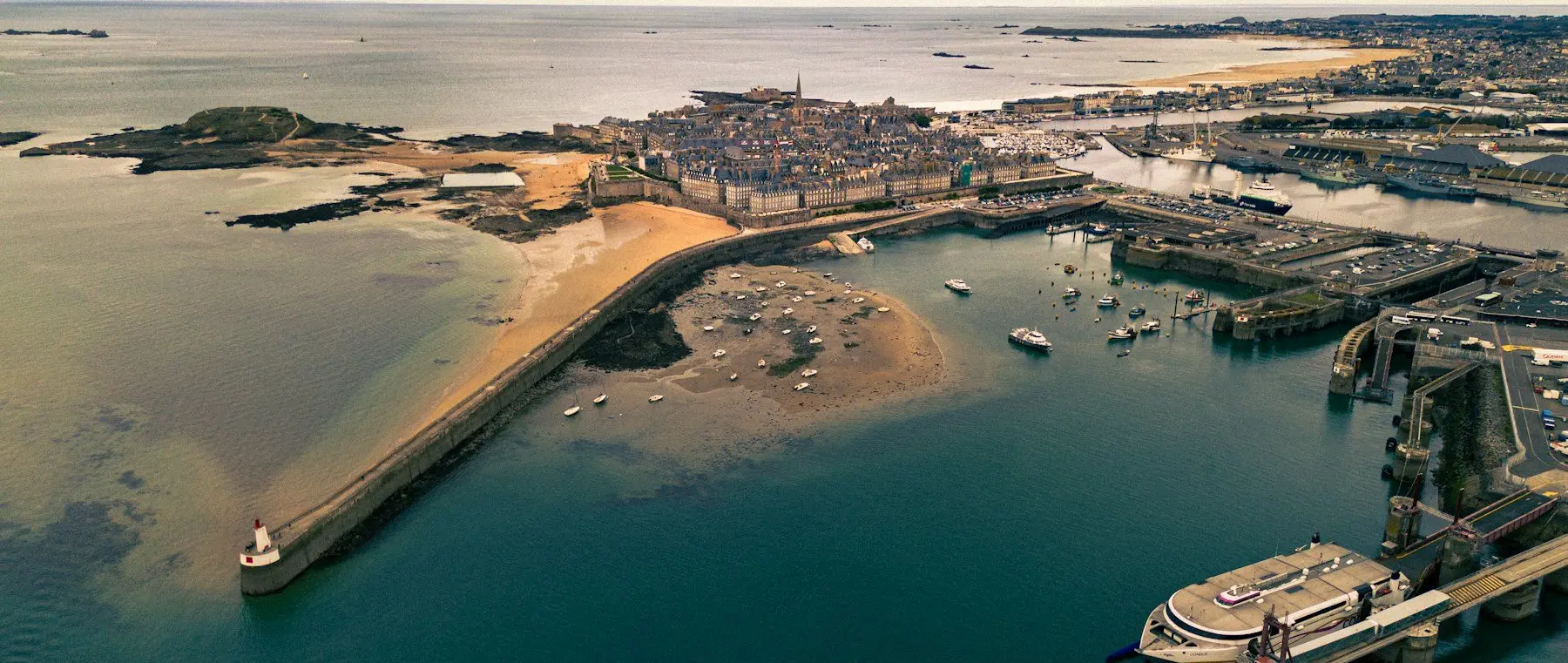
SEA.AI has been named among five winners of the 2026 Ocean Innovation Awards, giving maritime computer vision a fresh endorsement at a time when captains are examining how sensors can work together on increasingly complex bridges. The competition, organised by Crédit Maritime Grand Ouest, brought together more than 63 submissions and recognised projects with innovation, economic potential and environmental impact. The ceremony took place at the Palais du Grand Large in Saint-Malo, near the start of the Route du Rhum. The distinction recognises a technology rather than certifying any individual yacht's navigation performance.
Founded in Brittany in 2018, SEA.AI develops systems that interpret images from optical and thermal cameras to identify objects at the water's surface. Its award announcement names three areas of application: collision avoidance, maritime surveillance and detection of marine mammals. Those objectives are relevant to owners of ocean-going yachts and the crews responsible for moving large vessels through crowded approaches, remote anchorages and open-water passages. The company's published testimonials suggest potential benefits, but the award itself is not an independent comparative test of accuracy, range or response time under every maritime condition.
Modern superyachts are equipped with navigation systems built around several sources of information. Radar helps identify targets and land contours; AIS broadcasts information about participating vessels; charts, depth instruments and a maintained visual lookout provide different kinds of situational awareness. None of these offers a complete picture in isolation. A drifting log may have no AIS transmitter, a swimmer is a difficult radar target, and a poorly illuminated tender can be hard to pick out against coastal lights. Computer vision is an additional means of observing what other equipment might miss, not a substitute for its established counterparts.
The practical question for a captain is how reliably that additional information reaches the bridge. A sensor can produce detections without necessarily providing a useful warning; a warning can become noise if it is repeated too often; and a display can distract a watchkeeper if it is not integrated into the passage plan. SEA.AI says its technology combines visual imagery, thermal sensing and onboard artificial intelligence for real-time classification. Owners considering an installation should ask for measured operating limits, procedures for false alarms, and a demonstration on a vessel with a representative bridge layout and watchkeeping routine.
The developer describes a route to commercialisation that began with offshore racing crews. Racing boats exposed sensors to spray, variable light and sea states where detection has to work under imperfect conditions. SEA.AI says its algorithms have been trained with millions of observations collected at sea, with input from experienced navigators. That history helps explain the product's development, although trials on racing craft do not automatically prove identical outcomes aboard a much larger displacement superyacht. Different mounting heights, reflective surfaces and operating speeds create different demands on the camera system and its software.
For yachts over 24 metres, the bridge team often combines a formal navigation plan with the ability to switch quickly between restricted approaches, night passages and guest-intensive operations. A system that highlights small objects in darkness could assist the lookout when the yacht is entering a busy bay or tracking an approaching tender. An owner or technical manager should nevertheless treat a supplier's performance claims as a starting point for due diligence. The appropriate evidence includes the sensor's field of view, maintenance requirements, display compatibility, training provisions, service locations and the way alarms are logged and reviewed.
Crédit Maritime Grand Ouest's Ocean Innovation Awards are intended to promote a sustainable maritime economy. SEA.AI states that the eighth edition also marked the bank's 120th anniversary and that the jury selected five winners after receiving more than 63 entries. Its recognition was directed at safety, surveillance and marine-life protection, rather than the aesthetic design or luxury fit-out of a vessel. The programme's environmental dimension matters because a technological claim to protect wildlife should be examined separately from a product's commercial promise to reduce operational risks.
Among the examples described by the company are rescue applications and incidents involving small or poorly visible water users. Such accounts illustrate why identifying an object early can have consequences beyond avoiding damage to a yacht. They remain accounts reported by the supplier and are not a universal prediction of system performance. In a professional safety-management context, captains can use case studies to develop questions for sea trials: what was detected, in what conditions, how early was the warning received, what action followed, and which other instruments corroborated it?
One of SEA.AI's stated applications is observing marine mammals at the surface. For superyachts planning long ocean passages or cruises through areas with conservation measures, this is a useful distinction from systems designed solely to detect vessels. Camera-based recognition may add an alert when an animal breaks the surface in the field of view, but it cannot establish that animals below the surface have been detected. Bridge teams still need to follow local speed restrictions, recommended routes, seasonal advisories and applicable rules concerning interactions with protected species. Technology can support compliance; it does not replace it.
Environmental benefits also depend on the way a system is fitted and used. Sensor positioning, the availability of reliable power and clear watchkeeping responsibilities all influence whether an alert becomes a timely change of speed or course. Captains should avoid treating a conservation-themed award as permission to move faster in sensitive habitat or closer to wildlife. A disciplined approach would record sightings, review close encounters and identify any missed or late alerts. Such logs can help an owner assess both the operational value of a purchase and the credibility of environmental claims over an entire cruising season.
For new-build teams, computer vision is most easily assessed alongside the rest of the bridge design. Sightlines from the helm, camera mounting positions, cable routing, electrical redundancy and the handling of recorded images all warrant early consideration. For existing yachts, a retrofit may be technically straightforward in principle but can become more complex where a system must be integrated into older displays or a crowded mast. The sensible procurement process starts with a vessel-specific survey and a definition of operational needs rather than a general assumption that the newest equipment must be appropriate.
Owners should request a written account of which functions are available now, which require optional hardware and which remain planned features. Clarify whether alerts are advisory or can feed other onboard equipment, what support is available during remote voyages and how software changes are validated before installation. Crew familiarisation should include alarms, fault conditions and a procedure for operating safely if the equipment is unavailable. It is also worth separating a vendor's claims about classification accuracy from any formal approvals required by the yacht's flag state, class or insurer.
The Ocean Innovation Award is evidence that the maritime sector is paying greater attention to how computer vision can support safety and environmental aims. It does not show that every superyacht must adopt a particular product, or that computer vision will eliminate collisions. SEA.AI says its ambition is to make the technology a standard addition alongside radar and AIS. That is a company objective, not an announced regulatory requirement. For builders and equipment integrators, the opportunity lies in proving useful systems in realistic service, including long watches, poor visibility and maintenance cycles.
As yachts become more sensor-rich, their owners may find that the quality of the human interface matters at least as much as the total number of instruments fitted. Captains need clear priorities when several systems report the same target or deliver conflicting information. Crew training, maintenance contracts and sensible alert thresholds will remain essential. The industry should expect more conversations about interoperability and data quality, not simply the addition of a new camera housing to a mast. Successful adoption will be measured in everyday decisions on the bridge, not in trophies alone.
The award provides SEA.AI with a timely platform as the maritime industry prepares for its next round of equipment shows and winter refit discussions. It also gives owners a reason to revisit their navigation-technology specifications with technical managers and captains. The first question should be whether an existing bridge has identifiable blind spots that another sensor can address. The next is whether the proposed solution can demonstrate dependable performance under the yacht's real operating profile. The answers will differ between a Mediterranean charter yacht and an explorer spending long periods far from service centres.
Superyacht Guide's assessment is that maritime vision is an area worth watching precisely because it adds a different source of evidence to the bridge. The technology should earn its position through transparent trials, supportable installation and a workable relationship with the people keeping watch. SEA.AI's recognition in Saint-Malo is a significant company milestone and a useful industry signal. It should be understood with the same caution applied to all safety equipment: validation, seamanship and clearly defined limitations are more valuable than a promise of effortless automation.
Primary source: original announcement; corroborating source: additional first-party or industry material. Report dated 7 November 2026. Announcements and operating plans may change; editorial interpretations are distinguished from confirmed facts.
Editorial photograph: photographer and original image — World Thing / Unsplash License; Saint-Malo aerial photograph; illustrative location view, not award ceremony or SEA.AI equipment. Cropped and resized under the Unsplash License. Illustrative photograph only; it does not show the 2026 event or named product.
Continue reading
YachtCloud is highlighting how its ECHO system manages yacht network access, device registration and private casting across guest, crew and operational areas, aiming to …
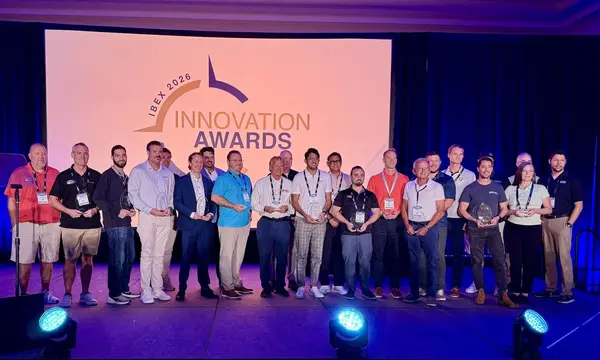
Propspeed's Foulfree Multi-Surface anti-fouling protection has won a 2026 IBEX Innovation Award in Boat Care and Maintenance, jointly with Spectrum Color.

Feadship’s AURORA artificial-intelligence research initiative has received Dutch maritime innovation funding for CFD-driven hull resistance prediction and optimisation.
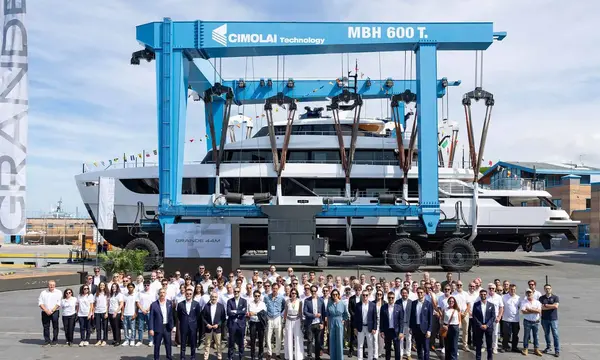
Azimut Grande 44M has won the Special Jury Award at the 2026 Innovation Route Awards during its Cannes Yachting Festival world debut.
Superyacht Guide
Continue into the wider Superyacht Guide.
Business opportunities · Superyacht Guide
Companies serving the superyacht market can discuss clearly identified advertising, sponsorship and business-profile opportunities. Commercial activity remains separate from independent editorial coverage.