Fincantieri Commits Nearly €100m to Robotics and Physical AI
By Stephen Yardley · Edited by Stephen Yardley
Fincantieri is moving its BOOST² robotics and Physical AI programme towards deployment, with planned investment approaching €100m across its shipyards.
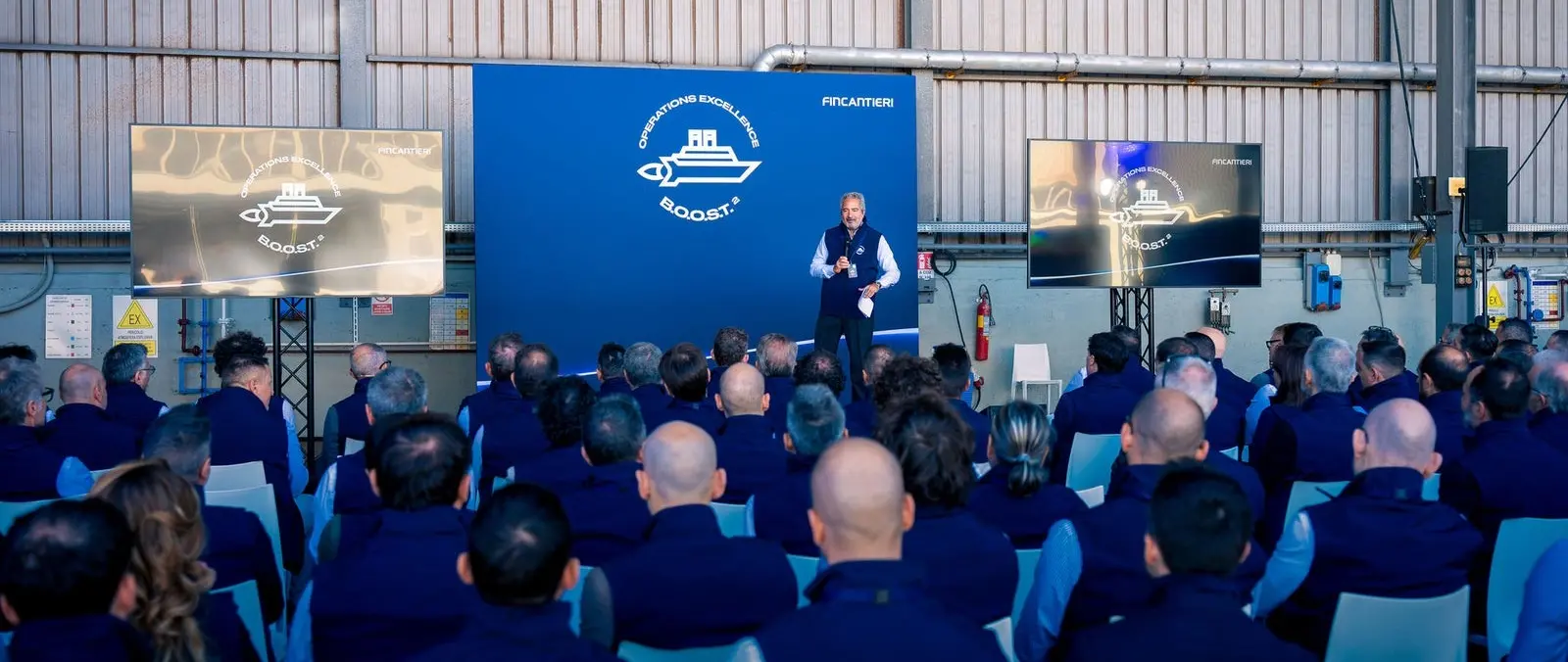
Fincantieri has unveiled the next phase of its BOOST² shipyard innovation programme, allocating nearly €100 million to advanced robotics, Physical AI and digital production systems. The Italian shipbuilding group described the work on 14 October 2026 after demonstrations at its Castellammare di Stabia facility, where employees and technical partners presented applications at different stages of validation.
The programme has involved more than 450 employees across 13 shipyards in Italy and overseas since its launch three years ago. While Fincantieri's latest announcement covers its wider complex-shipbuilding operation, the technologies also raise important questions for specialised yacht-build and refit facilities about safe automation, workforce skills and project control.
BOOST² began as a way of identifying new manufacturing technology and testing whether it could work in shipbuilding conditions. Fincantieri says its emphasis is now shifting towards industrial deployment rather than demonstrations that remain isolated from daily production.
That change requires consistent training, maintainable equipment and evidence that new systems actually improve outcomes on the shop floor. A successful trial at one facility does not mean the same process can immediately be copied into every yard.
The company points to Physical AI as a means of allowing intelligent systems to interact with physical environments. Combined with collaborative robotics, these technologies are intended to assist employees undertaking some of the most complex production activities.
Large metal structures and highly variable outfitting tasks pose challenges that differ from standardised factory assembly. For superyacht builders, any adaptation would need rigorous control of tolerances, worker access and damage prevention around valuable custom components.
Fincantieri says nearly €100 million is planned under the industrial programme, supporting its progression from research into operational use. The announcement does not identify a separate amount earmarked specifically for the company's luxury-yacht activities.
It would therefore be inaccurate to describe the sum as a new superyacht contract or yacht-only capital expenditure. The investment covers broader shipyard transformation involving many facilities and industrial applications.
More than 450 personnel from 13 Fincantieri yards have participated in the programme, including sites in Romania and the United States. The company emphasises practical engagement with production teams as a way of finding technology that solves real tasks.
Experienced welders, engineers and planners understand challenges that may be invisible in a software demonstration. Involving them early can help develop tools that support rather than disrupt the precision and craft associated with complex vessel construction.
Fincantieri names digital twins, automated industrial equipment and smart supply-chain tools alongside robotics in its innovation programme. These systems aim to connect planning, physical production and the information needed to manage machinery and materials.
A digital model becomes most useful when its dimensions, equipment records and revision history remain current. In bespoke yacht construction, uncontrolled design changes can otherwise create costly conflicts between structural, electrical and interior systems.
Additive manufacturing is also included in the technology portfolio, offering potential uses in tooling and other appropriate manufacturing applications. The official release does not specify that certified yacht-critical parts have already entered service through the programme.
Any application to equipment carried aboard a yacht must be evaluated for material properties, traceability and applicable classification requirements. The existence of a 3D-printing capability does not on its own establish approval for safety-critical installations.
Superyacht projects combine low production volumes with unusually high levels of customisation, making them different from mass-produced marine equipment. Technologies that can handle changing designs while retaining repeatable quality may be attractive for hull fabrication and technical integration.
The potential for transfer remains an implication rather than a confirmed Fincantieri luxury-yacht deployment. Individual yards would need to establish investment costs, contractor competence and measurable improvements before adopting similar processes.
The October announcement confirms continuing industrial tests, selected deployments and a programme for wider rollout across Fincantieri. It provides no verified production-speed gain for a particular superyacht or timetable for an automated luxury-yacht line.
Further reports should track confirmed installations and independent operating results as technologies become mature. The current development is evidence of a major shipbuilder investing in the practical integration of robotics and AI with human industrial expertise.
Explore
Go deeper into the yachts, companies, events and destinations directly connected to this article.
Continue reading

Frigomar has introduced its CU210VFDT chiller with 210,000 BTU/h capacity, a titanium seawater exchanger and the same compact dimensions as its 180,000 BTU unit.
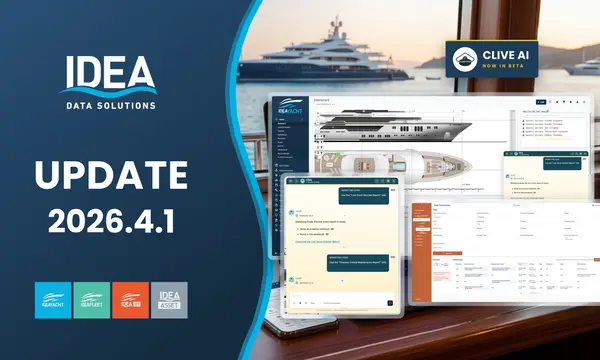
IDEA Data Solutions details release 2026.4.1 for yacht operations, including limited CLIVE AI testing and improvements to purchasing, maintenance and fleet views.
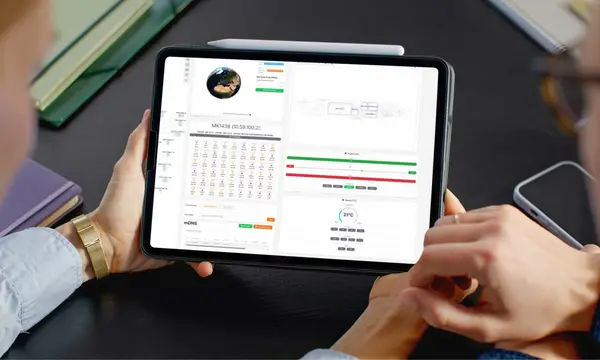
Videoworks explains AVIT Panel, an overlay system that connects existing onboard digital equipment to configurable views for captains and technical teams.
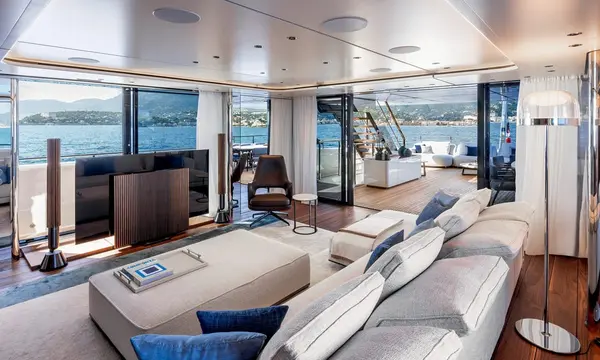
Videoworks explains its bespoke Bang & Olufsen systems on two Custom Line superyachts, naming the hardware used and the integration work carried out.
Superyacht Guide
Continue into the wider Superyacht Guide.
Business opportunities · Superyacht Guide
Companies serving the superyacht market can discuss clearly identified advertising, sponsorship and business-profile opportunities. Commercial activity remains separate from independent editorial coverage.