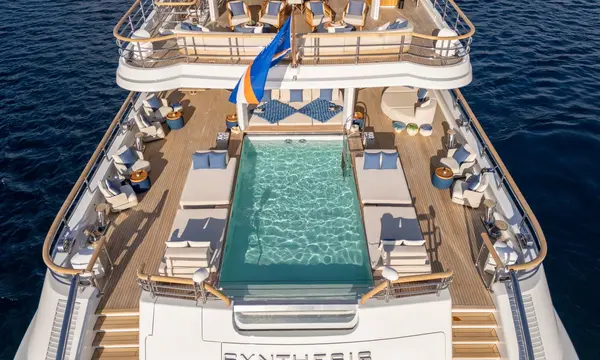
Burgess Highlights Charter-Before-Buying Across 2026 Superyacht Fleet
Burgess identifies a 74m Amels, 43m Codecasa and 36.6m Benetti among yachts offered for both sale and charter, inviting clients to experience life aboard …
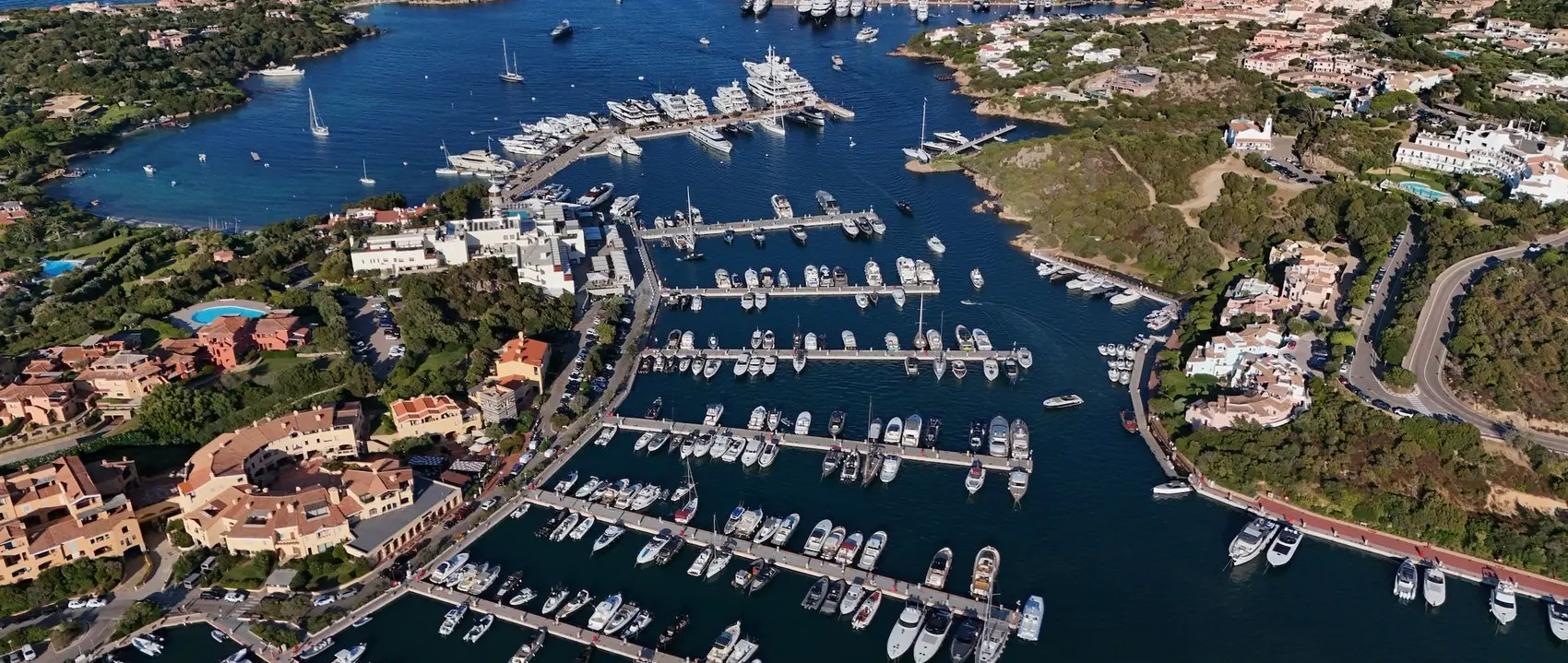
Marina di Porto Cervo original official aerial photograph of the port, provided for geographical context.
Marina di Porto Cervo reports that Sassari, including Gallura, ranks seventh in Italy for shipbuilding export share, citing the 2026 Space & Blue Economy study.
Sassari, the Italian province that includes the Gallura area of northern Sardinia, ranks seventh nationally for the share of provincial exports associated with shipbuilding and recreational marine construction, according to a newly publicised industry study. Marina di Porto Cervo reported the finding in late November 2026, drawing on the first national Space & Blue Economy report prepared by the Osservatorio nazionale sull'Economia del Mare with research partners. It places a global yachting destination within a wider economic picture of production, employment and international trade.
The ranking is not a league table of superyacht deliveries or marina berths. It concerns the proportion of provincial export activity attributed to specified maritime construction categories, a different measure from the total monetary value of exports. Correctly describing the denominator matters because a smaller province can rank highly by export concentration without producing the greatest absolute quantity of yachts in Italy.
The Marina di Porto Cervo article reports that shipbuilding and nautical exports represented approximately 17.9 percent of the total exports of Sassari province in 2025, placing it seventh on that particular national ranking. The Gallura territory is an important part of the provincial yachting economy and includes established marine services and destinations associated with the Costa Smeralda. The source uses the statistic to draw attention to this regional specialisation.
A 17.9 percent share should not be reinterpreted as 17.9 percent of all Italian superyacht exports, or as a measure of the value of yachts constructed in Gallura alone. Those would require different datasets. The figure describes the significance of the sector within one province's export mix. It is an interesting signal of maritime dependence, but it needs that explanation to remain meaningful to international readers.
The broader Space & Blue Economy research considers shipbuilding and nautical construction alongside aerospace activity. Its approach highlights areas in which the two sectors may share technologies, specialist skills and industrial methods, including composites, electronics, digital design and navigation-related engineering. This allows the maritime industry to be evaluated in the context of advanced manufacturing rather than only as a local tourism business.
Marina di Porto Cervo's report identifies the national study as work by the marine-economy observatory with the Centro Studi delle Camere di Commercio Guglielmo Tagliacarne and Assonautica Italiana of Unioncamere. Those attributions help distinguish an independent research programme from the marina's own operational figures. The article is an account of the published study, not a claim that the marina conducted a fresh company survey or independently audited national exports.
According to the cited study, Italian shipbuilding generated direct added value of approximately €10.3 billion in 2024, while aerospace accounted for approximately €4.5 billion. The research also considers wider economic effects, giving a combined figure of €46.3 billion when indirect activity associated with the two industries is included. The difference between direct value added and wider impact is material and these figures should not be added together as if they represent independent categories of income.
Readers should also avoid treating value added as the same thing as sales revenue, company profitability or the value of yacht contracts signed. Value added reflects the contribution of production to the economy under the study's methodology. Its usefulness for yachting lies in the scale of skilled employment and related manufacturing, even though the report encompasses more than the superyacht subsector.
The Marina di Porto Cervo summary refers to exports of approximately €18.5 billion in 2025, 31.4 percent higher than in 2024, and a positive trade balance of around €12.7 billion within the study's reported industrial scope. Those are national figures presented in the research's aerospace-and-maritime context; they should not be described as a tally of yachts sold to overseas owners or as shipyard revenue by itself.
Strong export figures can indicate the international reach of a manufacturing base, but several different businesses may contribute, from specialist parts makers to yards producing larger craft. Currency effects, delivery timing and the value of major individual contracts may influence annual results. A serious assessment of the superyacht market would examine these details separately before using a broad export figure to suggest a change in demand for large yachts.
The report says Sardinia had 1,009 active businesses connected to shipbuilding and recreational marine construction at the end of 2025, approximately 2.9 percent of the national total. It separately identifies 28 aerospace enterprises in the region. Those totals help demonstrate the industrial depth beyond the visible marinas and major yacht brands. A builder's ability to deliver a finished vessel often depends on a network of specialists with narrower technical skills.
Not every business in the 1,009-company group should be classified as a superyacht yard, naval architect or brokerage. The category is broader, and the study does not provide a verified register of how many companies produce yachts above 24 metres. Nevertheless, the size of the network is relevant to owners who need repair, component supply and technical services along Sardinia's coast.
In the source's regional analysis, the Sardinian shipbuilding supply chain accounts for approximately 2,770 people in employment and an estimated €134 million of added value in 2024. The report gives regional added value per worker of around €48,000, compared with a national average near €82,000 for the relevant sector. These are study estimates, not actual payroll figures or a measure of the quality of individual businesses.
A lower value-added-per-worker ratio is a prompt for further investigation rather than an automatic judgement that Sardinian workers are less productive in every sense. Industrial mix, the position of companies in the supply chain, capital intensity and accounting methodology can affect the comparison. It is important not to turn an aggregate metric into a claim about the skills of technicians working on superyachts in Porto Cervo or elsewhere.
Porto Cervo is best known internationally as a yachting destination, yet the economic study addresses industrial capabilities that may be less visible to visiting owners. Marine construction and repair draw on fabrication, composite processing, electronics, interior services and logistics. Marinas can provide a connection between vessels in operation and the wider network of businesses that maintain them.
A large yacht visiting Sardinia may require everything from berth management to propulsion servicing, specialist coatings or spare parts. The presence of a regional supply chain can therefore matter to the practical appeal of a cruising area. However, the economic export figure should not be confused with annual visitor spending at a marina. These are separate elements of the marine economy, and both require their own evidence.
An important caution in the marina's account is that Sardinian companies show a comparatively weak tendency to invest in internationalisation across the industries examined. The source places the region at the bottom of its relevant comparison for this aspect. That observation sits alongside the strong provincial export concentration, illustrating that an industry can be significant in existing trade flows while still facing obstacles to broadening its international reach.
Internationalisation may depend on export sales teams, foreign-language documentation, aftersales support, industry certification and participation in worldwide supply networks. Smaller specialised companies can find these investments demanding. The study's conclusion suggests a topic for regional policy and business development, not a prediction that the industry's exports will necessarily decline. Evidence of which interventions would be most effective would require further research.
For builders and marine technology suppliers, export concentration and local specialist capacity can influence decisions about partnerships and procurement. A supplier located in Sardinia may be close to important repair and cruising activity, while the strongest commercial opportunities could still involve customers abroad. Understanding the structure of the local economy can help companies plan training, quality systems and the support needed to deal with internationally operating yachts.
The study does not name individual companies that have been awarded new contracts, nor does it show that a specific yard is expanding production. It gives a regional context in which such decisions may take place. A useful follow-up would connect the aggregate data with documented company announcements rather than treating the ranking itself as proof that a particular shipyard is growing.
The research deliberately considers overlaps between the maritime and aerospace industries. In both, lightweight materials, precision manufacturing, digital engineering and safety documentation can be important. The maritime sector may draw lessons from other high-value manufacturing fields, while still requiring solutions tailored to saltwater exposure, vessel rules and the service environment of yachts.
These possible connections should not be overstated as newly announced partnerships. The publication of a report that considers two sectors together is evidence of a research framework, not confirmation that an aerospace supplier has secured a superyacht contract. The value of the analysis is to highlight skill and technology areas that might support competitiveness and more demanding export markets over time.
The key verified finding is that Sassari, including Gallura, ranks seventh by the share of provincial exports arising from shipbuilding and nautical construction, with the marina's summary giving that share as roughly 17.9 percent in 2025. The regional company and employment statistics add context, while the internationalisation warning helps prevent the ranking from being presented as an unqualified success story.
For the superyacht community, this is a wider industrial-development story rather than a new yacht launch. It concerns the economic foundations of a prominent cruising region and the engineering supply chain behind marine activity. The industry would benefit from more detailed, consistently dated figures on superyacht-specific manufacture and refit, but those are not supplied by this short report and are not invented here.
The principal source is Marina di Porto Cervo's late-November 2026 account of the Space & Blue Economy report. National and regional figures are presented as reported by that source, with the relevant reporting years retained. Broader implications for yacht builders and service companies are clearly editorial analysis rather than findings attributed to named participants.
The accompanying image is an original aerial photograph from the Marina di Porto Cervo's own official site, illustrating the Sardinian yachting location. It is not a photo of the study's authors or a representation of the export transactions analysed. The marina is credited, and a third-party stock photo was not taken from the article. No AI imagery or unidentified photo licence is asserted.
Continue reading
Burgess identifies a 74m Amels, 43m Codecasa and 36.6m Benetti among yachts offered for both sale and charter, inviting clients to experience life aboard …

MB92 supports La Ciotat Shipyards' December 11 opening of an arts venue in a restored 1949 fitting-out building, with metal sculptures and plans to …
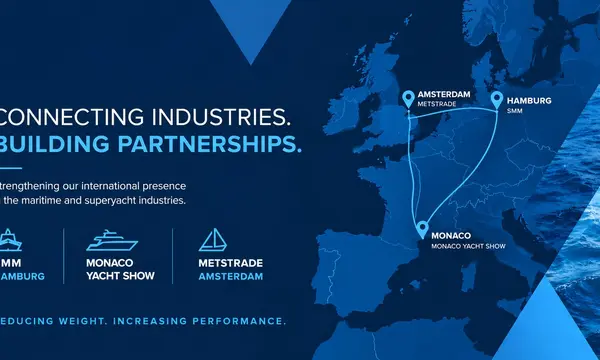
VABO Composites reports new supplier discussions and international relationship-building at SMM Hamburg, Monaco Yacht Show and METSTRADE's SuperYacht Pavilion in 2026.
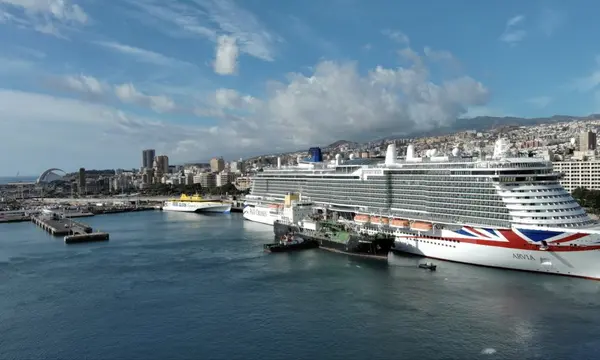
Tenerife's port authority becomes SEA-LNG's first mid-Atlantic member, strengthening cooperation around marine LNG bunkering and potential bio-LNG supply.
Superyacht Guide
Continue into the wider Superyacht Guide.
Business opportunities · Superyacht Guide
Companies serving the superyacht market can discuss clearly identified advertising, sponsorship and business-profile opportunities. Commercial activity remains separate from independent editorial coverage.