Burgess Highlights Charter-Before-Buying Across 2026 Superyacht Fleet
Burgess identifies a 74m Amels, 43m Codecasa and 36.6m Benetti among yachts offered for both sale and charter, inviting clients to experience life aboard …
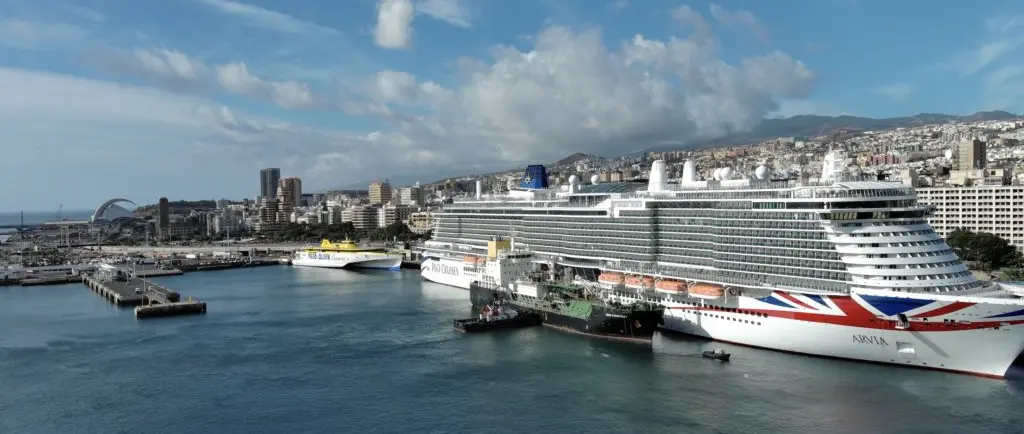
Port Authority of Santa Cruz de Tenerife, official photograph of Tenerife cruise-port infrastructure.
Tenerife's port authority becomes SEA-LNG's first mid-Atlantic member, strengthening cooperation around marine LNG bunkering and potential bio-LNG supply.
The Port Authority of Santa Cruz de Tenerife has joined SEA-LNG, becoming what the authority describes as the coalition's first member headquartered in the mid-Atlantic. In a statement dated 25 November 2026, the organisation says its membership will deepen cooperation around the supply of liquefied natural gas and potentially renewable methane-based marine fuels. Tenerife's position between European, African and American routes gives the decision relevance beyond the Canary Islands.
This is an announcement about the port authority's participation in an international industry network. It is not a declaration that an LNG-powered superyacht has taken delivery there, nor does it verify that a new bunkering installation has already opened for all vessel types. The immediate news is institutional cooperation tied to existing and planned port-fuel activities.
The authority manages six ports in the Canary Islands and describes Tenerife as a growing marine LNG supply location in the mid-Atlantic. For commercial shipping, route geography matters because fuel availability can influence itinerary planning and the choice of propulsion system. Vessels travelling between Europe and other Atlantic markets may benefit from a network of suitably equipped ports, subject to the specifications and service capacity of each facility.
Large superyachts sometimes follow similar regional corridors, although their fuel systems and logistics differ from those of cruise ships or ferries. The authority's announcement primarily concerns commercial shipping, so the yacht-industry implication is about wider infrastructure rather than a reported yacht bunkering contract. Owners should verify availability and compatibility for their own vessel instead of assuming that a port's commercial capabilities automatically extend to private yacht berths.
The statement recalls a 2018 operation at Santa Cruz de Tenerife that it describes as the first ship-to-ship LNG bunkering of a cruise vessel anywhere in the world. This historical detail helps explain why the port authority sees itself as having expertise in marine alternative fuels. It also illustrates that bunkering arrangements can be developed for large vessels without relying exclusively on fixed quayside pipes.
A historical first should not be represented as an event that occurred in 2026. The new development is SEA-LNG membership; earlier operations form the background. Bunkering of a fuel such as LNG involves specialised equipment, safety procedures, trained personnel and coordinated port management. Those requirements remain material whenever a new user group or vessel class seeks to use similar infrastructure.
According to the authority, the port has been supplying LNG to Baleària vessels through regular truck-to-ship arrangements since September 2026. This is a more recent operational detail than the 2018 milestone. It indicates actual service activity using mobile supply equipment, rather than only a proposal for future infrastructure.
The company statement does not disclose detailed annual volumes, prices or the service conditions that would apply to an unrelated yacht. Truck-to-ship delivery also needs sufficient access, safe transfer arrangements and compatibility with the vessel's receiving system. A port can provide regular services to a particular ferry operator while retaining different arrangements for other customers. The evidence here is specific to the operations described by the authority.
The port authority says more than 30 LNG bunkering calls are already scheduled for the 2026–27 cruise season. This is a forward-looking booking figure from the operator and should not be confused with 30 operations completed by 25 November. It suggests that LNG supply has become a relevant part of the area's cruise logistics.
Actual demand and scheduling can change, especially when vessel routes, weather or operational priorities shift. A detailed evaluation would require completed-delivery records, volumes and comparable periods from earlier years. The announcement nonetheless gives a meaningful indication of how the authority views its developing service role in international maritime operations.
The source highlights the Port of Granadilla as an area with opportunities for LNG supply, storage and supporting infrastructure. Deep-water facilities and suitable industrial space may help ports accommodate specialist fuel operations, but the development of additional capability depends on engineering, investment and safety approvals. An opportunity identified by an authority is not the same as a commissioned new tank or completed marine terminal.
Yacht developers and shipyards tracking alternative fuels may view such programmes as part of a changing supply environment. Yet it would be premature to claim that future superyacht designs can depend on Granadilla before the relevant service specifications and commissioning dates are known. The sensible approach is to monitor verified infrastructure progress and assess vessels against actual bunkering networks.
SEA-LNG is an industry coalition promoting LNG and methane-based pathways as options within the transition to lower-emission marine transport. Tenerife's membership expands the coalition's geographic representation. The port authority frames LNG as a transition fuel, particularly for cruise operations seeking to reduce local air pollutants while considering future use of renewable methane sources.
Those claims should be understood within an ongoing technical and policy debate. LNG can reduce certain local exhaust pollutants, but greenhouse-gas outcomes depend on fuel production, transport, combustion and methane leakage. The environmental case cannot be evaluated solely by the absence of visible smoke. An independent comparison needs appropriate lifecycle boundaries and credible fuel-chain information.
The source emphasises reductions in sulphur oxides and particles from LNG compared with conventional fuels, together with potential reductions in nitrogen oxides depending on engine technology. These benefits can be especially relevant for populated waterfronts that receive frequent large-vessel traffic. Local exposure matters to residents, workers and visitors even where a route's total greenhouse-gas footprint remains a separate question.
The authority also speaks positively about greenhouse-gas benefits, but readers should not interpret every LNG operation as automatically delivering an identical percentage reduction. Methane slip from engines and the supply chain can materially affect climate results. Evaluating one vessel's emissions therefore requires specific information about its machinery, fuel and operating profile rather than a general statement about fuel categories.
The port authority says some LNG infrastructure could in future handle liquefied biomethane and synthetic methane, sometimes called bio-LNG and e-methane. This is a potential compatibility advantage where the infrastructure and fuel standards support it. The authority's release cites the possibility of substantially lower lifecycle greenhouse-gas emissions with suitable renewable methane pathways.
Such reductions are conditional on feedstock, production energy, methane leakage and certification. They should not be presented as a guaranteed performance figure for every litre supplied through a Tenerife facility. Nor does the release confirm that a particular renewable methane bunkering service is already available to visiting superyachts. Future fuel choices need both engineering and evidence about the actual supply chain.
Airam Díaz, deputy director of the Tenerife port authority, describes LNG as part of a transition to cleaner marine operations and sees the coalition membership as a way to deepen international cooperation. SEA-LNG chief operating officer Steve Esau welcomes Tenerife's participation and emphasises the connection between local air quality, tourist destinations and longer-term marine fuel options.
These are the published positions of organisations involved in the initiative rather than an independent emissions study. Their perspectives explain the commercial and policy reasons for joining forces. Reporting them accurately does not mean that the newsroom has verified the projected climate effect of every proposed fuel source. Relevant claims should remain attributed and open to further technical evidence.
The authority's statement gives a figure of 222 ports worldwide where LNG bunkering is available, alongside plans for 62 additional locations. These are network figures cited by the announcement as of its publication date, not a live map of current availability or a promise that every port offers identical equipment and delivery capacity. Individual locations may serve specific routes or customers.
A captain or yacht manager evaluating a new fuel system would need to identify suitable delivery facilities long before committing to a voyage. The most useful information includes compatible connection arrangements, minimum volumes, operating windows and the ability to manage contingencies. A large total number of locations is encouraging for an industry fuel pathway, but it does not remove these practical constraints.
Most current superyachts use more familiar fuel arrangements, so Tenerife's announcement should not be reported as a new LNG service designed specifically for the superyacht sector. Its potential relevance lies in how commercial shipping infrastructure, port skills and safety procedures develop. Some specialist technologies and services may eventually cross between markets, but that requires documented vessel and facility compatibility.
The presence of alternative marine fuels can also influence long-term thinking at yacht-design offices and refit yards. Engineers have to consider storage volume, machinery types, ventilation, cryogenic handling and crew training. These are fundamental design questions, not features that can be added to an existing diesel yacht without significant study. A port authority's coalition membership is one contribution to that wider landscape.
The concrete development is Tenerife's entry into SEA-LNG and the authority's intention to collaborate more closely on alternative marine fuel supply. The source also records Baleària truck-to-ship operations, planned cruise bunkering calls and the role of Granadilla in possible future infrastructure. It connects those developments to the Canary Islands' location on international Atlantic routes.
The release does not confirm a new superyacht LNG contract, a port-wide fuel conversion or guaranteed lifecycle savings for visiting vessels. The article therefore treats the announcement as maritime infrastructure and policy news, relevant to the broader yachting economy through the development of energy supply networks. Any yacht-specific adoption would require separately verified evidence.
The main source is the Port Authority of Santa Cruz de Tenerife's 25 November 2026 SEA-LNG announcement. Network statistics, announced call numbers and organisational statements are attributed to the authority rather than presented as independently audited by this newsroom.
The accompanying image is a genuine photograph from the authority's own 2026 release, showing Tenerife's port and cruise infrastructure. It is credited to the Port Authority and does not imply that the photographed ship is an LNG-powered superyacht or that the image depicts a newly completed fuel transfer. No artificial image or competing editorial photograph is substituted.
Continue reading
Burgess identifies a 74m Amels, 43m Codecasa and 36.6m Benetti among yachts offered for both sale and charter, inviting clients to experience life aboard …

MB92 supports La Ciotat Shipyards' December 11 opening of an arts venue in a restored 1949 fitting-out building, with metal sculptures and plans to …
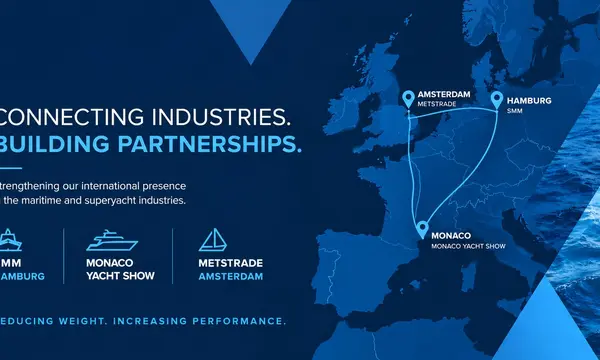
VABO Composites reports new supplier discussions and international relationship-building at SMM Hamburg, Monaco Yacht Show and METSTRADE's SuperYacht Pavilion in 2026.

VABO Composites announces its 25 November 2026 selection to supply doors and hatches to a major Italian naval programme, citing weight and shock resistance.
Superyacht Guide
Continue into the wider Superyacht Guide.
Business opportunities · Superyacht Guide
Companies serving the superyacht market can discuss clearly identified advertising, sponsorship and business-profile opportunities. Commercial activity remains separate from independent editorial coverage.