Burgess Highlights Charter-Before-Buying Across 2026 Superyacht Fleet
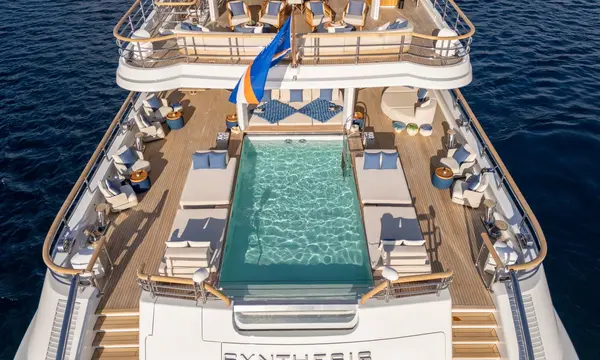
Burgess identifies a 74m Amels, 43m Codecasa and 36.6m Benetti among yachts offered for both sale and charter, inviting clients to experience life aboard …
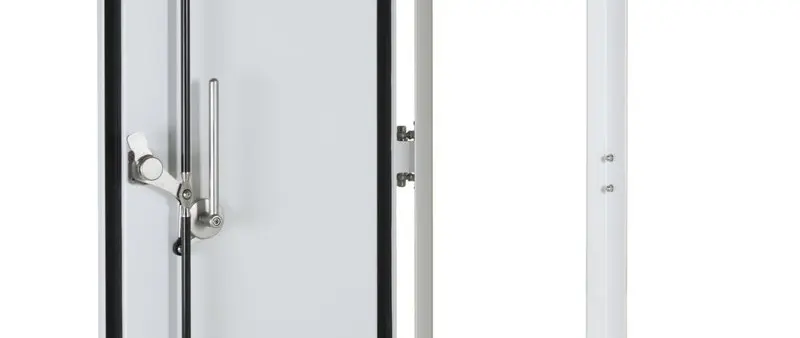
VABO Composites, official earlier product photograph of a watertight composite marine door; representative, not the Italian naval parts.
VABO Composites announces its 25 November 2026 selection to supply doors and hatches to a major Italian naval programme, citing weight and shock resistance.
VABO Composites has been selected to supply doors and hatches for a major Italian naval programme, the Dutch manufacturer announced on 25 November 2026. The company describes lightweight construction and resistance to shock as significant criteria in the customer's selection. Its update states that the order covers the programme's doors and hatches, although it does not name the naval vessel, the principal shipyard, the number of components or the commercial contract value.
The assignment belongs to the naval sector, rather than a newly disclosed superyacht contract. Its relevance to the yacht industry lies in specialist component engineering: large yachts also require doors and access systems designed around demanding structural, sealing, fire and weight requirements. Those connections are potential technology lessons, not evidence that this Italian naval programme is building a privately owned yacht.
The first-party statement identifies the supplier, the broad country and industry of the programme, and the intention to deliver lightweight doors and hatches for naval applications. It does not provide an installation schedule or the acceptance tests required for every component. A published contract award should therefore not be confused with completed manufacture, delivery or sea trials.
The company says the opportunity strengthens its international defence activity. That is VABO's commercial interpretation of the development. An independent account can report that a new supplier assignment has been announced while declining to invent the identity of the customer or quantify revenue that has not been publicly disclosed. Keeping those boundaries clear makes subsequent project reporting easier to verify.
Reducing the mass of equipment can offer a shipyard useful flexibility, especially where multiple items are installed throughout a vessel. Doors, hatch assemblies, frames and their operating hardware may be relatively small compared with the hull, yet the total weight can still matter to design margins. The appropriate comparison is between complete assemblies that meet the same functional requirements.
VABO identifies low mass as one reason for the Italian customer's choice, but it has not published a percentage saving compared with metal alternatives for this order. Any estimate would need a component schedule, material specification and installation arrangement. It would be misleading to apply a general manufacturer's marketing figure to a programme whose actual technical details remain confidential.
The statement separately highlights shock performance as a demanding requirement. In naval construction, components may need to retain their intended function after prescribed dynamic loads, depending on the vessel's specification and applicable tests. The effectiveness of a door or hatch under such conditions depends on more than the panel material: frames, fastening, seals and locking mechanisms must form an appropriate complete assembly.
The company says it can address complex technical requirements, including shock resistance. It does not identify a named test standard, test result or certificate for this particular Italian order. Reporting should preserve that distinction. A professional buyer would request the actual qualification evidence rather than treating the use of a composite material as automatic proof of performance.
A marine closure must often satisfy several requirements simultaneously. It may need to remain operational under motion, resist water entry, provide a defined level of fire protection, and fit within a constrained structural opening. These demands can interact. A change that reduces the panel's weight may affect hinge loading, sealing or the reinforcement needed around its frame.
For that reason, supplier selection should consider complete assemblies and documentation rather than isolated material samples. The Italian programme announcement is useful evidence that composite closures are being considered for technically demanding applications. It is not evidence that every closure on a naval vessel, or on a superyacht, can be replaced by the same catalogue part.
Naval vessels and large superyachts may use similar classes of construction material, but their acceptance requirements and operating contexts are not identical. A defence-oriented shock specification should not be treated as interchangeable with a yacht's flag or classification requirements. Conversely, the aesthetic and interior integration of a luxury yacht may introduce considerations that differ from a naval installation.
The significance of the contract is that a marine supplier works across sectors with overlapping engineering skills. It may transfer expertise in precision fabrication, lightweight structures and component reliability, subject to the separate demands of each project. The current customer remains an Italian naval programme, not an unidentified superyacht owner.
Composites can combine different reinforcements, resin systems and structural arrangements to suit a designed purpose. That flexibility may assist in forming complex shapes or integrating details that would otherwise require several metal components. However, the right solution depends on load, expected operating life, environmental exposure and the ability to inspect and repair the finished assembly.
VABO's statement refers to combining composite materials with application-specific engineering. It does not release the lay-up, resin chemistry or full construction drawings for this programme. Such information may be commercially sensitive. Editorial commentary should therefore focus on the engineering principles and verified assignment without claiming to know which precise material system the supplier will deliver.
Some yacht and shipboard openings are part of important safety boundaries. They may be required to achieve documented resistance to fire, flooding or other hazards, depending on their location. Those duties are established through design approval and the testing of complete assemblies. Material choice alone cannot guarantee suitability for a particular boundary.
The Italian naval press release highlights weight and shock requirements but does not specifically state an FRD60 rating for this order. VABO has separately announced FRD60-rated parts for Sunreef Yachts, a different project. These specifications must not be combined. A professional report should avoid implying that performance verified on one component automatically applies to products made for another customer.
Supplying numerous doors and hatches can place demands on production consistency. Each assembly must be traceable to an accepted design, and variations in size or fitting arrangements need to be controlled. A supplier working within a naval programme may have to coordinate factory inspections, records and the delivery sequence with the principal shipyard.
The company has not disclosed its manufacturing schedule for the Italian work, so the article does not invent deadlines or completed quantities. The wider lesson for yacht builders is that reliable component procurement depends on documentation, acceptance procedures and supply continuity. A design is only part of the contract's value; successful execution matters just as much.
VABO is a Dutch company addressing customers across multiple countries, and the Italian naval assignment illustrates the international nature of maritime component sourcing. A shipyard may select a specialist from another country when its technical offer is considered appropriate. Such contracts require coordination on specifications, logistics, quality documentation and future support.
Superyacht projects operate in an equally international environment. Yachts can be designed in one country, built in another and fitted with specialist equipment from many suppliers. However, the fact that VABO has won this particular naval programme does not establish a newly signed Italian superyacht deal. The contract should be reported within its actual market while recognising the relevance of the engineering capability.
Doors and hatches also matter after a vessel enters service. Hinges, latches, seals and framing may require inspection or replacement, particularly when components are opened frequently or exposed to spray and vibration. A lightweight design can reduce the force required to operate a closure, but its maintenance demands must still be assessed over time.
For a superyacht refit, replacing a closure may involve changes to the surrounding structure and interior finish. The Italian naval announcement does not concern such a refit, but its emphasis on custom-engineered assemblies is relevant to the way specialists approach complex installations. Owners should verify compatibility, approvals and replacement-part availability before committing to any change.
An owner representative or shipyard engineer considering composite marine closures should begin with a precise schedule of openings and their required functions. The supplier would need information about loads, water and fire boundaries, access, finish, tolerances and installation constraints. That allows meaningful comparison between approaches rather than a vague choice between metal and composite materials.
Performance claims should be tested against the applicable standard and the installed assembly. Buyers may also consider repairability, service access and how long replacement parts will remain available. VABO's new supply award demonstrates commercial interest in lightweight technology, but it is not a substitute for technical qualification on an individual yacht.
The company has also reported a completed series of FRD60-rated doors and hatches for Sunreef Yachts, an ongoing winter-garden superyacht refit, and recent international trade-show relationships. The new Italian programme is separate from each of those activities. It has a naval customer and emphasises shock resistance as well as weight reduction.
Maintaining those distinctions avoids inflating the company's order book or suggesting that a named yacht is part of the new defence project. The portfolio as a whole shows different applications of composite engineering. Each project, however, must be evaluated against its own customer, technical scope and stage of completion. That is the proper context for this November announcement.
The principal source is VABO Composites' 25 November 2026 announcement of the Italian naval component assignment. Its original company publishing record confirms the date and describes lightweight doors and hatches, the importance of low mass and the shock-resistance requirement. No unidentified shipyard, price or unreported certification is added to that record.
The accompanying photograph is a separate original VABO portfolio image of a watertight composite marine door. It illustrates the manufacturer's type of product, not the exact components ordered for the Italian naval programme. The image carries VABO credit, is not AI-created and is not copied from a competing maritime publication. No unrestricted standalone image licence or unnamed photographer is asserted.
Continue reading
Burgess identifies a 74m Amels, 43m Codecasa and 36.6m Benetti among yachts offered for both sale and charter, inviting clients to experience life aboard …

MB92 supports La Ciotat Shipyards' December 11 opening of an arts venue in a restored 1949 fitting-out building, with metal sculptures and plans to …

VABO Composites reports new supplier discussions and international relationship-building at SMM Hamburg, Monaco Yacht Show and METSTRADE's SuperYacht Pavilion in 2026.

Tenerife's port authority becomes SEA-LNG's first mid-Atlantic member, strengthening cooperation around marine LNG bunkering and potential bio-LNG supply.
Superyacht Guide
Continue into the wider Superyacht Guide.
Business opportunities · Superyacht Guide
Companies serving the superyacht market can discuss clearly identified advertising, sponsorship and business-profile opportunities. Commercial activity remains separate from independent editorial coverage.