Burgess Highlights Charter-Before-Buying Across 2026 Superyacht Fleet
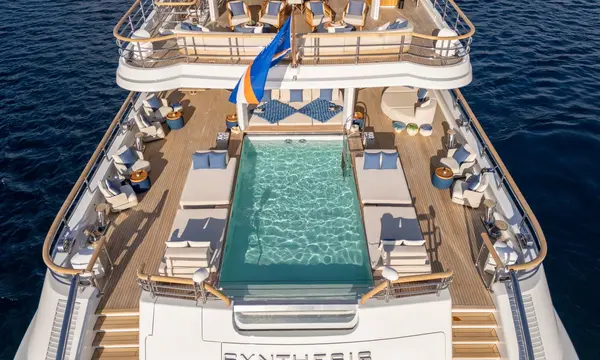
Burgess identifies a 74m Amels, 43m Codecasa and 36.6m Benetti among yachts offered for both sale and charter, inviting clients to experience life aboard …

SUPER YACHT 24 official forum research presentation original photograph from 27 November 2026, © organiser and photographer.
Confindustria Nautica figures presented at the 27 November Genoa Sailing Super Yacht Forum show a 7.5% decline in Italian sailboat production revenue during 2025.
Italy's sailboat-producing industry recorded a 7.5 percent fall in turnover during 2025, according to figures presented by Confindustria Nautica at the Sailing Super Yacht Forum in Genoa on 27 November 2026. The analysis, delivered by research director Stefano Pagani Isnardi, also contrasted the weaker small-boat market with the greater resilience of motor superyacht construction.
The figures refer to a completed 2025 trading year and were discussed publicly at this week's forum. They are not a claim that Italian yacht output fell 7.5 percent during November 2026, nor do they describe the performance of every individual builder. Clear definitions matter because sailing yachts, motor superyachts, equipment production and services are distinct parts of the marine economy.
Pagani Isnardi's presentation put Italian sailboat production turnover at €156.42 million in 2025, down 7.5 percent from 2024. The account attributes declines of roughly 7 percent to the domestic segment and 8 percent to exports. Including imports, the market's overall turnover was stated at €169.92 million, a separate measure from domestic manufacturing output.
The figures offer useful scale, but the relative percentage decline does not by itself reveal the number of boats ordered, their average lengths or the distribution of revenue among yards. A change in the mixture of small and large models can affect turnover even when unit counts behave differently. Readers should avoid translating the reported revenue percentage directly into a boat-count decline.
The presentation described motor superyachts as an important supporting element of the broader Italian marine industry. Their buyers, capital requirements and production lead times can be very different from those for small sailing craft. Demand for a high-value custom project therefore does not have to move in lockstep with middle-market purchases of recreational boats.
That separation is important for businesses spanning several categories. A strong order book for larger yachts can support specialised engineering and export earnings without resolving affordability challenges at the entry end. Industry-wide growth can coexist with pressure on particular segments, and a single headline may conceal both trends.
The organiser's report cites Italian marine-industry turnover of €8.72 billion in 2025, up approximately 1.4 percent. It also describes different outcomes across categories, including weaker performance for some smaller boat types. The headline increase should not be presented as proof that every business expanded or that all product groups benefited equally.
A large group of high-value projects can influence a national turnover figure even though many recreational boat owners are experiencing a different economic environment. The more useful question is which categories are driving growth and which are losing customers. That information can help shipyards plan future investment without assuming that the entire market has one common cycle.
Pagani Isnardi suggested a generational shift in which some younger people want access to boats but are less inclined to own and maintain them. This observation has implications beyond the size of the sailboat market: it raises questions about the balance between personal ownership, charter and other models of access across recreational yachting.
The observation should be treated as a reported market interpretation rather than a universal description of younger people. Boat ownership remains attractive to many, and preferences differ by country, income and intended use. Nevertheless, yacht-sector companies need to understand whether potential customers are seeking use of a vessel rather than the continuing obligations of owning one.
The forum discussion highlighted that boating qualifications can rise even when the registered fleet declines. The distinction matters because holding a licence and owning a registered boat are not the same activity. Someone may gain qualifications to charter, crew or occasionally operate another person's vessel rather than buy an asset outright.
Registration statistics also have limitations. In Italy, smaller vessels below a specified size may not be subject to the same registration requirements as larger craft. A dataset drawn from registries therefore cannot provide a complete count of all boats in use or directly measure the number of people enjoying sailing.
The organiser reported 19,387 registered sailing vessels in Italy at the end of 2024, representing around 24.3 percent of the recorded recreational fleet. For 2025 it cited 112 new sailing registrations and 247 deregistrations, a net reduction of 135 in that part of the register. These are specific administrative numbers, not a complete inventory of all Italian sailing craft.
Deregistration can have several explanations and is not automatically evidence that a yacht was scrapped or its owner ceased sailing. The vessel might move to another flag or leave a particular registry. Interpreting the figures responsibly requires keeping registration activity distinct from new construction, ownership transfers and actual use on the water.
Italy was described as the world's sixth-largest exporter of sailing boats and yachts, with 2025 exports worth approximately $119 million and a stated share of 4.6 percent. The account places France well ahead, at around $930 million and 35.5 percent, followed by several other European boatbuilding countries.
These export measures are valuable for understanding Italy's relative place in the sailing market but should not be confused with the country's export position in motor superyachts. Different builders, price ranges and trade classifications may be involved. A yard's individual international business should be assessed with its own verified sales and delivery data.
The speaker cited international research indicating that sailing boats accounted for roughly 8 percent of global new-boat retail sales value during 2024, with a higher share in Europe. The European figure was around 20 percent, compared with much smaller proportions in North America. The reported statistics describe a particular year, sales basis and classification.
A higher regional share does not guarantee stronger short-term growth. It may reflect long-established sailing culture, marina networks, product preferences or differences in the range of boats sold. The numbers are a starting point for understanding market structure, not proof that a particular country or marina will experience more sales in 2027.
The presentation linked weaker demand in smaller recreational categories to pressure on household spending, inflation, financing costs and economic uncertainty. These are reasonable commercial concerns because smaller boats are often purchased from discretionary income rather than the capital resources associated with large custom projects.
When buyers postpone decisions, builders and dealers must decide how to manage inventory and production capacity. An industry that depends on fixed specialist skills cannot always respond instantly to demand changes. That makes accurate market signals especially valuable, though no particular yard's staffing or financial position can be inferred from the national figures alone.
If more customers prefer to use rather than own a yacht, charter and other access arrangements may capture some of that demand. Yet an hour or a week aboard does not provide the same flexibility as having a privately owned vessel available throughout the season. The right model depends on how frequently someone expects to sail and how much responsibility they want.
Shipyards considering new commercial approaches should examine service support, fleet wear, insurance and availability. The presentation suggested innovation in how boats reach customers, but it did not announce a government-backed shared-ownership scheme or a universally accepted alternative to purchase.
Businesses supplying rigging, deck hardware, navigation systems and technical services may serve both small sailing craft and large yachts. A decline in one market can affect their order mix, while opportunities in another may require different certification, materials and installation skills. The cross-segment view is therefore relevant even to companies focused primarily on superyachts.
The industry should not assume that growth in motor superyachts will automatically compensate every supplier for losses elsewhere. Products and customer requirements differ. A manufacturer of components designed for compact boats may need substantial engineering work before serving a large custom yacht programme.
The forum account describes preliminary 2026 growth expectations for parts of the Italian marine sector, including a 0.8 percent figure associated with superyachts and higher estimates for broader shipbuilding and equipment categories. Those are forecasts or early estimates, not audited outcomes for a year that has not yet ended.
It would be misleading to present the preliminary sector numbers as a guaranteed recovery for Italian sailboat production. The research discussion did not provide a separate definitive 2026 sailing-only result. A future update should compare actual year-end data with these expectations and explain any revision.
Yacht-market reporting often mixes order announcements, delivered units, registered boats and revenue in one narrative. Those measures answer different questions. An order represents future work, a launch is a construction milestone, a delivery transfers a finished vessel and a registry entry records an administrative status. Turnover, meanwhile, reflects financial activity over a defined period.
The Genoa figures are most useful when each measure remains separate. They show a weaker 2025 Italian sailboat manufacturing segment and a marine economy whose other categories have not necessarily followed the same path. They do not, on their own, explain the financial condition of any named shipyard.
A yard could address a shift toward access and charter through product design, service partnerships or a stronger aftermarket business. It might also concentrate on fewer higher-value projects. The appropriate choice will depend on its capabilities and existing customers rather than on a headline national statistic.
Owners and fleet managers can help inform that debate by explaining how they use vessels, what maintenance burdens they encounter and which services would make sailing more practical. The gap between enthusiasm for boating and willingness to own is a strategic question whose answer will differ across market segments.
The research shared at Genoa does not suggest that interest in sailing has vanished. It indicates that the economics and customer behaviour associated with ownership are changing, while larger motor superyacht construction continues to support parts of Italy's wider marine sector. That combination deserves attention from builders, brokers and suppliers.
For the months ahead, the key indicators will be confirmed 2026 trading results, new orders, fleet activity and evidence that customers are converting interest into purchases or other forms of access. The responsible conclusion is one of divergent markets, not a blanket decline in Italian yachting.
Continue reading
Burgess identifies a 74m Amels, 43m Codecasa and 36.6m Benetti among yachts offered for both sale and charter, inviting clients to experience life aboard …

MB92 supports La Ciotat Shipyards' December 11 opening of an arts venue in a restored 1949 fitting-out building, with metal sculptures and plans to …

VABO Composites reports new supplier discussions and international relationship-building at SMM Hamburg, Monaco Yacht Show and METSTRADE's SuperYacht Pavilion in 2026.
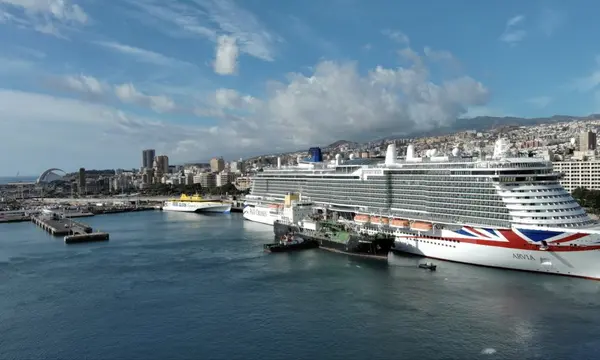
Tenerife's port authority becomes SEA-LNG's first mid-Atlantic member, strengthening cooperation around marine LNG bunkering and potential bio-LNG supply.
Superyacht Guide
Continue into the wider Superyacht Guide.
Business opportunities · Superyacht Guide
Companies serving the superyacht market can discuss clearly identified advertising, sponsorship and business-profile opportunities. Commercial activity remains separate from independent editorial coverage.