
Frigomar Introduces 210,000 BTU CU210 Yacht Chiller
Frigomar has introduced its CU210VFDT chiller with 210,000 BTU/h capacity, a titanium seawater exchanger and the same compact dimensions as its 180,000 BTU unit.
Hexagon has agreed to acquire Guidance Marine, bringing radar, laser and relative-positioning technology already used in superyacht applications into its marine portfolio.
Hexagon has agreed to acquire UK marine-positioning specialist Guidance Marine, combining the company’s relative-positioning sensors with Hexagon’s existing satellite-navigation, correction and assured-positioning technologies. Announced on 26 August 2026, the transaction is expected to complete by the end of the year, after which Guidance Marine will join Hexagon’s NovAtel Positioning Division within the Autonomous Solutions Business Area.
Guidance Marine specialises in radar, laser, vision and microwave systems that determine a vessel’s position relative to nearby structures, quaysides and other vessels rather than relying solely on its absolute geographical position. Hexagon says those technologies are already integrated with all major dynamic-positioning systems and will complement its existing GNSS, anti-jamming and positioning-correction capabilities.
Much of Guidance Marine’s historical business has been built around offshore energy, marine construction, ports and dynamic-positioning operations, where vessels must work within tight tolerances close to fixed and floating structures. Its technology is designed to provide an independent local reference for a vessel even when conventional satellite positioning is insufficient for the manoeuvre being undertaken.
That capability also has a direct yacht application rather than being merely transferable offshore technology. Guidance Marine lists superyachts among the applications for its RS24 high-resolution short-range radar, where the system supports manoeuvring in busy harbours, while its RangeGuard proximity system is offered for superyachts and pleasure yachts as a 360-degree hazard-detection aid.
A conventional GNSS receiver tells a vessel where it is geographically, but close-quarters manoeuvring frequently requires another question to be answered: exactly where is the yacht in relation to the quay, another vessel or an obstruction immediately around it? Guidance Marine’s product portfolio addresses that local-positioning problem through sensors capable of tracking nearby targets and structures independently of the vessel’s global position.
Hexagon’s acquisition rationale is built around combining those two types of information. Its existing marine technology establishes absolute position and can strengthen resilience against GNSS disruption, while Guidance Marine supplies the relative reference needed for precise station keeping and close-proximity operations, giving the enlarged group a broader positioning architecture.
The deal also reflects the marine industry’s movement toward increasingly automated vessel control, where independent sensor inputs become more important as bridge systems assume greater responsibility for positioning and manoeuvring. Guidance Marine has previously participated in autonomous-vessel development, including the IntelliTug programme in Singapore, and continues to develop technologies intended to maintain reliable positioning when conventional GNSS information is degraded or unavailable.
Its recent work has concentrated on resilient positioning by combining different independent reference technologies rather than depending on a single navigation source. That approach is increasingly relevant to sophisticated yachts as assisted docking, sensor fusion and higher levels of bridge automation place greater emphasis on the quality and independence of the data available to the vessel’s control systems.
Guidance Marine was founded in Leicester in 1991 and serves customers in more than 40 countries. Hexagon says the business generated approximately €22 million in revenue during the financial year ended 31 December 2025, with an operating margin above Hexagon’s group average, while the financial terms of the acquisition have not been disclosed.
For the superyacht sector, the significance is less the ownership change itself than what it may do to the development and distribution of advanced positioning systems. Bringing yacht-capable short-range radar and proximity sensing together with Hexagon’s GNSS, anti-jamming and assured-positioning expertise creates a broader technology platform around an increasingly important large-yacht requirement: knowing not simply where the vessel is, but precisely what is around it and how safely it can move.
Continue reading
Frigomar has introduced its CU210VFDT chiller with 210,000 BTU/h capacity, a titanium seawater exchanger and the same compact dimensions as its 180,000 BTU unit.
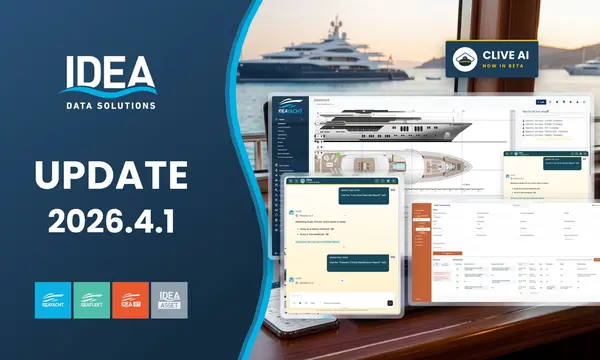
IDEA Data Solutions details release 2026.4.1 for yacht operations, including limited CLIVE AI testing and improvements to purchasing, maintenance and fleet views.
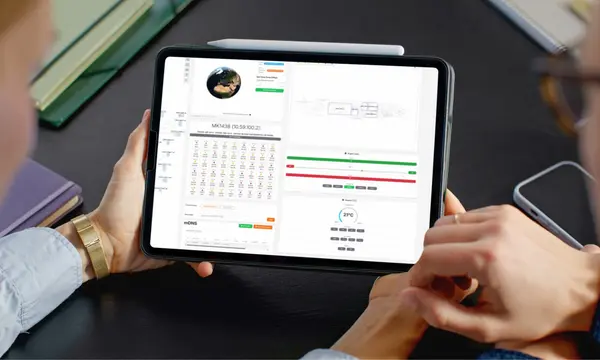
Videoworks explains AVIT Panel, an overlay system that connects existing onboard digital equipment to configurable views for captains and technical teams.
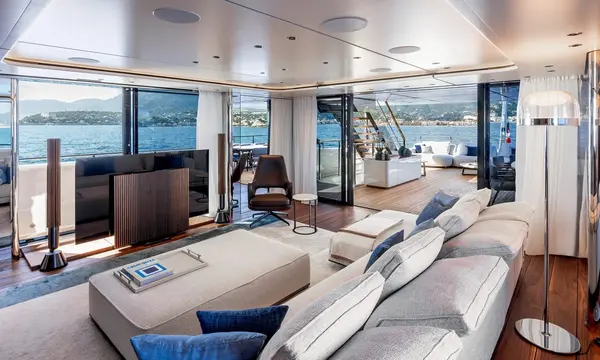
Videoworks explains its bespoke Bang & Olufsen systems on two Custom Line superyachts, naming the hardware used and the integration work carried out.
Superyacht Guide
Continue into the wider Superyacht Guide.
Business opportunities · Superyacht Guide
Companies serving the superyacht market can discuss clearly identified advertising, sponsorship and business-profile opportunities. Commercial activity remains separate from independent editorial coverage.