
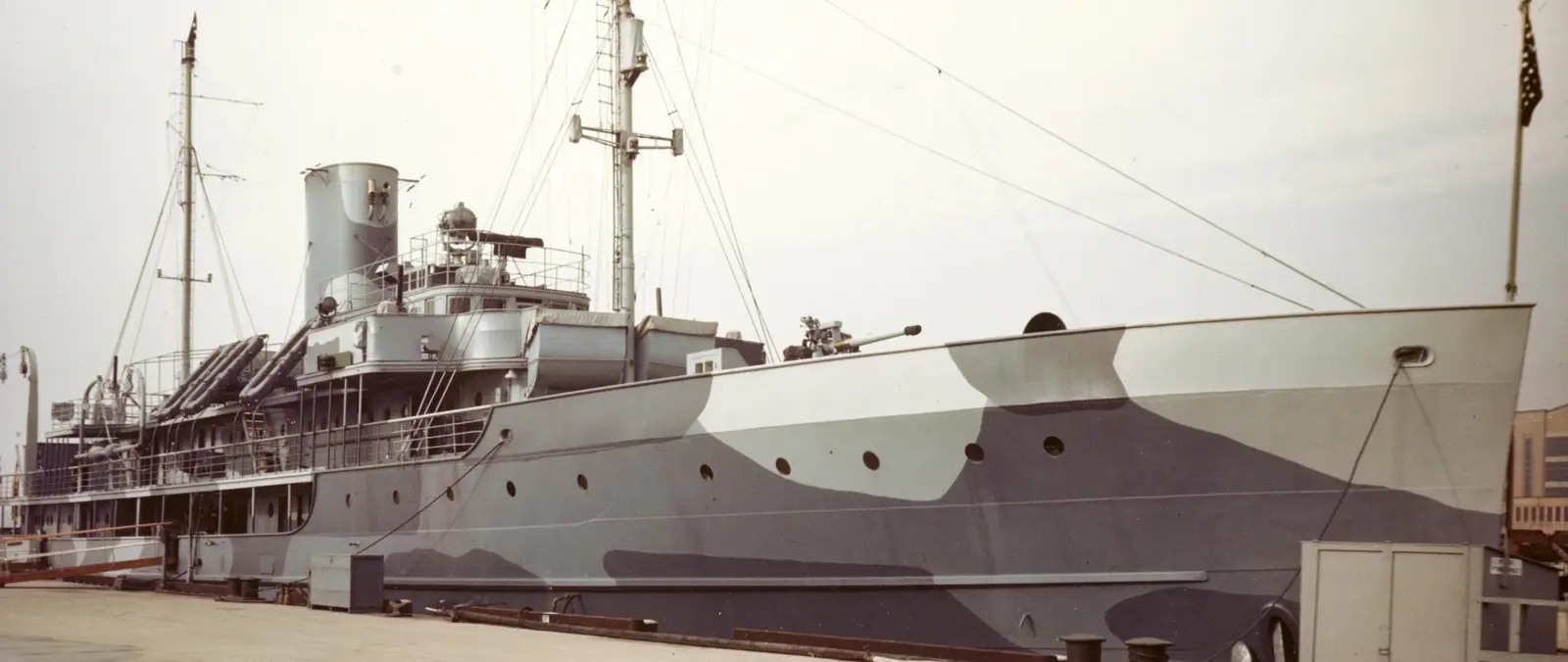
Built for Horace Dodge in 1921, SS Delphine survived sinking, wartime service as USS Dauntless and decades of uncertainty before a landmark restoration returned her to steam-powered life.
More than a century after she was launched on the Detroit River, SS Delphine remains one of the most extraordinary survivors from the first great age of large private yachts. At approximately 78.5 metres, with an imposing period silhouette, towering funnels and working steam machinery, she belongs to a time when America's industrial fortunes were producing private vessels on a scale previously associated with royalty. Unlike most of her contemporaries, however, Delphine survived fire, sinking, wartime requisition, decades of changing ownership and the threat of disappearance before being restored for a new life in the Mediterranean.
Her story reaches far beyond the development of luxury yachting. Built for automotive pioneer Horace E. Dodge in 1921, Delphine subsequently became USS Dauntless (PG-61) during the Second World War and served in Washington as flagship for the Commander-in-Chief, United States Fleet. After returning to civilian life, she endured a long and uncertain post-war period before an extensive restoration returned her original steam engines to service and restored much of the atmosphere of her early years. Today she represents something increasingly rare: not simply an old yacht preserved as an exhibit, but a functioning connection between the private steam-yacht era and modern superyachting.
Horace E. Dodge commissioned Delphine at a moment when the American automobile industry was creating fortunes of extraordinary scale. Dodge and his brother John had built Dodge Brothers into one of the defining companies of Detroit's rapidly expanding motor industry, and the new yacht reflected both that prosperity and an era in which large private steam yachts were among the ultimate expressions of industrial wealth. Delphine was built by Great Lakes Engineering Works at River Rouge, Michigan, and launched in 1921, with her name honouring Horace Dodge's daughter.
The yacht was an ambitious vessel even by the standards of the period. Monaco Classic Week records her at 78.5 metres long with a beam of 10.83 metres and describes three boilers supplying two 1,500hp quadruple-expansion engines. Those engines remain central to Delphine's historical importance because her surviving steam machinery represents an almost vanished method of propelling a yacht of this scale. Her significance therefore lies not simply in having survived for more than a century, but in retaining a mechanical connection with the period in which she was conceived.
Delphine's first major threat came only a few years after her launch. In 1926 she caught fire and sank in New York, an event that could easily have ended the career of a yacht of her size and complexity. Instead, she was recovered and restored, beginning a pattern of survival that would recur throughout her history. The recovery was a substantial undertaking because a large steam yacht carried extensive machinery, boilers, pipework and engineering systems whose restoration demanded considerably more than repairing a conventional hull.
Delphine nevertheless returned to service rather than becoming an early casualty of changing technology. She continued to embody the long-range private-yacht ambitions of the Dodge family and survived into the period when world events would transform her purpose completely. Within two decades of her launch, the vessel created as an expression of American industrial prosperity would be absorbed into the United States Navy and given an entirely different role.
The United States Navy acquired Delphine on 21 January 1942, shortly after the United States entered the Second World War. Renamed USS Dauntless and designated PG-61, she was commissioned on 11 May 1942 under Commander C. F. Grisham. The Naval History and Heritage Command records that Dauntless departed Ecorse, Michigan, on 27 May and arrived in Washington, D.C., on 16 June.
Her wartime importance came not from combat operations at sea but from the command function she assumed in Washington. Dauntless relieved USS Vixen as flagship for the Commander-in-Chief, United States Fleet, placing the former private yacht close to the centre of American naval command. She remained in Washington through the remainder of the conflict and was decommissioned on 11 May 1946 before being transferred to the Maritime Commission for disposal the following month.
A surviving U.S. Navy photograph provides unusually powerful evidence of this chapter. Catalogued as 80-G-K-14448, the image shows Dauntless at Washington Navy Yard around 1944–45 and identifies her as the flagship used by Fleet Admiral Ernest J. King, Chief of Naval Operations and Commander in Chief, U.S. Fleet, during most of the Second World War. King's five-star flag is visible at the mainmast, turning what might otherwise appear to be a photograph of an elegant converted yacht into a record of the vessel's position within wartime naval leadership.
Following the war, the former flagship returned to civilian hands and resumed the name Delphine. Monaco Classic Week records that Anna Dodge, Horace Dodge's widow, reacquired the yacht and restored her for civilian use. It was another remarkable transition for a vessel that had already moved from industrial-age luxury to military service and back again within approximately a quarter of a century.
The decades that followed were less secure. Large steam yachts became increasingly difficult and expensive to operate as diesel propulsion became dominant, while vessels designed around the engineering and crewing assumptions of the 1920s faced a very different economic environment. Delphine changed hands and uses, but survived a period in which many comparable vessels were scrapped, converted beyond recognition or simply became impractical to maintain.
The decisive modern chapter began in 1997, when Delphine was acquired for what became an extensive restoration. Monaco Classic Week records that the project returned the yacht towards her original 1921 condition and configuration, including the character of her interiors and, crucially, her steam engines. This was not simply an exercise in creating a traditional-looking yacht around modern machinery; preserving the propulsion plant allowed an important part of Delphine's engineering identity to remain operational.
The restoration culminated in 2003, when Delphine was officially re-christened during Monaco Classic Week with HSH Princess Stéphanie of Monaco as godmother. More than eight decades after her original launch, the yacht had effectively begun another working life. Her survival was no longer merely a consequence of avoiding demolition: a deliberate preservation effort had recognised that the machinery, proportions and history of the vessel were worth retaining together.
What distinguishes SS Delphine from a modern yacht styled to evoke the past is that much of her identity is genuinely inherited from it. Her steam machinery, naval history and connection with the Dodge family are not design references created for atmosphere; they are chapters in the biography of the same vessel. Modern systems and restoration work allow her to operate in today's environment, but the engineering below deck and the proportions above it still connect her physically with the technology and expectations of the early twentieth century.
That continuity gives Delphine an unusual place in superyacht history. She demonstrates that the desire for large-scale private cruising, elaborate hospitality spaces and sophisticated onboard engineering was firmly established long before the word superyacht acquired its modern meaning. Materials, machinery and operating practices have changed dramatically, yet many of the ambitions behind the yacht would remain familiar to an owner commissioning a large custom vessel today.
Historic yachts are most valuable when they reveal more than the design preferences of an earlier period, and Delphine does precisely that. Her history intersects with the rise of the American automobile industry, the culture of private steam yachting, the mobilisation of civilian vessels during global war and the modern movement to preserve important yachts as operational vessels rather than static museum objects.
Few surviving yachts can present such distinct identities without one having erased the others. Delphine was a Dodge family yacht, a casualty recovered after sinking, a United States Navy vessel, the flagship associated with America's senior wartime naval command and later a restoration project of exceptional complexity. Those chapters remain legible in the same vessel more than a century after her launch.
Her greatest historical achievement may therefore simply be that she still exists in working form. SS Delphine has survived technological obsolescence, physical disaster, war and periods in which her economic future was far from certain. In a sector where even comparatively young yachts can disappear after only a few decades, the continuing survival of a 1921 steam-powered yacht is remarkable. She is not merely an example of historic yacht design; she is one of the surviving machines through which the origins of modern large-yacht culture can still be understood.
Explore
Go deeper into the yachts, companies, events and destinations directly connected to this article.
Continue reading

Steam once powered the great private yachts of the industrial age, but diesel displaced it through efficiency, compactness and easier operation. SS Delphine and …
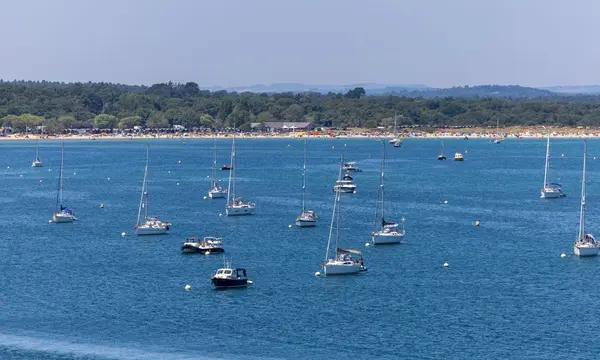
Five years of Studland Bay monitoring found average bare-seabed scars shrank 93.6% around trial eco-moorings, offering evidence for better yacht anchoring practices.
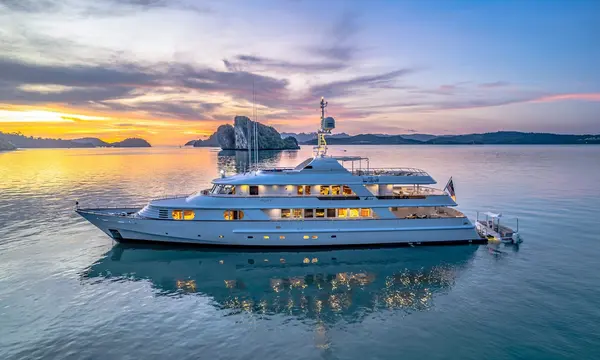
The 48.2m CRN-built AZUL V features in the October 12 premiere of Below Deck Season 13, filmed around Phuket, connecting a working charter yacht …
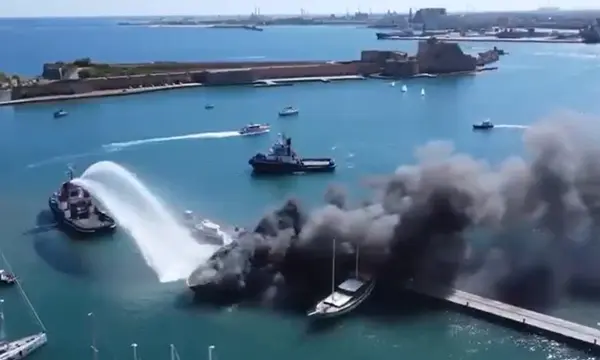
The 30m Sanlorenzo motor yacht JOHN was badly damaged by fire on 3 October at Marina di Brindisi; no injuries were reported among crew …
Superyacht Guide
Continue into the wider Superyacht Guide.
Business opportunities · Superyacht Guide
Companies serving the superyacht market can discuss clearly identified advertising, sponsorship and business-profile opportunities. Commercial activity remains separate from independent editorial coverage.