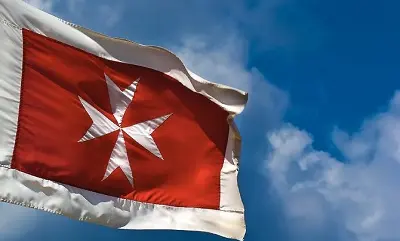
Malta Revises Assistant Engineer Rules for Commercial Yachts Under 500 GT
Malta has introduced a risk-based Assistant Engineer manning framework for qualifying Short Range and Extended Short Range commercial yachts below 500 GT.
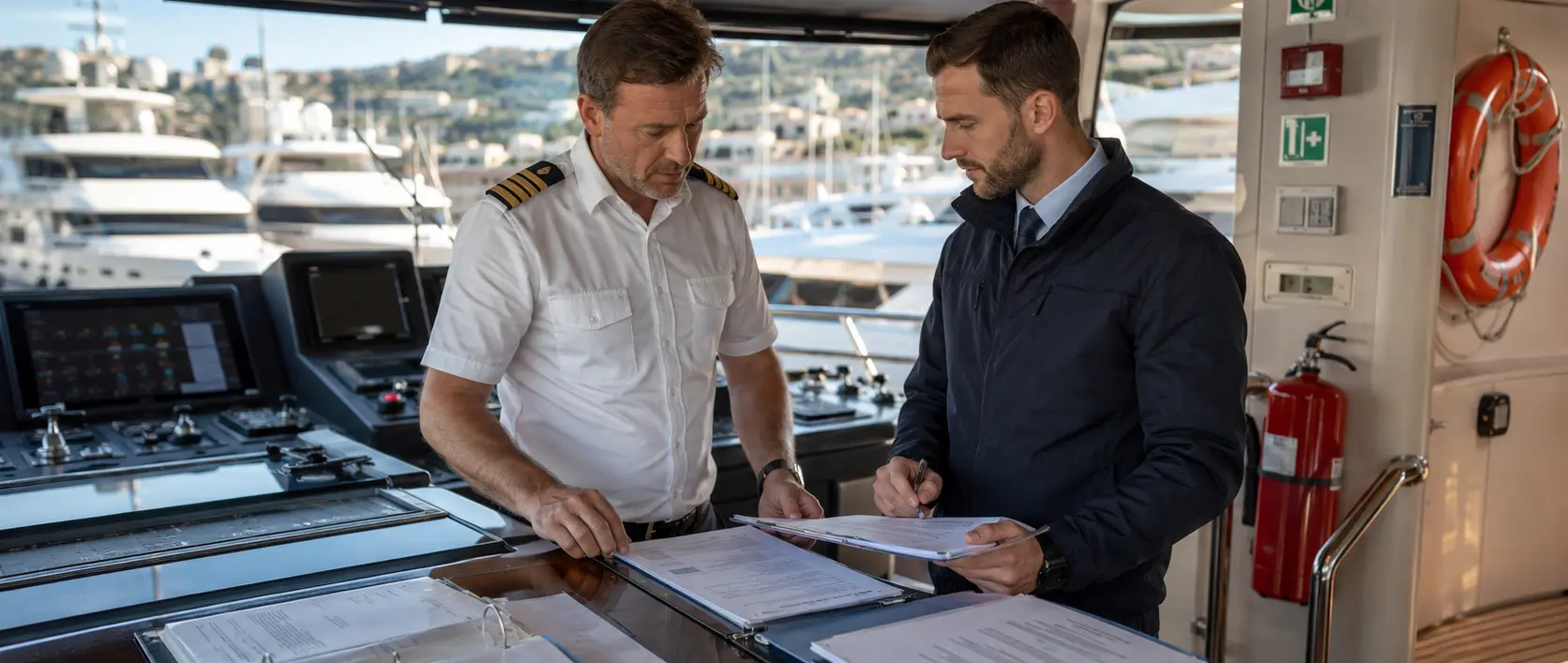
Port State Control can test far more than a yacht’s paperwork. Captains prepare by keeping certificates current, equipment operational, records accurate and crew ready to demonstrate their competence.
A superyacht can arrive in port looking immaculate, with polished stainless steel, spotless decks and guests unaware that anything unusual is happening. For the captain, however, a Port State Control inspection can turn an ordinary port call into one of the most important compliance tests of the season.
Port State Control, usually shortened to PSC, allows the authorities of a country visited by a foreign vessel to verify that the ship complies with the international conventions and standards that apply to it. For many commercially operated large yachts, that can involve safety, pollution prevention, crew certification, working conditions, navigation, machinery, lifesaving equipment and the effectiveness of the yacht's safety-management arrangements.
The best captains do not prepare for Port State Control when an inspector walks down the quay. They prepare throughout the year. Certificates are monitored before they expire, deficiencies are closed properly, drills are treated seriously, machinery is maintained in working condition and crew members are expected to understand the equipment and procedures for which they are responsible. A successful inspection is therefore rarely the result of a frantic morning spent tidying folders; it is usually evidence that the yacht has been run properly for months.
Port State Control is not a cosmetic inspection. An officer may form an initial impression before even boarding. IMO procedures recognise that an inspector can consider the vessel's visible standard of maintenance, including unrepaired damage and its general external condition. Once aboard, the inspection normally begins with documentation, with the Port State Control Officer determining which international requirements apply and examining the relevant certificates and records.
For a large commercial yacht, the precise document package depends on its flag, tonnage, construction, operation and certification regime. It may include statutory safety certificates, load-line documentation, pollution-prevention certificates, crew certificates of competency, Minimum Safe Manning documentation, Maritime Labour Convention documents where applicable, radio documentation, insurance certificates, safety-management records and other statutory material.
This is why experienced captains maintain a controlled certification system rather than relying on a collection of files that happens to contain the correct paperwork somewhere. Before entering a port where an inspection is possible, the captain or senior officer should know which certificates are approaching expiry, which surveys have recently been completed, whether any conditions of class or statutory deficiencies remain open and whether previous PSC deficiencies have been correctly closed.
Electronic certificates have made retrieval easier, but they have not removed the need for organisation. If an inspector asks for a document, the bridge team should be able to produce it quickly and confidently. Ten minutes spent searching several laptops for a certificate that should be immediately available can create an impression that the underlying compliance system is less controlled than it appears.
The paperwork is only the beginning. According to IMO and Paris MoU procedures, an initial inspection also considers the overall condition of the vessel. Areas likely to attract attention include the bridge, decks, machinery spaces, accommodation and equipment relevant to the yacht's statutory requirements.
For a captain preparing a superyacht, one of the most valuable exercises is therefore to walk the vessel without looking at it as the owner, guest or even captain normally would. Instead, the yacht is viewed through the eyes of a regulator. A fire door wedged open because it makes crew movement easier suddenly matters. An emergency light that has been unreliable for several weeks matters. A damaged fire-station label, an oily machinery-space bilge, a lifebuoy light that nobody has tested recently or an improperly secured item on deck can all contribute to the impression formed during an inspection.
The yacht may be worth tens or hundreds of millions of euros and finished to an extraordinary standard, but Port State Control is interested in whether the vessel is safe and compliant, not whether its interior was designed by a celebrated studio. Fire integrity, lifesaving appliances, emergency systems, pollution-prevention equipment and machinery condition remain fundamental regardless of the yacht's level of luxury.
Fire safety deserves particular attention because it remains a recurring area of deficiency in Port State Control inspections across the wider commercial fleet. Captains will therefore commonly want senior officers to check fire doors and dampers, detection systems, escape routes, firefighting appliances, emergency pumps, fixed systems and the condition and accessibility of equipment well before arrival.
The same principle applies in the engine room. Equipment that is required to work should work. Temporary fixes, persistent alarms, leakage, incomplete maintenance or an obvious difference between what records say and what machinery demonstrates can rapidly turn a routine inspection into a more detailed one.
One of the most important misconceptions about Port State Control is that the yacht can pass simply because its certificates are valid. IMO procedures allow a more detailed inspection where there are clear grounds to believe that the condition of the vessel, its equipment or its crew does not substantially meet applicable requirements. Crew unfamiliarity with essential safety or pollution-prevention procedures can itself provide grounds for closer examination.
This changes how a good captain prepares. It is not sufficient for the chief engineer to know how emergency equipment works if the engineer who might actually be asked to demonstrate it does not. It is not sufficient for the chief officer to understand a launching arrangement if the deck crew assigned to the equipment cannot explain their responsibilities. Beautifully completed drill records are of limited value if the crew appear confused when asked basic questions.
A Port State Control Officer conducting a more detailed examination can assess whether relevant crew members are capable of operating essential equipment and may include drills as part of that assessment. IMO guidance places emphasis on operational familiarity rather than merely the presence of written instructions.
Before a higher-risk port call, the captain may therefore review emergency duties with the crew, confirm muster-list assignments, revisit fire and abandon-ship procedures and ask department heads to make sure personnel can explain the equipment they operate. The objective is not to teach the crew how to answer an inspector's questions, but to ensure that they genuinely understand their responsibilities.
Superyachts generate an extraordinary amount of operational documentation. Hours of rest, drills, maintenance, garbage handling, oil-record entries, safety meetings, familiarisation, training, machinery checks and statutory logs can create an administrative burden that is easy to underestimate. The danger arises when records become an exercise in completion rather than evidence of what actually occurred.
Port State Control officers can compare paperwork with physical conditions and with what crew members say. A record stating that an item has recently been tested becomes uncomfortable if nobody can operate it. Perfect hours-of-rest sheets may attract questions if the working pattern visible on board appears incompatible with them. A completed maintenance entry provides little reassurance if the equipment remains visibly defective.
This is particularly important on busy charter yachts. Guest operations create considerable pressure: turnarounds are short, cruising programmes change, crew work demanding schedules and departments may struggle to protect maintenance time. Yet statutory obligations do not disappear because the principal or next charter party arrives tomorrow morning.
The captain therefore sits between two very different worlds. One is hospitality, where the yacht exists to deliver an exceptional experience. The other is maritime regulation, where the yacht remains a ship carrying people through an environment in which failures can have serious consequences. Port State Control is one of the occasions when that second world becomes impossible to ignore.
Inspection history matters. The Paris Memorandum of Understanding on Port State Control operates a risk-based inspection system in which factors including a ship's inspection history contribute to its Ship Risk Profile. Deficiencies, detentions and company performance can influence inspection priority and intervals.
Captains and managers should therefore understand their yacht's PSC history rather than treating every inspection as an isolated event. If an earlier inspection identified a deficiency that had to be corrected within a defined period, the evidence of correction should be clear. If the yacht has changed management or captain, previous findings should form part of the handover.
There should be no moment during an inspection when a new captain discovers that an outstanding item existed months before joining. The same discipline applies to class recommendations, flag observations and internal safety-management findings. They are not necessarily Port State Control deficiencies, but unresolved issues can contribute to the wider picture an inspector sees.
A yacht with organised records, demonstrably closed findings and officers who understand its recent history looks very different from one whose compliance story has to be reconstructed while the inspector is already on board.
A normal initial inspection does not automatically mean that every system aboard will be dismantled and tested. Where certificates are valid and the Port State Control Officer's general impression confirms a good standard of maintenance, IMO guidance indicates that the inspection should generally remain focused on reported or observed deficiencies.
The situation changes when there are clear grounds for concern. Those grounds might emerge from missing or questionable certification, visible equipment problems, poor maintenance, unresolved previous deficiencies, crew unfamiliarity or other evidence that the yacht may not substantially comply with the relevant requirements. At that point the scope can broaden considerably.
This is one reason experienced captains pay attention to apparently small deficiencies. A single failed light may simply be a failed light. A succession of poorly maintained safety items, confused crew responses and inconsistent records can suggest something more fundamental: that the yacht's safety-management system is not operating effectively. The inspection then stops being about isolated defects and starts becoming a test of the organisation behind them.
Not every deficiency results in detention. Paris MoU procedures provide several possible outcomes. A deficiency may be rectified during the inspection, required to be corrected within a specified period, or required to be corrected before departure. Serious deficiencies can lead to detention, meaning the vessel cannot sail until the authority is satisfied that the relevant problems have been addressed.
For a superyacht, even a non-detainable deficiency can have consequences. Technical work may need to be organised quickly. Class, flag, management or the yacht's recognised organisation may need to become involved. The itinerary can be disrupted, charter commitments may come under pressure and the owner may have to be informed. A recorded deficiency also becomes part of the vessel's inspection history.
A detention is considerably more serious. Apart from the immediate inability to depart, it can generate reputational and commercial consequences and can influence future inspection risk. Detentions are also recorded publicly through regional Port State Control systems.
The captain's responsibility when something is identified is therefore not to argue automatically that the yacht is maintained to a high standard. It is to understand the finding, establish the applicable requirement, correct the problem properly and preserve clear evidence of what was done. Where there is a genuine disagreement, formal procedures exist, but professionalism and evidence are normally more useful than confrontation.
The term superyacht covers vessels operating under significantly different legal arrangements. A private pleasure yacht and a commercially registered charter yacht of the same physical size may not be subject to precisely the same convention requirements or certification regime. Flag, gross tonnage, passenger numbers, area of operation and use all matter.
For example, the Red Ensign Group Yacht Code Part A establishes a regulatory framework for qualifying yachts of 24 metres and over engaged in commercial use and carrying no more than 12 passengers. The Code draws on international convention requirements and equivalent standards covering safety and pollution prevention.
Captains should therefore prepare against the requirements that actually apply to their yacht rather than copying a generic PSC checklist from another vessel. A 499GT commercial yacht, a yacht above 3,000GT, a passenger yacht and a private yacht can occupy very different regulatory positions even though all may be described publicly as superyachts. Knowing the yacht's statutory basis is part of command responsibility.
The temptation before Port State Control is to create an inspection mode: clean everything, arrange the files, brief the crew and hope nobody looks too deeply. That is the wrong model. A well-run superyacht should be close to inspection-ready whenever it enters port.
Certificates should be controlled continuously. Emergency equipment should not wait for an inspection to be tested. Drills should build real competence. Defects should enter a system and emerge only when genuinely closed. Hours-of-rest records should reflect reality, and safety-management procedures should describe what actually happens on board.
That does not mean an inspection causes no extra preparation. A sensible captain will still conduct a final documentation check, walk the yacht with department heads, review outstanding defects and make sure the crew understand that an inspection may take place. The difference between preparation and panic, however, is significant.
The captain who knows the yacht is genuinely compliant does not need to manufacture confidence when the Port State Control Officer arrives. The paperwork, condition of the vessel and competence of the crew provide the evidence, and that is ultimately what Port State Control is intended to establish.
International Maritime Organization — Procedures for Port State Control, 2023, Resolution A.1185(33)
Paris Memorandum of Understanding on Port State Control — Inspection Results
Paris MoU — 2025 Annual Report: Port State Control Progress and Performance Highlights
UK Maritime and Coastguard Agency — Red Ensign Group Yacht Code Part A
Continue reading
Malta has introduced a risk-based Assistant Engineer manning framework for qualifying Short Range and Extended Short Range commercial yachts below 500 GT.
Gard’s 2026 Crew Claims Report draws on about 3,000 P&I crew claims and finds elevated injury risk early in a crew member’s time on …
Junior Yacht Stewardess Salary 2026: Entry-Level Pay and Leave Junior yacht stewardess and steward pay in 2026 is currently benchmarked at about €3,000–€3,500 per …
Yacht Spa Manager Salary 2026: Pay, Rotation and Duties Spa managers with yachting experience on 80m+ yachts are currently benchmarked from about €4,500+ per …
Superyacht Guide
Continue into the wider Superyacht Guide.