
64.5m Sailing Yacht ATLANTIC Opens Five-Year World Voyage to Charter Guests
The 64.5m three-masted schooner ATLANTIC is offering bespoke luxury charters during a planned global voyage spanning 2027 to 2031, with the Pacific and Indian …

A 2026 superyacht charter price guide covering published weekly rates, APA, taxes, fuel, berthing, gratuity and realistic total-budget examples.
Chartering a superyacht in 2026 can cost from approximately €55,000 a week to more than €3.5 million, based on currently published rates. The advertised weekly price is only the starting point, however, because fuel, food, berthing, local taxes and other operating expenses are usually charged separately.
A practical charter budget therefore needs to distinguish between the base rate, the Advance Provisioning Allowance and costs that may sit outside both. Depending on the itinerary and spending choices, the total amount committed can be substantially higher than the number displayed in a yacht’s listing.
Current published rates show how wide the market has become. The following examples were checked on 31 August 2026 and represent advertised weekly base rates rather than guaranteed all-inclusive prices.
| Yacht | Length | Published weekly rate |
|---|---|---|
| Queen Martina | 26.76m | €75,000–€85,000 |
| Coral | 35m | €55,000–€60,000 |
| Aura | 40m | €100,000–€125,000 |
| K2 | 49.91m | €270,000–€290,000 |
| O’Madeleine | 60.1m | €390,000–€490,000 |
| Titania | 73m | €660,000–€760,000 |
| Bold | 85.3m | From €875,000 |
| Carinthia VII | 97.2m | From €1.5 million |
| Nixie | 102.4m | From €2.4 million |
| Breakthrough | 118.8m | From €3.5 million |
These figures are snapshots, not fixed market tariffs. Rates can change with season, availability, destination, refit status and commercial demand, while special-event charters may be priced separately.
The examples also show that length does not create a simple price ladder. The 35-metre Coral currently has a lower published rate than the smaller Queen Martina, illustrating how specification, positioning and market strategy can outweigh size.
The base rate normally pays for the use of the yacht and its installed equipment, together with the professional crew needed to operate it. Crew wages and the yacht’s normal operating insurance are generally part of that rate, although the signed charter agreement always determines the precise inclusions.
The base price does not normally provide an unlimited operating budget. Guest food and drink, fuel consumed during the charter, marina charges and many itinerary-specific expenses are generally paid from a separate account funded by the charterer.
This distinction explains why two apparently similar quotations may produce different final totals. A lower base rate is not necessarily the less expensive charter if the yacht consumes more fuel, requires costly positioning or follows a berth-intensive itinerary.
The Advance Provisioning Allowance, usually shortened to APA, is money placed with the yacht before the charter to fund expenses incurred on the charterer’s behalf. Current published guidance from Edmiston places the traditional allowance at approximately 30–35% of the charter fee, while Fraser recommends allowing around 30% and potentially more for demanding itineraries.
APA commonly covers the variable costs created by the charterer’s itinerary and preferences. The precise items and accounting arrangements must be read together with the signed charter agreement.
The APA is not a fee automatically retained by the yacht. It is a working account managed by the captain, with expenditure recorded during the charter and the remaining balance reconciled afterwards.
If the account begins to run low, the captain can request additional funds so the agreed programme can continue. If less than the advanced amount is spent, the unused balance should be returned or otherwise settled according to the charter agreement, supported by an account of expenditure.
Official MYBA guidance for captains and crew emphasises accurate provisioning accounts, supporting receipts and a final APA statement. MYBA also advises brokers to use the appropriate current agreement rather than superseded contract editions in its retail charter broker guidelines.
VAT or another local charter tax may be payable depending on where the charter begins, where the yacht cruises and how the contract is structured. Tax treatment can change, so a quotation should identify the applicable jurisdiction and rate rather than relying on a general Mediterranean or Caribbean assumption.
A delivery or redelivery fee may also apply when the yacht must reposition to meet the charterer or return to its planned operating area afterwards. This can include fuel, port costs and operating time incurred outside the booked charter period.
Premium berths can materially increase the budget during high season and major events. Monaco, Saint-Tropez, Capri, Ibiza and other high-demand locations may have limited availability, making early itinerary planning financially important as well as operationally useful.
Crew gratuity is separate from the APA and should remain discretionary. Current broker guidance generally places customary gratuities within a broad range of approximately 10–20% of the base charter fee, but service quality and the charterer’s judgement should determine the final amount.
For an initial planning exercise, adding 30% APA and reserving 10–20% for a possible gratuity produces a provisional commitment of roughly 40–50% above the base rate. This calculation is before VAT, delivery fees or other exceptional charges, and it assumes the full APA is spent.
| Weekly base rate | 30% APA | Possible 10–20% gratuity | Illustrative total before tax and delivery |
|---|---|---|---|
| €100,000 | €30,000 | €10,000–€20,000 | €140,000–€150,000 |
| €250,000 | €75,000 | €25,000–€50,000 | €350,000–€375,000 |
| €500,000 | €150,000 | €50,000–€100,000 | €700,000–€750,000 |
| €1 million | €300,000 | €100,000–€200,000 | €1.4–€1.5 million |
These totals represent prudent planning exposure rather than a prediction of the final invoice. Unspent APA should be returned, while unusually heavy fuel consumption, extensive cruising or premium provisioning may require more than the initial allowance.
For example, a yacht advertised at €250,000 per week might require €75,000 in APA and a possible gratuity reserve of €25,000–€50,000. Its working budget would therefore be approximately €350,000–€375,000 before VAT and any delivery fee.
Length provides a useful first comparison, but it does not determine charter price by itself. Age, build quality, guest capacity, crew numbers, amenities, recent refits, fuel efficiency and market reputation all affect the rate.
At approximately 40 metres, Aura is advertised at €100,000–€125,000 per week, while Tasty Waves is listed at €175,000–€200,000. The difference demonstrates why a simple price-per-metre calculation cannot capture the yacht’s specification, condition or guest proposition.
The same variation appears around 50 metres. Shake N’ Bake TBD is advertised at €160,000–€175,000, K2 at €270,000–€290,000 and Felicità at €295,000–€330,000.
A newer yacht with extensive wellness facilities, large tenders and a high crew-to-guest ratio may command substantially more than an older yacht of the same length. It may also cost more to operate during the charter, particularly when the itinerary involves long passages or frequent use of water toys.
July and August generally command the strongest Mediterranean rates, while Christmas and New Year are important peak periods in the Caribbean. Some yachts publish separate high- and low-season prices, while others use a single “from” rate and quote each enquiry individually.
Chartering outside the busiest periods can provide greater availability and occasionally a lower base price. It can also reduce competition for berths, although weather, repositioning and the yacht’s seasonal programme must still support the proposed itinerary.
A seven-day charter remains the normal commercial unit for much of the market. Shorter bookings may be accepted during lower-demand periods, but they are not always priced by simply dividing the weekly rate by seven because preparation and turnaround costs remain substantial.
Readers comparing different periods can also consult our guide to out-of-season superyacht charter. Current yachts and charter-planning resources are available through the Superyacht Guide charter section.
A useful quotation should identify the base rate, tax treatment, APA percentage, delivery charges and any exclusions before a deposit is paid. It should also state the cruising area, embarkation and disembarkation points, charter dates and cancellation terms.
The proposed itinerary should be detailed enough for the broker and captain to estimate fuel and berthing realistically. A week spent mostly at anchor near the embarkation port can have a very different expense profile from a fast multi-country itinerary covering hundreds of nautical miles.
Charterers should also check whether requested equipment, transfers, specialist instructors or security arrangements are included. Putting these requirements into the contract and preference process reduces the likelihood of expensive misunderstandings after the yacht has been booked.
The central question is therefore not simply how much the yacht costs per week. It is how the base rate, operating plan, taxes and personal spending choices combine to create the complete charter budget.
This guide uses MYBA documentation and current rate information published directly by established charter businesses. Rates and commercial terms remain subject to availability, contract, itinerary and later revision.
Continue reading
The 64.5m three-masted schooner ATLANTIC is offering bespoke luxury charters during a planned global voyage spanning 2027 to 2031, with the Pacific and Indian …
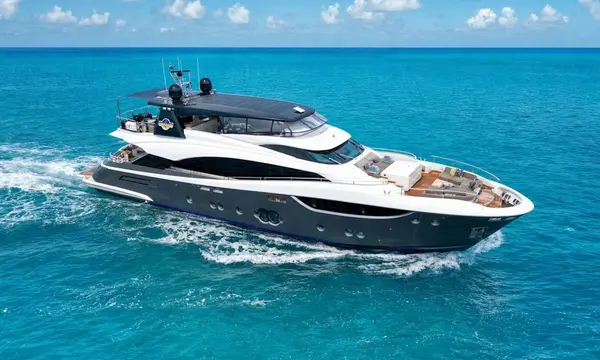
The 32m Monte Carlo Yachts motor yacht CIELO NERO joins Northrop & Johnson's Bahamas charter fleet from $90,000 per week after a 2024 refit.
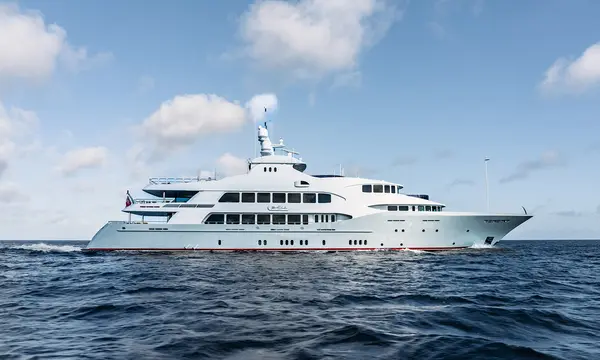
The 60m Trinity superyacht IRON BLONDE has rejoined IYC charter, offering seven guest cabins, a three-level elevator, dedicated wellness facilities and an owner deck.
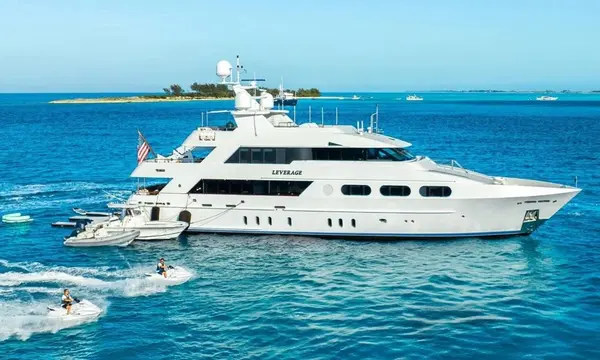
The 38.1-metre Palmer Johnson motor yacht LEVERAGE has opened bookings for Bahamas charters during the 2026/27 winter season.
Superyacht Guide
Continue into the wider Superyacht Guide.
Business opportunities · Superyacht Guide
Companies serving the superyacht market can discuss clearly identified advertising, sponsorship and business-profile opportunities. Commercial activity remains separate from independent editorial coverage.